Right Side Numbness of Face: Common Causes, Related Conditions, and When to See a Doctor

Right side numbness of face may come from skin, dental, sinus, nerve, or brain-related causes. Sudden facial numbness with weakness, speech difficulty, severe headache, or balance problems needs emergency assessment.
Key Takeaways
- Right side numbness of face may come from skin, dental, sinus, nerve, or brain-related causes.
- Sudden facial numbness with weakness, speech difficulty, severe headache, or balance problems needs emergency assessment.
- Temporary numbness can occur with migraine, anxiety-related hyperventilation, or mild nerve irritation, but persistent symptoms should still be checked.
- Evaluation often includes a neurological exam and may involve imaging, blood tests, or dental and ENT assessment depending on the pattern of symptoms.
- Treatment depends on the underlying cause and can range from observation and medicines to urgent stroke care.
Right side numbness of face is a symptom rather than a diagnosis. It can happen for relatively minor reasons such as pressure on a nerve, but it may also signal conditions that need urgent medical attention, especially if it starts suddenly or occurs with weakness, trouble speaking, or vision changes.
Overview: what right-sided facial numbness can mean
Right side numbness of face usually means that sensation is reduced, altered, or absent in part of the face on one side. Some people describe it as tingling, pins and needles, tightness, burning, heaviness, or a “sleeping” feeling. The symptom may involve the cheek, lips, jaw, forehead, tongue, or the area around the eye, and the exact location often gives useful clues about the cause.
In many cases, one-sided facial numbness is related to irritation of a sensory nerve, inflammation, dental problems, sinus disease, or a migraine. However, because the face is supplied by important nerves and connected to the brain, doctors also consider more serious causes such as stroke, transient ischemic attack, multiple sclerosis, or a growth affecting the nerve. The timing matters: symptoms that appear suddenly are usually evaluated more urgently than symptoms that have developed slowly over time.
A helpful way to think about this symptom is by asking three questions: how quickly it started, whether other symptoms came with it, and whether it goes away fully. Numbness that is brief and recurring may suggest one set of causes, while constant numbness that spreads or is paired with facial drooping, arm weakness, or trouble speaking suggests another. This is why medical assessment focuses not only on the numbness itself but also on the wider pattern.
How facial numbness may feel and what patterns matter
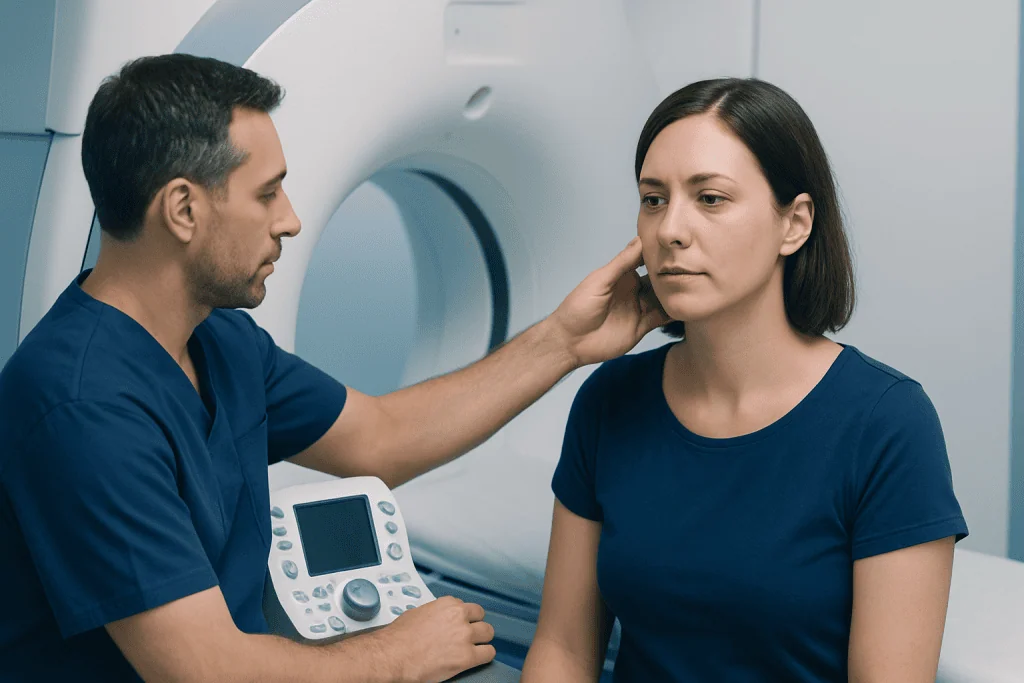
Not all facial numbness feels the same. Some people notice decreased feeling only when touching the skin, while others have spontaneous tingling or burning even without contact. A person may also feel pain and numbness together, especially when the trigeminal nerve is irritated. In other situations, the face feels normal at rest but numb during chewing, smiling, or exposure to cold air.
Doctors pay attention to whether the numbness affects one small patch or an entire side of the face. They also ask whether the forehead is involved, whether the lips or tongue feel numb, and whether symptoms extend into the ear, scalp, neck, or arm. Numbness with facial weakness may point toward a facial nerve disorder such as facial paralysis, while numbness without weakness may suggest sensory nerve involvement, migraine, or a central nervous system cause.
Associated symptoms can be especially important. These may include:
- Facial drooping or asymmetry
- Difficulty speaking or understanding speech
- Blurred or double vision
- Severe or unusual headache
- Dizziness, poor balance, or trouble walking
- Jaw pain, tooth pain, or recent dental treatment
- Ear rash, hearing changes, or facial pain
- Numbness or weakness in an arm or leg
Even when symptoms seem mild, a clear description of when they began and what they feel like can help a clinician decide how urgently they need investigation.
Common causes and related conditions

One common cause of right side numbness of face is irritation or compression of a facial sensory nerve, especially the trigeminal nerve. This can happen after dental work, with jaw problems, after minor trauma, or as part of a nerve inflammation. Sinus infections, severe nasal congestion, or local swelling may also create pressure sensations or numbness in the cheek and upper jaw area. Skin conditions, cold exposure, and shingles affecting the face can sometimes change sensation as well.
Migraine is another important cause. Some people experience numbness or tingling as part of a migraine aura, sometimes even without a severe headache. The symptoms may start gradually, spread over minutes, and then resolve. Anxiety and hyperventilation can also trigger tingling around the mouth and face, though this diagnosis should be made carefully, especially if symptoms are new.
Doctors also consider neurological disorders. A multiple sclerosis flare can cause facial numbness when pathways in the brain or brainstem are affected. Less commonly, tumors or other masses may press on a nerve over time, leading to progressive numbness. Conditions involving blood vessels or the brain, including stroke, are particularly important because they may need urgent treatment.
Less obvious causes include low vitamin levels, blood sugar problems, autoimmune disease, and infections. In some people, the symptom may be linked to temporomandibular joint strain, bruxism, or neck-related nerve issues. Because the list of possible causes is broad, a lasting or unexplained symptom should not be self-diagnosed.
When right-sided facial numbness may be an emergency
Sudden right side numbness of face should be treated as urgent when it occurs with other neurological symptoms. Emergency evaluation is especially important if there is facial drooping, weakness in the arm or leg, difficulty speaking, confusion, sudden vision loss, severe headache, fainting, or trouble walking. These can be warning signs of a stroke or another serious neurological problem.
Even if numbness improves after a few minutes, it should not be ignored. A transient ischemic attack can cause short-lived symptoms but still requires rapid assessment to reduce the risk of a future stroke. New facial numbness after head injury, along with severe pain, or together with a blistering rash near the ear or eye also deserves prompt medical attention.
It is also wise to seek timely care if numbness is persistent, repeatedly returns, gradually spreads, or is accompanied by unexplained weight loss, hearing changes, or worsening facial pain. While these symptoms do not always indicate a dangerous condition, they suggest that a clinician should look more closely for an underlying cause.
How doctors diagnose the cause
Diagnosis begins with a careful history and examination. A doctor will ask when the numbness started, whether it came on suddenly or gradually, how long it lasts, and whether there are triggers such as chewing, headache, stress, or recent infection. Medical history matters too, including migraine, diabetes, autoimmune disease, recent dental procedures, facial injury, and any prior neurological symptoms.
During the examination, the clinician may test light touch, pinprick, facial movement, eye movement, speech, balance, and strength in the arms and legs. These steps help show whether the symptom is limited to a local facial nerve area or whether it may involve the brain or broader nervous system. In some cases, an ENT or dental exam is also useful if the symptom pattern points toward the sinuses, jaw, or teeth.
Tests depend on the suspected cause. They may include blood tests, dental imaging, or sinus evaluation. If a brain or nerve problem is possible, the doctor may recommend MRI scan to look at the brain, brainstem, and cranial nerves in detail. In emergency settings, CT scan may be used quickly to assess urgent causes such as bleeding or stroke. Nerve tests or referral to neurology may be needed when symptoms are ongoing but not explained by initial evaluation.
Treatment options and what recovery depends on
Treatment for right side numbness of face depends entirely on the underlying cause. If the problem is due to a minor local irritation, management may focus on monitoring, treating inflammation, addressing jaw or dental problems, or managing sinus disease. If migraine is responsible, treatment aims to reduce attacks, ease symptoms, and identify triggers. For shingles or infection, antiviral or other targeted treatment may be appropriate if started in time.
When numbness is caused by a nerve disorder, the plan may involve medicines to reduce pain or inflammation, rehabilitation, or specialist follow-up. If doctors suspect a structural issue affecting the nerve or brain, further imaging and a multidisciplinary plan may be needed. Stroke-related facial numbness needs urgent hospital care; rapid evaluation can help determine whether time-sensitive treatment is possible, including stroke rehabilitation later if symptoms persist.
Recovery varies. Temporary numbness from migraine or brief nerve compression may resolve completely, while recovery from inflammation, shingles, or neurological disease may be slower. Some causes improve over days to weeks, but persistent or progressive numbness needs follow-up to make sure the diagnosis is correct and treatment is working.
Near the end of the diagnostic pathway, some patients benefit from coordinated care across neurology, radiology, ENT, dentistry, and rehabilitation. Acibadem International’s multidisciplinary specialists and JCI-accredited hospitals evaluate and treat neurological and facial sensory symptoms for international patients when a broader assessment is needed.
Self-care, prevention, and practical next steps
Because facial numbness has many causes, self-care should be cautious and should not replace medical assessment when symptoms are new, sudden, or persistent. It can help to note when symptoms occur, how long they last, and whether they are linked with headache, stress, sleep loss, dental pain, or viral illness. This symptom diary may support a faster diagnosis.
General measures that may lower the risk of some causes include managing blood pressure, diabetes, and cholesterol; avoiding smoking; getting regular sleep; staying hydrated; and following treatment plans for migraine or autoimmune disease. Good dental care and early attention to sinus or ear infections may also reduce some local causes of altered facial sensation.
People should avoid assuming that one-sided facial numbness is only anxiety or a pinched nerve, particularly if the symptom is unusual for them. Numbness affecting the face can overlap with several conditions, and prompt assessment is the safest choice when there is doubt. If symptoms are severe or accompanied by weakness, speech changes, or visual problems, emergency care is the right next step.
Frequently asked questions
Is right side numbness of face always a sign of stroke?
No. It can happen with migraine, nerve irritation, dental issues, sinus problems, shingles, or other non-stroke causes. However, sudden facial numbness with weakness, speech trouble, or vision changes should be treated as a medical emergency until stroke is ruled out.
Can anxiety cause numbness on one side of the face?
Anxiety and hyperventilation can cause tingling or numb sensations, often around the mouth or face. But one-sided facial numbness should not be assumed to be anxiety, especially if it is new, persistent, or accompanied by other symptoms.
How long can facial numbness last?
The duration varies widely depending on the cause. Migraine-related symptoms may last minutes to hours, while nerve inflammation, shingles, or neurological conditions may cause symptoms that last days, weeks, or longer.
Should a person go to the emergency room for facial numbness?
Emergency care is recommended if numbness starts suddenly or comes with facial droop, arm or leg weakness, severe headache, confusion, trouble speaking, or balance problems. These features may point to stroke or another urgent neurological condition.
Can dental problems cause numbness in one side of the face?
Yes. Tooth infection, jaw inflammation, dental procedures, or pressure on nearby nerves can sometimes cause numbness or tingling in part of the face. A clinician may recommend dental evaluation if symptoms fit that pattern.
What kind of doctor evaluates right side numbness of face?
The first assessment may be done by an emergency physician, primary care doctor, or neurologist, depending on how urgent the symptoms are. ENT specialists, dentists, or other doctors may also be involved if the symptoms suggest a local cause rather than a brain or nerve disorder.
References
- National Institute of Neurological Disorders and Stroke
- American Stroke Association
- National Health Service
- Mayo Clinic
- Merck Manual Consumer Version
This article is for general information only and is not a substitute for professional medical advice. Please consult a qualified doctor about your individual situation.
Explore treatments in Turkey — costs, top hospitals & a free quote
JCI-accredited · board-certified surgeons · reply within 24h
Add us as a Preferred Source to see more of our trusted health content across Google Search, AI Overviews and Discover.