Ring Avulsion: A Complete Medical Overview

Ring avulsion happens when a ring is forcefully pulled, damaging the soft tissues of the finger. The injury may look mild at first, but deeper damage to blood flow, nerves, or tendons can still be present.
Key Takeaways
- Ring avulsion happens when a ring is forcefully pulled, damaging the soft tissues of the finger.
- The injury may look mild at first, but deeper damage to blood flow, nerves, or tendons can still be present.
- Early emergency evaluation improves the chance of preserving finger function and appearance.
- Treatment depends on severity and may include wound care, splinting, surgery, or microsurgical repair.
- Removing rings during work, sports, and machinery use is the best prevention.
Ring avulsion is a traumatic finger injury that happens when a ring catches on an object and is suddenly pulled. It can range from a minor soft-tissue tear to a severe injury involving skin, blood vessels, tendons, nerves, or bone, so prompt medical assessment is important.
Overview: what ring avulsion means
Ring avulsion is an injury to the finger caused by a ring being caught and pulled with force. In simple terms, the ring acts like a fixed loop around the finger while the hand keeps moving, which can tear the skin and soft tissues. In more serious cases, it can damage blood vessels, nerves, tendons, and even bone.
This type of injury is uncommon but medically important because the outside appearance does not always show the full extent of damage. A small cut or swelling can exist alongside a serious interruption of circulation. For that reason, a ring avulsion injury is treated as a hand trauma that should be assessed promptly, especially if the finger looks pale, blue, numb, severely swollen, or misshapen.
Doctors often describe ring avulsion by severity, from injuries that involve only skin and soft tissue to injuries with loss of blood supply or complete amputation. The treatment plan and likely recovery depend largely on whether circulation to the finger is intact. Early recognition and specialist hand care can make a meaningful difference in healing and function.
How this injury happens
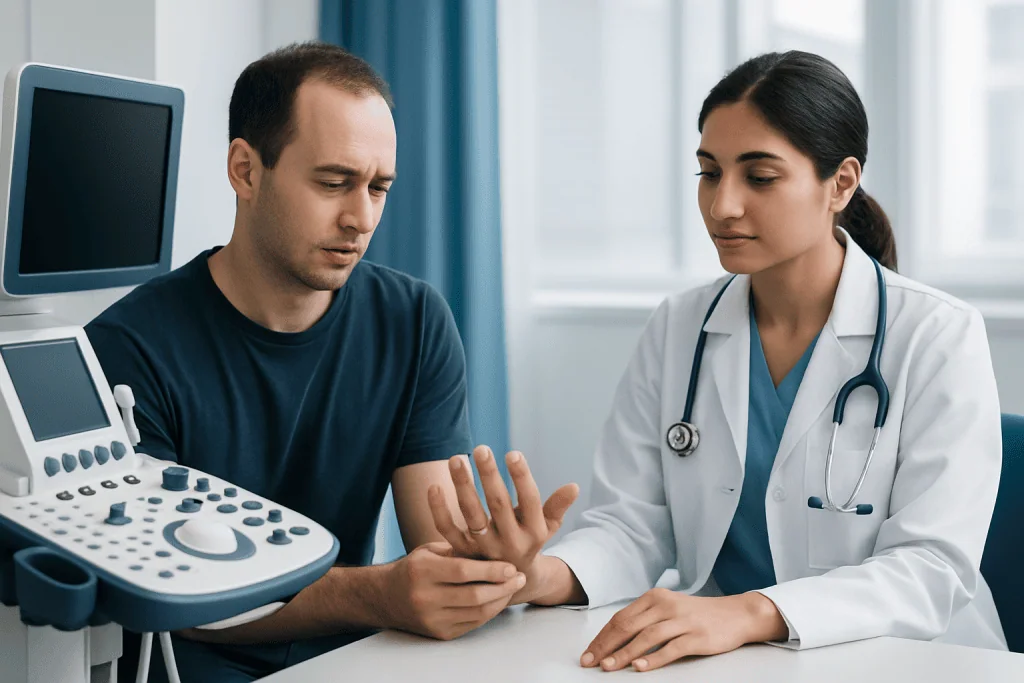
Ring avulsion usually occurs during a sudden accident. A ring may catch on a fence, ladder, gym equipment, machinery, a truck bed, or another protruding object while the person is climbing, jumping down, or falling. The body continues moving, but the ring stays fixed for a moment, creating a strong pulling force across the finger.
That force can strip skin away from deeper structures, similar to a degloving injury. It may also tear the arteries and veins that carry blood, stretch or sever nerves, injure flexor or extensor tendons, and fracture or dislocate the bones of the finger. In the most severe form, the finger can be partially or completely amputated.
Workplace tasks, home repairs, fitness training, and contact with moving equipment are common settings. People who regularly wear rings while doing manual work may have a higher risk. The injury is not limited to one type of ring; even a plain metal band can cause significant damage if the pulling force is strong enough.
Symptoms and signs to watch for

The symptoms of ring avulsion vary by severity. Mild injuries may cause pain, swelling, bruising, and a cut or laceration around the finger. More serious injuries can involve torn skin, heavy bleeding, visible deep tissue, loss of normal finger shape, or partial detachment of the fingertip or finger.
Changes in circulation are especially important. A finger that becomes pale, blue, cool, or increasingly swollen may not be getting enough blood flow. Numbness, tingling, or inability to move the finger normally can suggest nerve or tendon injury. Sometimes the ring has already come off, but the finger continues to swell rapidly afterward.
Warning signs that need urgent assessment include:
- Persistent bleeding or a deep open wound
- Pale, blue, or cold skin on the injured finger
- Severe swelling, tightness, or increasing pain
- Numbness or loss of sensation
- Difficulty bending or straightening the finger
- Visible deformity, exposed tissue, or suspected fracture
- Partial or complete amputation
Even when pain seems manageable, a clinician should assess any ring-related trauma that breaks the skin or affects finger color, feeling, or movement.
How doctors assess ring avulsion
Medical evaluation starts with checking circulation, sensation, and movement in the injured finger. A doctor examines skin color, temperature, capillary refill, pulse signals if available, and whether the person can feel touch on different parts of the finger. The position of the wound and the condition of tendons and joints also help show how deep the injury may be.
Imaging is often used to look for fractures, dislocations, or foreign material in the wound. X-rays are common when bone injury is possible. If blood flow is uncertain, hand surgeons may use additional tests to evaluate circulation. The main goal is to determine whether the finger still has a reliable blood supply and whether urgent repair is needed.
Classification systems may be used by specialists to grade severity and guide treatment. In practical terms, the key questions are whether the soft tissue is damaged only superficially, whether blood vessels and nerves are injured, and whether there is partial or complete amputation. Severe injuries may require evaluation by teams experienced in microvascular surgery and complex hand trauma.
Because contaminated wounds can lead to infection, the injury is also assessed for dirt, metal fragments, grease, or other debris. Tetanus status may be reviewed, and pain control is provided as part of emergency care.
Treatment options and what they aim to restore
Treatment depends on the degree of tissue damage. Minor injuries with intact circulation may be treated with careful cleaning, wound closure when appropriate, dressing changes, splinting, pain relief, and follow-up with a hand specialist. The goals are to protect healing, prevent infection, and maintain movement as safely as possible.
When deeper structures are involved, surgery may be needed to repair blood vessels, nerves, tendons, or fractures. If blood flow is threatened, urgent restoration of circulation becomes the priority. In some cases, doctors perform revascularization or replantation techniques to preserve the finger. Severe crush or degloving injuries may also require staged reconstruction, skin grafts, or flap procedures, sometimes within the field of hand surgery.
If there is extensive tissue destruction, treatment focuses on the safest and most functional outcome. This may include reconstructive procedures and later rehabilitation. Hand therapy is often an important part of recovery because swelling, scarring, stiffness, and weakness can persist after the wound closes.
Associated injuries may need separate care as well. For example, if the trauma includes a broken bone, treatment may overlap with orthopedic and traumatology care. If doctors are concerned about significant soft-tissue loss or reconstructive needs, they may also involve teams with expertise in plastic and reconstructive surgery.
Recovery, rehabilitation, and possible complications
Recovery from ring avulsion varies widely. A superficial injury may heal in weeks, while a severe injury can require surgery, rehabilitation, and longer follow-up. The final outcome depends on the amount of tissue damage, how quickly treatment begins, the success of restoring circulation, and whether nerves or tendons were injured.
Rehabilitation may include splinting for protection at first, followed by guided exercises to reduce stiffness and improve motion, strength, and hand coordination. Hand therapy can help manage swelling and scar tissue while teaching safe ways to use the hand during recovery. Patients should follow their surgeon’s or therapist’s advice closely, since doing too much too soon or too little for too long can both affect function.
Possible complications include infection, persistent pain, cold sensitivity, limited range of motion, altered sensation, scarring, nail changes, and reduced grip or dexterity. In cases where blood flow cannot be fully restored, part of the tissue may not survive. Some symptoms can resemble other serious hand injuries, including compartment syndrome, which is why worsening pain, swelling, or color change needs prompt reassessment.
Emotional recovery also matters. An injury to a visible and highly used body part can affect confidence at work and in daily life. Reassuring communication, realistic expectations, and structured follow-up often help people adjust during healing.
Prevention and self-care after an injury
The best way to prevent ring avulsion is simple: remove rings before activities where they can catch. This includes climbing, weight training, operating tools or machinery, electrical work, some sports, and manual labor. People who need to wear a ring for personal reasons should still consider removing it during high-risk tasks.
General injury prevention measures also help. Wearing appropriate gloves when suitable, maintaining equipment, using ladders safely, and avoiding loose jewelry around moving machinery reduce the chance of hand trauma. Awareness matters because many injuries happen during everyday tasks that do not feel dangerous at the time.
After an injury, self-care should be limited to safe first aid while arranging prompt medical attention. If a ring is still on and the finger is swelling, it should be removed quickly if possible without causing extra trauma. The hand can be elevated, bleeding can be controlled with gentle pressure using a clean cloth, and the wound can be covered with a clean dressing. Ice may be placed near the area with a barrier, but direct ice on open wounds should be avoided.
If any finger part has detached, it should be wrapped in clean, slightly moist gauze, placed in a sealed bag, and then kept cool by placing that bag on ice water or in a second bag with ice nearby. It should not be placed directly on ice. These steps do not replace emergency care, but they may help preserve tissue while the person travels to hospital.
When to seek medical care
Any suspected ring avulsion should be medically assessed the same day, and severe injuries need emergency care immediately. This is especially true if the finger is pale, blue, cold, numb, heavily bleeding, difficult to move, visibly deformed, or partially amputated. Delay can reduce the chance of saving tissue and preserving function.
People should also seek care if there is increasing swelling, worsening pain, signs of infection such as spreading redness or drainage, or a wound that is contaminated with dirt or metal. Even when a cut seems small, a doctor may identify deeper damage that is not obvious at home.
For international patients needing specialist evaluation, Acibadem International’s multidisciplinary teams in JCI-accredited hospitals diagnose and treat complex hand injuries, including severe ring avulsion and other traumatic conditions. Prompt assessment by emergency, hand surgery, orthopedic, and reconstructive specialists can help define the safest treatment plan.
Frequently asked questions
Is ring avulsion always an emergency?
It should be treated as urgent because the injury can damage blood vessels, nerves, and tendons even when the surface wound seems limited. If the finger is pale, blue, numb, cold, heavily bleeding, or partly detached, emergency care is needed right away.
Can a finger survive after a severe ring avulsion?
Sometimes it can, especially when circulation is restored quickly by specialists. The outcome depends on how much tissue was damaged, whether blood flow is still present, and how soon treatment begins.
What should someone do immediately after a ring avulsion injury?
The first steps are to remove the ring if it can be done safely, control bleeding with gentle pressure, cover the wound with a clean dressing, and keep the hand elevated. A detached part should be wrapped in clean moist gauze, sealed in a bag, kept cool near ice, and taken to emergency care with the patient.
Will surgery always be needed for ring avulsion?
No. Mild injuries with intact blood flow and no deep structural damage may be treated with wound care, splinting, and follow-up. Surgery is more likely when there is damage to circulation, tendons, nerves, bone, or major soft-tissue loss.
How long does recovery take?
Recovery can range from a few weeks for minor injuries to several months for severe injuries that need surgery and hand therapy. Some people continue to improve over time as swelling decreases and movement returns.
Can ring avulsion cause permanent problems?
It can, particularly if the injury is severe or treatment is delayed. Possible lasting effects include stiffness, reduced sensation, cold sensitivity, scarring, weakness, or changes in appearance and fine motor function.
This article is for general information only and is not a substitute for professional medical advice. Please consult a qualified doctor about your individual situation.
Joint and spine care in Turkey — expert assessment & treatment
JCI-accredited · board-certified surgeons · reply within 24h
Add us as a Preferred Source to see more of our trusted health content across Google Search, AI Overviews and Discover.

More from the Health Library

Xywav Ih: A Complete Medical Overview

Antioxidants and Skin Health: A Complete Medical Overview

Ophthalmoplegia: A Complete Medical Overview

Pimple: A Complete Medical Overview

Asthma Exacerbation — Explained by Medical Evidence, Not Myths