Rosacea — Explained by Medical Evidence, Not Myths

Rosacea commonly causes facial redness, flushing, and sensitivity, and some people also develop pimples or eye symptoms. It is a chronic inflammatory condition with several subtypes, so symptoms can look different from person to person.
Key Takeaways
- Rosacea commonly causes facial redness, flushing, and sensitivity, and some people also develop pimples or eye symptoms.
- It is a chronic inflammatory condition with several subtypes, so symptoms can look different from person to person.
- Common triggers include sun exposure, heat, alcohol, spicy foods, stress, and certain skin-care products.
- Early diagnosis can help reduce flare-ups, improve comfort, and limit progression of visible skin changes.
- Treatment may include gentle skin care, sun protection, prescription creams, oral medicines, or laser-based therapies.
Rosacea is a long-term inflammatory skin condition that most often affects the central face, causing persistent redness, flushing, visible blood vessels, and sometimes acne-like bumps. It is not caused by poor hygiene, and while it cannot always be cured, it can usually be managed well with the right diagnosis, trigger awareness, and treatment.
Overview: what rosacea is and what it is not
Rosacea is a chronic inflammatory skin condition that mainly affects the cheeks, nose, forehead, and chin. It often begins with episodes of flushing that come and go, then may develop into more persistent redness, visible small blood vessels, acne-like bumps, burning, stinging, or dryness. In some people, the eyes are also affected.
Medical evidence shows that rosacea is not simply “sensitive skin” and it is not the same as acne, even though bumps and pustules can appear. It is also not caused by poor hygiene. Rather, rosacea is understood as a complex condition involving inflammation, changes in blood vessels, skin barrier dysfunction, and an exaggerated response to certain triggers.
Rosacea tends to follow a pattern of flare-ups and calmer periods. Symptoms can vary over time and may differ widely between individuals. Because of this, diagnosis and treatment are most effective when based on the person’s exact symptom pattern rather than myths, social media advice, or one-size-fits-all routines.
Signs and symptoms of rosacea
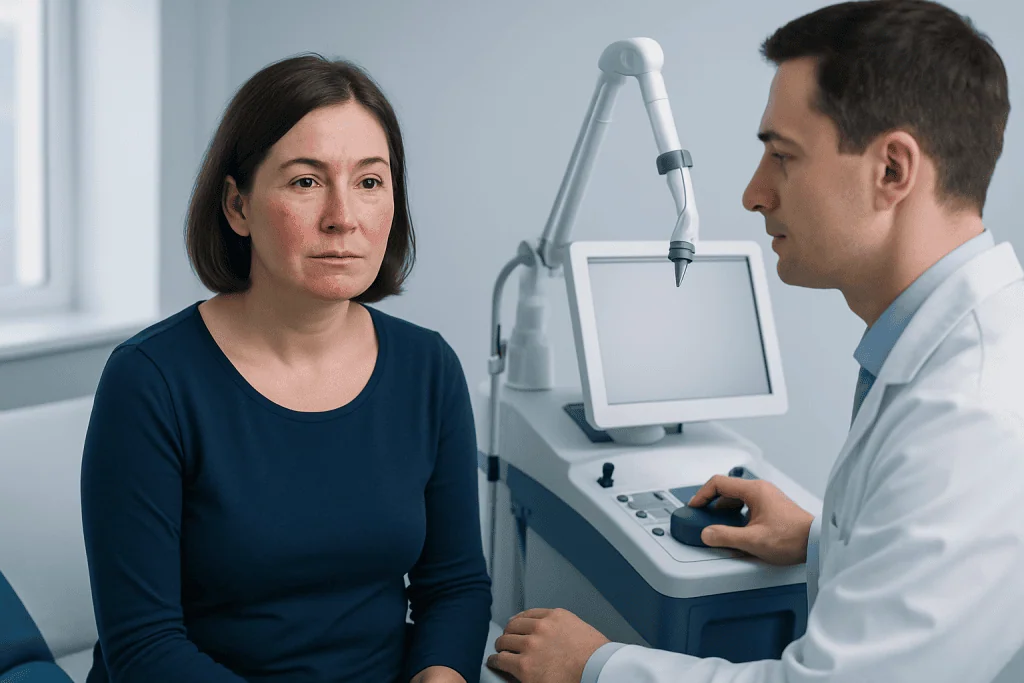
The most recognizable sign of rosacea is redness across the central face. At first, this may appear as intermittent flushing after heat, exercise, emotional stress, or spicy foods. Over time, the redness can become more constant. Some people notice fine red lines on the skin, which are enlarged superficial blood vessels.
Another common form of rosacea includes acne-like bumps and pus-filled spots, especially on the cheeks, chin, and forehead. Unlike acne, rosacea usually does not cause blackheads. The skin may also feel hot, dry, tight, itchy, or unusually reactive to skin-care products.
Rosacea can also affect the eyes. Ocular rosacea may cause watery or bloodshot eyes, burning, a gritty sensation, eyelid irritation, or light sensitivity. In a smaller number of cases, long-term inflammation can lead to thickened skin, most often on the nose, a change known as rhinophyma.
- Persistent facial redness
- Frequent flushing
- Visible tiny blood vessels
- Red bumps or pus-filled lesions
- Burning, stinging, dryness, or swelling
- Eye irritation or eyelid inflammation
Why rosacea happens: causes, triggers, and risk factors
The exact cause of rosacea is not fully understood, but research points to a combination of factors. These include an overactive inflammatory response, increased skin sensitivity, changes in facial blood vessels, and possible genetic susceptibility. Some experts also study the role of skin microorganisms such as Demodex mites and how the immune system reacts to them.
Rosacea is not contagious, and it does not develop because a person has not cleaned their skin properly. Instead, everyday exposures can trigger flare-ups in people who are already prone to the condition. Common triggers include ultraviolet light, hot weather, wind, cold air, hot drinks, alcohol, spicy foods, strenuous exercise, emotional stress, and irritating skin products.
Risk can be influenced by age, family history, skin type, and underlying skin sensitivity. Adults often develop rosacea after age 30, though it can appear earlier or later. It may occur alongside other skin concerns, and it can sometimes be confused with acne or eczema-like irritation, especially in the early stages.
How rosacea is diagnosed
Rosacea is usually diagnosed by a clinician through medical history and skin examination. There is no single blood test that confirms it. Instead, diagnosis is based on typical features such as persistent central facial redness, repeated flushing, bumps and pustules, visible blood vessels, or eye involvement.
A doctor will also consider conditions that can look similar, including acne, seborrheic dermatitis, contact dermatitis, lupus, and certain allergic or inflammatory skin disorders. This matters because treatments that help one condition may worsen another. For example, heavy or irritating acne products can aggravate rosacea-prone skin.
If the eyes are involved, an ophthalmology assessment may be recommended. In uncertain cases, a dermatologist may need to rule out other causes of redness or rash before confirming the diagnosis. Early diagnosis is helpful because treatment can reduce discomfort and may help prevent symptoms from becoming more persistent.
Treatment options based on symptom type
Rosacea treatment is tailored to the features that are most bothersome or medically important. For persistent redness and flushing, doctors may recommend trigger management, barrier-friendly skin care, sun protection, and sometimes prescription topical medicines. For acne-like bumps and pustules, treatment may include prescription creams, gels, or oral anti-inflammatory antibiotics used for limited periods under medical supervision.
When visible blood vessels or long-standing redness are prominent, device-based treatment can help some patients. Procedures such as laser treatment or other light-based therapies may reduce visible vessels and background redness in selected cases. These are usually considered after a clinical assessment of skin type, severity, and treatment goals.
People with thickened skin changes, especially around the nose, may need procedural care from experienced specialists. Eye symptoms may require eyelid hygiene measures, lubricating drops, or prescription treatment guided by an eye doctor. In more complex cases, care may involve both dermatology and ophthalmology to address skin and eye symptoms together.
Because rosacea is chronic, treatment often focuses on control rather than permanent cure. It is common to need adjustments over time. A person should avoid starting strong exfoliants, steroid creams, or over-the-counter acne regimens without medical advice, since these can worsen redness and irritation.
Daily skin care, prevention, and self-care
Self-care plays a major role in rosacea management. Gentle cleansing, regular moisturizing, and daily sun protection are among the most important steps. A broad-spectrum sunscreen, preferably one formulated for sensitive skin, can help reduce UV-triggered flare-ups. Many people benefit from fragrance-free products and simple routines with fewer active ingredients.
Keeping a trigger diary can be useful. Not everyone reacts to the same things, so identifying personal patterns is often more helpful than following broad internet lists. People may discover that heat, saunas, red wine, certain cosmetics, or even abrupt temperature changes are more relevant for them than food alone.
Helpful habits may include washing the face with lukewarm rather than hot water, avoiding harsh scrubs, patch-testing new products, and using non-irritating makeup if desired. During flares, less can be more. Trying multiple new treatments at once often makes it harder to tell what is helping and what is causing irritation.
If symptoms are persistent or recurrent, specialist review is worthwhile. In multidisciplinary centers such as Acibadem International, specialists in skin and eye health evaluate rosacea and related concerns for international patients in JCI-accredited hospitals, helping guide diagnosis and long-term management.
When to seek medical care
Medical care is appropriate if facial redness keeps returning, becomes persistent, or is accompanied by bumps, burning, swelling, or skin sensitivity. A clinical review is also important when symptoms affect confidence or quality of life, because effective treatment often improves both physical comfort and visible redness.
Prompt assessment is especially important if the eyes are involved. Burning, watery eyes, eyelid irritation, light sensitivity, or blurry vision should not be ignored, as ocular rosacea can need dedicated treatment. A person should also seek advice if the skin on the nose appears to be thickening or changing shape over time.
Because several disorders can mimic rosacea, a doctor may need to distinguish it from allergic reactions, acne, inflammatory rashes, or other causes of facial redness. People who need expert evaluation for persistent redness may also be assessed in services linked to skin diseases and related inflammatory skin conditions.
Frequently asked questions
Is rosacea the same as acne?
No. Rosacea can cause acne-like bumps and pustules, but it usually does not cause blackheads, and persistent facial redness and flushing are more typical. The treatments also differ, so a correct diagnosis is important.
Can rosacea be cured permanently?
Rosacea is usually a long-term condition, so treatment focuses on control rather than a permanent cure. Many people manage it well with trigger awareness, gentle skin care, and medical treatment when needed.
What commonly triggers rosacea flare-ups?
Common triggers include sun exposure, heat, wind, alcohol, spicy foods, hot drinks, emotional stress, strenuous exercise, and irritating skin products. Triggers vary, so keeping a personal record can help identify patterns.
Can rosacea affect the eyes?
Yes. Ocular rosacea may cause burning, watery eyes, redness, a gritty feeling, eyelid irritation, or light sensitivity. Eye symptoms should be assessed by a qualified doctor, especially if vision changes occur.
Does diet cause rosacea?
Diet does not directly cause rosacea, but certain foods and drinks can trigger symptoms in some people. Spicy foods, hot beverages, and alcohol are common examples, though not everyone reacts the same way.
Should people with rosacea avoid all skin-care products?
No, but they should choose products carefully. Gentle, fragrance-free cleansers, moisturizers, and sunscreens are usually better tolerated, while harsh exfoliants and highly active formulas may worsen irritation.
References
- American Academy of Dermatology
- National Institute of Arthritis and Musculoskeletal and Skin Diseases
- National Rosacea Society
- Mayo Clinic
- British Association of Dermatologists
This article is for general information only and is not a substitute for professional medical advice. Please consult a qualified doctor about your individual situation.
Rosacea in Turkey — costs, top hospitals & a free quote
JCI-accredited · board-certified surgeons · reply within 24h
Add us as a Preferred Source to see more of our trusted health content across Google Search, AI Overviews and Discover.