Roseola in Babies and Toddlers: High Fever Followed by Rash
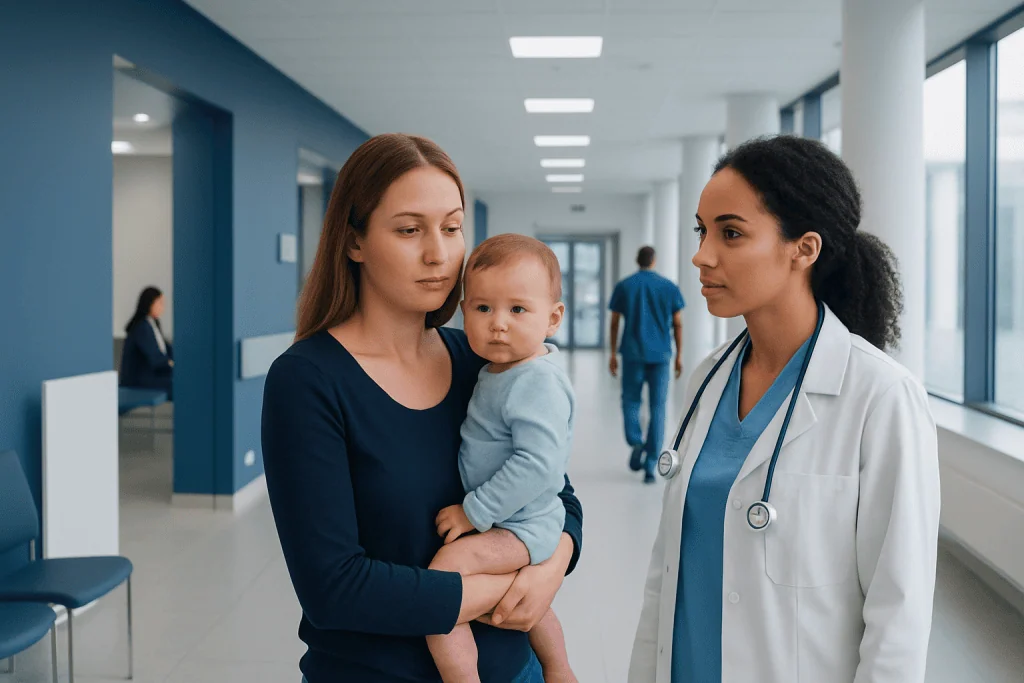
Roseola is usually caused by a common virus and often affects children under 2 years old. A high fever often comes first, and the rash usually appears after the fever drops.
Key Takeaways
- Roseola is usually caused by a common virus and often affects children under 2 years old.
- A high fever often comes first, and the rash usually appears after the fever drops.
- Most children recover fully with rest, fluids, and supportive care at home.
- Fever can sometimes trigger febrile seizures in young children, so prompt medical advice is important if one occurs.
- A doctor should assess persistent fever, signs of dehydration, breathing problems, or an unusually unwell child.
Roseola is a common childhood viral illness that often affects babies and toddlers. It usually begins with a high fever for several days, followed by a pink rash that appears as the fever goes away.
Overview of Roseola
Roseola is a common viral illness seen mainly in babies and toddlers. It is sometimes called sixth disease or roseola infantum. The illness is best known for its typical pattern: a sudden high fever for several days, followed by a light rash when the fever settles.
In most cases, roseola is mild and gets better on its own. The viruses most often linked to it are human herpesvirus 6 and, less commonly, human herpesvirus 7. Although the name can sound concerning, these are common childhood viruses and are not the same as the herpes infections many people think of in adults.
Roseola usually affects children between about 6 months and 2 years of age, though older toddlers can also develop it. Many children recover without complications, and the rash itself is usually not painful or itchy. The main concern during the illness is the fever and how the child is coping with it.
Symptoms and What Parents May Notice
The most common early symptom is a high fever that starts suddenly and may last for three to five days. During this stage, a child may seem irritable, tired, less interested in food, or clingier than usual. Some children still appear fairly well despite the fever, while others may be more uncomfortable.
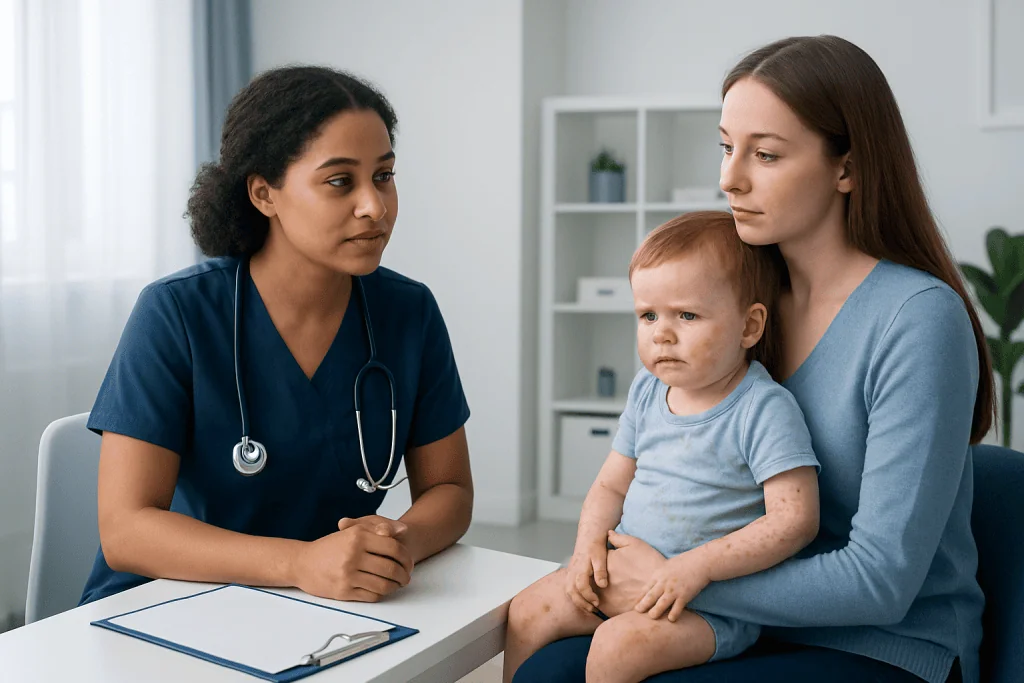
As the fever improves, a rash often appears. This rash usually consists of small pink spots or patches that begin on the chest, back, or tummy and may spread to the neck, arms, or legs. It is often flat or slightly raised, tends to fade within hours to two days, and usually does not bother the child.
Other symptoms can include a runny nose, mild sore throat, swollen glands in the neck, or mild diarrhea. Some children may have redness around the eyelids or seem generally unsettled. In many cases, the rash appears at a time when the child is already starting to feel better.
Because roseola often presents as a high fever followed by rash, it can look different from illnesses where the rash appears first. Parents may be reassured to know that once the fever has ended and the rash appears, the child is often on the way to recovery.
Causes and How Roseola Spreads
Roseola is caused by common viruses, most often human herpesvirus 6. It spreads from person to person, usually through respiratory droplets or saliva, for example when an infected child coughs, sneezes, or shares close contact with others. A child may catch the virus from someone who has only mild symptoms or no obvious symptoms at all.
The incubation period, meaning the time from exposure to illness, is usually around one to two weeks. Children are often contagious before the rash appears, especially while they have a fever. This means roseola can spread before parents realize what illness is developing.
Roseola is common in early childhood because babies and toddlers are still building immunity to many viruses. Close contact in households, nurseries, and play settings can make spread easier. Even so, not every child who is exposed will become noticeably ill.
Having roseola once generally helps the body develop lasting immunity. Repeat illness is uncommon in healthy children. Good hygiene, such as regular handwashing and avoiding close contact when a child is feverish, may help reduce spread, although it cannot prevent every case.
How Doctors Diagnose Roseola
Doctors usually diagnose roseola based on the child’s age, symptoms, and the pattern of illness. A sudden high fever followed by a rash as the fever breaks is very characteristic. The doctor will also ask about feeding, wet diapers, energy level, and any other symptoms that could suggest a different infection.
During the examination, the doctor checks the child’s temperature, hydration, breathing, skin appearance, and general responsiveness. In many straightforward cases, laboratory testing is not needed. Roseola is often diagnosed clinically rather than through a specific test.
Sometimes the doctor may consider other causes of fever and rash, especially if the child looks unusually unwell, is very young, or has symptoms that do not fit the usual pattern. Other viral infections, ear infections, urinary infections, or conditions such as measles may need to be ruled out depending on the situation and vaccination history.
If a child has a seizure, persistent fever, signs of dehydration, or symptoms affecting breathing, further medical assessment is important. The goal is to confirm that roseola is the most likely cause and to make sure a more serious illness is not being missed.
Treatment and Home Care
There is no specific cure needed for most cases of roseola. Treatment is supportive, which means helping the child stay comfortable while the illness runs its course. This usually includes rest, offering plenty of fluids, and monitoring the fever and the child’s overall condition.
A doctor may recommend age-appropriate fever-reducing medicine if needed for comfort. Parents should use only medicines suitable for the child’s age and follow professional guidance carefully. Light clothing and a comfortably cool room may also help a feverish child feel more at ease, though overcooling should be avoided.
The rash itself usually does not need treatment. It often fades on its own and does not leave scars. Antibiotics do not treat roseola because it is caused by a virus, not bacteria.
If a child has a high fever with poor fluid intake, repeated vomiting, or concerns about another illness, medical care may be needed. In some situations, clinicians may use tests such as MRI scan or ultrasound for other possible causes of symptoms, but these are not routine tests for uncomplicated roseola. Near the end of the care journey, families seeking international medical support may wish to know that Acibadem International’s multidisciplinary specialists and JCI-accredited hospitals diagnose and treat pediatric infections for international patients.
Prevention and Self-care Tips
There is no routine vaccine for roseola, so prevention focuses on everyday infection-control habits. Frequent handwashing, covering coughs and sneezes, and cleaning commonly touched surfaces can help reduce the spread of viruses in the home. Avoiding close contact with others while a child has a fever is also sensible when possible.
For parents caring for a child with roseola, hydration is one of the most important self-care steps. Babies may need more frequent breastfeeds or bottle feeds, while toddlers can be encouraged to sip water or other suitable fluids. Wet diapers or regular urination are helpful signs that fluid intake is adequate.
Comfort measures matter too. Extra rest, calm activities, and watching for changes in mood or alertness can help parents judge whether a child is improving. If the child feels well once the fever has gone, the rash alone is not usually a sign that the illness is getting worse.
Parents should avoid giving any medication not advised for the child’s age and health needs. If there is uncertainty about fever management, a pediatrician or family doctor can guide safe home care and advise when further assessment is needed.
When to See a Doctor
Medical advice is important if a baby or toddler has a high fever and appears very sleepy, difficult to wake, unusually irritable, or is drinking poorly. A doctor should also assess signs of dehydration, such as very few wet diapers, a dry mouth, no tears when crying, or marked lethargy. Breathing difficulty, persistent vomiting, or a rash that does not match the usual pattern also need prompt attention.
Emergency help is needed if a child has a seizure, struggles to breathe, becomes unresponsive, or develops a stiff neck. Roseola can sometimes trigger a febrile seizure because the temperature rises quickly, especially in younger children. Although many febrile seizures are brief and children recover fully, they should always be assessed by a healthcare professional.
Parents should also contact a doctor if the fever lasts longer than expected, returns after improving, or if the child seems worse rather than better after the rash appears. Very young infants with fever generally need prompt medical evaluation, even if roseola is suspected.
Most children with roseola recover well, but careful observation is still important. If parents are unsure whether symptoms fit roseola or another illness, it is always reasonable to seek advice from a qualified doctor.
Frequently asked questions
Is roseola serious in babies and toddlers?
Roseola is usually a mild illness that gets better on its own. The main concern is the high fever, which can make a child uncomfortable and, in some children, may lead to a febrile seizure. Most children recover fully with supportive care.
How long does roseola last?
The fever usually lasts about three to five days. The rash often appears as the fever goes away and may last from a few hours to about two days. Overall, the illness commonly improves within about a week.
Can a child have roseola without a rash?
Yes, some children may have the fever of roseola without a clearly noticeable rash. In others, the rash is so mild and brief that it can be missed. This can make the illness look like an unexplained viral fever.
Is the roseola rash itchy or painful?
The roseola rash is usually not itchy or painful. It often appears as pink spots or patches on the trunk and may spread outward. Many children seem comfortable by the time the rash shows up.
When is a child with roseola contagious?
A child is usually most contagious during the fever phase, before the rash appears. Once the fever has resolved and the child is otherwise well, the risk of spreading the virus generally decreases. Guidance about returning to nursery or daycare can vary, so parents can check local advice.
Can adults catch roseola from children?
Most adults have already been exposed to the viruses that cause roseola in childhood and have immunity. Because of that, adults usually do not become ill from it. However, general hygiene measures are still important around any viral illness.
References
- World Health Organization
- American Academy of Pediatrics
- Centers for Disease Control and Prevention
- National Health Service
- Merck Manual Consumer Version
This article is for general information only and is not a substitute for professional medical advice. Please consult a qualified doctor about your individual situation.
Explore treatments in Turkey — costs, top hospitals & a free quote
JCI-accredited · board-certified surgeons · reply within 24h
Add us as a Preferred Source to see more of our trusted health content across Google Search, AI Overviews and Discover.

Pediatrics
Complete healthcare for infants, children and adolescents across all sub-specialties.
232 specialists in this unitMore from the Health Library



Related Specialists
Assoc. Prof. Dr. Murat Baştopcu
Cardiovascular Surgery
Dr. Süreyya Fethi Paksoy
Pediatrics
Prof. Dr. Eser Kaya
Nuclear Medicine
Prof. Dr. Erkin Öztaş
Gastroenterology