Ruptured Perforated Eardrum — Explained by Medical Evidence, Not Myths

A ruptured perforated eardrum is a tear or hole in the eardrum, usually caused by infection, pressure changes, injury, or loud noise. Common symptoms include ear pain, fluid drainage, muffled hearing, ringing, and sometimes dizziness.
Key Takeaways
- A ruptured perforated eardrum is a tear or hole in the eardrum, usually caused by infection, pressure changes, injury, or loud noise.
- Common symptoms include ear pain, fluid drainage, muffled hearing, ringing, and sometimes dizziness.
- Many perforations heal within weeks, but a doctor should assess persistent symptoms, significant hearing loss, or signs of infection.
- Keeping the ear dry and avoiding cotton swabs or inserting anything into the ear supports healing.
- Treatment depends on the cause and size of the tear and may include observation, antibiotics, patching, or surgery.
A ruptured perforated eardrum is a hole or tear in the thin membrane that separates the outer ear from the middle ear. Many cases heal naturally, but proper evaluation matters because some tears are linked to infection, hearing changes, or balance symptoms that need medical care.
Overview: what a ruptured perforated eardrum means
A ruptured perforated eardrum means the eardrum has developed a tear or hole. The eardrum, also called the tympanic membrane, is a thin layer of tissue that helps transmit sound and protects the middle ear from water, bacteria, and debris. When it is damaged, hearing may become muffled and the ear can be more vulnerable to infection.
In many people, a ruptured perforated eardrum heals on its own with time and careful ear protection. However, the cause of the rupture matters. A tear related to an ear infection, sudden pressure change, trauma, or very loud sound may need different follow-up, especially if there is drainage, fever, significant hearing loss, or dizziness.
It is common to see the terms “ruptured eardrum” and “perforated eardrum” used interchangeably. In practice, both describe an opening in the eardrum. What matters most is identifying the reason it happened, checking for associated middle ear problems, and monitoring whether the membrane closes properly as it heals.
Symptoms and how they may feel
Symptoms can begin suddenly or develop during an ear infection. Some people feel a sharp ear pain that quickly improves after the eardrum tears because built-up pressure is released. Others first notice drainage from the ear, reduced hearing, or a sensation that the ear is blocked.
Common symptoms include:
- Ear pain, which may be sudden or short-lived
- Muffled hearing or temporary hearing loss
- Fluid, pus, or bloody drainage from the ear
- Ringing in the ear, known as tinnitus
- A spinning sensation or imbalance
- Nausea if dizziness is present
Not every tear causes severe symptoms. Small perforations may produce only mild discomfort or subtle hearing changes. In children, irritability, ear pulling, poor sleep, or fluid coming from the ear may be the first clues.
Because symptoms can overlap with other ear conditions, evaluation can be useful when hearing remains reduced or drainage continues. Similar complaints may also occur with ear infection or other ENT problems, so the diagnosis should be confirmed rather than assumed.
Causes, myths, and risk factors

The most common causes of a ruptured perforated eardrum are middle ear infection, sudden pressure changes, direct injury, and loud noise. During an infection, fluid and inflammation behind the eardrum can build pressure until the membrane tears. Pressure-related injury, also called barotrauma, may happen during flying, scuba diving, or a forceful blow to the ear.
Direct trauma is another important cause. This includes inserting cotton swabs, hairpins, or other objects into the ear canal, as well as head injury. Exposure to an explosion or very loud sound can also damage the eardrum and nearby hearing structures.
Several myths are worth correcting. A perforated eardrum does not always cause permanent hearing loss, and many cases heal without surgery. It is also a myth that cleaning the ear deeply with swabs prevents problems; in fact, inserting objects into the ear increases the risk of injury and may push wax deeper.
Risk factors include repeated ear infections, chronic sinus or upper respiratory illness, smoking exposure in children, contact sports, diving, and frequent air travel when congested. People with ongoing middle ear disease may be more likely to develop recurrent perforations or slower healing.
How doctors diagnose a perforated eardrum
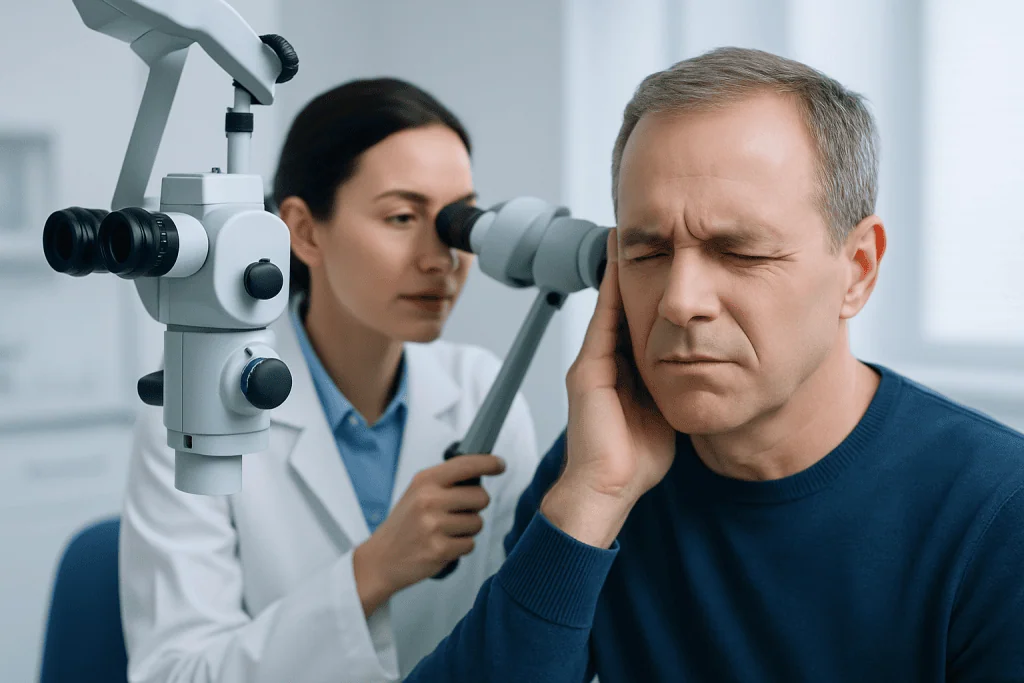
Diagnosis usually starts with a symptom review and ear examination. A doctor uses an otoscope to look into the ear canal and inspect the eardrum for a visible tear, inflammation, fluid, or signs of infection. This examination often provides the key answer quickly and painlessly.
If hearing seems affected, a hearing test may be recommended. Audiometry can help measure the degree of hearing loss and whether it is likely due to the eardrum alone or to deeper structures in the middle or inner ear. In some cases, tympanometry or microscope-assisted examination helps evaluate how well the eardrum moves and whether fluid is present.
Further testing is not needed for every patient, but it may be considered when symptoms are severe, the injury followed significant trauma, or dizziness suggests inner ear involvement. If there is concern about chronic ear disease, an ENT specialist may look for related conditions and discuss options for ear surgery if the perforation does not heal.
Treatment options and expected healing
Treatment depends on the size of the perforation, the cause, and whether infection is present. Many small tears heal on their own over several weeks. In these cases, treatment may focus on keeping the ear dry, controlling discomfort, and arranging follow-up to confirm closure.
If bacterial infection is suspected, a doctor may prescribe antibiotic ear drops or oral antibiotics, depending on the situation and the condition of the eardrum. Not all ear drops are appropriate when the eardrum is perforated, so medicines should be used only as directed by a qualified clinician. Pain relief may also be recommended.
When a perforation remains open, an ENT specialist may place a paper patch or similar office-based patch to encourage healing. Larger or persistent tears, especially those linked to repeated infection or hearing loss, may require a surgical repair called tympanoplasty. In selected cases, evaluation may be part of broader ENT surgery planning if other middle ear issues are also present.
The outlook is often good. Many people recover normal or near-normal hearing once the membrane heals. Recovery can take longer if there is ongoing infection, repeated water exposure, smoking, or injury to nearby middle ear bones or the inner ear.
Self-care, healing tips, and what to avoid
Self-care during healing is mainly about protecting the ear. Keeping the ear dry is especially important because water entering through the tear can trigger or prolong infection. During bathing or showering, some people are advised to use a protective barrier recommended by their doctor. Swimming is usually avoided until healing is confirmed.
It is also important not to put anything into the ear canal, including cotton swabs, oils, or home remedies, unless a clinician specifically recommends them. Forceful nose blowing can increase pressure in the middle ear and may worsen symptoms, so gentle nose care is preferable when congested.
Helpful self-care steps include:
- Keep the affected ear dry
- Avoid swimming until cleared by a doctor
- Do not insert cotton swabs or other objects into the ear
- Take prescribed medicines exactly as directed
- Avoid smoking and secondhand smoke when possible
- Attend follow-up visits to confirm the eardrum has healed
Prevention focuses on reducing future injury and infection. Managing colds and allergies, protecting the ears from loud noise, equalizing pressure carefully during flights, and treating recurrent ear infections promptly can all help lower risk. People with repeated perforations may need assessment for underlying hearing loss or chronic middle ear disease.
When to seek medical care
Medical evaluation is recommended if there is sudden hearing loss, persistent ear pain, drainage from the ear, dizziness, or symptoms after a blow to the head or ear. Children with ear drainage, fever, or ongoing discomfort should also be assessed. Prompt evaluation helps identify infection, confirm the diagnosis, and protect hearing.
Urgent care is particularly important if symptoms are severe, if there is marked imbalance, or if facial weakness occurs. Heavy bleeding, serious trauma, or rapidly worsening hearing should not be monitored at home. While many perforations heal well, these features can suggest a more complex injury.
If symptoms do not improve or the perforation does not close as expected, an ENT specialist may discuss further management. Acibadem International’s multidisciplinary specialists in JCI-accredited hospitals diagnose and treat ear conditions for international patients, including assessment of persistent eardrum perforations and hearing-related concerns.
Frequently asked questions
Can a ruptured perforated eardrum heal on its own?
Yes. Many small eardrum perforations heal naturally over days to weeks, especially if the ear is kept dry and protected from further injury. A doctor should still confirm the diagnosis and check that healing is progressing normally.
How long does it take a perforated eardrum to heal?
Healing time varies depending on the size of the tear and its cause. Small perforations may close within a few weeks, while larger or infected tears can take longer and sometimes need a patch or surgery.
Is hearing loss from a perforated eardrum permanent?
Not usually. Hearing often improves once the eardrum heals, especially if the inner ear and middle ear bones are unaffected. Persistent hearing loss should be evaluated because it can suggest additional injury or ongoing middle ear disease.
Should the ear be kept dry after an eardrum rupture?
Yes. Keeping the ear dry helps reduce the chance of infection and supports healing. A clinician can advise how to protect the ear during bathing and when it is safe to return to swimming.
Can cotton swabs cause a ruptured eardrum?
Yes, they can. Inserting cotton swabs or other objects into the ear canal may injure the eardrum directly and can also push wax deeper into the ear. The ear generally does not need deep cleaning at home.
When should someone see a doctor for a suspected perforated eardrum?
A doctor should be seen if there is ear drainage, noticeable hearing loss, dizziness, fever, or persistent pain. Medical care is especially important after trauma, loud blast exposure, or if symptoms are severe or worsening.
This article is for general information only and is not a substitute for professional medical advice. Please consult a qualified doctor about your individual situation.
Explore treatments in Turkey — costs, top hospitals & a free quote
JCI-accredited · board-certified surgeons · reply within 24h
Add us as a Preferred Source to see more of our trusted health content across Google Search, AI Overviews and Discover.

More from the Health Library

Pitted Keratolysis: An Evidence-Based Guide for Patients

Boostrix: What Patients Need to Know

Choking: What Patients Need to Know

Hot Feet — Explained by Medical Evidence, Not Myths

Third Spacing: What Patients Need to Know