Sacroiliac Joint Pain: How It Is Diagnosed and Treated

The sacroiliac joints connect the spine to the pelvis and can be a source of lower back and buttock pain. Symptoms may mimic sciatica, hip problems, or other causes of low back pain, so diagnosis can take time.
Key Takeaways
- The sacroiliac joints connect the spine to the pelvis and can be a source of lower back and buttock pain.
- Symptoms may mimic sciatica, hip problems, or other causes of low back pain, so diagnosis can take time.
- Doctors usually diagnose sacroiliac joint pain using medical history, physical exam maneuvers, and sometimes imaging or diagnostic injections.
- Treatment often starts with activity changes, physical therapy, pain relief measures, and exercises to improve pelvic stability.
- Some people benefit from image-guided injections or other procedures when symptoms do not improve with conservative care.
- Medical evaluation is important if pain is severe, persistent, follows trauma, or occurs with fever, weakness, or bowel or bladder changes.
Sacroiliac joint pain is a common cause of pain in the lower back, buttock, or upper leg. Careful history, physical examination, and selected tests help confirm the diagnosis and guide treatment.
Overview
The sacroiliac joints, often called the SI joints, are located where the lower spine meets the pelvis. There is one joint on each side. These joints help transfer weight and force between the upper body and the legs, especially during walking, standing, climbing, and turning. Although they move only slightly, they play an important role in stability and shock absorption.
Sacroiliac joint pain happens when one or both of these joints become irritated, inflamed, stiff, or unusually mobile. The pain is often felt in the lower back, buttock, or back of the hip, and it may sometimes spread into the groin or thigh. Because the symptoms can overlap with other conditions such as sciatica or hip-related pain, it can be difficult to recognize without a proper assessment.
This condition is sometimes described as sacroiliac joint dysfunction. In practical terms, this means the SI joint is thought to be a significant source of pain, whether from inflammation, mechanical strain, degeneration, pregnancy-related changes, or stress after injury. A careful diagnosis is important because the most helpful treatment depends on the true cause of the pain.
Symptoms
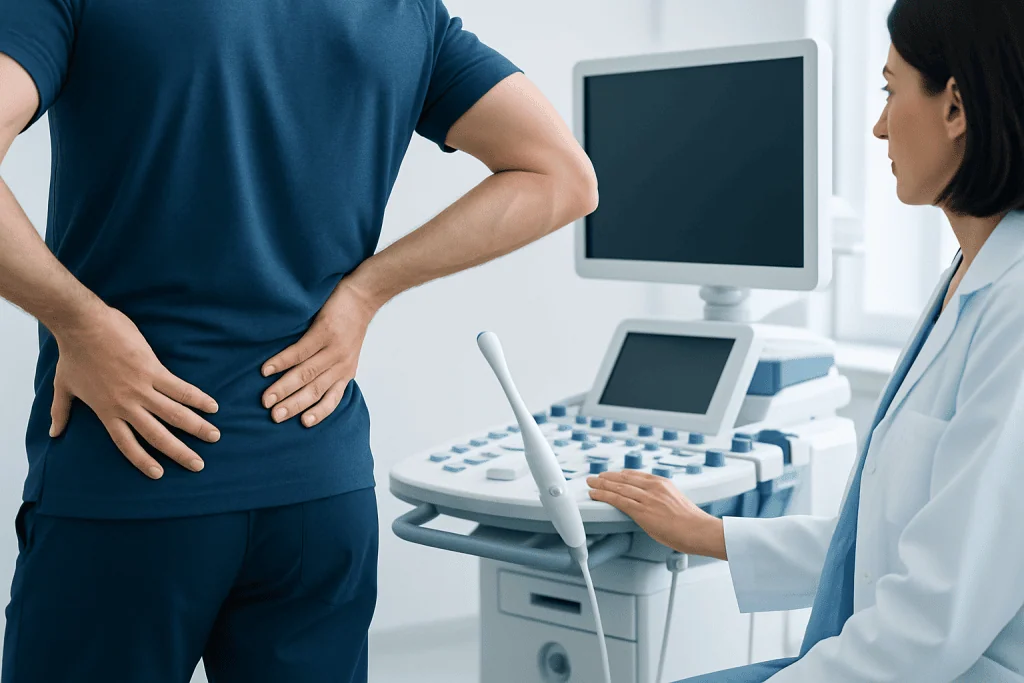
The most common symptom is pain in the lower back or one buttock, though some people feel pain on both sides. The discomfort may be dull and aching, sharp with certain movements, or worse after standing for a long time, climbing stairs, turning in bed, or getting up from a chair. Sitting for long periods may also aggravate symptoms in some people.
Pain from the SI joint can spread to nearby areas. It may radiate into the groin, outer hip, upper thigh, or occasionally down the leg, which is one reason it can be confused with nerve-related back pain. Unlike classic nerve compression, SI joint pain usually does not follow a clear nerve pattern all the way to the foot, though overlap can occur.
Some people describe a feeling of pelvic instability, stiffness, or discomfort when putting more weight on one leg. Symptoms may begin gradually or after a specific event such as lifting, twisting, a fall, running, or pregnancy and childbirth. The severity can vary from mild but persistent discomfort to pain that noticeably limits daily activities.
- Lower back pain near one side of the spine
- Buttock or posterior hip pain
- Pain that worsens with standing, walking, stairs, or transitions
- Discomfort when turning in bed or standing on one leg
- Pain that may spread to the groin or upper thigh
Causes and Risk Factors

Sacroiliac joint pain can develop for several reasons. In some cases, the joint becomes inflamed after strain or repetitive stress. In others, age-related wear and tear changes the way the joint moves. Pain may also occur when the supporting ligaments or surrounding muscles are overloaded, leading to poor force transfer through the pelvis.
Pregnancy is a well-known risk factor because hormones can loosen ligaments, and the growing uterus changes posture and load distribution. After childbirth, some people continue to have pelvic or SI-related pain for a period of time. Previous injury, leg length differences, altered walking patterns, and weak core or hip muscles can also contribute.
Inflammatory arthritis is another possible cause. Conditions such as ankylosing spondylitis and related disorders may affect the SI joints and can cause pain and morning stiffness, especially in younger adults. In other people, SI joint pain may occur along with other spine disorders such as a herniated disc or general lower back strain, which can make diagnosis more complex.
- Repetitive lifting, twisting, or uneven loading
- Pregnancy and postpartum biomechanical changes
- Trauma such as a fall or motor vehicle accident
- Arthritis, including inflammatory or degenerative joint disease
- Weakness or imbalance in the core, gluteal, or pelvic muscles
How Sacroiliac Joint Pain Is Diagnosed
Diagnosis usually begins with a detailed conversation about symptoms, daily activities, prior injuries, and medical history. The doctor often asks where the pain is felt, what makes it worse, whether it spreads down the leg, and whether there are signs of nerve irritation, morning stiffness, fever, or recent trauma. This history helps narrow the possible causes.
Physical examination is especially important. The clinician checks posture, gait, hip movement, lower back mobility, muscle strength, and areas of tenderness. Several specific maneuvers that gently stress the SI joint may be used. No single test is perfect, but when several provocation tests reproduce familiar pain, suspicion for SI joint involvement becomes stronger.
Imaging may be recommended to rule out other causes or look for structural changes. X-rays can show some arthritic or inflammatory changes, while MRI may be useful if inflammation, stress injury, or another spinal condition is suspected. In selected cases, CT can show bony detail. However, imaging alone does not always prove that the SI joint is the source of pain.
When the diagnosis remains uncertain, a doctor may consider an image-guided diagnostic injection. In this procedure, a local anesthetic is placed into the SI joint under guidance. If pain clearly improves for a short time, that supports the SI joint as a major pain source. Depending on the overall picture, some patients may also need evaluation with MRI scanning or CT scanning to clarify the diagnosis.
Treatment Options
Treatment usually starts with conservative care. Many people improve with a combination of temporary activity modification, heat or ice, gentle mobility work, and medication recommended by a doctor. Nonsteroidal anti-inflammatory drugs may help some patients, but they are not suitable for everyone, especially people with certain stomach, kidney, or heart conditions. Care is individualized based on the cause and the person’s general health.
Physical therapy is a main part of treatment. Exercises often focus on core strength, gluteal muscle activation, hip mobility, posture, and movement patterns that reduce strain across the pelvis. A therapist may also teach strategies for getting in and out of bed, climbing stairs, lifting safely, and returning to activity gradually. For some people, a pelvic or SI support belt may provide short-term relief, particularly during pregnancy or postpartum recovery.
If symptoms continue, image-guided injections may be considered. A corticosteroid injection can help reduce inflammation and may provide temporary pain relief that makes rehabilitation easier. In selected chronic cases, physicians may discuss other procedures such as radiofrequency ablation to reduce pain from nearby nerves. Surgery to fuse the SI joint is generally reserved for carefully selected patients whose symptoms remain significant despite prolonged non-surgical treatment.
When other spinal conditions are contributing, treatment may need to address them as well. For example, some patients with overlapping low back problems may benefit from broader rehabilitation or procedures related to spine surgery evaluation, though surgery is not the usual treatment for isolated SI joint pain. The best plan is based on the likely pain source, symptom duration, and how much the condition affects daily life.
Prevention and Self-care
Not all cases can be prevented, but healthy movement habits can lower strain on the sacroiliac joints. Regular exercise that builds core, hip, and gluteal strength helps support the pelvis. Flexibility work for the hips and surrounding muscles may also improve mechanics. People who sit for long periods may benefit from changing positions often and avoiding prolonged postures that trigger pain.
Body mechanics matter during daily activities. Lifting with the legs, avoiding sudden twisting under load, and distributing weight evenly can reduce stress on the lower back and pelvis. Supportive footwear and gradual increases in exercise intensity may help people who walk or run regularly. During and after pregnancy, guided exercise and pelvic support strategies can be especially useful.
At home, short periods of rest may help during flare-ups, but prolonged bed rest is usually not recommended because it can increase stiffness and weakness. Gentle stretching, heat, and a gradual return to normal movement are often more helpful. If pain keeps returning, a medical assessment is worthwhile to identify the underlying cause and prevent repeated aggravation.
When to See a Doctor
It is sensible to seek medical advice if lower back or buttock pain lasts more than a few weeks, keeps coming back, or limits work, sleep, exercise, or daily tasks. A clinician can help determine whether the SI joint is involved or whether another condition is more likely. Early assessment may prevent prolonged discomfort and guide more effective treatment.
Urgent medical attention is important if pain starts after a major fall or accident, or if it is accompanied by fever, unexplained weight loss, severe night pain, numbness, worsening weakness, or changes in bowel or bladder control. These features may suggest a different or more serious problem that needs prompt care.
For patients who need specialist evaluation, multidisciplinary teams can coordinate diagnosis, rehabilitation, pain management, and imaging. Acibadem International’s multidisciplinary specialists and JCI-accredited hospitals diagnose and treat sacroiliac joint pain for international patients when more advanced evaluation is needed.
Frequently asked questions
Can sacroiliac joint pain feel like sciatica?
Yes. Sacroiliac joint pain can spread into the buttock, hip, groin, or upper leg, which may resemble sciatica. A careful examination helps distinguish SI joint pain from nerve compression and other spine problems.
Will sacroiliac joint pain show up on an MRI or X-ray?
Sometimes, but not always. Imaging can show inflammation, arthritis, injury, or other conditions, yet many people with SI joint pain have scans that are not definitive. Doctors often combine imaging with the history, examination, and sometimes a diagnostic injection.
How long does sacroiliac joint pain take to improve?
Recovery time varies depending on the cause, severity, and how long symptoms have been present. Some people improve within weeks with exercise and activity changes, while others need longer rehabilitation or additional treatments. Following a structured plan is often more helpful than resting completely.
Is walking good for sacroiliac joint pain?
Gentle walking is often helpful because it keeps the body moving and may reduce stiffness. However, if walking clearly worsens pain, the distance and pace may need to be adjusted. A doctor or physical therapist can suggest the right activity level for the individual.
Can pregnancy cause sacroiliac joint pain?
Yes. Pregnancy can increase stress on the SI joints because of hormonal ligament relaxation, posture changes, and added load through the pelvis. Many people improve after delivery, but some need exercises, support belts, or rehabilitation during the postpartum period.
When are injections used for sacroiliac joint pain?
Injections may be used when symptoms do not improve enough with conservative treatment or when the diagnosis is uncertain. A diagnostic injection can help confirm the SI joint as the pain source, and a therapeutic injection may reduce inflammation and allow better participation in rehabilitation.
References
- National Institute of Arthritis and Musculoskeletal and Skin Diseases
- American Academy of Orthopaedic Surgeons
- National Health Service
- Mayo Clinic
This article is for general information only and is not a substitute for professional medical advice. Please consult a qualified doctor about your individual situation.
Joint and spine care in Turkey — expert assessment & treatment
JCI-accredited · board-certified surgeons · reply within 24h
Add us as a Preferred Source to see more of our trusted health content across Google Search, AI Overviews and Discover.