Salmon DNA Facial — Explained by Medical Evidence, Not Myths

A salmon DNA facial does not place whole salmon DNA into the skin; it typically uses purified polynucleotides or PDRN derived from fish DNA. These products are usually injected as skin boosters, although some clinics use the term for topical treatments combined with microneedling.
Key Takeaways
- A salmon DNA facial does not place whole salmon DNA into the skin; it typically uses purified polynucleotides or PDRN derived from fish DNA.
- These products are usually injected as skin boosters, although some clinics use the term for topical treatments combined with microneedling.
- Research suggests possible benefits for skin repair and hydration, but evidence for anti-ageing results is not yet strong or standardized.
- Expected effects are usually subtle and gradual rather than equivalent to a facelift, filler or laser resurfacing treatment.
- Injection-related risks include temporary redness, swelling, bruising, infection and, rarely, more serious complications.
- Product approval, product quality and permitted cosmetic uses differ between countries.
A salmon DNA facial is a cosmetic treatment that uses purified DNA fragments, usually called polynucleotides or PDRN, in an effort to improve skin hydration, texture and recovery. Early research is promising in some settings, but results vary, high-quality evidence for facial rejuvenation is still limited, and treatment should be performed only by a qualified medical professional.
What Is a Salmon DNA Facial?
A salmon DNA facial is a non-surgical cosmetic treatment that uses purified fragments of DNA derived from salmon or trout. These fragments are generally known as polynucleotides (PN) or polydeoxyribonucleotide (PDRN). They are processed and purified for medical or aesthetic use; a treatment does not involve applying raw fish material or whole salmon DNA directly to the face.
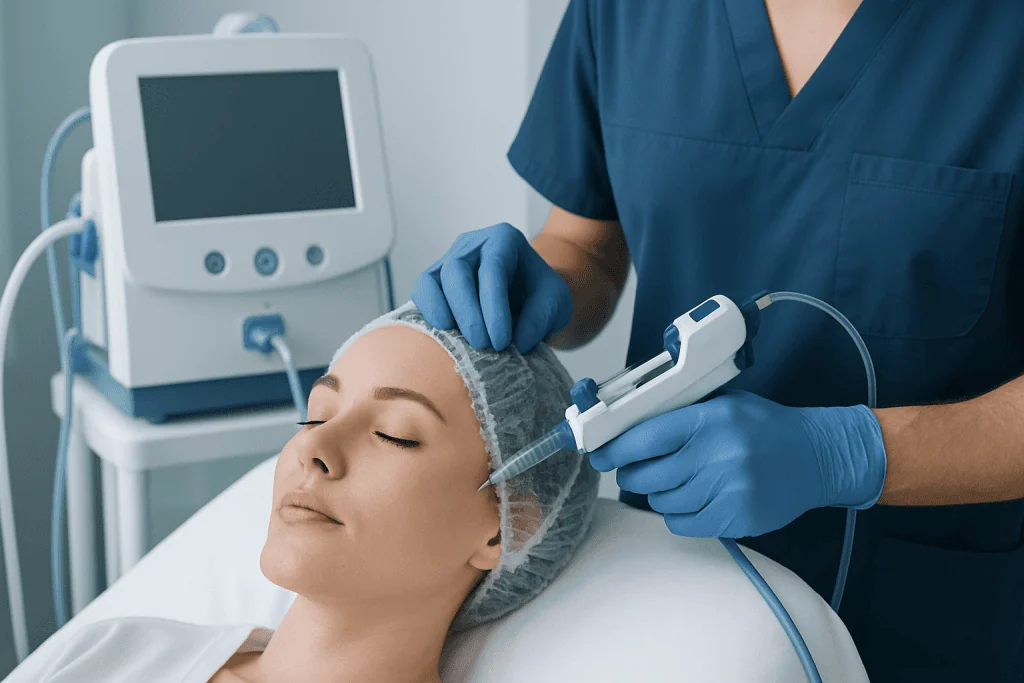
In many clinics, the term describes small injections placed into the superficial layers of facial skin. The products are sometimes called skin boosters because the aim is to improve hydration, elasticity and the appearance of tired or uneven skin. In other settings, “salmon DNA facial” may refer to a topical product used after microneedling or alongside another facial procedure. The precise method matters because expected results and safety considerations are different.
Polynucleotides have been studied for their potential role in tissue repair. In laboratory and early clinical research, they may support processes involved in wound healing, moisture retention and skin regeneration. However, these biological findings do not automatically prove that every product or treatment protocol produces visible anti-ageing benefits for every person.
What the Medical Evidence Does and Does Not Show
The scientific rationale for polynucleotide treatments is based on their possible effects on cells involved in repair, inflammation and the skin’s extracellular matrix. Small clinical studies and research involving wound healing, scars and skin quality have reported improvements in hydration, fine texture and recovery after certain procedures. Some patients may notice skin that appears smoother, more hydrated or more luminous after a treatment course.
However, the evidence specifically evaluating salmon DNA facials for cosmetic facial rejuvenation remains limited. Available studies are often small, use different products and injection techniques, and assess outcomes over relatively short periods. This makes it difficult to compare results or determine the ideal candidate, dose, treatment schedule or duration of benefit.
Claims that polynucleotides can “reverse ageing,” replace lost facial volume, permanently rebuild collagen, or provide the same result as surgery are not supported by strong evidence. They are also not a substitute for treatments that address specific concerns such as marked volume loss, deep wrinkles, significant pigmentation or skin cancer screening. A clinician can help match the treatment to the person’s main goal and skin condition.
- Possible benefits: hydration, improved skin texture, subtle radiance and support during recovery.
- Less certain outcomes: major wrinkle reduction, lifting, long-lasting volume restoration and dramatic scar correction.
- Important limitation: results depend on the product, technique, skin health, sun exposure and individual healing response.
How the Treatment Is Usually Performed

Before treatment, a qualified clinician should review the person’s medical history, current medicines, skin concerns, previous cosmetic procedures and history of allergies. The skin is examined to identify active acne, infection, dermatitis, cold sores or other conditions that may need treatment first. Photographs may be used to document the starting point and assess change over time.
For injectable treatments, the face is cleaned and a topical numbing cream may be offered. The clinician uses a fine needle or cannula to place small amounts of product into selected superficial skin layers. Depending on the plan, treatment may focus on the cheeks, under-eye area, forehead, neck, hands or other areas. Appointments are usually brief, but the full consultation and preparation can take longer.
Most protocols involve more than one session, followed by maintenance treatment if desired. There is no universally accepted schedule because available products and clinical practices differ. People should be cautious about packages that promise a fixed outcome or claim that one technique is appropriate for everyone.
Topical products used during a facial are not the same as injectable polynucleotides. Intact skin limits how deeply many topical ingredients penetrate. Microneedling may increase delivery into the skin, but it also creates temporary channels and should be performed with appropriate sterile technique and aftercare.
Who May Consider It and Who Should Delay Treatment
A salmon DNA facial may be considered by adults seeking a subtle improvement in skin hydration or texture, particularly when they understand that results can be gradual and variable. It may also be discussed as part of a broader, medically supervised skin-care plan that includes sun protection, appropriate topical products and treatment of underlying conditions such as acne or rosacea.
It may not be the best first choice for every concern. Deep folds, substantial facial volume loss and sagging skin often require a different approach. People with persistent acne, eczema, pigmentation changes or redness may benefit more from diagnosis and treatment of the underlying skin problem before considering cosmetic procedures.
Treatment should usually be postponed when there is an active skin infection, open wound, severe flare of an inflammatory skin condition, or active cold sore in the treatment area. A clinician should also assess people who are pregnant or breastfeeding, have a bleeding disorder, take medicines that affect bleeding, have an autoimmune condition, have a history of severe allergies, or have known sensitivity to fish or seafood. Fish allergy does not always mean a reaction will occur, but it is an important reason for careful medical assessment and product review.
Side Effects, Safety and Product Regulation
Common short-term effects after injections include pinpoint bleeding, redness, tenderness, mild swelling, itching and bruising. Small raised areas at injection points can occur temporarily. These effects often settle over several days, although bruising may last longer. Following the clinician’s aftercare instructions can help protect the skin while it heals.
As with any injectable procedure, less common risks include infection, prolonged inflammation, allergy, uneven results, persistent lumps or pigment changes. Improper injection technique can increase risk. Rare but serious complications, including damage to blood vessels, are possible with facial injections in general and require urgent assessment. Treatment should therefore be performed in a clinical setting by an appropriately trained healthcare professional who understands facial anatomy and can manage complications.
Regulation is not the same in every country. A product marketed as a skin booster in one region may have different authorization, quality controls or permitted uses elsewhere. In particular, patients should not assume that a product is approved for cosmetic injection simply because it is widely promoted online or offered in another country. Asking for the product name, its intended use and the clinician’s qualifications supports informed decision-making.
It is safest to avoid unverified products, at-home injection devices and treatments offered in non-medical environments. Low cost, social-media popularity or celebrity endorsement should not be used as a measure of safety or effectiveness.
Preparing for Treatment and Caring for Skin Afterwards
During consultation, patients should disclose all medicines, supplements and previous reactions to injectables or anaesthetics. The clinician may advise whether any medicines that can increase bruising need special consideration; people should not stop prescribed medicines without advice from the doctor who manages them. It is also useful to discuss prior filler, thread, laser or surgery treatments, as these can affect planning.
After an injectable salmon DNA facial, gentle skin care is generally recommended. Patients may be advised to avoid touching the area unnecessarily, applying makeup immediately, strenuous exercise, excessive heat, saunas, alcohol and intense sun exposure for a short time. Specific guidance differs by treatment and by the person’s skin, so the treating clinician’s instructions should take priority.
Daily sun protection remains one of the most reliable ways to support skin health and reduce photoageing. A broad-spectrum sunscreen, protective clothing, smoking avoidance, adequate sleep and a suitable moisturizing routine can make a meaningful difference to skin quality over time. Cosmetic injections cannot fully compensate for ongoing ultraviolet exposure or untreated skin disease.
Acibadem International’s multidisciplinary specialists and JCI-accredited hospitals can assess skin concerns and provide medically supervised aesthetic care for international patients when appropriate.
When to Seek Medical Care
Patients should contact the treating clinic promptly if redness, pain, swelling or warmth becomes worse rather than improving, or if there is pus, fever, a spreading rash or other signs of infection. They should also seek advice for persistent lumps, marked discoloration, severe itching or a reaction that seems unusual for them.
Urgent medical care is needed for symptoms of a serious allergic reaction, such as difficulty breathing, swelling of the lips, tongue or throat, widespread hives, faintness or severe dizziness. Sudden severe pain, blanching or dusky discoloration of the skin, visual symptoms, or severe headache after a facial injection should also be treated as urgent concerns.
People considering treatment should arrange a medical consultation rather than relying on online images or informal advice. A skin specialist can explain whether polynucleotides are reasonable for the individual’s goals, discuss alternatives and ensure that any persistent skin change is not mistaken for a purely cosmetic concern.
Frequently asked questions
Is a salmon DNA facial really made from salmon?
The term usually refers to purified DNA fragments obtained from salmon or trout and processed for use in specific medical or aesthetic products. It does not mean that raw salmon material is injected into the skin. Product composition and purification standards can differ, so patients should ask their clinician which product is being used.
Does a salmon DNA facial work?
Some early studies and clinical experience suggest polynucleotides may improve hydration, texture and skin recovery in selected patients. However, evidence for cosmetic facial rejuvenation is still limited and treatment methods vary widely. Results should be expected to be subtle and individual rather than guaranteed.
How long do salmon DNA facial results last?
The duration of visible changes varies according to the product, injection method, number of sessions, skin condition and lifestyle factors. Some people choose a series of treatments followed by maintenance, but there is no universal schedule supported by strong evidence. A qualified clinician can give a realistic plan based on the specific product and treatment goal.
Is a salmon DNA facial the same as dermal filler?
No. Dermal fillers are generally used to restore volume, contour areas of the face or soften particular folds. Polynucleotide treatments are usually intended as skin-quality treatments and do not provide the same lifting or volumizing effect as filler.
Can someone with a fish allergy have a salmon DNA facial?
A fish or seafood allergy should be discussed with a doctor before any treatment derived from fish sources is considered. Although purified products may differ from food allergens, an allergic history requires individual assessment and review of the product information. The clinician may recommend avoiding the procedure or selecting an alternative.
Can salmon DNA facial treatments be combined with other procedures?
They may sometimes be combined with other skin treatments, but the sequence and timing should be planned by a qualified clinician. Combining injections, microneedling, chemical peels, lasers or fillers too closely together can increase irritation or complicate recovery. A personalized plan helps avoid unnecessary procedures and supports safer results.
References
- U.S. Food and Drug Administration
- American Academy of Dermatology Association
- American Society for Dermatologic Surgery
- National Center for Biotechnology Information
- World Health Organization
This article is for general information only and is not a substitute for professional medical advice. Please consult a qualified doctor about your individual situation.
Explore treatments in Turkey — costs, top hospitals & a free quote
JCI-accredited · board-certified surgeons · reply within 24h
Add us as a Preferred Source to see more of our trusted health content across Google Search, AI Overviews and Discover.