Sarcoidosis symptoms: Common Causes, Warning Signs, and When to Worry

Sarcoidosis symptoms vary because the condition can affect several organs, especially the lungs and lymph nodes. Common symptoms include dry cough, shortness of breath, fatigue, fever, swollen lymph nodes, and skin or eye changes.
Key Takeaways
- Sarcoidosis symptoms vary because the condition can affect several organs, especially the lungs and lymph nodes.
- Common symptoms include dry cough, shortness of breath, fatigue, fever, swollen lymph nodes, and skin or eye changes.
- Some people have few or no symptoms, while others develop more serious problems involving the heart, nerves, or vision.
- Diagnosis usually combines a medical history, examination, imaging, and tests to confirm inflammation and exclude other conditions.
- Treatment depends on the organs involved and symptom severity; many cases are monitored, while others need medicines to control inflammation.
- Urgent assessment is important for chest pain, fainting, severe breathing difficulty, sudden vision changes, or neurologic symptoms.
Sarcoidosis symptoms commonly involve the lungs, causing a dry cough, shortness of breath, chest discomfort, and fatigue, but the condition can also affect the skin, eyes, lymph nodes, heart, or nervous system. Because symptoms vary widely and may be mild at first, medical evaluation is important when they persist, worsen, or involve breathing, vision, or the heart.
Overview: What sarcoidosis symptoms usually mean
Sarcoidosis symptoms happen when clusters of inflammatory cells, called granulomas, form in different parts of the body. The lungs are most often affected, so many people first notice a dry cough, shortness of breath, chest tightness, or unusual tiredness. However, sarcoidosis is a multisystem condition, which means symptoms can also come from the skin, eyes, lymph nodes, heart, joints, liver, or nervous system.
One reason sarcoidosis can be confusing is that symptoms differ greatly from person to person. Some people feel well and only learn about it after an abnormal chest X-ray. Others develop symptoms slowly over weeks or months, while a smaller group experience a more sudden illness with fever, joint pain, and tender skin nodules.
In many cases, symptoms improve over time, and some people recover without long-term treatment. Still, persistent or organ-threatening inflammation needs careful follow-up because untreated disease can affect breathing, vision, heart rhythm, or nerve function. A clinician may also evaluate for related lung conditions, including interstitial lung disease, when symptoms and imaging overlap.
Common symptoms by organ and body system

The most common sarcoidosis symptoms are linked to the chest. These include a dry cough, shortness of breath during activity, wheezing in some cases, and chest discomfort. Many people also report generalized symptoms such as fatigue, low-grade fever, night sweats, weight loss, or a reduced ability to exercise.
Outside the lungs, the skin and eyes are frequently involved. Skin symptoms may include tender red bumps on the shins, raised or discolored patches, or lumps under old scars or tattoos. Eye symptoms can include redness, pain, blurred vision, light sensitivity, or a feeling of dryness. Because eye inflammation can sometimes progress quietly, even mild symptoms deserve medical attention.
Lymph nodes may become enlarged, especially in the chest, neck, or under the arms. Joint pain, muscle aches, and ankle swelling can occur, sometimes as part of an acute presentation. Less commonly, sarcoidosis affects the heart or nervous system, leading to palpitations, fainting, unexplained dizziness, facial weakness, numbness, severe headaches, or seizures.
- Lung symptoms: dry cough, breathlessness, chest tightness
- General symptoms: fatigue, fever, night sweats, weight loss
- Skin symptoms: tender red nodules, plaques, scar changes
- Eye symptoms: redness, pain, blurred vision, light sensitivity
- Heart or nerve symptoms: palpitations, fainting, weakness, numbness
What causes sarcoidosis and who is at risk
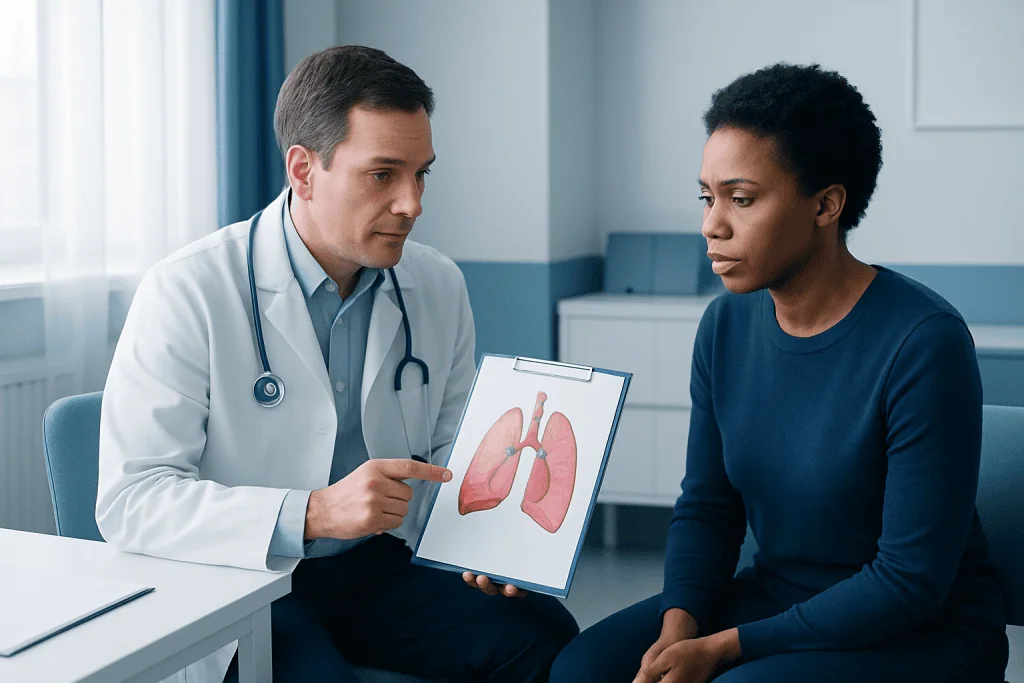
The exact cause of sarcoidosis is not fully understood. Experts believe it results from an exaggerated immune response in genetically susceptible people after exposure to one or more environmental triggers. These triggers may include infectious agents, inhaled particles, or workplace exposures, but no single cause explains all cases.
Sarcoidosis is not considered contagious, and it is not usually passed directly from person to person. Family history may increase risk in some people, suggesting a genetic component. Age, sex, ethnic background, and geography can also influence who is more likely to develop the disease, although sarcoidosis can occur in any adult and occasionally in children.
Risk factors do not guarantee that someone will become ill, and many people with sarcoidosis have no clear trigger. What matters most is recognizing a pattern of symptoms that persists and seeking assessment rather than trying to self-diagnose. Other inflammatory or infectious conditions can look similar, so a structured evaluation is important.
How doctors diagnose sarcoidosis
There is no single test that diagnoses sarcoidosis on its own. Doctors usually combine a detailed symptom history, physical examination, chest imaging, and laboratory tests with other studies based on the organs involved. The goal is not only to detect granulomatous inflammation but also to rule out conditions that can mimic sarcoidosis, such as infections, autoimmune disease, or other lung disorders.
Chest X-ray and computed tomography can show enlarged lymph nodes or lung changes. Pulmonary function tests help assess how well the lungs are working, especially when shortness of breath is a concern. When the diagnosis remains uncertain, a biopsy of affected tissue may be recommended to confirm granulomas and help exclude other causes. In some patients, bronchoscopy is used to collect samples from the airways or lungs.
Additional tests may include blood work, eye examination, electrocardiogram, echocardiography, or MRI if heart or nervous system involvement is suspected. This tailored approach matters because sarcoidosis can affect multiple organs in different ways. If advanced imaging is needed, MRI may help evaluate inflammation in the heart, brain, or other tissues.
Treatment options and what recovery can look like
Treatment depends on how severe the symptoms are, which organs are affected, and whether there is a risk of lasting damage. Some people with mild sarcoidosis need only regular monitoring because the inflammation may settle on its own. Follow-up often includes symptom review, lung function testing, imaging, and checks for eye or heart involvement when relevant.
When treatment is needed, doctors commonly use anti-inflammatory medicines such as corticosteroids. If symptoms are prolonged, recur, or involve important organs, other immune-modulating medicines may be considered to reduce inflammation and limit steroid exposure. Oxygen support, pulmonary rehabilitation, or symptom-directed care may also be helpful for some people with breathing limitation.
If inflammation has led to scarring or more complex lung disease, specialist respiratory care becomes especially important. Some patients are also evaluated in relation to pulmonary fibrosis if imaging shows significant long-term lung changes. For international patients who need coordinated evaluation, Acibadem International’s multidisciplinary specialists and JCI-accredited hospitals diagnose and treat sarcoidosis with organ-specific care planning.
Prevention and self-care for symptom control
There is no known way to fully prevent sarcoidosis because its exact cause remains unclear. Still, self-care can make symptoms easier to manage and may support overall lung and immune health. People with sarcoidosis are generally advised to avoid smoking and secondhand smoke, attend regular follow-up visits, and discuss occupational or environmental exposures with their doctor.
Healthy daily habits can also help. These include staying physically active within comfort, getting enough sleep, eating a balanced diet, and taking prescribed medicines exactly as directed. People using long-term steroids may need monitoring for side effects such as weight gain, high blood sugar, bone loss, or mood changes.
Eye symptoms should never be ignored, even if they seem mild. It is also sensible to seek medical advice before starting supplements or over-the-counter remedies, especially because calcium and vitamin D issues can occur in sarcoidosis. If breathing symptoms are increasing, doctors may arrange tests such as pulmonary function testing to monitor change over time.
When to seek medical care
Medical review is appropriate when sarcoidosis symptoms last more than a few weeks, interfere with daily life, or continue to worsen. A persistent dry cough, unexplained shortness of breath, swollen lymph nodes, skin nodules, eye redness, or unusual fatigue should be discussed with a healthcare professional. Early assessment can help confirm the cause and protect organs that might be affected silently.
Urgent care is important for severe shortness of breath, chest pain, fainting, a racing or irregular heartbeat, sudden vision changes, marked weakness, facial drooping, seizures, or new confusion. These symptoms do not always mean severe sarcoidosis, but they can signal heart, eye, or nervous system involvement and should not be delayed.
People who already have sarcoidosis should also contact their doctor if symptoms return after improving, if treatment side effects become hard to manage, or if they develop signs of infection while taking immune-suppressing medicines. Ongoing communication with a qualified clinician is the safest way to adjust care and decide whether specialist evaluation is needed.
Frequently asked questions
What are the first signs of sarcoidosis?
Early sarcoidosis symptoms often include a dry cough, mild shortness of breath, chest discomfort, fatigue, or swollen lymph nodes. Some people first notice skin changes, eye irritation, or joint pain instead. In others, there may be no obvious symptoms at first.
Can sarcoidosis symptoms come and go?
Yes, symptoms can fluctuate. Some people have periods of improvement followed by flare-ups, while others have steady symptoms or gradual recovery. Regular follow-up helps doctors judge whether the disease is active or settling down.
Is sarcoidosis always a lung disease?
No. Although the lungs are the most commonly affected organ, sarcoidosis can also involve the skin, eyes, lymph nodes, heart, joints, liver, or nervous system. That is why the symptom pattern can vary so much from one person to another.
How serious are sarcoidosis symptoms?
Many cases are mild and improve with monitoring or treatment. However, symptoms affecting breathing, vision, heart rhythm, or neurologic function can be more serious and need prompt evaluation. The overall outlook depends on which organs are involved and how active the inflammation is.
How do doctors confirm that symptoms are caused by sarcoidosis?
Doctors usually use a combination of medical history, examination, chest imaging, blood tests, and organ-specific evaluations. In many cases, a biopsy is needed to confirm granulomas and exclude other possible causes such as infection or another inflammatory disease.
When should someone worry about sarcoidosis symptoms?
Medical attention is important if symptoms are persistent, worsening, or affecting daily activities. Urgent care is needed for severe breathlessness, chest pain, fainting, sudden vision changes, seizures, or new weakness. These can suggest important organ involvement that should be assessed quickly.
References
- National Heart, Lung, and Blood Institute
- American Lung Association
- National Institute of Arthritis and Musculoskeletal and Skin Diseases
- Mayo Clinic
- American Thoracic Society
This article is for general information only and is not a substitute for professional medical advice. Please consult a qualified doctor about your individual situation.
Sarcoidosis in Turkey — costs, top hospitals & a free quote
JCI-accredited · board-certified surgeons · reply within 24h
Add us as a Preferred Source to see more of our trusted health content across Google Search, AI Overviews and Discover.