Schmorl’s Node: What Patients Need to Know

A Schmorl's node occurs when disc material moves into the vertebral endplate and body. Many Schmorl's nodes do not cause symptoms and are discovered by chance on imaging.
Key Takeaways
- A Schmorl's node occurs when disc material moves into the vertebral endplate and body.
- Many Schmorl's nodes do not cause symptoms and are discovered by chance on imaging.
- When symptoms occur, they usually involve localized back pain rather than leg or arm nerve pain.
- Diagnosis often relies on MRI or CT imaging interpreted alongside symptoms and exam findings.
- Treatment depends on whether the finding is painful and may include rest, physical therapy, and pain control.
- New, severe, persistent, or nerve-related symptoms should be assessed by a qualified doctor.
A Schmorl's node is a type of spinal disc herniation in which disc material pushes into the bone of a vertebra rather than outward toward a nerve. Many Schmorl's nodes are found incidentally on imaging and cause no symptoms, but some are linked with back pain and underlying spine changes that deserve evaluation.
What is a Schmorl's node?
A Schmorl’s node is a condition in which part of an intervertebral disc pushes through the endplate, the thin layer between the disc and the vertebral bone, and extends into the vertebra itself. In simple terms, the disc herniates inward into the bone rather than outward into the spinal canal. This is why a Schmorl’s node is different from the more familiar slipped or herniated disc that may press on nerves.
Many people learn they have a Schmorl’s node only after having an X-ray, CT scan, or MRI for another reason. In these cases, the finding may be incidental and may not require specific treatment. However, in some people, especially when the area is inflamed or associated with recent injury or disc degeneration, a Schmorl’s node can contribute to back pain.
Schmorl’s nodes can appear in the thoracic spine or lumbar spine and may affect one or more vertebrae. They are not a disease by themselves, but rather an imaging and structural finding that has to be interpreted in context. A doctor will consider symptoms, examination findings, and imaging together before deciding whether the node is clinically important.
How Schmorl's nodes affect the spine
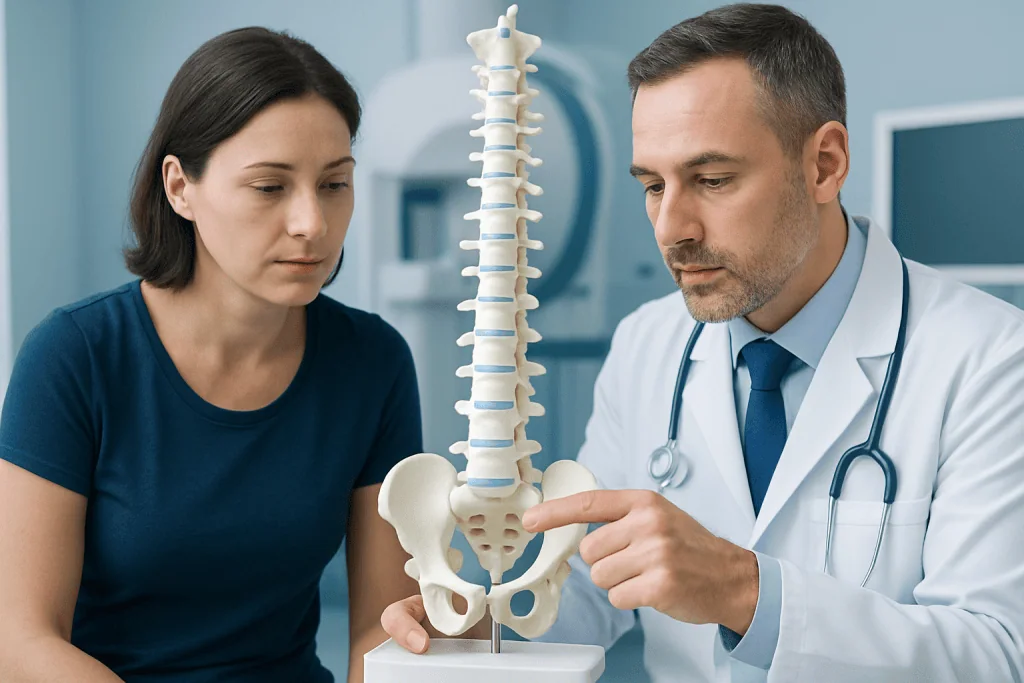
The spine is made of vertebrae stacked with discs between them. These discs act as cushions and help the spine move and absorb force. When the vertebral endplate is weakened or exposed to stress, a portion of the disc may indent or pass into the bone, forming a Schmorl’s node.
This process does not always irritate nearby nerves, which helps explain why some people have no symptoms. If there is active inflammation, bone marrow swelling, or an acute endplate injury, the affected segment may become painful. In other cases, the Schmorl’s node may be part of broader age-related disc wear, alongside disc herniation or other degenerative spine changes.
Doctors also look at whether the node is old and stable or appears recent. An older, well-defined Schmorl’s node may simply represent a past structural change. A newer lesion seen on MRI may look more active and may be more likely to match a patient’s recent back pain.
Symptoms and what patients may notice
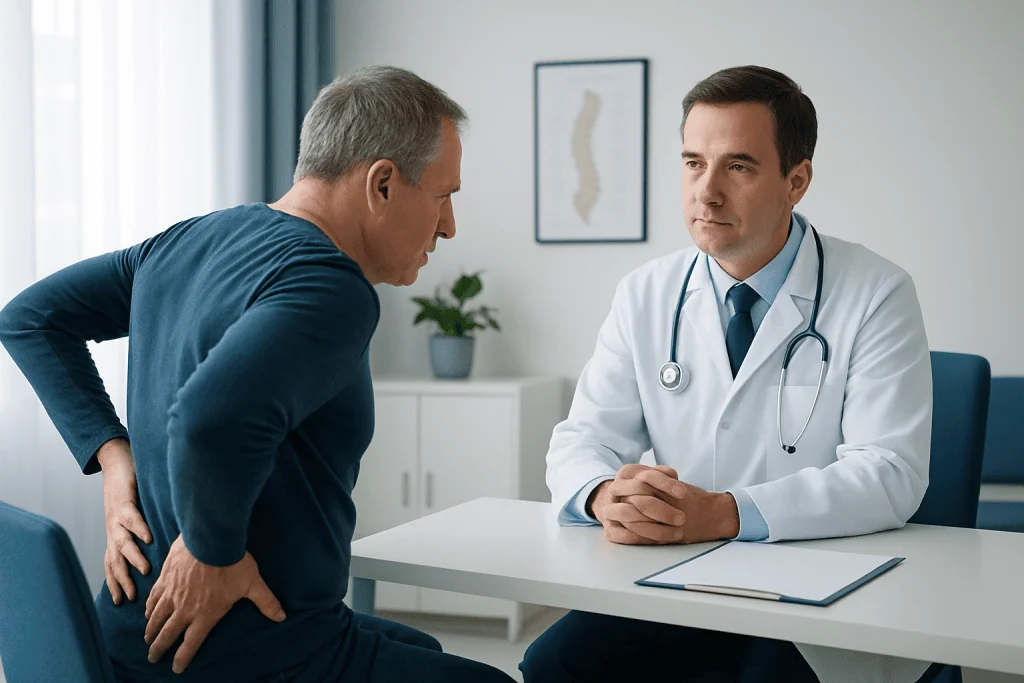
Many Schmorl’s nodes cause no symptoms at all. When symptoms are present, the most common complaint is localized back pain in the area of the affected vertebra, often in the mid-back or lower back. The pain may begin after lifting, twisting, sports activity, or a minor spinal strain, though it can also develop gradually.
People sometimes describe discomfort that worsens with prolonged sitting, bending, or impact activity and improves with rest. The pain is usually mechanical, meaning it changes with movement and posture. Unlike a typical outward disc herniation, a Schmorl’s node is less likely to cause classic sciatica or pain traveling down an arm or leg.
Still, symptoms can overlap with other spinal problems, so it is important not to assume every episode of back pain comes from the Schmorl’s node. A clinician may also check for muscle spasm, reduced flexibility, tenderness over the spine, and signs of conditions such as scoliosis or more common degenerative back problems.
- Localized mid-back or low-back pain
- Pain that worsens with activity or certain movements
- Back stiffness or reduced range of motion
- Tenderness near the affected spinal level
- No symptoms at all in many cases
Causes and risk factors
Schmorl’s nodes are thought to develop when pressure from the disc is directed into a weakened or vulnerable vertebral endplate. This may happen because of normal age-related disc and bone changes, repetitive spinal loading, trauma, or developmental factors that affect the strength of the endplate. In adolescents and young adults, rapid growth or sports-related loading may play a role in some cases.
Other possible contributors include osteoporosis, spinal degeneration, poor bone quality, and conditions that alter the structure of the spine. Some Schmorl’s nodes are associated with Scheuermann-type changes in the thoracic spine, while others appear as part of common wear-and-tear findings in adulthood. In many people, there is no single clear cause.
Risk factors do not mean a person will develop symptoms. Many healthy, active people may have a Schmorl’s node on imaging without pain. What matters most is whether the imaging finding matches the person’s current symptoms and whether there are signs of active inflammation or another treatable spine condition.
How doctors diagnose a Schmorl's node
Diagnosis begins with a medical history and physical examination. The doctor will ask when the pain started, what makes it better or worse, whether there was an injury, and whether any numbness, weakness, fever, or unexplained weight loss is present. These details help separate a benign mechanical cause from conditions that need more urgent evaluation.
Imaging is usually needed to identify a Schmorl’s node. X-rays may show an indentation in the vertebral body, but MRI is often the most helpful test because it can show the disc, vertebral endplates, nearby bone marrow changes, and signs of active inflammation. CT can also define bony anatomy clearly in some cases. If symptoms suggest a broader spinal issue, doctors may assess for related problems such as spinal stenosis.
The key challenge is correlation. A Schmorl’s node seen on MRI does not automatically explain pain. Doctors interpret the scan alongside the location of symptoms, examination findings, and whether the node appears acute or chronic. This careful approach helps avoid overtreatment of an incidental finding.
Treatment options and recovery
Treatment depends on symptoms rather than the imaging finding alone. If a Schmorl’s node is painless and discovered incidentally, no specific treatment may be necessary. When pain is present, initial care is usually conservative and may include temporary activity modification, guided exercise, posture support, and nonprescription or prescription pain-relief strategies recommended by a doctor.
Physical therapy is often helpful, especially when pain is linked to muscle tension, reduced core support, or movement patterns that stress the spine. A personalized rehabilitation plan may focus on flexibility, spinal stabilization, and gradual return to normal activity. In people with persistent pain, specialists may also consider more structured physical therapy and rehabilitation or additional pain-management approaches.
If symptoms continue, a doctor may recommend further evaluation to exclude other pain generators, such as a standard disc problem, fracture, or inflammatory spinal condition. Surgery is rarely needed for a Schmorl’s node itself, but if there is a related structural problem requiring intervention, treatments may overlap with broader spine surgery planning. In selected cases, advanced imaging and expert review help determine whether a targeted procedure is appropriate.
Recovery varies. Some painful Schmorl’s nodes improve over weeks to months with conservative care, while others reflect ongoing degenerative changes that require longer-term spine management. The goal is to reduce pain, restore movement, and address any underlying condition rather than simply treating the scan result.
Self-care, prevention, and when to seek medical care
Although not all Schmorl’s nodes can be prevented, good spinal habits may reduce strain on discs and vertebral endplates. Helpful measures include regular low-impact exercise, strengthening the core and back muscles, maintaining a healthy weight, using safe lifting technique, and avoiding sudden increases in heavy loading. For people with known bone weakness, discussing bone health with a doctor is also important.
At home, many people benefit from short-term relative rest rather than prolonged bed rest, followed by gradual activity as tolerated. Heat or cold, ergonomic adjustments, and a structured home exercise plan can also support recovery. However, self-care should not replace medical advice if pain is severe, persistent, or associated with other symptoms.
Medical care should be sought if back pain follows a significant injury, lasts more than a few weeks, keeps returning, or interferes with sleep and daily life. Prompt assessment is also important for numbness, weakness, balance problems, fever, unexplained weight loss, or changes in bladder or bowel control. These symptoms may point to a problem other than a simple Schmorl’s node.
For patients who need specialist input, Acibadem International’s multidisciplinary spine teams in JCI-accredited hospitals evaluate back pain and related spinal findings for international patients, with access to imaging, rehabilitation, and when necessary orthopedic and traumatology surgery.
Frequently asked questions
Is a Schmorl's node serious?
Usually, a Schmorl's node is not serious on its own. Many are incidental imaging findings that do not cause symptoms. It becomes more important when it is linked with pain, recent injury, inflammation, or other spine problems.
Can a Schmorl's node cause back pain?
Yes, it can, but not always. Pain is more likely when the node is new, inflamed, or associated with endplate injury or surrounding degenerative changes. A doctor will compare symptoms with imaging before deciding whether the node is the likely cause.
What is the difference between a Schmorl's node and a herniated disc?
A Schmorl's node goes vertically into the vertebral bone through the endplate. A typical herniated disc pushes outward and may irritate nearby nerves. Because of this, Schmorl's nodes are less likely to cause radiating nerve pain such as sciatica.
Do Schmorl's nodes go away?
The structural change itself may remain visible on imaging. However, symptoms can improve significantly, especially if pain was caused by temporary inflammation around the lesion. Many people recover well with conservative treatment and activity guidance.
How is a Schmorl's node treated?
Treatment is based on symptoms, not the scan result alone. Common options include rest from aggravating activities, pain relief, physical therapy, and addressing any underlying spine or bone issue. Surgery is uncommon and is usually considered only if another structural problem is present.
Should everyone with a Schmorl's node have an MRI?
Not necessarily. Some Schmorl's nodes are first seen on X-ray or CT and may not need further testing if there are no symptoms. MRI is especially useful when a person has ongoing pain, recent injury, or signs that suggest active inflammation or another spinal condition.
This article is for general information only and is not a substitute for professional medical advice. Please consult a qualified doctor about your individual situation.
Joint and spine care in Turkey — expert assessment & treatment
JCI-accredited · board-certified surgeons · reply within 24h
Add us as a Preferred Source to see more of our trusted health content across Google Search, AI Overviews and Discover.

More from the Health Library

Sparkling Water: An Evidence-Based Guide for Patients

Correct weight for 5’2 female: Symptoms, Causes, and Treatment — Complete Patient Guide

Immunoglobulin M: What Patients Need to Know
Vasodilator — Explained by Medical Evidence, Not Myths
High Functioning Autism: An Evidence-Based Guide for Patients