Sciatica: Causes, Warning Signs, and When Imaging Is Needed

Sciatica is a symptom pattern, not a diagnosis by itself. It usually causes pain, tingling, numbness, or weakness that follows one leg.
Key Takeaways
- Sciatica is a symptom pattern, not a diagnosis by itself.
- It usually causes pain, tingling, numbness, or weakness that follows one leg.
- Most people improve within weeks with activity modification, exercise, and pain relief measures.
- Imaging is not always needed at the start and is mainly used when red flags are present or symptoms persist.
- Sudden bladder or bowel problems, severe weakness, fever, or trauma need urgent medical attention.
Sciatica describes pain that travels from the lower back or buttock down the leg because the sciatic nerve is irritated or compressed. Most cases improve with conservative care, but certain warning signs mean prompt medical assessment and sometimes imaging are important.
Overview
Sciatica refers to pain that travels along the path of the sciatic nerve, the large nerve that runs from the lower spine through the buttock and down each leg. The term describes a pattern of symptoms rather than a single disease. In many cases, the pain begins when a nerve root in the lower back becomes irritated, inflamed, or compressed.
People often describe sciatica as a sharp, burning, electric, or shooting pain that affects one side more than the other. Some also notice tingling, numbness, or a feeling of weakness in the leg or foot. The discomfort may be mild and intermittent or more constant and limiting.
Sciatica is common and often improves over time, especially with simple conservative care. However, because several conditions can cause it, the right approach depends on the person’s history, physical examination, and the presence or absence of warning signs.
Symptoms and Warning Signs
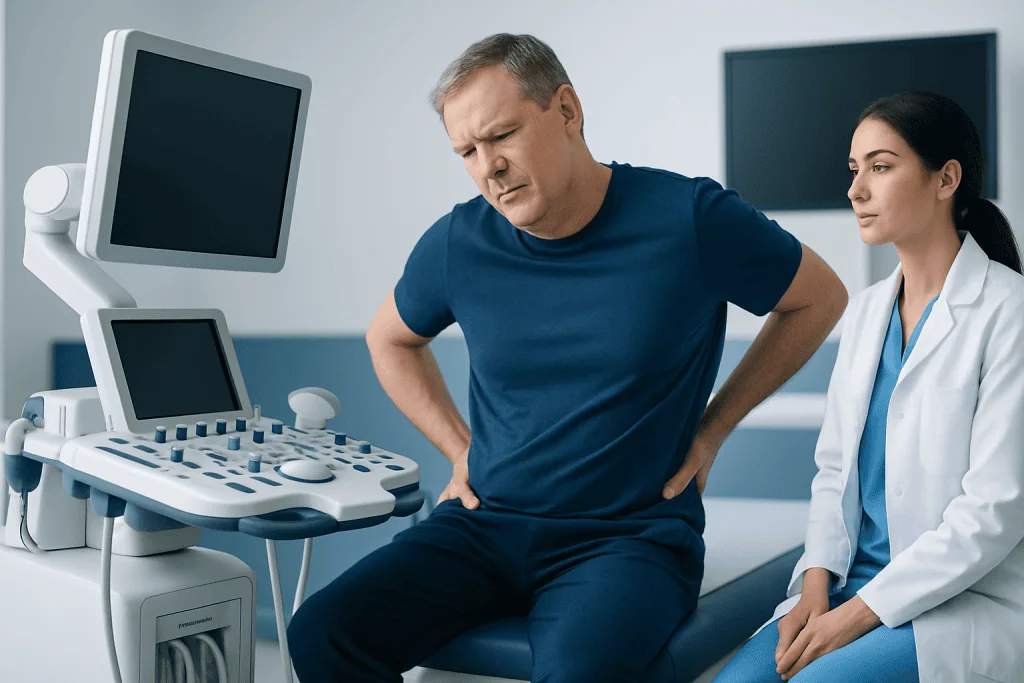
The hallmark symptom of sciatica is pain that radiates from the lower back, buttock, or hip into the thigh and sometimes below the knee to the calf or foot. The pain may worsen with coughing, sneezing, prolonged sitting, bending, or certain twisting movements. Some people feel discomfort mostly in the leg rather than in the back.
Other symptoms can include pins-and-needles sensations, numbness, muscle weakness, or reduced ability to lift the front of the foot. The exact pattern depends on which spinal nerve root is affected. For example, one person may feel pain down the back of the leg, while another feels it more on the side of the calf or top of the foot.
Certain warning signs need urgent medical attention because they can suggest a more serious cause. These include:
- New loss of bladder or bowel control
- Numbness in the groin, buttocks, or inner thighs
- Rapidly worsening leg weakness
- Severe pain after a fall, accident, or other injury
- Fever, chills, or unexplained weight loss with back pain
- A history of cancer, serious infection, or immune suppression
These red flags do not always mean an emergency is present, but they should not be ignored. Prompt evaluation helps identify whether urgent treatment is needed.
Causes and Risk Factors
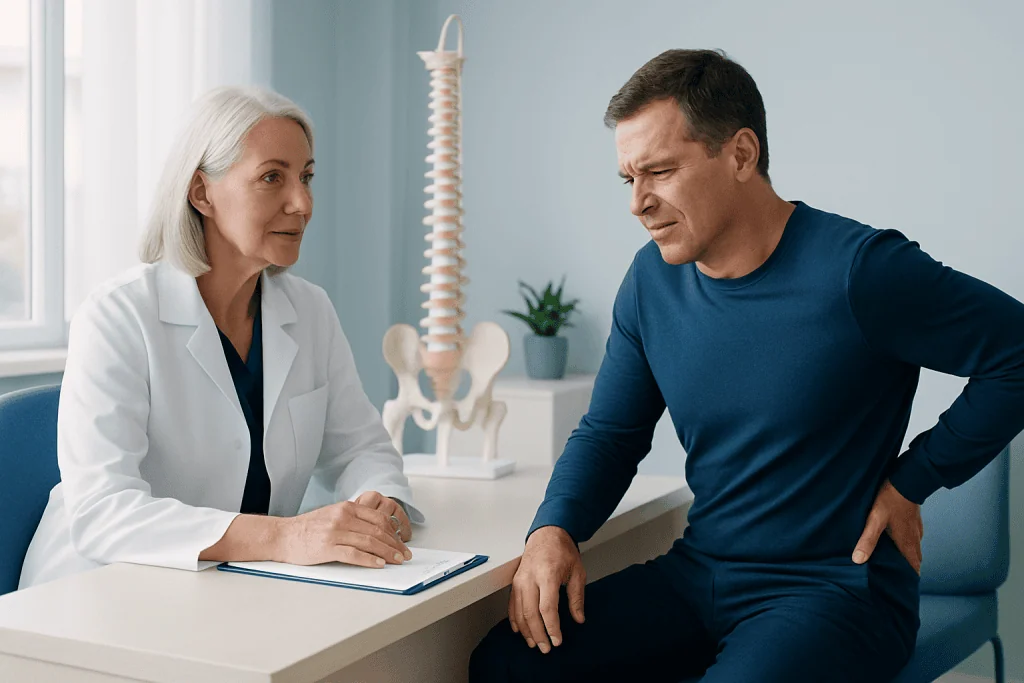
The most common cause of sciatica is a herniated or bulging lumbar disc pressing on a nerve root in the lower spine. Age-related wear and tear, sometimes called spinal degeneration, can also narrow the spaces around the nerves. This may occur with bone spurs, thickened ligaments, or spinal stenosis.
Other possible causes include spondylolisthesis, in which one vertebra slips forward over another, irritation around the piriformis muscle, or less commonly tumors, infection, or inflammatory disease. In some cases, the pain may mimic sciatica but actually come from the hip, sacroiliac joint, or another part of the musculoskeletal system.
Risk factors include older age, jobs or activities involving repetitive lifting or twisting, long periods of sitting, low physical activity, obesity, and smoking. Poor core strength and a previous history of low back problems may also increase risk. Not every person with these risk factors develops sciatica, but they can make irritation of the lower spinal nerves more likely.
Because sciatica can result from different conditions, treatment should focus on the underlying cause as well as symptom control. Persistent or recurrent pain may sometimes be linked to disorders such as lumbar disc herniation, which a doctor can assess more closely.
How Sciatica Is Diagnosed
Diagnosis usually begins with a careful medical history and physical examination. A doctor will ask where the pain starts, where it travels, what movements make it worse, and whether there is numbness, weakness, or bladder or bowel changes. They may also ask about fever, trauma, unexplained weight loss, cancer history, and recent infections.
During the examination, the doctor checks posture, walking, leg strength, reflexes, and sensation. Simple maneuvers, such as raising the straightened leg while lying down, may reproduce nerve-related pain and help identify which nerve root is involved. The goal is not only to confirm sciatica but also to rule out other conditions that can look similar.
Many people do not need extensive testing right away, especially if symptoms are typical, there are no red flags, and the pain has been present for only a short time. In these cases, conservative treatment may begin first. If symptoms are severe, unusual, or not improving, further evaluation can help guide the next steps.
When Imaging Is Needed
Imaging is not routinely required for every new episode of sciatica. This is because many cases improve within a few weeks, and early scans do not always change treatment. Also, imaging can show age-related changes that are common even in people without pain, which may not be the true cause of symptoms.
Doctors are more likely to recommend imaging when red flags are present, when pain is severe and disabling, or when symptoms do not improve after a period of appropriate conservative care. Imaging is also useful before procedures or surgery, or when there is uncertainty about the diagnosis.
MRI is often the preferred test because it shows discs, nerves, soft tissues, and signs of inflammation clearly. CT may be used when MRI is not suitable, and plain X-rays can help assess alignment, fractures, or certain structural problems, although they do not show nerves or discs well. In selected cases, nerve testing may be considered if the diagnosis remains unclear.
If advanced evaluation is needed, doctors may use MRI or other forms of radiology and imaging to understand whether nerve compression is present and how best to treat it.
Treatment Options
Initial treatment for sciatica usually focuses on relieving pain, maintaining movement, and allowing the irritated nerve to recover. Short periods of rest may help during severe flare-ups, but staying in bed for long stretches is generally discouraged. Gentle walking and gradually returning to normal activity are often more helpful than complete inactivity.
Common conservative measures include heat or cold packs, posture adjustments, and over-the-counter or prescribed pain-relieving medicines when appropriate. A doctor or physiotherapist may recommend stretching, core strengthening, and movement-based rehabilitation to reduce pressure on the nerve and improve spine support. Some people benefit from a structured physical therapy and rehabilitation program.
If symptoms are persistent, severe, or linked to clear nerve compression, more targeted options may be discussed. These can include injections to reduce inflammation around a nerve root or, in selected cases, surgery to relieve pressure. Surgery is usually considered when there is significant weakness, major functional limitation, or pain that does not improve with non-surgical treatment.
For the small number of patients who need an operation, procedures may aim to remove part of a herniated disc or enlarge a narrowed spinal canal. If surgery is being considered, a specialist may discuss options in the context of the underlying problem, including spine surgery when appropriate.
Prevention and Self-care
It is not always possible to prevent sciatica, but certain habits may lower the chance of recurrence. Regular physical activity, especially exercises that strengthen the core and support flexibility, can help protect the lower back. Good lifting technique, avoiding sudden twisting while carrying weight, and taking movement breaks during long periods of sitting are also useful.
Maintaining a healthy weight may reduce strain on the spine, and stopping smoking can support disc and bone health. Supportive footwear, ergonomic workspace adjustments, and safe sleep positions may also help some people manage back and leg symptoms more comfortably.
At home, many people feel better with a balanced approach: gentle activity, gradual stretching, and avoiding positions that sharply increase leg pain. Severe self-treatment routines are usually not necessary. If symptoms keep returning, a clinician can help identify triggers and create a practical long-term plan.
When to See a Doctor
A doctor should be consulted if leg pain lasts more than a few days, repeatedly returns, spreads below the knee, or is accompanied by numbness or weakness. Medical review is also important if the pain interferes with walking, sleep, work, or daily activities, or if there is uncertainty about whether the symptoms are truly due to sciatica.
Urgent assessment is needed for bladder or bowel changes, numbness around the saddle area, progressive weakness, fever, severe pain after trauma, or symptoms in someone with a history of cancer or serious infection. These situations call for prompt evaluation because they may require faster imaging and treatment.
For international patients who need multidisciplinary assessment, Acibadem International’s JCI-accredited hospitals evaluate and treat spine and nerve-related conditions with input from experienced specialists. A qualified doctor can explain whether conservative care, further testing, or specialist referral is the safest next step.
Frequently asked questions
Is sciatica the same as lower back pain?
No. Sciatica is a specific pattern of nerve-related pain that usually travels from the lower back or buttock down one leg. Some people have very little back pain and feel the symptoms mainly in the leg.
How long does sciatica usually last?
Many cases improve within a few weeks, especially with conservative care and gradual return to normal movement. Recovery time varies depending on the cause, symptom severity, and whether there is ongoing nerve compression.
When is imaging needed for sciatica?
Imaging is usually considered when there are red flags, severe or progressive neurological symptoms, or pain that does not improve after a reasonable trial of conservative treatment. It is also often used before injections or surgery, or when the diagnosis is uncertain.
What is the best sleeping position for sciatica?
There is no single best position for everyone, but many people feel more comfortable on the side with a pillow between the knees or on the back with a pillow under the knees. The goal is to keep the spine in a neutral, supported position.
Can walking help sciatica?
Gentle walking often helps because it keeps the body moving without placing heavy strain on the back. However, if walking sharply worsens the pain or causes weakness, a doctor should review the symptoms.
Does sciatica always need surgery?
No. Most people improve without surgery through medication, activity modification, exercise, and rehabilitation. Surgery is generally reserved for selected cases, such as persistent disabling pain, significant weakness, or urgent nerve compression problems.
References
- National Institute of Neurological Disorders and Stroke
- National Institute for Health and Care Excellence
- American Academy of Orthopaedic Surgeons
- American Association of Neurological Surgeons
- World Health Organization
This article is for general information only and is not a substitute for professional medical advice. Please consult a qualified doctor about your individual situation.
Joint and spine care in Turkey — expert assessment & treatment
JCI-accredited · board-certified surgeons · reply within 24h
Add us as a Preferred Source to see more of our trusted health content across Google Search, AI Overviews and Discover.