Seeing Flashes, Blind Spots, or Visual Distortion: Is It Migraine, Retina, or Brain?

Visual symptoms may arise from the eye, the optic nerve, or the brain’s visual centers. Migraine aura often causes temporary shimmering, zigzags, or blind spots that gradually spread and then resolve.
Key Takeaways
- Visual symptoms may arise from the eye, the optic nerve, or the brain’s visual centers.
- Migraine aura often causes temporary shimmering, zigzags, or blind spots that gradually spread and then resolve.
- A sudden shower of flashes or floaters, a curtain over vision, or persistent one-eye vision loss needs urgent eye evaluation.
- Visual distortion with weakness, speech trouble, or confusion may point to a brain emergency and requires immediate medical attention.
- Keeping track of timing, triggers, and whether one or both eyes are affected can help doctors find the cause.
Flashes, blind spots, zigzag lines, or warped vision can have several causes, including migraine aura, retinal disease, or conditions affecting the brain and visual pathways. The pattern of symptoms, whether one or both eyes are involved, and whether symptoms are sudden or persistent can help guide how urgently a person should seek care.
Overview: Why visual symptoms can mean different things
Seeing flashes, blind spots, wavy lines, shimmering patterns, or areas of missing vision can be unsettling, but these symptoms do not all come from the same place. Some begin in the retina, the light-sensitive tissue lining the back of the eye. Others arise from migraine-related activity in the brain, while some reflect problems affecting the optic nerve or the brain’s visual pathways.
A useful first clue is whether the symptom seems to affect one eye or both eyes. Symptoms truly limited to one eye often suggest a retinal or optic nerve cause. Symptoms that appear in the same part of the visual field of both eyes, especially shimmering or zigzag patterns, are more often linked to migraine aura or another brain-based visual phenomenon.
The time course also matters. Migraine aura usually builds gradually over several minutes and often resolves within an hour. In contrast, retinal tears or retinal detachment may cause sudden flashes, new floaters, or a shadow across vision. Brain-related causes can vary, but sudden symptoms accompanied by weakness, numbness, trouble speaking, or confusion require emergency care.
Because the possible causes range from benign and temporary to urgent and vision-threatening, persistent, new, or severe visual symptoms should be assessed by a qualified doctor. An ophthalmologist, neurologist, or neuro-ophthalmology specialist may be involved depending on the symptom pattern.
Common symptoms and what they may look like
Visual symptoms are often described in different ways. Some people notice brief flashes of light, like lightning streaks or camera flashes, especially in dim light. Others report blind spots, gray patches, shimmering edges, zigzag lines, distorted faces or words, or straight lines appearing bent or wavy.
These symptoms may occur with or without headache. Migraine aura can happen before a headache, during it, after it, or even without any headache at all. Retinal conditions may cause symptoms only in one eye, while visual symptoms from the brain often affect both eyes in a similar area of vision.
Important details include how long the symptom lasts, whether it moves or spreads, and whether it is associated with pain. A symptom that slowly enlarges and then fades is more typical of migraine aura. A fixed dark area, sudden drop in vision, or a curtain-like shadow is more concerning for an eye problem that needs urgent evaluation.
- Flashes of light: often linked to vitreous traction, retinal tear, or migraine aura
- Blind spots or missing areas: may occur with migraine, retinal disease, optic nerve disease, or stroke
- Wavy or distorted central vision: can suggest macular disease
- Zigzags, sparkles, or shimmering: commonly described in migraine aura
- Double vision or trouble focusing: may indicate eye movement, nerve, or brain-related causes
Migraine aura: a frequent cause of temporary visual changes

Migraine aura is a common explanation for temporary visual disturbance. It is caused by a wave of altered brain activity affecting visual processing areas. People may see shimmering lights, jagged lines, blind spots, or patterns that slowly expand across the visual field. The experience may be dramatic, but it is often temporary and reversible.
Typical migraine aura develops gradually over 5 to 20 minutes and lasts less than 60 minutes. The visual changes often affect both eyes, even if this is not obvious at first. Covering one eye and then the other during an episode can help a person notice whether the pattern is present in both visual fields, which supports a brain-based cause rather than a problem inside one eye.
Aura may be followed by headache, nausea, light sensitivity, or sound sensitivity, but not always. Some people have visual aura without headache, especially as they get older. Even so, a first episode of aura, a change in the usual pattern, or symptoms lasting longer than expected should be assessed to rule out other causes such as stroke or a retinal condition.
Doctors may discuss migraine management when episodes are frequent or disruptive. This can include trigger awareness, lifestyle measures, and in some cases migraine treatment tailored to the person’s symptoms and medical history.
Retinal causes: when eye symptoms need urgent attention
The retina can produce visual symptoms when it is pulled, torn, inflamed, or not receiving enough blood flow. A common example is a posterior vitreous detachment, in which the gel inside the eye changes with age and pulls away from the retina. This can cause flashes and floaters and is often not dangerous by itself, but it can sometimes lead to a retinal tear.
A retinal tear or detachment is more urgent. Warning signs include a sudden increase in floaters, repeated flashes in one eye, a curtain or shadow coming over part of the vision, or a sudden loss of side vision. These symptoms need prompt dilated retinal examination because early treatment may help protect vision.
Distortion affecting the center of vision may suggest a problem in the macula, the part of the retina responsible for sharp central sight. Straight lines may look bent, printed words may appear warped, and faces may seem misshapen. Conditions such as age-related macular degeneration, swelling of the macula, or other retinal disorders can cause this type of change.
Assessment and treatment may involve detailed retinal imaging and specialist care. Depending on the cause, options may include observation, laser treatment, injections, or retinal treatments. New one-eye visual symptoms should not be assumed to be migraine without an eye examination.
Brain and optic nerve causes beyond migraine
Not all visual symptoms that come from the brain are related to migraine. Problems in the optic nerve, visual pathways, or visual cortex can cause blind spots, dim vision, color changes, or missing areas of the visual field. Examples include optic neuritis, transient ischemic attacks, stroke, seizures, inflammation, or less commonly masses affecting the visual pathway.
Symptoms from the optic nerve are often described as blurred or dim vision in one eye, sometimes with pain on eye movement or reduced color brightness. Visual field defects from the brain may be noticed as bumping into objects on one side, difficulty reading, or missing part of a page or screen. Some people are unaware of a field loss until formal testing is done.
One important clue is the presence of neurological symptoms along with visual change. Weakness, facial drooping, numbness, new imbalance, severe confusion, fainting, or trouble speaking can indicate a brain emergency. Sudden painless loss of vision in one eye can also reflect reduced blood flow and needs urgent medical assessment.
When the cause is not clear, doctors may recommend a combined eye and neurological evaluation. In selected cases, testing can include visual field assessment, optical coherence tomography, blood tests, or brain MRI to examine the optic nerves and visual pathways more closely.
How doctors tell the difference
Diagnosis starts with a careful history. Doctors usually ask what exactly was seen, whether one eye or both eyes were affected, how suddenly it started, how long it lasted, and whether there were associated symptoms such as headache, pain, weakness, or new floaters. These details often point strongly toward migraine, retinal disease, or a neurological cause.
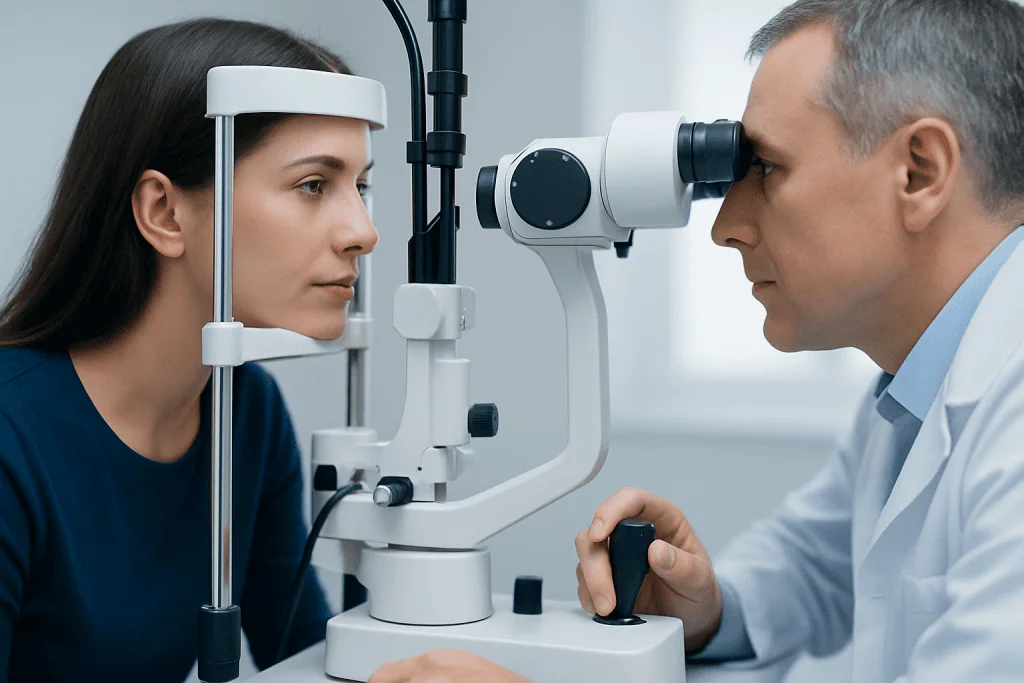
An eye examination may include vision testing, pupil assessment, eye pressure measurement, slit-lamp examination, and a dilated look at the retina. If distortion or central visual change is present, retinal imaging such as optical coherence tomography may be used. Visual field testing can detect blind spots or side-vision loss that a person may not notice clearly on their own.
If a neurological cause is suspected, the doctor may recommend imaging, blood pressure and vascular risk assessment, or referral to neurology or neuro-ophthalmology. The goal is not only to explain the symptom but also to identify any urgent condition that could threaten vision or general health.
Because symptoms can overlap, self-diagnosis is not always reliable. Someone with a known history of migraine can still develop a retinal or vascular problem, and a first-time visual event should be approached with particular care.
Treatment options and ongoing care
Treatment depends entirely on the cause. Migraine aura itself often resolves without specific treatment, though headache management and prevention strategies may reduce future episodes. Doctors may advise regular meals, hydration, sleep consistency, and attention to individual triggers such as stress, bright light, or certain foods if these are relevant.
Retinal problems are treated according to the diagnosis and urgency. Retinal tears may be sealed with laser or freezing treatment, while retinal detachment may require surgery. Macular conditions may be managed with injections, medication, or close follow-up depending on the underlying disorder.
Brain- or nerve-related causes may require urgent stroke care, anti-inflammatory treatment, seizure assessment, vascular risk reduction, or other targeted management. If the diagnosis is uncertain, coordinated care between ophthalmology, neurology, and neuro-ophthalmology can be especially helpful.
Near the end of the care pathway, some patients benefit from multidisciplinary evaluation. Acibadem International’s specialists in ophthalmology, neurology, and neuro-ophthalmology, working in JCI-accredited hospitals, diagnose and treat visual symptoms for international patients when a retina, migraine, or brain-related cause is being considered.
Prevention, self-care, and when to see a doctor
Prevention is not always possible, but certain steps support eye and brain health. Routine eye examinations, control of blood pressure and diabetes, smoking cessation, and regular follow-up for known migraine or retinal disease can all help reduce risk or improve early detection. People who notice central distortion may find it useful to check one eye at a time and seek review if the change is new or worsening.
For those with recurring migraine aura, keeping a symptom diary can be helpful. Recording the date, duration, what was seen, any headache, food or stress triggers, sleep pattern, and whether one or both eyes were involved may help doctors confirm the diagnosis and guide treatment.
Urgent same-day eye care is important for a sudden shower of floaters, new flashes in one eye, a curtain or shadow across vision, or sudden persistent loss of vision. Emergency medical attention is needed for visual symptoms with weakness, speech difficulty, severe confusion, fainting, or a sudden severe headache.
If symptoms are mild but new, unusual, or recurring, a scheduled medical review is still wise. Reassurance is appropriate only after an eye or neurological cause has been properly considered.
Frequently asked questions
How can someone tell if visual symptoms are from migraine or the eye itself?
A helpful clue is whether the symptom affects one eye or both eyes. Migraine aura often affects both eyes in the same area of vision and usually spreads gradually, while retinal problems are more often limited to one eye and may start suddenly. Because this can be hard to judge in the moment, medical evaluation is important if the pattern is new or unclear.
Are flashes of light always a sign of retinal detachment?
No. Flashes can happen with migraine aura or age-related changes in the vitreous gel inside the eye, not only retinal detachment. However, new flashes, especially with floaters or a shadow over vision, should be assessed urgently to rule out a retinal tear or detachment.
Can migraine aura happen without a headache?
Yes. Some people have visual aura without any headache, and this may become more common with age. Even so, a first episode or a major change from a person’s usual migraine pattern should be checked by a doctor.
What does a retinal problem usually feel like?
Retinal symptoms are often described as sudden flashes, a burst of new floaters, distorted central vision, or a curtain-like shadow. They are typically painless, which is why they can be easy to underestimate. Sudden one-eye visual change should always be taken seriously.
When should visual distortion be treated as an emergency?
Emergency care is needed if visual symptoms come with weakness, numbness, trouble speaking, confusion, fainting, or a sudden severe headache. Urgent same-day eye care is also needed for a curtain over vision, sudden persistent vision loss, or new flashes and floaters in one eye.
Can stress or lack of sleep trigger these symptoms?
They can trigger migraine aura in some people, especially if there is an existing migraine tendency. Stress and poor sleep do not usually cause retinal tears or stroke directly, so symptoms should not automatically be blamed on lifestyle factors without medical review when they are new or severe.
References
- American Academy of Ophthalmology
- American Migraine Foundation
- National Eye Institute
- National Institute of Neurological Disorders and Stroke
- Royal College of Ophthalmologists
This article is for general information only and is not a substitute for professional medical advice. Please consult a qualified doctor about your individual situation.
Migraine in Turkey — costs, top hospitals & a free quote
JCI-accredited · board-certified surgeons · reply within 24h
Add us as a Preferred Source to see more of our trusted health content across Google Search, AI Overviews and Discover.