Sharp Pain in Ear: Possible Causes and When to Seek Care

Sharp ear pain can start in the ear itself or be referred from the jaw, teeth, throat, or sinuses. Common causes include outer or middle ear infection, pressure injury, earwax blockage, and temporomandibular joint problems.
Key Takeaways
- Sharp ear pain can start in the ear itself or be referred from the jaw, teeth, throat, or sinuses.
- Common causes include outer or middle ear infection, pressure injury, earwax blockage, and temporomandibular joint problems.
- Warning signs include fever, drainage, hearing loss, severe swelling, dizziness, or symptoms that do not improve.
- Treatment depends on the cause and may range from observation and symptom relief to prescription medicines or specialist care.
- A doctor can help identify whether the pain is related to the ear, nose, throat, teeth, or jaw.
Sharp pain in ear is a symptom rather than a diagnosis. It may be caused by an ear infection, pressure changes, earwax buildup, jaw or dental problems, or pain referred from nearby structures, and the right next step depends on the pattern of symptoms.
Overview: what sharp ear pain can mean
Sharp pain in ear often has a treatable explanation. In many people it is linked to an ear infection, a blocked ear canal, pressure changes during flying or a cold, or inflammation in nearby areas such as the jaw, throat, or teeth.
The ear contains delicate structures that help with hearing and balance, and it also shares nerves with the face, jaw, scalp, throat, and neck. Because of this, pain felt in the ear does not always begin in the ear itself. A careful history and ear examination are often the key to understanding the source.
The pattern of the pain can offer clues. Brief stabbing pain may happen with pressure changes or irritation of the ear canal, while pain that becomes constant, throbbing, or worse at night may suggest infection or inflammation. Sharp pain with chewing, yawning, or after dental work may point more strongly toward the jaw or teeth.
Most cases are not dangerous, but ongoing or severe symptoms should not be ignored. Early assessment can help protect hearing, relieve discomfort, and guide whether home care, medication, or specialist evaluation is needed.
Common symptoms that may occur with sharp pain in ear
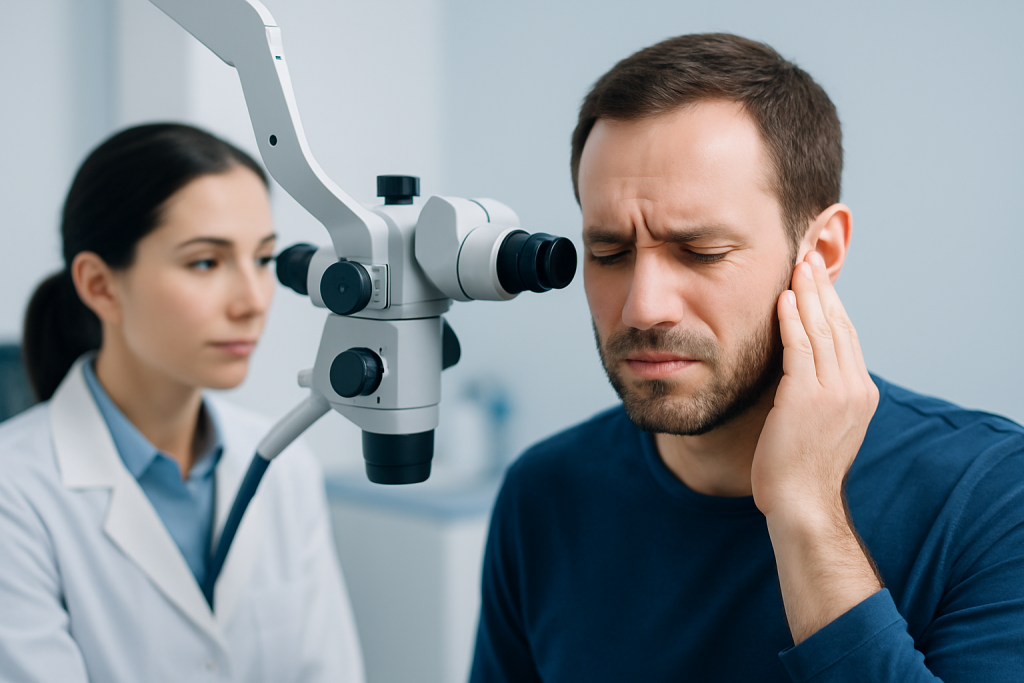
Sharp ear pain may happen on its own or with other symptoms that help narrow down the cause. Some people feel a sudden jab for a few seconds, while others describe repeated stabs, fullness, pressure, or pain that worsens when lying down. The pain may affect one ear or both.
Associated symptoms can involve hearing, the ear canal, or nearby areas. Hearing may sound muffled if earwax, fluid, or swelling is present. If the outer ear canal is inflamed, the ear may feel tender to the touch, especially when the outer ear is moved.
- Feeling of fullness or blocked ear
- Muffled hearing or temporary hearing loss
- Ringing in the ear
- Ear drainage or moisture
- Fever or general unwell feeling
- Dizziness or imbalance
- Sore throat, nasal congestion, or sinus pressure
- Jaw pain, tooth pain, or pain with chewing
Noticing what triggers the pain can also help. Pain after swimming may suggest irritation or infection of the outer ear canal, while pain during takeoff or landing on a flight may suggest pressure imbalance. If sharp pain appears during chewing or clenching, a jaw joint problem may be more likely than an ear disorder.
Possible causes of sharp pain in ear

One of the most common causes is infection. Outer ear infection, often called swimmer’s ear, affects the ear canal and can cause sharp pain, redness, itching, and tenderness when the ear is touched. Middle ear infection usually causes deeper ear pain and may come with fever, recent cold symptoms, reduced hearing, or a sense of pressure from fluid behind the eardrum. A doctor may evaluate this in the context of ear infection.
Pressure problems are another frequent reason. When the eustachian tube does not open normally, pressure can build up during colds, allergies, altitude changes, or air travel. This may cause brief or persistent sharp pain, popping, and muffled hearing. In some cases, severe pressure change can irritate or injure the eardrum.
Blockage and local irritation can also be responsible. Earwax buildup may create discomfort, pressure, ringing, or hearing changes. Cotton swabs, earbuds, or scratching inside the ear can irritate the ear canal and sometimes lead to infection. A small pimple or inflamed hair follicle in the outer ear may also feel surprisingly painful.
Not all ear pain comes from the ear. Referred pain may arise from the jaw joint, teeth, throat, neck, or sinuses because these areas share nerve pathways. Temporomandibular joint disorders can cause sharp pain near the ear, especially with chewing or jaw movement. Dental infection, impacted wisdom teeth, tonsillitis, and throat inflammation can all produce pain that feels as though it is inside the ear. In some people, sinus congestion contributes to pressure and discomfort, which may overlap with sinusitis.
Risk factors and situations that make ear pain more likely
Several everyday situations increase the chance of sharp ear pain. Swimming, humid environments, or frequent use of earphones can irritate the ear canal. Colds, allergies, and sinus congestion can interfere with normal pressure regulation and lead to pain or fullness.
Children are especially prone to middle ear infections because the eustachian tubes are smaller and more easily blocked. Adults may notice ear pain after flying, scuba diving, or sleeping with pressure on one ear. People who grind their teeth, clench their jaw, or have untreated dental problems may also develop pain around the ear.
Some habits can worsen irritation. Using cotton swabs or inserting objects into the ear can push wax deeper, scratch the skin, and increase the risk of infection. Smoking exposure, poorly controlled allergies, and untreated nasal congestion may also contribute to recurrent pressure-related symptoms.
Although many causes are minor, certain groups deserve extra caution. People with diabetes, weakened immune systems, prior ear surgery, chronic skin conditions, or a history of repeated ear infections should speak to a clinician sooner if pain develops, especially if there is swelling, discharge, or hearing change.
How doctors diagnose the cause
Diagnosis starts with a detailed history. A doctor will usually ask when the pain began, whether it is constant or intermittent, and whether it is linked to swallowing, chewing, flying, swimming, or a recent cold. They will also ask about fever, drainage, hearing changes, dizziness, throat symptoms, and dental or jaw problems.
An ear examination is essential. Using an otoscope, the clinician looks at the ear canal and eardrum for wax, swelling, redness, fluid, or signs of infection or injury. They may also examine the nose, throat, jaw joint, teeth, lymph nodes, and neck to check for referred pain.
Additional testing is not always needed, but it may be useful when symptoms persist, hearing is affected, or the diagnosis is unclear. Hearing tests can help if there is concern about reduced hearing or inner ear involvement. Imaging is usually reserved for specific situations such as persistent severe pain, suspected complications, trauma, or concern about a problem outside the ear. Depending on the findings, a patient may be referred for specialist assessment, including ENT evaluation or hearing assessment.
The goal is not only to confirm whether the ear itself is inflamed or infected, but also to make sure nearby causes are not missed. This is especially important when the ear exam looks normal but pain continues.
Treatment options for sharp ear pain
Treatment depends on the underlying cause. Some cases improve with time and supportive care, while others require prescription drops, antibiotics, wax removal, or treatment directed at the jaw, teeth, nose, or throat. Because causes differ, self-treating without an examination may delay the right care.
If the problem is an outer ear infection, a doctor may prescribe medicated ear drops and advise keeping the ear dry until healing occurs. Middle ear infections may be observed or treated depending on age, symptoms, and clinical findings. If pressure imbalance is the issue, managing nasal congestion or allergies and allowing pressure to equalize can help.
Earwax should be removed safely when it is causing blockage, pain, or hearing symptoms. This is best done by a healthcare professional if there is significant discomfort, past ear surgery, an eardrum problem, or uncertainty about the cause. When referred pain comes from the jaw or teeth, treatment focuses on those areas, for example dental care, jaw rest, or further review. Persistent structural problems may occasionally need ear surgery or related specialist treatment, but this is not the usual cause of simple ear pain.
Until the cause is known, it is sensible to avoid inserting anything into the ear. If over-the-counter pain relief is being considered, it should be used according to package instructions or a clinician’s advice, especially in children, during pregnancy, or in people with chronic medical conditions.
Self-care, prevention, and when to seek medical care
Simple self-care may ease mild symptoms while waiting for advice. Rest, fluids, and avoiding smoking exposure can be helpful if ear pain follows a viral upper respiratory infection. Gentle swallowing, yawning, or chewing may help equalize pressure during altitude changes. Keeping the ears dry after swimming and not using cotton swabs inside the ear can help prevent irritation and infection.
Managing contributing conditions also matters. Allergy control, treatment of nasal congestion, dental care, and reducing jaw clenching may lower the chance of recurring pain. If a person frequently develops symptoms after flights or colds, a doctor can suggest strategies tailored to their health history.
Medical care should be sought promptly if sharp pain in ear is severe, lasts more than a day or two, or returns repeatedly. A person should also be assessed sooner if there is fever, discharge from the ear, swelling around the ear, hearing loss, worsening dizziness, significant sore throat, or pain after an injury. Urgent care is especially important for sudden hearing loss, weakness of the face, severe headache, or pain with marked redness and swelling behind the ear.
For international patients who need coordinated assessment, Acibadem International’s multidisciplinary specialists and JCI-accredited hospitals diagnose and treat ear, nose, throat, and related conditions. In some cases, symptoms may overlap with problems evaluated through sinus care or other specialist pathways, depending on the source of the pain.
Frequently asked questions
Why does my ear hurt sharply for a few seconds at a time?
Brief stabbing ear pain can happen with pressure changes, irritation of the ear canal, or referred pain from the jaw or throat. It is often not serious, but repeated episodes or symptoms such as hearing loss, fever, or drainage should be checked by a doctor.
Can jaw problems cause sharp pain in ear?
Yes. The jaw joint sits close to the ear and shares nerve pathways, so temporomandibular joint problems can feel like ear pain. Pain that gets worse with chewing, clenching, or yawning makes this more likely.
Is sharp ear pain always an infection?
No. Infection is a common cause, but sharp ear pain may also result from pressure imbalance, earwax, irritation from cotton swabs, dental problems, throat inflammation, or sinus congestion. An examination helps identify the source.
What should be avoided when the ear hurts?
It is best to avoid putting cotton swabs, fingers, oils, or other objects into the ear unless a clinician has advised it. This can worsen irritation, push wax deeper, or increase the risk of infection.
When is sharp pain in ear an emergency?
Urgent assessment is needed if ear pain comes with sudden hearing loss, severe dizziness, facial weakness, high fever, major swelling behind the ear, or symptoms after significant head or ear trauma. These features can suggest a more serious problem that should not wait.
Can allergies or a cold cause sharp ear pain?
Yes. Allergies and viral colds can block the eustachian tube, leading to pressure, popping, fullness, and sometimes sharp pain. These symptoms often improve as nasal and throat inflammation settles, but persistent pain should be evaluated.
References
- American Academy of Otolaryngology–Head and Neck Surgery
- Centers for Disease Control and Prevention
- National Institute on Deafness and Other Communication Disorders
- Mayo Clinic
- Merck Manual Consumer Version
This article is for general information only and is not a substitute for professional medical advice. Please consult a qualified doctor about your individual situation.
Hair transplant in Turkey — costs, graft counts & a free assessment
JCI-accredited · board-certified surgeons · reply within 24h
Add us as a Preferred Source to see more of our trusted health content across Google Search, AI Overviews and Discover.