Shingles and Eyes Treatment: How It Works, Results and What to Expect

Shingles affecting the eye area needs same-day medical assessment, even if vision seems normal. Antiviral medicines work best when started early, but evaluation and treatment may still help after the first few days.
Key Takeaways
- Shingles affecting the eye area needs same-day medical assessment, even if vision seems normal.
- Antiviral medicines work best when started early, but evaluation and treatment may still help after the first few days.
- An ophthalmologist may use prescription eye drops, pain management and repeat examinations depending on which eye structures are involved.
- Recovery varies: the skin rash often settles within weeks, while eye inflammation, nerve pain or blurred vision can last longer.
- Prompt follow-up helps identify complications such as corneal damage, raised eye pressure or inflammation inside the eye.
Shingles and eyes treatment usually starts promptly with antiviral medicine and a detailed eye assessment to reduce viral activity, inflammation and the chance of vision-related complications. Care is individualized because shingles can affect the eyelid, surface of the eye, cornea, internal eye structures or nerves around the eye.
Overview: how shingles and eyes treatment works
Shingles and eyes treatment refers to care for herpes zoster ophthalmicus, a reactivation of the varicella-zoster virus in a nerve that supplies the forehead, eyelid and eye. It is not a single procedure. Treatment combines prompt antiviral medicine with ophthalmology assessment, targeted eye treatment when needed, pain relief and follow-up monitoring.
The central goal is to limit viral replication early and protect delicate eye structures from inflammation and damage. A rash on one side of the forehead, scalp, upper eyelid or nose may be the first sign, but eye involvement can occur with or without obvious redness or visual symptoms. For this reason, a person with suspected shingles around the eye should be assessed urgently by a qualified clinician.
Most people improve with timely care. However, the course differs from person to person because shingles may involve only the skin around the eye or may also affect the cornea, the colored part of the eye, pressure inside the eye, the retina or the nerves that control eye movement and sensation.
Who needs urgent assessment and what symptoms may occur?
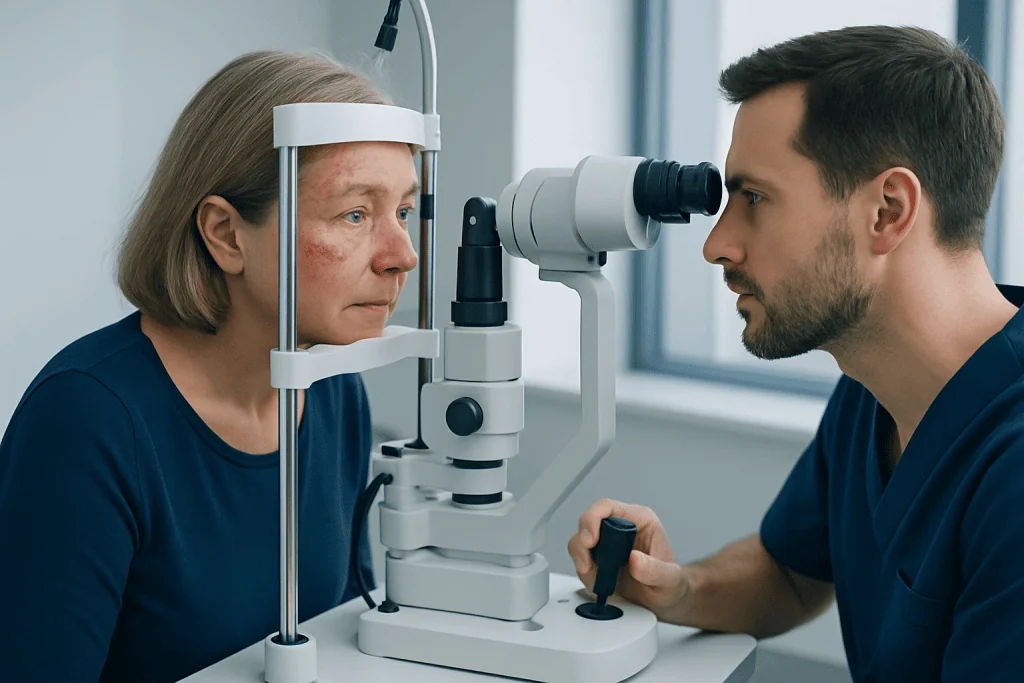
Ophthalmic shingles is most often suspected when a painful, tingling or burning sensation is followed by a blistering rash on one side of the forehead or upper face. The eyelid may become swollen, red and tender. Some people develop headache, feverishness or sensitivity of the skin before the rash appears.
Eye symptoms can include redness, tearing, light sensitivity, a gritty sensation, eye pain, blurred vision or difficulty keeping the eye open. Blisters on the tip, side or bridge of the nose can indicate involvement of a branch of the same nerve that supplies the eye, although their absence does not rule out eye complications.
- Older adults and people with weakened immune systems may have a higher risk of severe or prolonged illness.
- People taking immune-suppressing medicines, receiving cancer treatment or living with certain long-term health conditions should seek advice promptly.
- Contact lens wearers should avoid wearing lenses until an eye doctor says it is safe to restart.
Shingles itself cannot be passed from one person to another. However, fluid from active blisters can transmit varicella-zoster virus to someone who has not had chickenpox or the chickenpox vaccine, potentially causing chickenpox. Covering the rash and avoiding contact with vulnerable people until lesions have crusted can reduce this risk.
What will an eye doctor do for shingles?
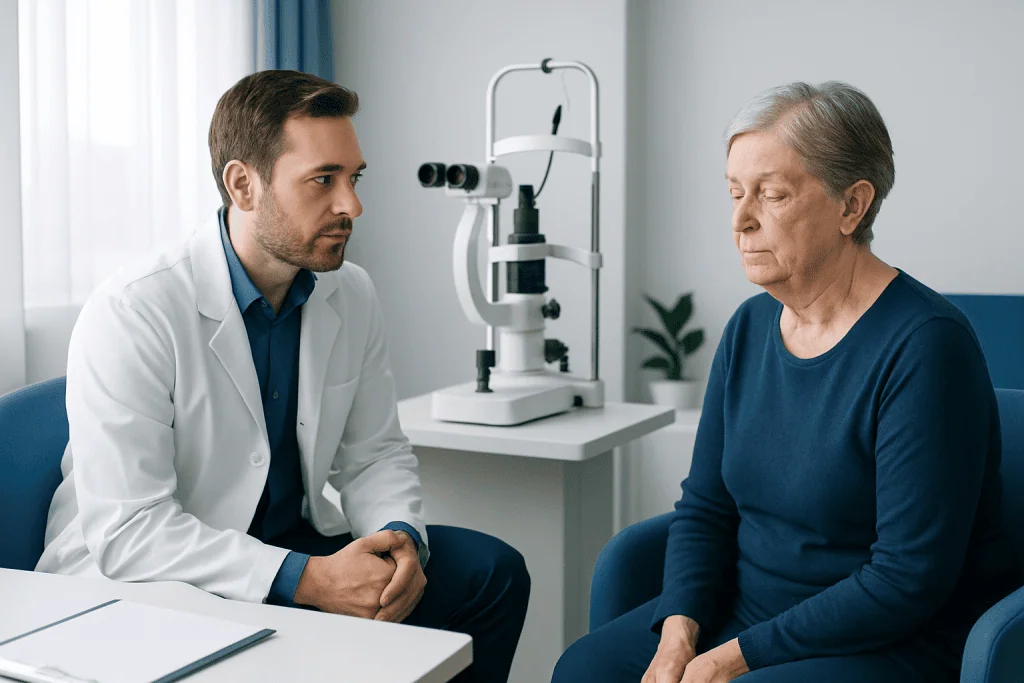
An eye doctor will ask about the timing of pain, rash and visual symptoms, review medical history and examine the face, eyelids and eye. Vision is checked in each eye, and the doctor may measure eye pressure. A slit-lamp examination uses a bright microscope to look closely at the eyelid margins, tear film, cornea and front part of the eye.
Fluorescein dye may be placed in the eye to show scratches, ulcers or characteristic changes on the corneal surface. Dilating drops may also be used to examine the retina and optic nerve at the back of the eye. These tests help determine whether the infection has caused keratitis, uveitis, raised eye pressure or another complication requiring specific treatment.
The doctor will usually prescribe or confirm systemic antiviral treatment when shingles is suspected. Depending on the examination, treatment may also include lubricating drops or ointment, medicines to control inflammation, drops to lower eye pressure, or pupil-dilating drops to ease pain from internal inflammation. Steroid eye drops can be valuable in selected cases, but they should only be used under ophthalmology supervision because they can worsen some infections or raise eye pressure.
Step-by-step treatment plan and candidacy
Nearly everyone with suspected shingles near the eye is a candidate for urgent clinical assessment. Antiviral medicines are generally considered as soon as possible, ideally early in the illness. A clinician selects the medicine and duration based on the person’s age, kidney function, immune status, severity of disease, pregnancy status and other medicines. Treatment may still be recommended when presentation is later, especially if new lesions, eye inflammation or immune suppression are present.
First, the clinician confirms the likely diagnosis and starts antiviral treatment when appropriate. Second, an ophthalmologist identifies the affected eye structures and adds targeted treatment. Third, the care team arranges follow-up at an interval based on findings; some people need only short-term review, while others need ongoing monitoring for recurrent inflammation or changes in eye pressure.
Comfort measures are also important. Cool compresses over closed eyelids, rest, adequate fluids and simple pain-relief options recommended by a clinician may help. The rash should be kept clean and dry, and people should not squeeze blisters or use non-prescribed eye drops. If pain remains significant after the rash heals, a clinician can assess for postherpetic neuralgia and discuss appropriate pain-management options.
How long does it take to recover from ophthalmic shingles?
Recovery from ophthalmic shingles varies with the location and severity of inflammation. The skin rash commonly forms crusts within about one to two weeks and often heals over two to four weeks. Swelling, discoloration and tenderness can take longer to settle, particularly in older adults.
If the eye itself is not affected, recovery may be relatively straightforward once the rash resolves. When the cornea, inside of the eye or eye pressure is involved, improvement may take several weeks or months and follow-up is important. Some complications can recur after an apparently settled episode, so new discomfort, redness or vision change should not be ignored.
Nerve-related pain can persist beyond skin healing in some people. This does not necessarily mean the virus remains active, but it can be distressing and deserves medical support. Early evaluation, appropriate antiviral therapy and close eye care offer the best opportunity to reduce complications, though no treatment can guarantee a particular recovery time.
How serious are shingles in your eyes?
Shingles in or around the eye can be serious because inflammation may affect parts of the eye essential for clear sight. Potential complications include corneal inflammation or scarring, inflammation inside the eye, raised eye pressure, reduced corneal sensation, retinal involvement and, rarely, problems affecting the optic nerve or eye movements. These complications are not inevitable, and many are treatable when recognized early.
The degree of risk cannot be judged reliably from the rash alone. A mildly appearing eyelid rash can coexist with corneal changes, while marked swelling may occur without long-term eye injury. This is why examination by an eye professional is recommended for suspected shingles affecting the forehead, eyelid or nose.
Prompt treatment is protective, but it does not replace monitoring. Follow-up visits allow clinicians to adjust drops, check vision and eye pressure, and identify delayed inflammation. People should keep all scheduled appointments even if pain and skin symptoms are improving.
Will blurry vision go away after shingles?
Blurred vision after shingles may improve completely, especially when it is caused by temporary swelling, tear-film disruption, light sensitivity or inflammation that responds to treatment. The outlook depends on the underlying cause and how quickly it is assessed. Vision should be checked promptly rather than waiting for it to clear on its own.
Blurred sight may result from corneal inflammation, a corneal ulcer, inflammation inside the eye, high eye pressure or less common involvement of the retina or optic nerve. An ophthalmologist can identify the cause through examination and decide whether additional medicines or more frequent monitoring are needed.
Any sudden worsening of vision, a new shadow or curtain in the field of vision, severe eye pain, marked light sensitivity, double vision or inability to open the eye needs urgent medical attention. After recovery, ongoing dryness or reduced corneal sensation may require continued eye-surface care to maintain comfort and vision.
When to seek medical care
Medical care should be sought the same day for a new painful or blistering rash on one side of the forehead, scalp, nose or eyelid. Urgent assessment is particularly important if there is eye redness, pain, light sensitivity, blurred vision, eyelid swelling, double vision or a rash on the nose. People with a weakened immune system should contact a clinician promptly for any suspected shingles.
Emergency assessment is appropriate for sudden or severe loss of vision, a severe headache with confusion, weakness on one side of the face or body, severe eye pain, or symptoms that rapidly worsen. These symptoms can have causes other than shingles but need immediate evaluation.
Prevention includes discussing shingles vaccination with a doctor when eligible. Vaccination reduces the risk of shingles and its complications but does not replace assessment of a new facial rash. Acibadem International’s multidisciplinary specialists and JCI-accredited hospitals can assess and treat ophthalmic shingles for international patients when coordinated eye and medical care is needed.
Frequently asked questions
Can shingles in the eye be treated at home?
Home measures may help comfort, but shingles near the eye should not be managed without medical assessment. Prompt antiviral treatment and an eye examination may be needed to protect vision and detect inflammation that is not visible without specialist equipment.
Do antivirals cure ophthalmic shingles?
Antiviral medicines reduce viral replication and can lessen the severity and duration of shingles when started promptly. They do not instantly remove symptoms, and additional eye treatment may be required if inflammation or other complications are present.
Can steroid eye drops be used for shingles in the eye?
Steroid eye drops may be prescribed when an ophthalmologist identifies certain types of eye inflammation. They are not suitable for every case and should not be started, stopped or shared without specialist guidance because they can affect infection control and eye pressure.
Is ophthalmic shingles contagious?
A person with shingles can pass varicella-zoster virus from active blisters to someone who is not immune to chickenpox. That person would develop chickenpox rather than shingles. Covering the rash and avoiding direct contact with blister fluid until lesions crust over helps reduce spread.
Can shingles cause permanent vision loss?
Most people do not develop permanent vision loss, particularly with timely care. However, untreated or severe inflammation can damage the cornea, retina, optic nerve or other eye structures, which is why urgent assessment and follow-up are important.
Can ophthalmic shingles come back?
Shingles can recur, although it is not the usual outcome. Eye inflammation may also return after the original rash has healed, so recurrent redness, pain, light sensitivity or blurred vision should be reviewed by an eye doctor.
References
- American Academy of Ophthalmology
- Centers for Disease Control and Prevention
- National Eye Institute
- National Health Service
- Mayo Clinic
This article is for general information only and is not a substitute for professional medical advice. Please consult a qualified doctor about your individual situation.
Shingles in Turkey — costs, top hospitals & a free quote
JCI-accredited · board-certified surgeons · reply within 24h
Add us as a Preferred Source to see more of our trusted health content across Google Search, AI Overviews and Discover.