Shingles on Legs — Explained by Medical Evidence, Not Myths

Shingles on legs usually causes pain, tingling, and a blistering rash on one side of the leg or buttock. It results from reactivation of the varicella-zoster virus, the same virus that causes chickenpox.
Key Takeaways
- Shingles on legs usually causes pain, tingling, and a blistering rash on one side of the leg or buttock.
- It results from reactivation of the varicella-zoster virus, the same virus that causes chickenpox.
- Antiviral medicines work best when started early, but medical assessment can still be useful after 72 hours in some situations.
- Keeping the rash clean and covered can support comfort and reduce the chance of passing the virus to susceptible people.
- A shingles vaccine can lower the risk of shingles and some long-lasting nerve pain, especially in eligible older adults and people with weakened immunity.
Shingles on legs is a form of herpes zoster that follows a nerve pathway in one leg, usually causing burning pain followed by a band-like rash and blisters on one side. It is treatable, and seeking medical advice early—ideally within 72 hours of rash onset—can help reduce symptom severity and complications.
Overview: What Does Shingles on Legs Look and Feel Like?
Shingles on legs is an outbreak of herpes zoster affecting nerves that supply the buttock, thigh, calf, foot, or toes. It usually produces symptoms on only one side of the body. The earliest sign may be unusual skin sensitivity, tingling, itching, burning, or deep aching pain in a strip or patch of one leg before anything can be seen on the skin.
Within a few days, a red rash commonly develops in the same painful area. Clusters of small, fluid-filled blisters may then appear. The distribution often looks like a narrow band because the virus becomes active in a single sensory nerve and affects the area of skin served by that nerve, called a dermatome.
Although shingles is often associated with the chest or face, it can occur anywhere that sensory nerves travel, including the leg. A rash on one leg may also have other causes, such as contact dermatitis, insect bites, fungal infection, cellulitis, or a herpes simplex infection. Because the treatment and urgency can differ, a clinician should assess a new painful blistering rash whenever possible.
Symptoms and the Usual Course
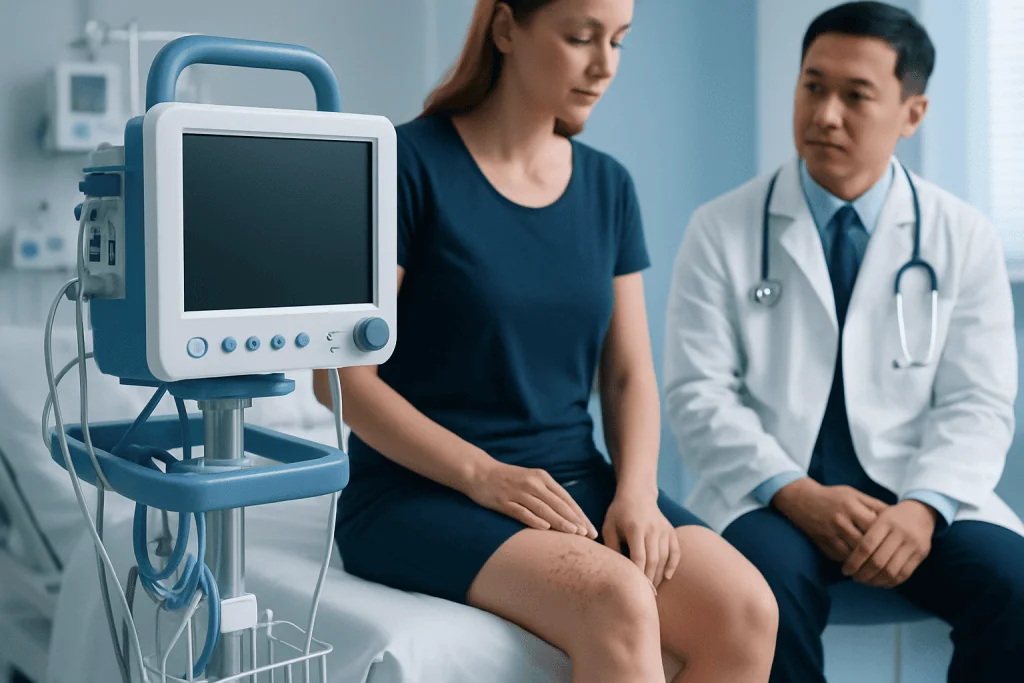
The pain of shingles can range from mild tenderness to sharp, stabbing, burning, or electric-shock-like sensations. Some people notice pain from light touch, clothing, or bed sheets. In addition to the rash, a person may feel tired, have a headache, or develop a low-grade fever, though these general symptoms are not present in everyone.
On the leg, the rash can involve the lower back or buttock and extend down the thigh, behind the knee, across the calf, or onto the foot. New blisters may form for several days. They then dry, crust over, and usually heal within about two to four weeks. The rash does not typically cross the body’s midline.
Skin color can affect how visible redness appears. In darker skin tones, the rash may look violet, grayish, darker brown, or simply inflamed compared with nearby skin. Pain, blisters, and one-sided distribution may therefore be especially helpful clues. Shingles may occasionally cause pain without a noticeable rash, but this requires professional evaluation because many other conditions can cause leg pain.
- Early symptoms: tingling, itching, numbness, burning, or localized pain.
- Rash stage: grouped blisters on a painful, usually one-sided area of skin.
- Healing stage: blisters crust and gradually clear, sometimes leaving temporary color changes.
Why Shingles Develops in a Leg
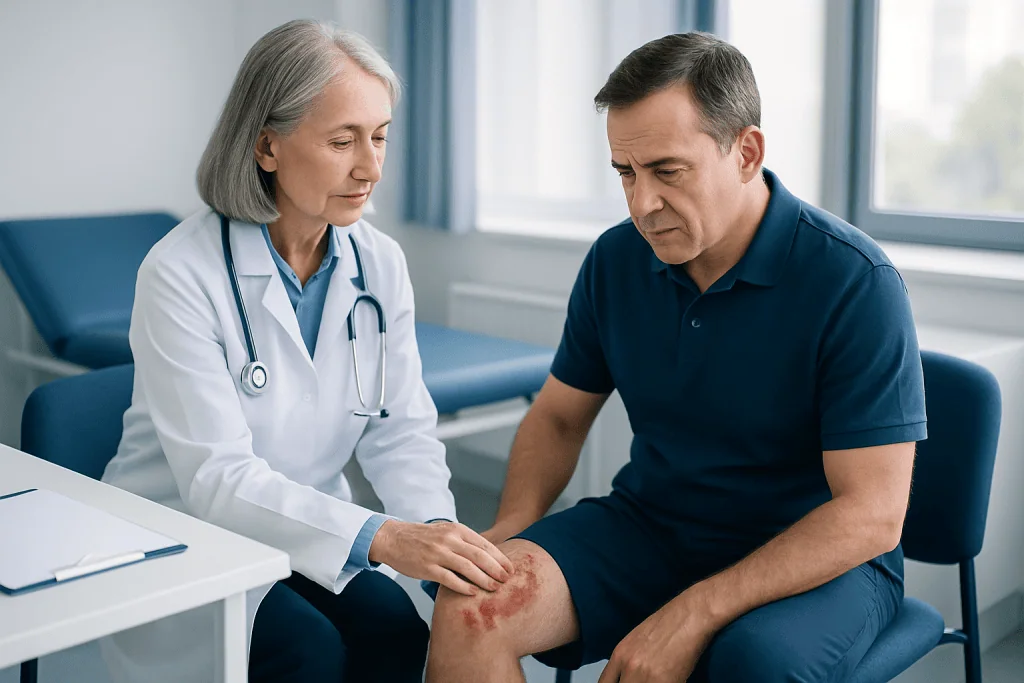
Shingles is caused by reactivation of the varicella-zoster virus. After a person has chickenpox, the virus remains inactive in nerve tissue. Years later, it can reactivate and travel along a nerve to the skin, causing shingles. A person does not “catch” shingles from stress, poor hygiene, or being cold, although physical or emotional stress may coincide with reactivation in some people.
Age is an important risk factor because immune responses naturally change over time. Shingles is also more likely in people whose immune system is weakened by certain medical conditions or medicines, including treatments that suppress immune activity. However, shingles can occur in otherwise healthy younger adults as well.
Having shingles on a leg does not necessarily mean there is a problem with the leg itself. The location reflects which nerve pathway is involved, rather than an injury to the muscles, bones, or blood vessels. Recurrent episodes are uncommon but can occur; repeated or unusually severe outbreaks should be discussed with a doctor, particularly when immunity may be affected.
How Clinicians Diagnose Shingles on Legs
Clinicians can often diagnose shingles by asking about the timing and character of pain and examining the rash. A one-sided cluster of blisters following a nerve distribution is strongly suggestive. They may also ask about a previous history of chickenpox, vaccination, medications, pregnancy, immune conditions, and exposure to people who may be vulnerable to chickenpox.
Laboratory testing is not always needed. When the diagnosis is uncertain, especially if the rash is unusual or widespread, a clinician may take a swab from a blister for testing. This can distinguish varicella-zoster virus from herpes simplex virus and may help guide treatment.
Leg pain without a rash should not automatically be assumed to be shingles. A doctor may consider nerve compression, sciatica, circulation problems, skin infection, and other possible explanations. Urgent assessment is appropriate if the leg is suddenly swollen, pale, cold, weak, or severely painful, as these features may indicate a condition unrelated to shingles that needs prompt care.
Treatment Options and Comfort Measures
Prescription antiviral medicines are the main treatment for shingles. They are most effective when started as soon as possible, ideally within 72 hours after the rash appears. Early treatment may reduce the duration and severity of the outbreak. A clinician may still recommend antivirals after this time if new blisters are appearing, pain is significant, the rash is extensive, or the person has a weakened immune system.
Pain management is also important. A healthcare professional may recommend appropriate non-prescription pain relief or prescribe medicine for more severe pain. If nerve pain continues after the skin heals, other treatments may be considered. Medication choices depend on a person’s age, kidney function, other health conditions, pregnancy status, and current medicines, so individualized advice is important.
At home, the rash can be gently washed with soap and water, then patted dry. Loose, soft clothing and cool, damp compresses may ease discomfort. Blisters should not be scratched or deliberately opened, as this can increase the risk of a bacterial skin infection. It is also sensible to rest, stay hydrated, and avoid activities that rub against the painful skin.
Antibiotics do not treat shingles because it is caused by a virus. They are only used if a clinician identifies a separate bacterial skin infection. Corticosteroids are not appropriate for everyone and should only be considered under medical guidance, alongside—not instead of—antiviral treatment when indicated.
Preventing Spread and Future Episodes
A person with shingles cannot directly give another person shingles. However, virus from active blister fluid can cause chickenpox in someone who has never had chickenpox or has not received chickenpox vaccination. Once all blisters have crusted over, the risk of transmission is much lower.
Until the rash has crusted, keeping it covered and washing hands after touching the area can reduce transmission risk. It is best to avoid direct skin contact with pregnant people who are not known to be immune to chickenpox, newborn babies, and people with significantly weakened immune systems. Sharing towels or clothing that may contact the rash should also be avoided.
Vaccination is the most effective way to reduce the likelihood of shingles and related complications in people who are eligible. Recommendations vary by country and personal health status, but vaccination is commonly advised for older adults and may be recommended at younger ages for people with certain immune conditions. A clinician or local immunization service can explain whether vaccination is suitable, including after a previous shingles episode.
When to Seek Medical Care
Medical advice should be sought promptly for a new painful, tingling, or blistering rash on one leg. Contacting a clinician early is especially valuable because antiviral treatment is time-sensitive. The same-day assessment is advisable for people who are pregnant, immunocompromised, have severe pain, have a widespread rash, or develop signs of skin infection such as increasing warmth, swelling, pus, or fever.
Urgent care is needed if shingles is suspected near the eye or face, if there is confusion, severe headache, neck stiffness, new weakness, difficulty walking, trouble passing urine, or loss of bowel control. These symptoms are uncommon but need timely evaluation. A rash affecting both sides of the body or spreading widely also warrants prompt medical review.
Most cases of shingles on legs improve with timely assessment, symptom care, and follow-up when needed. Acibadem International’s multidisciplinary specialists and JCI-accredited hospitals support diagnosis and treatment for international patients, including evaluation of persistent pain or atypical rashes.
Frequently asked questions
Can shingles occur only on one leg?
Yes. Shingles commonly affects one side of the body because it follows the path of an individual sensory nerve. It may involve part of the buttock, thigh, calf, foot, or toes, and it usually does not cross the midline.
Is shingles on the leg the same as sciatica?
No. Sciatica is pain related to irritation or compression of the sciatic nerve, while shingles is a viral reactivation that affects a sensory nerve and typically causes a rash. Early shingles pain can sometimes resemble sciatica, particularly before blisters appear, so a new or unusual leg pain should be assessed.
How long does shingles on legs last?
The rash usually heals within two to four weeks. Pain may improve as the skin heals, but some people have nerve pain that lasts longer. Early medical care and appropriate pain management may help reduce the burden of symptoms.
Can a person walk with shingles on their leg?
Many people can walk, but pain, skin sensitivity, and blisters may make movement uncomfortable. Gentle activity is usually reasonable if it does not worsen symptoms, while loose clothing and avoiding friction can help. New weakness, difficulty walking, or sudden severe leg symptoms should be assessed urgently.
Is shingles on legs contagious?
The shingles rash itself is not passed from person to person as shingles. However, direct contact with fluid from active blisters can transmit varicella-zoster virus and cause chickenpox in a person without immunity. Covering the rash and avoiding direct contact with vulnerable people until lesions crust can reduce this risk.
Can shingles come back in the same leg?
It is possible to have shingles more than once, including in a similar area, although repeat episodes are not the usual pattern. A person with recurrent, severe, or unusual outbreaks should discuss this with a doctor. Vaccination may help reduce future risk for eligible individuals.
References
- Centers for Disease Control and Prevention
- World Health Organization
- National Institute of Neurological Disorders and Stroke
- National Health Service
- American Academy of Dermatology Association
This article is for general information only and is not a substitute for professional medical advice. Please consult a qualified doctor about your individual situation.
Shingles in Turkey — costs, top hospitals & a free quote
JCI-accredited · board-certified surgeons · reply within 24h
Add us as a Preferred Source to see more of our trusted health content across Google Search, AI Overviews and Discover.

More from the Health Library



Related Specialists

Prof. Dr. Abdullah Zorluoğlu
General Surgery
Prof. Dr. Ekrem Algün
Internal Medicine
Assoc. Prof. Dr. İzzet Doğan
Medical Oncology
Assoc. Prof. Dr. Yetkin Zeki Yılmaz
Otorhinolaryngology