Signs of Testicular Cancer: Symptoms and Self-Check

A painless lump or swelling in a testicle is one of the most recognized signs of testicular cancer. Testicular cancer can also cause heaviness, discomfort, or a change in testicle size or firmness.
Key Takeaways
- A painless lump or swelling in a testicle is one of the most recognized signs of testicular cancer.
- Testicular cancer can also cause heaviness, discomfort, or a change in testicle size or firmness.
- Monthly self-checks may help a person notice new changes, but they do not replace a doctor’s examination.
- Many non-cancer conditions can cause similar symptoms, so imaging and medical assessment are needed for diagnosis.
- Early evaluation improves the chance of timely treatment and reassurance when the cause is benign.
Signs of testicular cancer can include a lump, swelling, heaviness, or changes in the size or feel of a testicle. Many testicular changes are not cancer, but prompt medical evaluation is important because early diagnosis often leads to highly effective treatment.
Overview
Testicular cancer is a cancer that begins in the testicles, the male reproductive glands that produce sperm and testosterone. It is less common than many other cancers, but it is the most common solid cancer in younger men, especially during the teens, twenties, and thirties. The good news is that it is often very treatable, particularly when found early.
The earliest signs of testicular cancer are often subtle. Many people first notice a small lump, one-sided swelling, or a feeling that one testicle has changed in size, shape, or firmness. Pain may be absent, which is one reason these changes can be overlooked or put down to a minor injury.
Not every lump or discomfort means cancer. Infections, fluid collections, enlarged veins, and benign cysts can also affect the testicles or scrotum. Even so, any new testicular change deserves medical attention so the cause can be identified accurately and safely.
Symptoms of Testicular Cancer
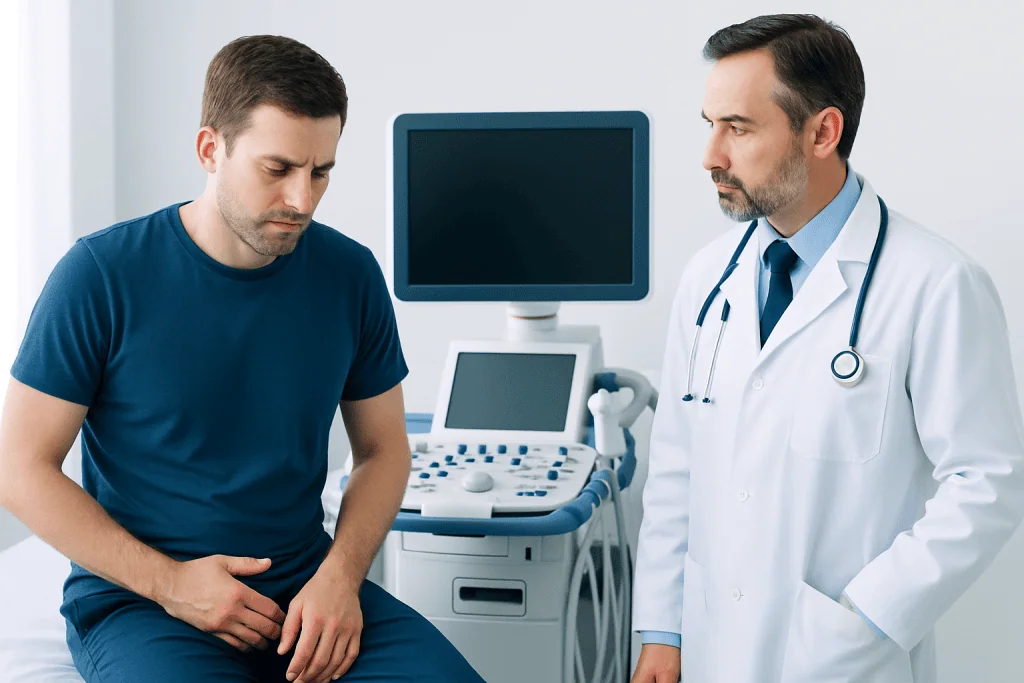
The most common symptom is a lump or nodule in one testicle. This lump may feel firm, smooth, or irregular, and it is often painless. Some people do not feel a clear lump but instead notice that one testicle seems larger, heavier, or different from usual.
Other possible signs of testicular cancer include a dull ache in the lower abdomen, groin, or scrotum; a feeling of heaviness in the scrotum; or a sudden build-up of fluid in the scrotum. There may also be tenderness or discomfort in the testicle, although severe pain is less typical.
Less commonly, symptoms can happen outside the scrotum if the cancer has spread. These may include back pain, persistent cough, chest symptoms, or unexplained weight loss. Rarely, hormonal effects can cause breast tenderness or enlargement.
- Painless lump in a testicle
- Swelling or enlargement of one testicle
- Change in shape, firmness, or texture
- Heaviness in the scrotum
- Dull ache in the groin or lower abdomen
- Sudden fluid collection in the scrotum
How to Do a Testicular Self-Check
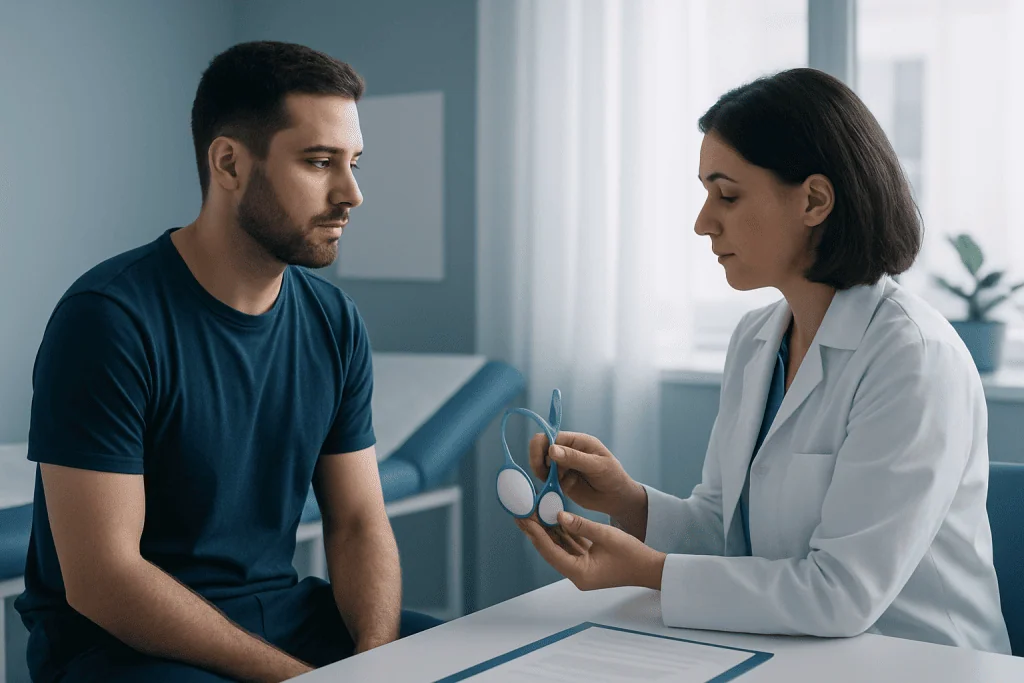
A testicular self-check is a simple way to become familiar with what is normal for the body. It does not diagnose cancer, but it may help a person notice changes early. Many experts suggest doing it once a month, ideally after a warm shower or bath when the scrotal skin is relaxed.
To perform a self-check, each testicle should be examined gently with both hands. The testicle can be rolled lightly between the thumb and fingers to feel for any lump, thickening, or change in surface. It is normal for one testicle to be slightly larger or hang lower than the other, and it is also normal to feel the soft, rope-like epididymis at the back of each testicle.
What matters most is noticing a new difference. A doctor should be consulted if there is a hard lump, increasing size, unusual firmness, swelling, or persistent discomfort. A self-check is not a substitute for professional care, especially if symptoms are present.
Causes and Risk Factors
The exact cause of testicular cancer is not always clear. It develops when cells in the testicle begin to grow in an abnormal and uncontrolled way. Most testicular cancers arise from germ cells, the cells that normally develop into sperm.
Several factors can increase risk. One of the strongest known risk factors is an undescended testicle, also called cryptorchidism, even if it was corrected in childhood. A personal history of testicular cancer also raises the chance of developing cancer in the other testicle.
Other risk factors may include a family history of testicular cancer, certain inherited conditions, and being born with abnormal testicular development. Testicular cancer is more common in younger and middle-aged adults than in older men. However, many people who develop it have no obvious risk factors at all.
It is important to remember that injury, cycling, or sexual activity do not cause testicular cancer. Sometimes an injury simply draws attention to an area that had already changed, leading the person to notice a lump for the first time.
Diagnosis and Tests
If a person notices signs of testicular cancer, a doctor will usually begin with a medical history and physical examination. The doctor will ask when the change was first noticed, whether there is pain or swelling, and whether there are any other symptoms such as back pain or weight loss.
The next key test is usually a scrotal ultrasound. This imaging test helps show whether a lump is inside the testicle and whether it appears solid or fluid-filled. Ultrasound is painless and is one of the most useful ways to distinguish a suspicious testicular mass from other causes of scrotal symptoms.
Blood tests may also be ordered to measure tumor markers such as AFP, beta-hCG, and LDH. These markers do not diagnose every case by themselves, but they can support the diagnosis and help guide treatment. If cancer is strongly suspected, doctors may recommend surgery to remove the affected testicle, which also allows the tissue to be examined and classified.
Further imaging may be used to stage the cancer and check whether it has spread. Depending on the situation, this can include MRI imaging or CT scanning to assess nearby lymph nodes or other organs. An accurate diagnosis is important because treatment depends on the exact type and stage of the tumor.
Treatment Options
Treatment for testicular cancer depends on the tumor type, stage, tumor marker results, and the person’s overall health. In many cases, the first step is surgery to remove the affected testicle. This procedure is called radical inguinal orchiectomy, and it is both a treatment and a way to confirm the diagnosis under the microscope.
After surgery, some people need only careful follow-up, also called surveillance. Others may need additional treatment such as chemotherapy, radiotherapy for selected tumor types, or surgery to remove lymph nodes. The plan is individualized to lower the risk of recurrence while avoiding unnecessary treatment where possible.
Doctors may also discuss fertility and hormone-related concerns before treatment begins. Depending on the planned therapy, sperm banking may be considered. In some cases, care may overlap with broader testicular cancer management and related cancer treatment planning in a multidisciplinary setting.
For international patients seeking coordinated care, Acibadem International’s multidisciplinary specialists and JCI-accredited hospitals diagnose and treat testicular cancer using modern imaging, surgery, and oncology services tailored to the individual case.
Prevention, Self-Care, and When to See a Doctor
There is no guaranteed way to prevent testicular cancer, because many risk factors cannot be changed. Still, body awareness matters. A monthly self-check can help a person recognize what is normal and notice a new lump, swelling, or change sooner.
General self-care includes not ignoring symptoms, keeping follow-up appointments, and asking about fertility preservation if treatment may affect future family planning. If there is pain, swelling, or fever, urgent evaluation may be needed because some non-cancer problems, such as infection or testicular torsion, require prompt treatment.
A doctor should be seen as soon as possible for any new lump, persistent enlargement, unusual firmness, heaviness, or unexplained ache in the testicle, scrotum, or groin. Early evaluation does not mean the cause is serious, but it is the safest way to reach the right diagnosis and begin treatment if needed.
It may also help to learn about other conditions that can affect the area, such as varicocele, which can also cause a change in the scrotum but is not cancer. Because symptoms can overlap, professional assessment is always more reliable than self-diagnosis.
Frequently asked questions
What is usually the first sign of testicular cancer?
The first sign is often a painless lump or a change in the size or feel of one testicle. Some people notice heaviness or swelling rather than a distinct lump. Any new change should be checked by a doctor.
Does testicular cancer always cause pain?
No, testicular cancer is often painless, especially in its early stages. That is why a lump or swelling should not be ignored even if it does not hurt. Pain or discomfort can happen, but it is not always present.
Are all testicular lumps cancer?
No, many testicular or scrotal lumps are caused by non-cancer conditions such as cysts, fluid collections, infections, or enlarged veins. However, it is not possible to know the cause just by feeling the area. A medical examination and ultrasound are usually needed.
How often should a testicular self-check be done?
A monthly self-check is a practical routine for many people, especially those who want to be familiar with their normal anatomy. The best time is after a warm bath or shower, when the scrotal skin is relaxed. If something new is found, a doctor should be consulted.
Can testicular cancer be cured?
Many cases of testicular cancer can be treated very successfully, especially when found early. Treatment may include surgery, surveillance, chemotherapy, radiotherapy, or other specialist care depending on the type and stage. A doctor can explain the outlook for the individual situation.
Who is most at risk for testicular cancer?
Testicular cancer is more common in younger and middle-aged men than in older adults. Risk is higher in people with an undescended testicle, a personal history of testicular cancer, or a family history of the disease. Still, it can also occur in people without any known risk factors.
References
- World Health Organization
- National Cancer Institute
- American Cancer Society
- European Association of Urology
- NHS
This article is for general information only and is not a substitute for professional medical advice. Please consult a qualified doctor about your individual situation.
Testicular Cancer in Turkey — costs, top hospitals & a free quote
JCI-accredited · board-certified surgeons · reply within 24h
Add us as a Preferred Source to see more of our trusted health content across Google Search, AI Overviews and Discover.