Sjogren’s Dry Eye Treatment: How It Works, Results and What to Expect

Sjogren's syndrome can cause severe aqueous-deficient dry eye because the immune system affects tear-producing glands. Treatment is usually stepped and individualized, starting with preservative-free lubricants and addressing eyelid, tear-film and inflammatory factors.
Key Takeaways
- Sjogren's syndrome can cause severe aqueous-deficient dry eye because the immune system affects tear-producing glands.
- Treatment is usually stepped and individualized, starting with preservative-free lubricants and addressing eyelid, tear-film and inflammatory factors.
- Prescription anti-inflammatory drops, tear-stimulating medicines, punctal occlusion and protective contact lenses may help selected patients.
- Extreme dry eye is usually managed rather than permanently cured, and improvement may take weeks to months.
- Sudden pain, light sensitivity, worsening redness or reduced vision needs prompt eye assessment.
Sjogren's dry eye treatment aims to restore comfort, reduce inflammation and protect the cornea when the immune condition reduces tear production. Most people need a tailored, long-term plan that combines daily eye-surface care with prescription treatment and, when appropriate, tear-conserving procedures.
Overview: how Sjogren's dry eye treatment works
Sjogren’s dry eye treatment works by adding moisture to the eye surface, reducing immune-driven inflammation, improving the quality of the tear film and conserving the tears a person can still produce. Because Sjogren’s syndrome often damages the lacrimal glands, the eyes may not make enough watery tears; this is different from mild, occasional dryness caused by screen use or a dry room.
The treatment plan is based on symptom severity, corneal health, eyelid function, other medicines and whether dry mouth, joint symptoms or other systemic features are present. An ophthalmologist or optometrist commonly works alongside a rheumatologist, since controlling systemic disease and treating the eye surface are complementary parts of care.
There is no single procedure that suits everyone. Effective management is usually ongoing and adjusted over time, with the goals of improving daily comfort, supporting clear vision and preventing damage to the cornea.
What do dry eyes from Sjogren's feel like?
Dry eyes related to Sjogren’s can feel gritty, sandy, burning, stinging or unusually tired. Some people describe a sensation that something is trapped in the eye, even when nothing is present. Redness, itching, blurred or fluctuating vision, sensitivity to light and difficulty wearing contact lenses are also common.
Paradoxically, the eyes may water. Reflex tearing can occur when a dry, irritated eye surface sends an alarm signal, but these tears are often not enough to restore a stable tear film. Symptoms may become more noticeable in air-conditioned rooms, wind, smoke, during reading or computer use, or later in the day.
Severe dryness can affect sleep, work and reading. Recurrent sharp pain, marked light sensitivity or reduced vision is not something to self-manage with lubricants alone and should be assessed promptly.
Assessment and candidacy for treatment

People with persistent dry eye, especially when it occurs with dry mouth, fatigue, joint discomfort, recurrent dental cavities or salivary-gland swelling, may need assessment for Sjogren’s syndrome. Not every person with dry eyes has Sjogren’s, and a clinician will consider other causes such as blepharitis, meibomian gland dysfunction, allergy, contact lens problems, hormone changes and medication effects.
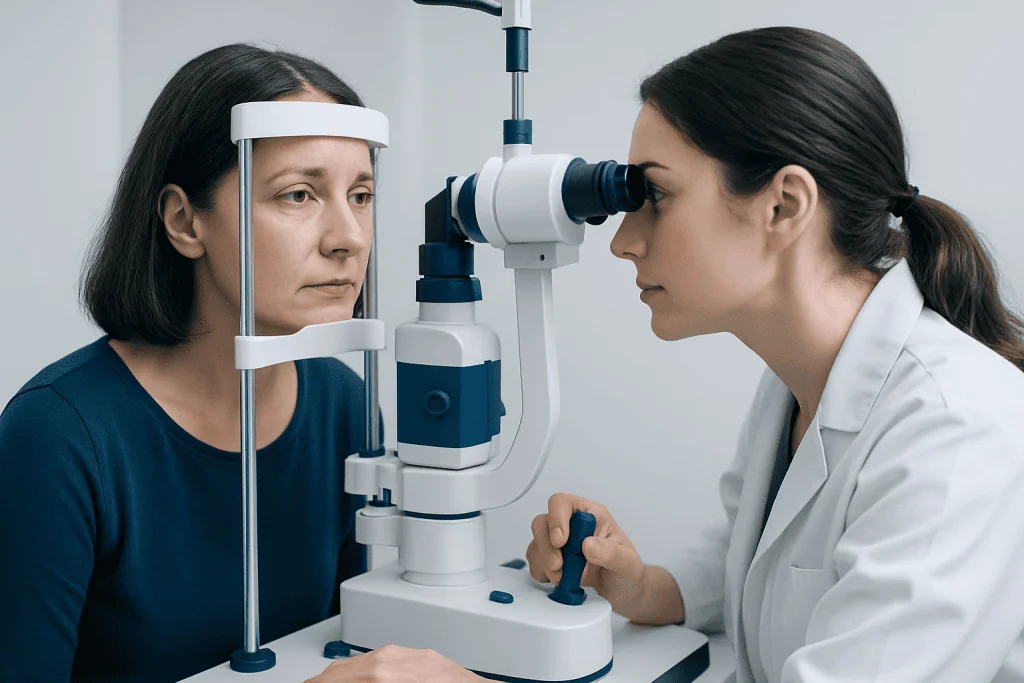
An eye assessment may include a detailed symptom history, vision testing, slit-lamp examination, tear-film evaluation and staining of the eye surface with diagnostic dyes. Tear production and tear-breakup tests may also be used. Rheumatology testing can include blood tests and, in selected cases, salivary-gland assessment.
Most people with Sjogren’s-related dry eye are candidates for treatment, but the most appropriate option depends on the amount of tear production, degree of inflammation and whether the cornea has been affected. Pregnancy, contact lens use, eye infection, glaucoma and other eye conditions may influence medicine or procedure choices.
Sjogren's dry eye treatment step by step
Care often begins with preservative-free artificial tears used as needed and a lubricating gel or ointment at night if symptoms disturb sleep. Preservative-free products are generally preferred when drops are needed frequently, since preservatives can irritate an already sensitive ocular surface. Humidification, wraparound glasses outdoors and regular screen breaks can support this first stage.
If symptoms remain significant, an eye specialist may prescribe anti-inflammatory drops to calm inflammation on the eye surface. These medicines may take several weeks to show benefit and need follow-up because the correct choice, duration and monitoring vary. In some cases, short-term anti-inflammatory treatment may be used under close ophthalmic supervision.
Tear-stimulating drops can help certain people who retain some functioning tear-gland tissue. If tears drain away too quickly, the clinician may recommend punctal plugs. During this brief office procedure, tiny removable plugs are placed into the tear drainage openings, called puncta, to retain natural and artificial tears. Temporary plugs may be used first to judge whether the approach is helpful.
For advanced disease, options may include autologous serum eye drops, which are prepared from the person’s blood under appropriate protocols, or scleral lenses. Scleral lenses vault over the cornea and hold a reservoir of fluid against the eye surface, offering protection and improved vision for selected patients. These treatments require specialist fitting and regular review.
- Lubricate and protect the ocular surface.
- Treat inflammation and coexisting eyelid disease.
- Conserve tears when appropriate.
- Escalate to advanced therapies when corneal protection or daily function remains limited.
Benefits, risks and what to expect after treatment
The potential benefits of treatment include less burning and foreign-body sensation, more stable vision, improved comfort with daily tasks and better protection of the cornea. Results vary because Sjogren’s dry eye can range from mild to severe, and treatment often needs more than one component. People commonly continue lubricating drops even when prescription treatment or a procedure is added.
Artificial tears are usually well tolerated, though some formulations can blur vision briefly. Prescription drops may sting on instillation, and some can cause temporary changes in taste or eye irritation. It is important to use them exactly as prescribed and to report persistent discomfort or unexpected changes in vision.
Punctal plugs can occasionally cause watering, irritation, plug loss, inflammation or, rarely, infection. Scleral lenses can be highly helpful but require careful hygiene, fitting and follow-up; improper lens care can raise the risk of infection. Autologous serum drops require specialized preparation and storage instructions.
After a punctal plug procedure, many people return to usual activities the same day. Improvement from lubrication may be immediate but short-lived, while anti-inflammatory therapy often takes several weeks. Follow-up allows the clinician to check the cornea, review symptoms and refine the plan safely.
What medications should be avoided by people with Sjogren's syndrome?
People with Sjogren’s syndrome should not stop prescribed medicines without medical advice. However, many commonly used medicines can worsen dry eyes or dry mouth because of anticholinergic or drying effects. A doctor or pharmacist can review the full medication list and discuss whether alternatives are suitable.
Examples that may contribute to dryness include some antihistamines, decongestants, sleep aids, bladder medicines, antidepressants, antipsychotic medicines, Parkinson’s medicines, certain blood-pressure medicines and acne treatments containing isotretinoin. The effect differs between individuals, and the medical benefit of a medicine may outweigh its contribution to dryness.
Alcohol, tobacco and recreational substances may also worsen dehydration or irritation for some people. Before using over-the-counter cold, allergy or sleep products, it is sensible to ask a pharmacist about drying ingredients and possible interactions with current treatment.
How long does it take to cure extreme dry eye?
Extreme dry eye caused by Sjogren’s syndrome is generally not described as curable, because the underlying autoimmune condition can be chronic. The practical aim is long-term control: easing symptoms, maintaining vision and preventing injury to the eye surface. With the right plan, many people achieve meaningful improvement.
Lubricating drops may give relief within minutes, although they may need frequent use. Prescription anti-inflammatory therapies usually require several weeks, and sometimes a few months, before their full effect can be judged. Procedures such as punctal plugs may help soon after placement, while scleral lenses can provide comfort during wear once fitting is complete.
If symptoms do not improve, it does not necessarily mean treatment has failed. The clinician may look for eyelid inflammation, allergy, infection, nerve-related eye pain, incomplete blinking or a need for more advanced corneal protection. Regular review is especially important for extreme dryness.
What does Sjogren's do to hair?
Sjogren’s syndrome does not usually cause a specific, direct pattern of hair loss. However, some people notice shedding or thinning related to chronic illness, stress, nutritional deficiency, thyroid disease, hormonal changes, scalp conditions or medicines. Autoimmune conditions can also occur together, so new or patchy hair loss deserves medical assessment rather than assumption.
A clinician may review symptoms, diet, medicines and relevant blood tests, including thyroid or iron studies when appropriate. Sudden patchy loss, scalp redness, scaling, pain or scarring should be evaluated by a dermatologist, as these features can point to conditions that need specific treatment.
Gentle hair care, adequate protein and a balanced diet can support general hair health, but supplements should not be used as a substitute for identifying the cause. It is best to discuss persistent shedding with a qualified doctor.
When to seek medical care
Medical care is appropriate for dry-eye symptoms that persist despite regular lubrication, interfere with work or reading, prevent contact lens use or occur alongside dry mouth and other possible Sjogren’s symptoms. An eye specialist can check whether the cornea is healthy and identify factors that may be treatable.
Urgent eye assessment is needed for significant eye pain, increasing redness, light sensitivity, discharge, a sudden decline in vision, injury or a feeling that a foreign body cannot be removed. These symptoms can signal corneal damage, infection or another eye problem requiring timely treatment.
Acibadem International’s multidisciplinary specialists and JCI-accredited hospitals diagnose and treat Sjogren’s-related eye symptoms for international patients. Ongoing care is best coordinated between eye care professionals, rheumatology and the person’s local healthcare team.
Frequently asked questions
Can artificial tears treat Sjogren's dry eye?
Artificial tears are a central part of Sjogren's dry eye treatment because they lubricate and protect the eye surface. Preservative-free drops are often preferred when frequent use is needed. Severe symptoms commonly require additional treatment to address inflammation or conserve tears.
Are punctal plugs safe for Sjogren's dry eyes?
Punctal plugs can be helpful when tears drain away quickly and the eye surface inflammation is appropriately managed. They are usually placed in an outpatient setting and may be temporary or longer-lasting. Possible complications include irritation, excessive tearing, plug loss and, rarely, infection.
Can Sjogren's dry eye damage vision?
Severe or poorly controlled dryness can damage the cornea and may lead to blurred vision, pain or infection risk. Early assessment and consistent treatment help protect the eye surface. New visual loss, marked pain or light sensitivity requires prompt medical care.
Should people with Sjogren's use redness-relief eye drops?
Many redness-relief drops constrict blood vessels but do not treat the underlying dryness and may worsen irritation with repeated use. It is better to ask an eye professional which lubricating or prescription drops are suitable. Preservative-free artificial tears are often a safer choice for frequent use.
Can diet or drinking more water cure Sjogren's dry eye?
Good hydration and a balanced diet support overall health, but they do not reverse immune-related tear-gland dysfunction. Some people may benefit from addressing nutritional issues or eyelid inflammation, but these measures are not substitutes for eye care. A clinician can advise on safe, individualized lifestyle measures.
How often should Sjogren's dry eye be monitored?
The follow-up schedule depends on symptom severity, corneal findings and the treatments being used. People with severe dryness, corneal staining, prescription therapy or specialty lenses generally need closer review. The treating eye specialist will recommend an appropriate timetable and should be contacted sooner if symptoms worsen.
References
- American Academy of Ophthalmology
- National Eye Institute
- National Institute of Arthritis and Musculoskeletal and Skin Diseases
- Sjögren's Foundation
- European Alliance of Associations for Rheumatology
This article is for general information only and is not a substitute for professional medical advice. Please consult a qualified doctor about your individual situation.
Explore treatments in Turkey — costs, top hospitals & a free quote
JCI-accredited · board-certified surgeons · reply within 24h
Add us as a Preferred Source to see more of our trusted health content across Google Search, AI Overviews and Discover.