Skull — Explained by Medical Evidence, Not Myths
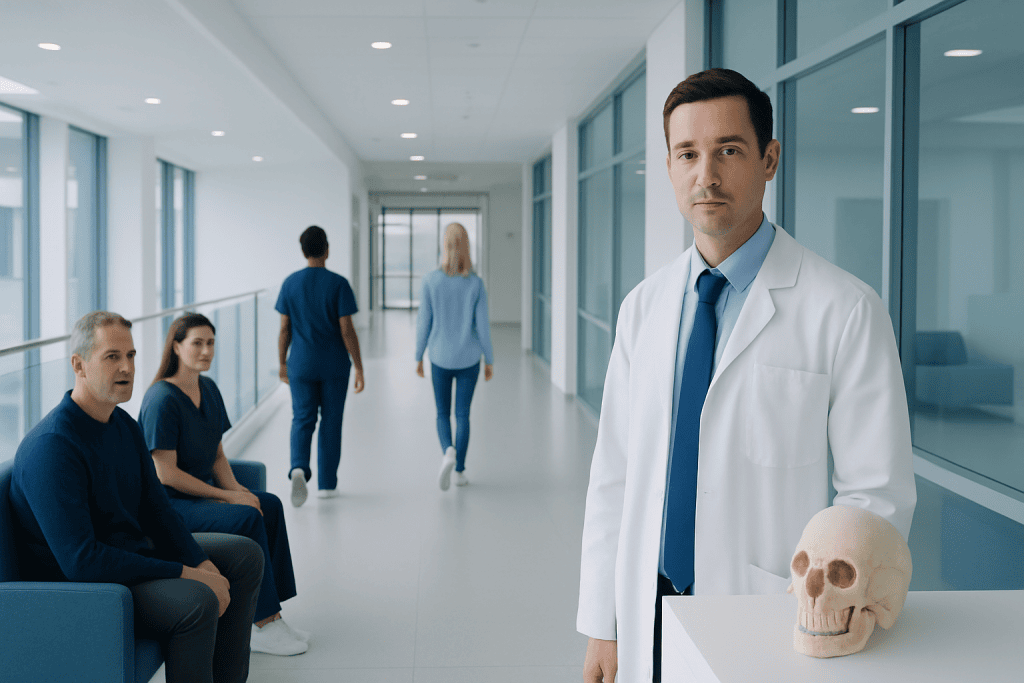
The skull is made of cranial and facial bones joined mostly by immovable joints called sutures. Its main roles are protecting the brain, supporting the eyes and airways, and anchoring muscles for chewing and facial movement.
Key Takeaways
- The skull is made of cranial and facial bones joined mostly by immovable joints called sutures.
- Its main roles are protecting the brain, supporting the eyes and airways, and anchoring muscles for chewing and facial movement.
- Skull symptoms that need attention include head injury, severe headache, swelling, deformity, fluid leaking from the nose or ear, and new neurologic symptoms.
- Doctors evaluate skull concerns with a physical exam and, when needed, imaging such as X-ray, CT, or MRI.
- Treatment depends on the cause and may range from observation to medication or specialist care, including surgery for some injuries or structural problems.
The skull is the bony framework of the head that protects the brain, supports the face, and helps with vision, hearing, breathing, and chewing. Most questions about the skull are best answered by anatomy and medical evidence: its shape and structure are normal variations in many people, while pain, injury, or visible changes may need medical assessment.
Overview: what the skull is and why it matters
The skull is the hard bony structure of the head. It protects the brain, forms the shape of the face, houses the eyes and inner ear structures, and creates openings for breathing, eating, speaking, and major blood vessels and nerves. In medical terms, it includes both the cranium, which surrounds the brain, and the facial skeleton.
Many people search for information about the skull because of head shape, pain, injury, or concerns raised by myths online. Evidence-based medicine views the skull as a living structure rather than a fixed shell. Its bones grow and change through infancy and childhood, then remain strong but can still be affected by trauma, infection, tumors, congenital conditions, and age-related changes.
Most differences in skull shape are harmless normal variation. However, some symptoms suggest a problem in the skull itself or in nearby tissues such as the brain, sinuses, jaw, scalp, or nerves. Understanding the skull’s anatomy helps explain why symptoms can overlap and why proper diagnosis matters.
How the skull is built
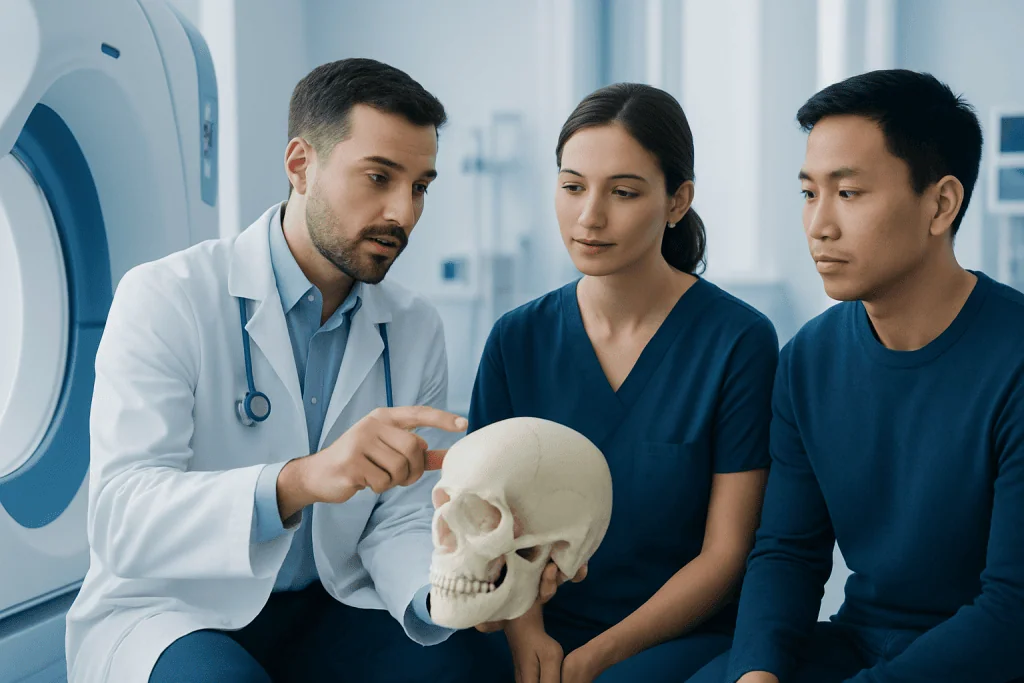
The adult skull is commonly described as a group of cranial bones and facial bones. The cranial bones include the frontal, parietal, temporal, occipital, sphenoid, and ethmoid bones. Together they form a protective case around the brain. The facial bones shape the nose, cheeks, jaws, and eye sockets.
Most skull bones are connected by fibrous joints called sutures. In infants and young children, some areas between the bones remain softer and more flexible to allow brain growth and passage through birth. These soft spots and sutures gradually close over time. If a suture closes too early, the head shape can change and may need specialist evaluation.
The skull also contains important openings and spaces. These include the eye sockets, nasal cavity, sinuses, ear canals, and the large opening at the base of the skull where the spinal cord connects to the brain. Muscles for chewing, speaking, and facial expression attach to the skull, which is why dental, jaw, and muscle problems can sometimes feel like “skull pain.”
- Cranium: encloses and protects the brain
- Facial skeleton: supports the eyes, nose, and mouth
- Sutures: strong seams between bones
- Base of skull: supports the brain and allows nerves and vessels to pass through
What the skull does

The skull’s best-known function is brain protection, but its role is broader than that. It provides a rigid framework that helps absorb and distribute external force, reducing the chance that minor impact directly injures delicate brain tissue. Protection is not absolute, though, which is why strong blows can still cause concussion, bleeding, or fracture.
The skull also supports the organs of special senses. It positions and shields the eyes, helps form the passages involved in smell and breathing, and encloses structures of hearing and balance within the temporal bones. Its shape affects how the jaw works and where chewing muscles attach, making the skull essential for eating and speech.
Because nerves and blood vessels pass through many small skull openings, a problem in the skull can sometimes affect vision, hearing, facial sensation, swallowing, or balance. This is one reason persistent symptoms involving the head should not be dismissed as simply stress or tension without appropriate assessment.
Symptoms and signs of skull-related problems
The skull itself does not usually cause symptoms unless there is injury, pressure on nearby tissues, infection, abnormal growth, or a structural condition. People may notice pain, tenderness, swelling, bruising, a visible dent or lump, or a change in head shape. In babies and children, parents may be concerned about an unusual head shape or delayed closure of soft spots.
Symptoms after a blow to the head deserve particular attention. Warning signs can include persistent headache, vomiting, confusion, drowsiness, fluid or blood coming from the nose or ear, double vision, hearing changes, memory problems, seizures, or weakness. These may point to a skull fracture or a brain injury that needs urgent care.
Not all head pain comes from the skull bones. Tension headaches, migraine, scalp conditions, dental problems, sinus disease, and jaw disorders are common causes of discomfort in the head and face. For example, facial pressure may be related to sinusitis, while temple or jaw discomfort may be influenced by joint or muscle strain rather than the skull itself.
- Headache that is severe, sudden, or different from usual
- New swelling, tenderness, or a growing lump on the skull
- Head injury followed by nausea, confusion, or loss of consciousness
- Changes in vision, hearing, speech, balance, or facial movement
- Persistent skull or scalp pain without a clear cause
Causes and risk factors
Skull concerns can arise from several broad causes. Trauma is one of the most important. Falls, road traffic accidents, sports injuries, and direct blows can cause bruising, fracture, or bleeding around the brain. A brain hemorrhage may occur with or without an obvious external injury, which is why symptoms after head trauma should be taken seriously.
Congenital and developmental conditions can also affect the skull. Some babies are born with head shape differences, while others develop positional flattening from lying in one position for long periods. Less commonly, premature closure of skull sutures changes how the skull grows and may increase pressure inside the head if untreated.
Other causes include infection of the bone or nearby tissues, benign or malignant tumors, metabolic bone disorders, prior surgery, and age-related bone thinning. Risk factors depend on the problem but may include contact sports, osteoporosis, anticoagulant use, repeated falls, smoking, certain genetic syndromes, and chronic ear or sinus infections. A doctor’s assessment helps separate common, less serious causes from conditions that require prompt treatment.
How doctors diagnose skull problems
Diagnosis begins with a detailed medical history and physical examination. The doctor asks when symptoms began, whether there was an injury, what the pain feels like, and whether there are associated symptoms such as vomiting, fever, neurologic changes, or visible head shape changes. Examination may include the scalp, face, eyes, ears, jaw, neck, and a neurologic assessment.
Imaging is used when the history or examination suggests a structural problem. CT is often the preferred first test after significant head trauma because it shows bone injury and bleeding quickly. MRI may be used when more detail is needed about the brain, nerves, soft tissues, or certain skull-base conditions. In selected cases, X-rays, ultrasound in infants, or specialized scans may also help.
Additional tests depend on the suspected cause. Blood tests may be useful if infection, inflammation, or a metabolic bone condition is possible. If symptoms suggest a tumor, congenital issue, or a complex injury, referral to specialists such as neurology, neurosurgery, ENT, maxillofacial surgery, or orthopedics may be appropriate. For injuries or structural concerns, doctors may coordinate imaging with MRI or CT scan evaluation as part of a broader workup.
Treatment options and recovery
Treatment depends entirely on the cause. Minor bumps to the head without red-flag symptoms may only need observation, rest, and follow-up advice. Pain linked to muscles, tension headache, sinus disease, or jaw strain is treated differently from pain caused by fracture or infection. Self-diagnosis can be misleading, so persistent or unusual symptoms should be assessed by a clinician.
Skull fractures range from simple cracks that heal with monitoring to more serious injuries requiring hospital care. If there is depression of the bone, leakage of cerebrospinal fluid, infection risk, bleeding, or pressure on the brain, specialist treatment is needed. Some patients may require neurosurgery or care led by a trauma team.
Structural conditions in infants and children may be managed with positioning advice, observation, helmet therapy in selected cases, or surgery when a suture has fused too early. Tumors, infections, and skull-base conditions are treated according to their type and location, often with multidisciplinary input. Near the end of the care pathway, rehabilitation, hearing or vision support, and follow-up imaging may be important for recovery.
Acibadem International’s multidisciplinary specialists and JCI-accredited hospitals diagnose and treat skull-related conditions for international patients, especially when coordinated imaging, neurology, ENT, and surgical expertise are needed.
Self-care, prevention, and when to seek medical care
Healthy skull care mainly means protecting the head and supporting overall bone health. Seat belts, age-appropriate car seats, helmets for cycling and contact sports, fall prevention at home, and safe work practices all reduce the risk of head injury. Good nutrition, adequate vitamin D and calcium intake when appropriate, regular exercise, and avoiding smoking support bone strength over time.
For babies, parents can help prevent positional flattening by using supervised tummy time when awake, varying the direction the baby faces in the crib, and following safe sleep guidance. Any concern about a baby’s head shape, bulging soft spot, poor feeding, fever, or developmental issues should be discussed with a pediatrician.
Medical care should be sought promptly after a significant head injury, loss of consciousness, repeated vomiting, seizure, severe or worsening headache, confusion, weakness, uneven pupils, or fluid leaking from the nose or ear. People should also see a doctor for a new skull lump, persistent localized tenderness, head shape changes, or symptoms affecting vision, hearing, balance, or facial movement. If symptoms are sudden or severe, emergency evaluation is the safest choice.
Frequently asked questions
Is the skull one bone or many bones?
The skull is made up of multiple bones rather than a single bone. In adults, these bones are joined mostly by sutures, which are strong fibrous connections that normally do not move.
Can the skull change shape in adulthood?
Major shape changes in adulthood are not typical and should be evaluated if they are new or noticeable. Apparent changes may come from scalp swelling, muscle tension, weight changes, injury, or rarely bone disorders or growths.
Does skull pain always mean a bone problem?
No. Pain felt over the skull often comes from nearby structures such as the scalp, sinuses, jaw joint, teeth, neck muscles, or headache disorders. A clinician can help determine whether the skull bone itself is involved.
How do doctors know if a skull fracture is present?
Doctors use the history, physical examination, and imaging tests when needed. CT is commonly used after significant head injury because it can quickly show fractures and bleeding.
When is a head injury an emergency?
Emergency care is important if a head injury is followed by loss of consciousness, repeated vomiting, confusion, seizure, severe headache, weakness, unusual drowsiness, or fluid from the nose or ear. These signs can suggest injury to the skull or brain.
Are unusual skull shapes in babies always serious?
Not always. Many head shape differences in babies are due to normal molding or positional flattening, but some are caused by early closure of a skull suture and need specialist assessment. Early evaluation helps guide the safest management.
References
- World Health Organization
- National Institute of Neurological Disorders and Stroke
- American Academy of Pediatrics
- American Association of Neurological Surgeons
- Radiological Society of North America
This article is for general information only and is not a substitute for professional medical advice. Please consult a qualified doctor about your individual situation.
Explore treatments in Turkey — costs, top hospitals & a free quote
JCI-accredited · board-certified surgeons · reply within 24h
Add us as a Preferred Source to see more of our trusted health content across Google Search, AI Overviews and Discover.

More from the Health Library

Clitoral Atrophy: A Complete Medical Overview

Cordyceps: What Patients Need to Know

Muscle Recovery: What Patients Need to Know

Secukinumab: An Evidence-Based Guide for Patients
Shoulder Blade Tenderness — Explained by Medical Evidence, Not Myths