Sleep Estimator: A Complete Medical Overview

A sleep estimator offers a practical estimate of sleep need, bedtime, or wake time based on general sleep science. These tools are helpful for routine planning but do not diagnose insomnia, sleep apnea, or other sleep disorders.
Key Takeaways
- A sleep estimator offers a practical estimate of sleep need, bedtime, or wake time based on general sleep science.
- These tools are helpful for routine planning but do not diagnose insomnia, sleep apnea, or other sleep disorders.
- Sleep quality matters as much as sleep duration; waking often, snoring, or daytime sleepiness may signal a medical issue.
- Age, work schedule, medications, stress, and health conditions can all affect how much sleep a person needs.
- A doctor should assess persistent sleep problems, loud snoring, breathing pauses, or sleepiness that affects daily life.
A sleep estimator is a tool that helps estimate how much sleep a person may need and when to go to bed or wake up based on age, schedule, and sleep patterns. It can be useful for planning healthier routines, but it cannot diagnose sleep problems or replace a medical evaluation when symptoms suggest a sleep disorder.
What a Sleep Estimator Does
A sleep estimator is a general tool used to estimate sleep duration, bedtime, wake time, or likely sleep cycles. In practical terms, it helps answer common questions such as how much sleep a person may need, what time to go to bed for an early morning, or whether a current routine is likely to provide enough rest. Many estimators use age-based recommendations and basic assumptions about average sleep cycles.
These tools can be helpful because sleep needs are often underestimated. Adults may focus only on total hours in bed, but healthy sleep also depends on regular timing, enough time to fall asleep, and how often sleep is interrupted. A sleep estimator may bring attention to patterns that deserve adjustment, such as very short sleep windows, inconsistent bedtimes, or schedules that shift dramatically between weekdays and weekends.
At the same time, a sleep estimator has limits. It cannot measure the true quality of sleep, identify why someone feels tired, or detect medical conditions. For example, a person may spend eight hours in bed yet still wake unrefreshed because of insomnia, obstructive sleep apnea, restless legs syndrome, depression, chronic pain, medication effects, or shift work. That is why the tool is best understood as an educational guide rather than a diagnostic test.
How Sleep Need Is Estimated
Most sleep estimators are based on established sleep recommendations by age group. Infants, children, teenagers, adults, and older adults all have different average sleep needs. For most healthy adults, the usual target is at least seven hours per night, though some people function best with slightly more. Estimators may also ask about wake-up time, bedtime, naps, work schedule, and time needed to fall asleep.
Some tools are built as sleep cycle calculators. These assume sleep occurs in repeating stages over roughly 90-minute cycles and suggest bedtimes or wake times that may align with the end of a cycle. This approach can be useful for planning, but it remains an approximation. Real sleep cycles vary from person to person and change across the night, with factors such as stress, alcohol, illness, and sleep deprivation affecting the pattern.
Wearable devices and smartphone apps may add movement, heart rate, or sound data. These extra signals can make sleep estimates feel more personalized, but they still do not replace medical testing. Consumer tools may be less accurate in people with insomnia, breathing-related sleep problems, irregular schedules, or frequent nighttime awakenings. If a person’s symptoms and device readings do not match, clinical evaluation is more important than the app result.
What a Sleep Estimator Can and Cannot Tell You

A sleep estimator can be a useful starting point for sleep planning. It may show that a person is regularly trying to function on too little sleep, going to bed too late for the desired wake time, or depending on long weekend catch-up sleep. It can also help families understand changing sleep needs in children and adolescents, especially during school years when schedules are often compressed.
However, a sleep estimator cannot confirm whether someone has healthy sleep. It does not diagnose sleep apnea, insomnia, circadian rhythm disorders, narcolepsy, or movement-related sleep conditions. It also cannot determine whether fatigue is caused by anemia, thyroid disease, depression, infection, medication side effects, or another medical issue. Feeling poorly rested despite “normal” estimated sleep is a sign to look beyond the calculator.
It is also important to separate tiredness from sleepiness. Tiredness can mean low energy, burnout, or physical fatigue. Sleepiness means a tendency to doze off when trying to stay awake, such as while reading, watching television, or driving. Sleepiness is more concerning because it can suggest insufficient sleep, poor-quality sleep, or an untreated sleep disorder. A sleep estimator may highlight a short sleep schedule, but persistent daytime sleepiness deserves medical attention.
Signs That Sleep May Not Be Healthy
A person may benefit from a medical review if sleep feels unrefreshing or difficult even when enough time is set aside for bed. Common warning signs include trouble falling asleep, waking often, waking too early, loud snoring, observed pauses in breathing, morning headaches, restless or uncomfortable legs at night, vivid dream enactment, and excessive daytime sleepiness. Problems with concentration, mood, memory, or work performance can also be linked to poor sleep.
Sleep loss can affect the whole body. In the short term, it may increase irritability, slower reaction time, poor judgment, and risk of accidents. Over time, chronic sleep problems are associated with higher risks of heart and metabolic disease, mental health strain, and reduced quality of life. A sleep estimator may help identify a pattern of too little sleep, but it cannot explain these broader health effects on its own.
In children, poor sleep may show up differently. Instead of obvious sleepiness, a child may seem hyperactive, irritable, emotionally reactive, or have trouble with school performance and attention. In older adults, sleep may become lighter and more fragmented, but persistent insomnia, acting out dreams, or excessive sleepiness is not simply something to ignore as a normal part of aging.
- Needing an alarm repeatedly and still feeling unrefreshed
- Falling asleep unintentionally during the day
- Snoring with gasping, choking, or breathing pauses
- Difficulty staying asleep for weeks at a time
- Reliance on alcohol or frequent sleep aids to get through the night
Why Sleep Estimates May Be Off
There are many reasons an estimator may not match how a person feels. One major reason is sleep efficiency, which refers to how much of the time in bed is actually spent asleep. Someone who lies awake for long periods, wakes often, or has fragmented sleep may technically allow enough hours but still get too little restorative sleep. Stress, anxiety, noise, room temperature, light exposure, and evening device use can all interfere.
Medical and lifestyle factors also matter. Shift work, jet lag, pain, reflux, menopause symptoms, pregnancy, alcohol, caffeine, nicotine, and certain medications may affect the ability to fall asleep or stay asleep. Sleep need can also vary with illness, heavy physical training, recovery from sleep deprivation, and changes in mental health. In these situations, simple bedtime arithmetic may not reflect true rest needs.
Another reason is that self-reported sleep is often imperfect. People may overestimate or underestimate how long they sleep. Wearables may help trend patterns over time, but they can still misclassify quiet wakefulness as sleep or movement as awakening. If there is concern for a sleep disorder, a clinician may recommend a formal evaluation and, when appropriate, a sleep study to understand what is happening during the night more accurately.
How Doctors Evaluate Sleep Problems
When sleep concerns go beyond routine planning, medical evaluation usually starts with a detailed sleep history. A doctor may ask about bedtime habits, work schedule, sleep duration, snoring, breathing pauses, restless legs, caffeine and alcohol use, medications, mood symptoms, and any impact on daytime function. Sometimes a sleep diary kept for one to two weeks helps reveal patterns more clearly than memory alone.
The physical examination may look for clues such as nasal obstruction, enlarged tonsils, weight-related airway narrowing, signs of neurological disease, or medical issues affecting sleep. Depending on symptoms, blood tests or other studies may be considered to evaluate contributing conditions. If breathing-related sleep disturbance is suspected, assessment for obstructive sleep apnea may be appropriate.
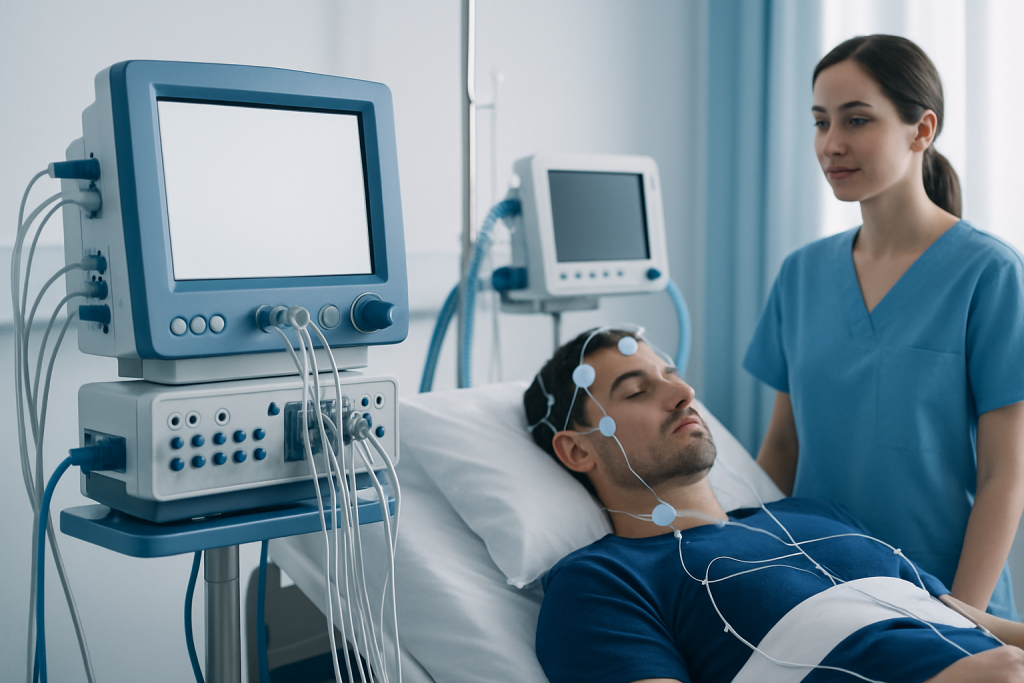
Testing is tailored to the problem. Overnight studies may be used to assess breathing, oxygen levels, brain activity, limb movements, and heart rhythm during sleep. In some cases, doctors may also recommend neurology consultation or referral to a sleep medicine specialist, especially when symptoms suggest complex sleep behaviors, unexplained daytime sleepiness, or a neurological contribution to sleep disturbance.
Using a Sleep Estimator in a Helpful Way
The most useful way to use a sleep estimator is as a planning tool rather than a scorecard. A person can start with the recommended sleep range for their age, then count backward from the required wake time to set a realistic bedtime. It is wise to include some extra time for winding down and falling asleep, rather than assuming sleep starts the moment the head touches the pillow.
It also helps to look at patterns across several weeks instead of one night. Tracking bedtime, wake time, naps, caffeine intake, exercise, and how alert a person feels in the daytime can reveal whether the schedule is sustainable. If the estimator suggests seven to nine hours but the person consistently needs to sleep much longer or still feels exhausted, the issue may be quality rather than quantity.
Sleep estimators are especially helpful during life transitions, such as a new job, school schedule, parenthood, travel, or shift changes. They can support small habit changes that improve consistency. Still, if concerns persist, the next step should not be trying more calculators. It should be discussing symptoms with a qualified clinician, who may advise treatments ranging from behavioral approaches to targeted care such as sleep apnea treatment when indicated.
Healthy Sleep Habits and When to Seek Medical Care
Good sleep habits can improve the value of any sleep estimate. Helpful measures include keeping a regular wake time, getting daylight exposure in the morning, limiting caffeine late in the day, reducing alcohol near bedtime, creating a cool and quiet sleep environment, and reserving the bed mainly for sleep. A calming wind-down routine and less screen exposure before bed can also support easier sleep onset.
Naps should be used thoughtfully. Short naps may help some people, but long or late naps can make nighttime sleep harder. Exercise often improves sleep, though vigorous activity very close to bedtime may not suit everyone. Importantly, ongoing dependence on over-the-counter sleep products should not replace medical advice, especially if sleep problems are frequent or worsening.
Medical care is appropriate when sleep problems last for several weeks, interfere with work, school, mood, or safety, or occur along with loud snoring, choking during sleep, chest discomfort, unusual nighttime behaviors, or severe daytime sleepiness. Urgent attention is needed if sleepiness raises the risk of driving or workplace accidents. Near the end of the care pathway, some patients may choose assessment at centers such as Acibadem International, where multidisciplinary specialists in JCI-accredited hospitals evaluate and treat sleep-related conditions for international patients.
Frequently asked questions
What is a sleep estimator?
A sleep estimator is a tool that estimates how much sleep a person may need or suggests bedtimes and wake times. It is meant to support sleep planning, not to diagnose a sleep disorder.
Are sleep estimators accurate?
They can be useful for general guidance, especially when based on age and schedule. However, they are only estimates and cannot fully measure sleep quality, fragmented sleep, or medical causes of tiredness.
Can a sleep estimator tell if someone has sleep apnea or insomnia?
No. A sleep estimator cannot diagnose sleep apnea, insomnia, or other sleep disorders. Persistent symptoms such as snoring, breathing pauses, frequent waking, or daytime sleepiness should be assessed by a doctor.
How much sleep do most adults need?
Most adults need at least seven hours of sleep per night, though some may feel best with more. Sleep need varies with age, health, stress, activity level, and individual differences.
Why do some people feel tired even after enough hours in bed?
Time in bed is not always the same as restorative sleep. Frequent awakenings, poor sleep quality, stress, medications, pain, sleep apnea, and other health conditions can all lead to unrefreshing sleep.
When should someone seek medical help for sleep problems?
Medical advice is recommended if sleep problems last for weeks, affect daily functioning, or involve snoring, gasping, breathing pauses, unusual behaviors during sleep, or excessive daytime sleepiness. Help is especially important if sleepiness affects driving, work safety, or mood.
References
- American Academy of Sleep Medicine
- Centers for Disease Control and Prevention
- National Heart, Lung, and Blood Institute
- National Institute of Neurological Disorders and Stroke
- World Health Organization
This article is for general information only and is not a substitute for professional medical advice. Please consult a qualified doctor about your individual situation.
Explore treatments in Turkey — costs, top hospitals & a free quote
JCI-accredited · board-certified surgeons · reply within 24h
Add us as a Preferred Source to see more of our trusted health content across Google Search, AI Overviews and Discover.
Check your numbers in seconds
BMI, calories, due date, blood pressure and 30+ more clinical calculators — free, instant, doctor-reviewed ranges.

More from the Health Library

Leep Procedure: A Complete Medical Overview

Early Warning Signs of Poor Health You Should Not Ignore

Normal Infant Length — Explained by Medical Evidence, Not Myths

Karo Syrup for Babies: An Evidence-Based Guide for Patients

Intercostal Muscle Strain: A Complete Medical Overview