Slipped Capital Femoral Epiphysis Treatment: How It Works, Results and What to Expect
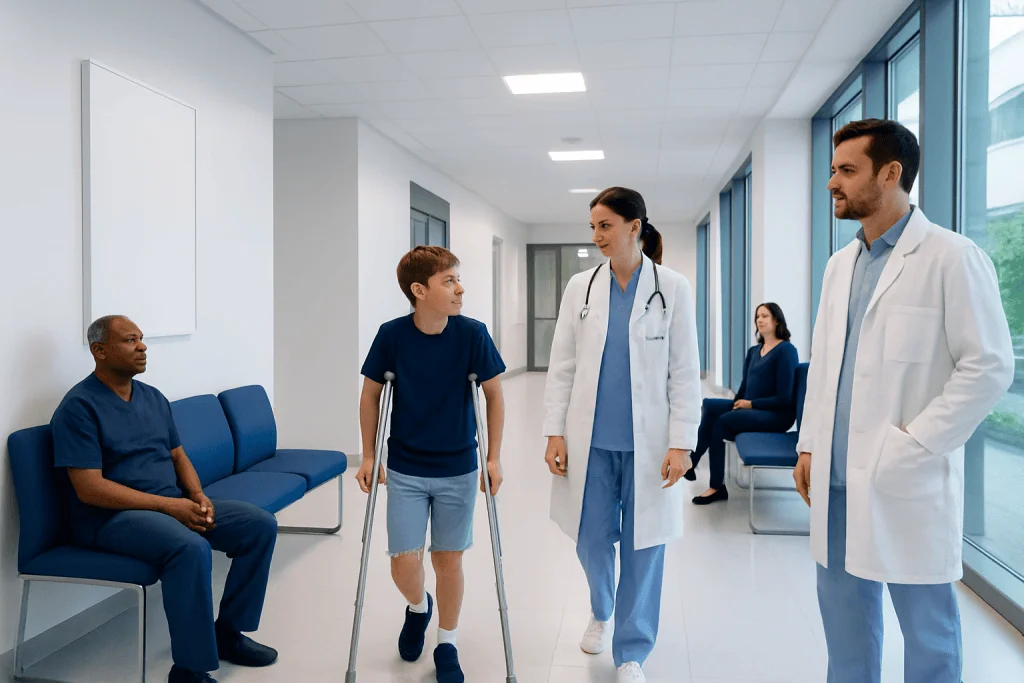
SCFE is a hip condition in which the upper end of the thigh bone slips through its growth plate. Most children and teenagers with SCFE need prompt surgical stabilization, commonly with a single screw.
Key Takeaways
- SCFE is a hip condition in which the upper end of the thigh bone slips through its growth plate.
- Most children and teenagers with SCFE need prompt surgical stabilization, commonly with a single screw.
- Weight-bearing is usually restricted before and for a period after surgery to protect the hip.
- Recovery varies with slip stability, severity and the child’s overall health, but follow-up commonly continues until growth is complete.
- New or worsening hip, groin, thigh or knee pain with limping in a growing child should be assessed promptly.
Slipped capital femoral epiphysis treatment is usually surgery to stabilize the growth plate of the hip and prevent further slipping. Early assessment and treatment can protect hip function and reduce the risk of long-term complications.
Overview: How slipped capital femoral epiphysis treatment works
Slipped capital femoral epiphysis (SCFE) is treated by preventing the upper part of the thigh bone from slipping further at the hip growth plate. In most cases, this means prompt orthopedic surgery, usually called in-situ fixation, in which a surgeon places a screw across the growth plate to hold the femoral head in a stable position while healing occurs.
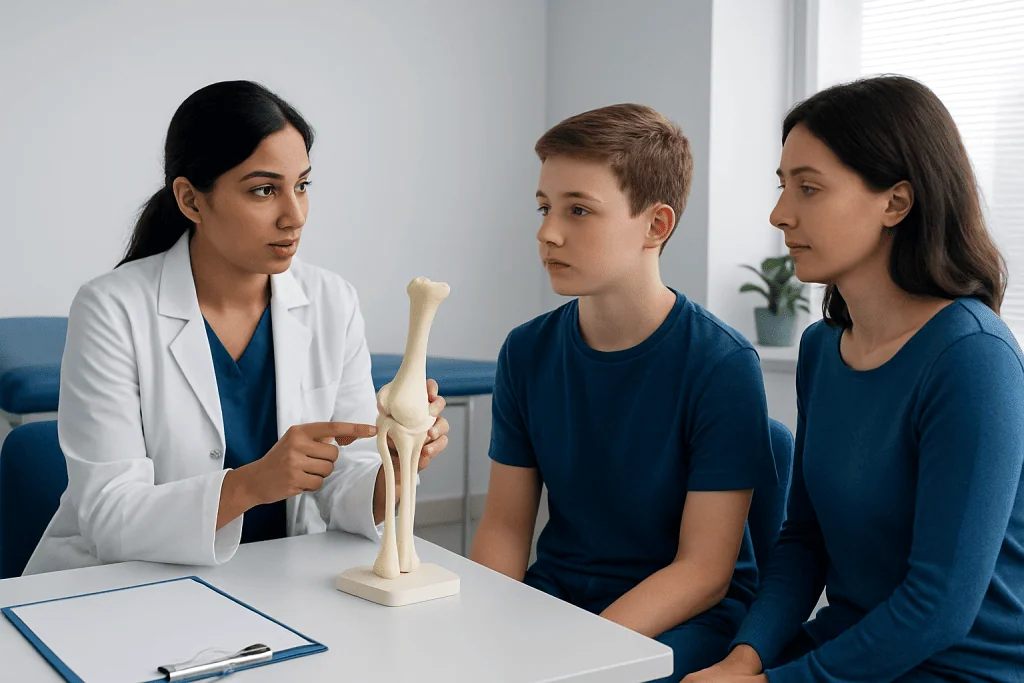
The procedure generally aims to stabilize rather than force the bone back into place. Attempting to reposition the hip can sometimes affect the blood supply to the femoral head, so the safest approach depends on whether the slip is stable or unstable and how severe it is. A pediatric orthopedic surgeon individualizes the plan after clinical assessment and imaging.
SCFE can affect one hip or both. The opposite hip may be monitored closely, and in selected children, the surgeon may discuss preventive fixation of the unaffected side when the likelihood of a future slip is considered high.
Who may need surgery and how SCFE is diagnosed
SCFE occurs while the growth plate is still open, most often during adolescence and periods of rapid growth. It may develop gradually over weeks or months, but it can also worsen suddenly. Pain may be felt in the groin, hip, thigh or even the knee, and a child may limp or turn the leg outward while walking.
A stable SCFE means the child can still walk, usually with or without crutches. An unstable SCFE means they cannot bear weight on the affected leg, even with support. Unstable slips require urgent specialist assessment because they carry a higher risk of complications affecting the hip joint.
Diagnosis includes a medical history, physical examination and hip X-rays, typically taken from more than one angle. Additional imaging may occasionally be needed. The team may also evaluate factors that can influence bone and growth-plate health, including endocrine conditions, particularly when SCFE occurs at an unusual age or body size.
- Hip, groin, thigh or knee pain with a limp should not be dismissed as a simple strain in a growing child.
- Until assessment, avoiding weight-bearing can help limit further slipping.
- Once SCFE is suspected or confirmed, referral to an orthopedic specialist is generally arranged promptly.
What happens during SCFE surgery
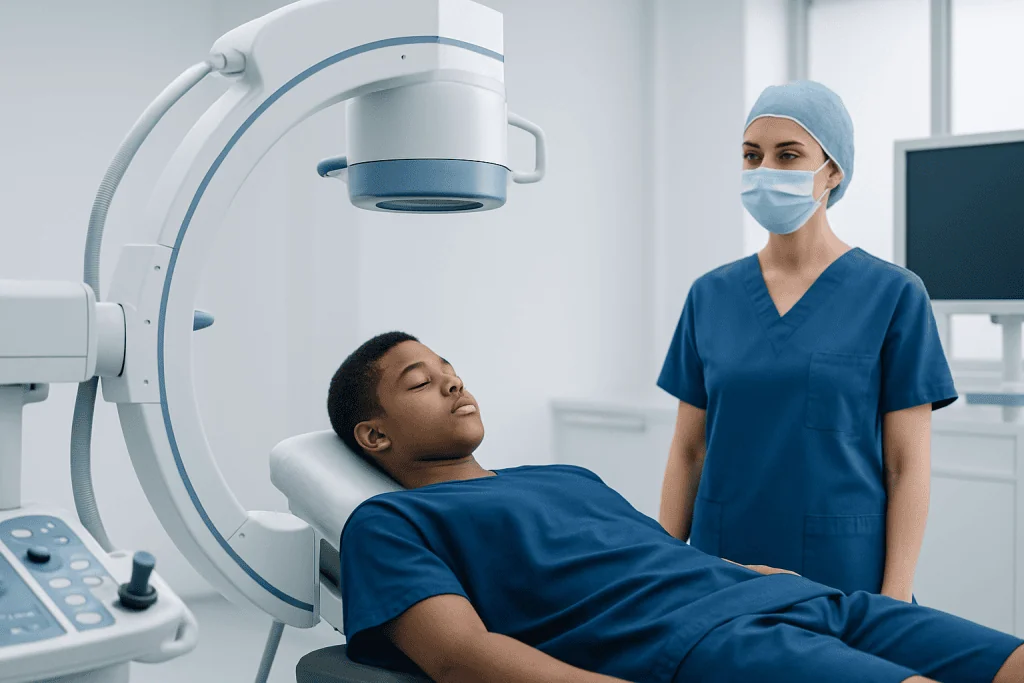
SCFE fixation is performed in an operating room under general anesthesia. The child is positioned carefully, and the surgical team uses real-time X-ray guidance to plan the safest path into the upper thigh bone. Through a small incision near the hip, the surgeon inserts one or more screws to secure the femoral head across the growth plate.
For a stable slip, the goal is commonly in-situ fixation: stabilizing the bone where it lies without deliberately reducing the displacement. With an unstable or severe slip, the surgical plan may be more complex. In some cases, specialized techniques are considered to address alignment, but these decisions require careful assessment of the risks and potential benefits.
The operation itself often takes a relatively short time, although preparation, anesthesia and recovery-room monitoring add to the hospital stay. Whether the child goes home the same day or stays longer depends on the type of slip, pain control, mobility and the treating team’s advice.
Families should ask the surgeon about the expected plan for the affected hip, whether the opposite hip needs monitoring or preventive treatment, and how school, sports and physical activity will be managed during healing.
Recovery timeline after slipped capital femoral epiphysis treatment
Recovery after slipped capital femoral epiphysis treatment depends on whether the slip was stable or unstable, the degree of displacement, the procedure performed and the child’s healing progress. After routine fixation of a stable SCFE, many children use crutches or a wheelchair and avoid putting full weight through the leg for several weeks. The exact restriction period is determined by the surgeon.
Follow-up visits include wound checks, symptom review and repeat X-rays to confirm that the hip remains stable. As healing progresses, the orthopedic team advises when partial and then full weight-bearing can resume. Physical therapy may be recommended to restore safe walking, hip movement, strength and confidence with daily activities.
Return to school may be possible before return to sports, depending on comfort, mobility needs and practical support. Running, jumping, contact sports and other high-impact activities are usually delayed until the surgeon confirms that the hip has healed sufficiently. Monitoring often continues through the remaining growth years because changes in hip shape or growth can occur over time.
Acibadem International’s multidisciplinary specialists and JCI-accredited hospitals support international patients needing assessment, surgery and follow-up planning for pediatric orthopedic conditions.
Benefits and possible risks of SCFE surgery
The main benefit of surgical stabilization is stopping further displacement at the growth plate. This can relieve instability, support healing and help preserve the hip joint for the future. Earlier treatment is generally associated with a better opportunity to protect the joint, although every child’s outcome depends on the type and severity of the slip.
As with any operation, SCFE surgery has potential risks. These can include infection, bleeding, blood clots, anesthetic complications, pain, screw-related problems and the need for additional surgery. Risks specific to SCFE include avascular necrosis, in which the blood supply to the femoral head is affected, and chondrolysis, involving damage to hip cartilage. These risks are more likely with unstable or severe slips.
Some children may later develop hip stiffness, altered hip shape, femoroacetabular impingement or early osteoarthritis. Regular follow-up helps the care team identify concerns early. Families should contact the surgical team promptly for fever, increasing redness or drainage from the incision, uncontrolled pain, numbness, a cold foot, or worsening inability to move the leg.
How painful is slipped capital femoral epiphysis?
SCFE can be mildly uncomfortable at first or quite painful, particularly when the slip becomes more severe. Pain is often felt in the groin, but some children mainly report pain in the thigh or knee. This can delay recognition because the hip may not be the area that seems to hurt.
The pain may worsen with walking, running or turning the leg. A child may limp, avoid activity or be unable to bear weight. Sudden severe pain with inability to walk can indicate an unstable slip and needs urgent medical evaluation.
After surgery, pain is usually managed with medications chosen by the clinical team, rest and the prescribed activity restrictions. Pain should gradually improve; new, escalating or persistent pain should be discussed with the treating orthopedic team.
Is SCFE an emergency surgery?
SCFE is considered an urgent orthopedic condition because continued weight-bearing may allow the slip to worsen. A child with suspected SCFE should stop weight-bearing and be assessed promptly by an orthopedic specialist or emergency department, particularly if there is significant pain or limping.
An unstable SCFE, where the child cannot walk or bear weight even with crutches, is generally treated as a surgical urgency. Prompt stabilization is important because unstable slips have a greater risk of damage to the blood supply of the femoral head.
Not every stable SCFE requires surgery within the same hour, but it should not be managed as a routine problem that can wait for weeks. The treating orthopedic team determines the appropriate timing based on symptoms, imaging findings and the child’s stability.
At what age is slipped capital femoral epiphysis most common?
SCFE is most common in adolescents, usually around puberty, when the growth plates are open and the body is growing quickly. It often develops between approximately ages 10 and 16, though it can occur outside this range.
The condition is more frequent in children with certain risk factors, including higher body weight and some hormonal or endocrine disorders. SCFE in a younger child, an older teenager or someone with a low body weight may prompt clinicians to look more closely for an underlying metabolic or endocrine condition.
Age alone cannot confirm or exclude SCFE. Any child or teenager with unexplained hip, groin, thigh or knee pain and a limp should receive a medical assessment, especially if symptoms persist or limit walking.
Frequently asked questions
How long does it take to recover from a slipped capital femoral epiphysis?
Initial recovery commonly involves several weeks of restricted weight-bearing after surgery, followed by a gradual return to walking as advised by the orthopedic surgeon. Return to sports can take longer and depends on healing, X-ray findings, hip movement and the type of activity. Follow-up may continue until skeletal growth is complete.
Can SCFE heal without surgery?
SCFE generally does not heal safely without stabilizing the growth plate. Continuing to walk on the affected hip may worsen the slip and increase the risk of long-term joint problems. A pediatric orthopedic surgeon can explain the most appropriate treatment for the individual child.
Will a child need physical therapy after SCFE surgery?
Some children benefit from physical therapy after the period of protection and restricted weight-bearing. It can help restore walking pattern, hip strength, flexibility and safe return to daily activities. The timing and exercises should follow the surgeon’s instructions.
Can slipped capital femoral epiphysis affect both hips?
Yes. SCFE may occur in both hips, either at the same time or at different times. The orthopedic team monitors the unaffected hip and may discuss preventive fixation for children who have a higher risk of a second slip.
When should a child with hip or knee pain see a doctor?
A child should be assessed promptly if hip, groin, thigh or knee pain causes limping, reduced activity or difficulty bearing weight. Urgent care is needed if the child cannot walk, has sudden severe pain, or symptoms rapidly worsen. Avoiding weight-bearing until assessment is a sensible precaution when SCFE is suspected.
References
- American Academy of Orthopaedic Surgeons
- OrthoInfo – American Academy of Orthopaedic Surgeons
- Pediatric Orthopaedic Society of North America
- National Institute of Arthritis and Musculoskeletal and Skin Diseases
This article is for general information only and is not a substitute for professional medical advice. Please consult a qualified doctor about your individual situation.
Joint and spine care in Turkey — expert assessment & treatment
JCI-accredited · board-certified surgeons · reply within 24h
Add us as a Preferred Source to see more of our trusted health content across Google Search, AI Overviews and Discover.