Slipped Capital Femoral Epiphysis
Quick answer
Slipped capital femoral epiphysis is a hip disorder in children and adolescents in which the top of the thigh bone shifts at the growth plate, causing pain, limping, and reduced movement. Treatment focuses on stabilizing the bone, usually with surgery, and at Acibadem in Turkey care is planned by pediatric orthopedic specialists using imaging, diagnosis, and follow-up to protect hip…
Overview
Slipped Capital Femoral Epiphysis, often shortened to SCFE, is an orthopedic condition that affects the hip joint in children and teenagers. It occurs when the ball at the top of the thigh bone, called the femoral head, slips out of position at the growth plate. The growth plate is an area of developing cartilage near the end of the bone that allows bones to grow during childhood and adolescence.
SCFE most often develops during periods of rapid growth, usually around puberty. It can affect one hip or both hips, and symptoms may appear gradually or suddenly. Because the hip is an important weight-bearing joint, early medical evaluation is important to help reduce the risk of long-term hip problems.
Symptoms
The symptoms of SCFE can vary depending on how much the femoral head has slipped and how quickly the condition develops. Some children have mild discomfort for weeks or months, while others develop sudden pain and difficulty walking.
- Pain in the hip, groin, thigh, or knee
- Limping or walking with the foot turned outward
- Stiffness or reduced movement in the hip
- Difficulty running, climbing stairs, or getting up from a chair
- Worsening pain with activity
- Inability or severe difficulty bearing weight on the affected leg
- One leg appearing shorter or positioned differently than the other
Knee pain can sometimes be the main complaint, even though the problem is in the hip. For this reason, persistent knee or thigh pain in a growing child may still require a hip examination.
Causes and Risk Factors
SCFE happens when the growth plate at the top of the thigh bone becomes weakened and can no longer hold the femoral head in its normal position. The exact reason this occurs is not always clear, and it is usually not caused by a single injury. In some cases, a minor fall or activity may bring attention to a slip that was already developing.
Several factors may increase the likelihood of SCFE:
- Adolescence and rapid growth, especially around puberty
- Being above a healthy weight for age and height, which increases stress on the hip growth plate
- Male sex, although SCFE can occur in any child
- A family history of similar hip problems
- Hormonal or endocrine conditions that affect growth and bone development
- Certain kidney or metabolic conditions
SCFE can sometimes occur in both hips, either at the same time or at different times. Children with underlying medical conditions or those who develop SCFE at an unusually young age may need additional assessment.
Diagnosis
Diagnosis begins with a medical history and physical examination. The doctor may ask about pain location, walking changes, recent growth, activity level, and how long symptoms have been present. During the examination, the hip’s range of movement is checked carefully. In SCFE, certain hip movements may be painful or limited.
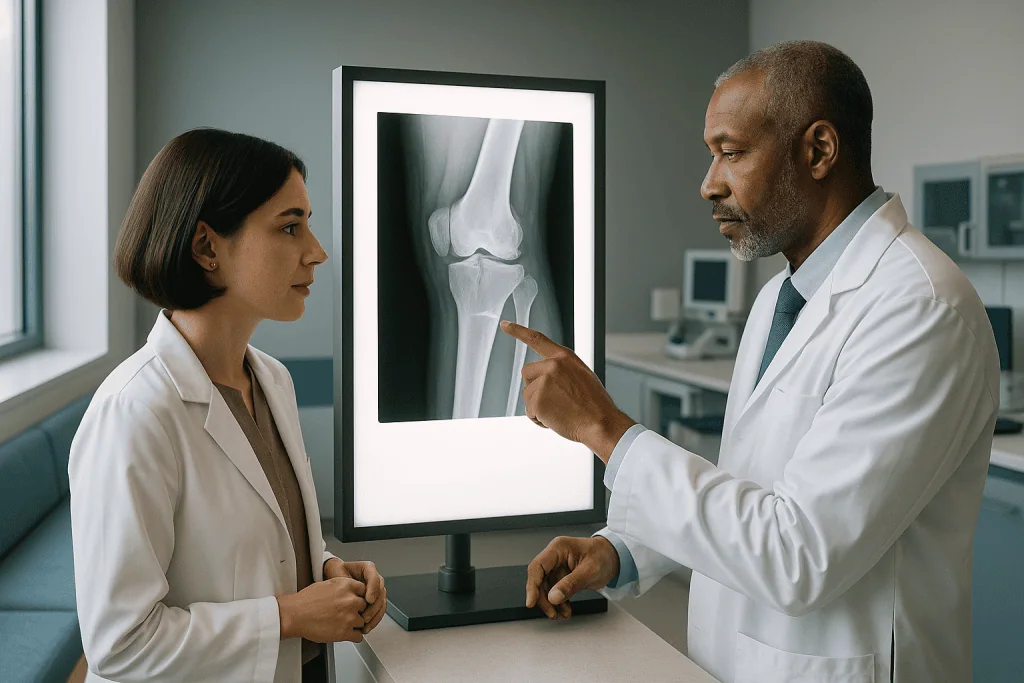
Imaging is essential to confirm the diagnosis. X-rays of both hips are commonly used to assess the position of the femoral head and the growth plate. In some situations, additional imaging may be recommended if symptoms are present but X-ray findings are not clear.
SCFE may be described as stable or unstable. In a stable slip, the child can usually walk, with or without support. In an unstable slip, the child cannot bear weight on the affected leg. This distinction helps guide urgency and treatment planning.
Treatment Options
Treatment for SCFE is usually surgical, with the main goal of preventing further slipping and protecting the hip joint. The specific approach depends on the severity of the slip, whether it is stable or unstable, the child’s age, and whether one or both hips are affected.
A common treatment involves placing a screw or fixation device across the growth plate to hold the femoral head in place. This is done to stabilize the hip rather than to “push” the slipped bone back into position in most cases. More complex slips may require additional orthopedic procedures, depending on the child’s condition and the surgeon’s assessment.
After treatment, follow-up is important. The medical team monitors bone healing, hip position, growth, and the other hip. Physical activity is usually limited for a period of time, and gradual return to movement is guided by the orthopedic team. Rehabilitation may be recommended to help restore strength, walking pattern, and hip function.
Possible complications can include reduced blood supply to the femoral head, joint stiffness, cartilage problems, differences in leg positioning, and earlier wear of the hip joint later in life. Early diagnosis and appropriate management can help reduce risks, but each child’s situation is different.
When to See a Doctor
A child or teenager should be assessed by a doctor if they have persistent hip, groin, thigh, or knee pain, especially if it is associated with limping or changes in walking. Hip stiffness, difficulty with sports, or pain that worsens with activity should also be evaluated.
Seek urgent medical care if a child suddenly develops severe hip or leg pain, cannot walk, or cannot put weight on the leg. These symptoms may indicate an unstable slip or another serious orthopedic problem that needs prompt attention.
SCFE is a treatable condition, but timely evaluation is important. Families should avoid assuming that ongoing limping or knee pain is simply due to growth, sports strain, or minor injury. An orthopedic assessment can help identify the cause and guide safe treatment planning.
Frequently Asked Questions
What is slipped capital femoral epiphysis?
Slipped capital femoral epiphysis, often shortened to SCFE, is an orthopedic condition that affects the hip joint in children and teenagers. It occurs when the ball at the top of the thigh bone, called the femoral head, slips out of position at the growth plate, an area of developing cartilage that allows bones to grow. It most often develops during periods of rapid growth, usually around puberty, and can affect one or both hips.
What symptoms can slipped capital femoral epiphysis cause in a child?
Symptoms can vary depending on how far the femoral head has slipped and how quickly the condition develops. Signs include pain in the hip, groin, thigh, or knee, limping or walking with the foot turned outward, hip stiffness, and difficulty running, climbing stairs, or getting up from a chair. Some children have mild discomfort for weeks or months, while others develop sudden pain. Knee pain can be the main complaint even though the problem is in the hip.
Who is more likely to develop slipped capital femoral epiphysis?
SCFE happens when the growth plate becomes weakened and can no longer hold the femoral head in its normal position. The exact reason is not always clear, and it is usually not caused by a single injury. Factors that may increase the likelihood include adolescence and rapid growth around puberty, being above a healthy weight for age and height, male sex, a family history of similar hip problems, and hormonal, endocrine, kidney, or metabolic conditions.
How is slipped capital femoral epiphysis diagnosed?
Diagnosis begins with a medical history and physical examination. Your doctor may ask about pain location, walking changes, recent growth, activity level, and how long symptoms have been present, and will carefully check the hip's range of movement. Imaging is essential to confirm the diagnosis; X-rays of both hips are commonly used, and additional imaging may be recommended if findings are not clear. The slip may be described as stable or unstable, which helps guide urgency and treatment planning.
How is slipped capital femoral epiphysis usually treated?
Treatment is usually surgical, mainly to prevent further slipping and protect the hip joint. A common approach places a screw or fixation device across the growth plate to hold the femoral head in place; in most cases this stabilizes the hip rather than pushing the bone back into position. More complex slips may need additional procedures. Your surgeon will decide based on the slip's severity and stability, the child's age, and whether one or both hips are affected.
When should a child with hip or knee pain see a doctor?
A child should be assessed by a doctor if they have persistent hip, groin, thigh, or knee pain, especially with limping or changes in walking. Hip stiffness, difficulty with sports, or pain that worsens with activity should also be evaluated. Seek urgent medical care if a child suddenly develops severe hip or leg pain, cannot walk, or cannot put weight on the leg, which may indicate an unstable slip. Do not assume ongoing limping is simply due to growth.
Medically reviewed by the Acıbadem International Medical Board September 13, 2026
See our medical review board →
Update history
- PublishedJune 14, 2026
- Medical review approvedSeptember 13, 2026
- Last content updateSeptember 12, 2026