Smashed Finger Swollen Purple: Possible Causes and When to Seek Care
Purple discoloration after a finger smash is commonly caused by bruising, but it does not rule out a fracture. Blood trapped beneath a nail can cause intense throbbing pain and may need professional drainage.
Key Takeaways
- Purple discoloration after a finger smash is commonly caused by bruising, but it does not rule out a fracture.
- Blood trapped beneath a nail can cause intense throbbing pain and may need professional drainage.
- A finger that looks crooked, feels numb, cannot move normally or has an open wound should be assessed urgently.
- Early gentle protection, elevation and wrapped cold packs can help reduce swelling and discomfort.
- Rings should be removed promptly from an injured finger before swelling increases.
A smashed finger that becomes swollen and purple usually reflects bruising from damaged small blood vessels after a crush injury. It can also involve a nail-bed injury, dislocation or fracture, so the severity of pain, movement, sensation and skin damage helps determine whether medical assessment is needed.
Overview: why a smashed finger turns swollen and purple
A smashed finger swollen purple after a door, drawer, tool, sports injury or other impact is most often a contusion, also called a bruise. The impact damages tiny blood vessels beneath the skin, allowing blood to leak into surrounding tissue. This creates purple, blue or dark-red discoloration and swelling, sometimes within minutes and sometimes more noticeably over the following day.
However, fingers contain small bones, joints, tendons, nerves and a sensitive nail bed in a compact space. A crush injury can therefore cause more than a simple bruise, including a fracture, joint injury, cut, nail-bed tear or blood collection under the nail. A person should not judge the injury by color alone; pain level, ability to move the finger, sensation and finger shape are equally important.
Many mild injuries improve with protection and basic home care. Yet prompt evaluation is appropriate when pain is severe or worsening, the finger is misshapen, the nail is badly damaged, or normal circulation and sensation seem affected. Early assessment can help protect finger function and support proper healing.
What symptoms can occur after a finger crush injury?
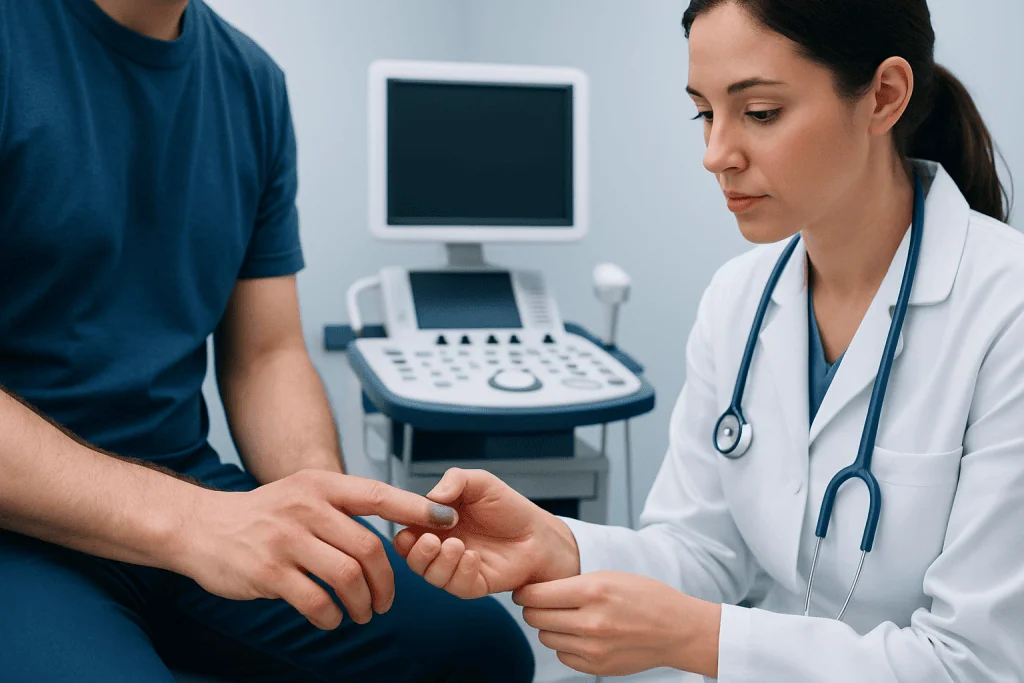
Symptoms vary with the force and location of the impact. A simple soft-tissue bruise can cause tenderness, swelling, stiffness and purple discoloration around one part of the finger. The color may later change to blue, green or yellow as the body gradually clears the blood pigments. Mild bruising can remain visible for one to two weeks, while swelling and stiffness may take longer to settle.
If the blow involved the nail, a dark purple, brown or black patch may appear beneath it. This is called a subungual hematoma, meaning blood has collected under the nail. It may be painless when small, but a larger collection can create pressure and marked throbbing. The nail may become loose later if the injury disrupted the tissue underneath.
Features that may suggest a more significant injury include sharp pain directly over a bone, inability to bend or straighten the finger, pain when the finger is gently compressed lengthwise, visible crookedness, or bruising that spreads rapidly. Tingling, numbness, a cold or pale fingertip, and reduced capillary refill are not typical of a minor bruise and need urgent attention.
- Swelling and tenderness at the impact site
- Purple or blue skin discoloration
- Stiffness or reduced range of motion
- Throbbing beneath a darkened nail
- Small cuts, bleeding or skin splitting in more forceful injuries
Possible causes of a purple swollen finger

Most cases follow a direct crush injury. Common examples include catching a finger in a closing door, dropping an object on the hand, striking the finger with a hammer, or being hit by a ball. The pressure can injure the skin and soft tissues without breaking the bone, producing a bruise and localized swelling.
A fracture of the fingertip bone or one of the other finger bones can occur with similar symptoms. In particular, a crush to the tip of the finger may cause a small fracture along with nail-bed injury. A joint may also be sprained, dislocated or fractured. These injuries may not always look dramatic, especially if swelling obscures the finger’s normal outline.
Less commonly, a purple or swollen finger may be related to an infection, inflammatory joint problem, circulation issue or an injury that happened earlier than recalled. After a clear recent smash, trauma is the likely explanation. Still, redness that spreads, increasing warmth, pus, fever or pain developing days after an open injury can point to infection rather than normal bruising and should be checked by a clinician.
How clinicians assess a smashed finger
A clinician will ask how the injury happened, when it occurred and whether there was immediate loss of movement, numbness or bleeding. They will examine the skin, nail, fingertip circulation, sensation and ability to bend and straighten each finger joint. Comparing the injured hand with the other hand can help identify subtle rotation, deformity or weakness.
An X-ray may be recommended when there is significant tenderness over a bone, marked swelling, impaired movement, nail-bed trauma, deformity or concern for a fracture or dislocation. X-rays can show many bone injuries, although some small fractures may be difficult to see immediately. Follow-up assessment can be useful if symptoms remain substantial despite an initially reassuring examination.
If blood is trapped under the nail and pain is intense, a trained clinician may consider draining it through a small opening in the nail. This is generally most useful soon after injury and should not be attempted at home. The clinician will also assess whether the nail bed needs repair, whether there is an open fracture, and whether tetanus vaccination status should be reviewed for a contaminated or open wound.
Treatment and safe home care
For a mild injury without deformity, open skin or concerning symptoms, initial care focuses on reducing swelling and protecting the finger. Remove rings promptly, as swelling can make them difficult to remove later. Rest the hand, keep it elevated above heart level when practical, and apply a cold pack wrapped in a cloth for short periods at a time during the first day or two. Do not place ice directly on the skin.
A clean light dressing may protect a small superficial cut. If movement is comfortable and there is no suspected fracture, gentle motion of the nearby joints can help limit stiffness after the first acute pain settles. Avoid forceful gripping, contact sports and activities that could cause another impact until tenderness and function improve. A pharmacist or clinician can advise whether an age- and health-appropriate non-prescription pain reliever is suitable.
Fractures, dislocations, significant nail injuries and tendon injuries may require splinting, reduction, wound repair or specialist hand care. It is important not to tape or splint a finger tightly, as this can interfere with circulation. A clinician can recommend the right immobilization method and duration, because the best approach depends on which bone or joint is involved.
It is best not to puncture a dark nail with a needle, heated object or other household item. This can introduce infection, burn the tissue or worsen a nail-bed injury. Medical drainage, when appropriate, is performed using clean technique after examination of the finger.
When to seek medical care
Medical care should be sought promptly, ideally the same day, if the finger looks bent, rotated or shortened; cannot be moved normally; has severe pain; or has a deep cut, exposed tissue or uncontrolled bleeding. A person should also seek urgent assessment if the fingertip is numb, pale, blue-gray, cold, or increasingly tight and swollen. These signs can indicate a problem with nerve function, circulation or a more serious structural injury.
A dark collection of blood under the nail accompanied by strong throbbing pain should be assessed, particularly after a high-force injury. Evaluation is also advisable when the nail is split, partly detached or associated with a cut at the base of the nail. Children should be assessed carefully after crush injuries because fingertip and growth-area injuries can be less obvious.
Even when urgent warning signs are absent, arrange a medical review if pain, swelling or limited movement is not clearly improving over several days, or if the finger remains very tender over a bone. Seek care for increasing redness, warmth, drainage, fever or red streaks after an open injury. These changes may suggest infection and should not be managed with home measures alone.
Recovery, prevention and follow-up
Recovery depends on the injury. A simple bruise may feel substantially better within days, although color changes and mild tenderness can last longer. A fractured finger, nail-bed injury or severe crush injury may need several weeks to heal. Nail growth is slow, so a damaged nail can take months to grow out and may temporarily look irregular while healing.
During recovery, protect the finger from repeat impact and follow any splinting or wound-care instructions provided. Once a clinician confirms that movement is safe, gradual use of the finger can help prevent stiffness. Persistent inability to fully bend or straighten the finger, ongoing numbness, or pain that limits daily activities warrants follow-up rather than waiting indefinitely for it to resolve.
Prevention often involves simple practical steps: keep fingers clear of door hinges and closing drawers, use protective gloves for manual work, and take care when lifting heavy items. In sports, suitable protective equipment and correct technique can reduce hand injuries. Acibadem International’s multidisciplinary specialists and JCI-accredited hospitals can assess and treat hand and finger injuries for international patients when specialist care is needed.
Frequently asked questions
Is a smashed finger that is swollen and purple always broken?
No. Purple discoloration and swelling commonly result from a bruise after small blood vessels are damaged. However, a fracture can cause the same appearance, so severe pain, bone tenderness, limited movement, deformity or a significant nail injury should be medically assessed.
How long does a purple swollen finger take to heal?
A mild bruise often begins improving within a few days and may fade over one to two weeks. Swelling and stiffness can last longer, especially after a stronger impact. Fractures and nail-bed injuries may require weeks of recovery and follow-up care.
Should a person ice a smashed finger?
A wrapped cold pack can help reduce pain and swelling during the first day or two after injury. It should be placed over a cloth barrier for short periods, rather than directly on the skin. If the finger is numb, pale, cold or severely painful, urgent assessment is more important than continued icing.
What does purple blood under a fingernail mean?
It usually means blood has collected beneath the nail after trauma, known as a subungual hematoma. Small collections may grow out with the nail, while larger painful ones may need drainage by a healthcare professional. Home puncturing of the nail is not safe.
Can a smashed finger be treated by taping it to the next finger?
Buddy taping can be useful for some minor stable injuries, but it is not right for every type of finger injury. It should not be used as a substitute for assessment when there is deformity, substantial swelling, severe pain, numbness or suspected fracture. Tape should always be loose enough to avoid affecting circulation.
When should an injured fingernail be checked by a doctor?
A doctor should assess a nail that is partly detached, deeply split, associated with a cut, or covering a painful dark blood collection. Prompt care is also important if there may be a fingertip fracture or if the injury was caused by a crush with a dirty object. Infection symptoms developing afterward also need medical review.
References
- American Academy of Orthopaedic Surgeons
- American Society for Surgery of the Hand
- National Health Service
- Mayo Clinic
- Merck Manual Consumer Version
This article is for general information only and is not a substitute for professional medical advice. Please consult a qualified doctor about your individual situation.
Joint and spine care in Turkey — expert assessment & treatment
JCI-accredited · board-certified surgeons · reply within 24h
Add us as a Preferred Source to see more of our trusted health content across Google Search, AI Overviews and Discover.