

Soft Tissue Sarcoma Surgery: Candidacy, Limb-Sparing Options, and Recovery
Surgery is often the primary treatment for localized soft tissue sarcoma. Many patients can have limb-sparing surgery instead of amputation.
Key Takeaways
- Surgery is often the primary treatment for localized soft tissue sarcoma.
- Many patients can have limb-sparing surgery instead of amputation.
- Treatment planning usually involves imaging, biopsy results, and a multidisciplinary team.
- Radiation therapy and, in selected cases, chemotherapy may be used before or after surgery.
- Recovery depends on tumor size, location, reconstruction needs, and rehabilitation.
Soft tissue sarcoma surgery is a main treatment used to remove cancer while protecting as much normal tissue and function as possible. Careful planning helps determine who is a candidate, whether limb-sparing surgery is feasible, and what recovery may involve.
Overview of Soft Tissue Sarcoma Surgery
Soft tissue sarcoma surgery is an operation to remove a sarcoma, a rare cancer that starts in soft tissues such as muscle, fat, blood vessels, nerves, tendons, or connective tissue. Surgery is often the main treatment when the tumor is localized and can be removed safely. The goal is to take out the cancer completely while leaving as much healthy tissue and function intact as possible.
For many people, surgery is part of a broader treatment plan rather than a standalone step. Depending on the tumor type, size, grade, and location, the care team may also recommend radiation therapy or chemotherapy before or after the operation. This approach helps reduce the risk of recurrence and may improve the chance of preserving the affected limb or organ.
Soft tissue sarcomas can occur almost anywhere in the body, but they are common in the arms, legs, trunk, and abdomen. Because these tumors may grow near important nerves, blood vessels, or bones, treatment planning is highly individualized. Operations can range from relatively straightforward tumor removal to complex procedures that require reconstruction.
Patients benefit most when surgery is planned by specialists experienced in soft tissue sarcoma. Sarcoma care often involves surgical oncologists, orthopedic oncologists, plastic and reconstructive surgeons, radiologists, pathologists, radiation oncologists, and rehabilitation experts working together.
Who May Be a Candidate for Surgery
Many patients with localized soft tissue sarcoma are candidates for surgery. In general, doctors consider surgery when the tumor can be removed completely and the person is well enough for anesthesia and recovery. Candidacy also depends on where the tumor is located and whether removal would leave acceptable function in the limb or body part involved.
Doctors assess several factors before recommending surgery. These include the tumor’s size, depth, grade, how close it is to nerves and major blood vessels, whether it has spread, and whether a previous surgery or biopsy has changed the tissue around it. A person’s age, overall health, mobility, and other medical conditions are also important.
In some situations, surgery may not be the first step. If a tumor is very large or lies close to critical structures, treatment may begin with radiation therapy or chemotherapy to shrink or control it before surgery. If the cancer has spread to other organs, surgery may still be useful in selected cases, but the care plan is usually tailored to the wider picture of disease control.
Because sarcomas are uncommon and complex, a second opinion at a center experienced in sarcoma treatment can be helpful. Careful planning from the beginning may improve the chance of complete removal and reduce the need for additional surgery later.
How Surgeons Plan the Operation
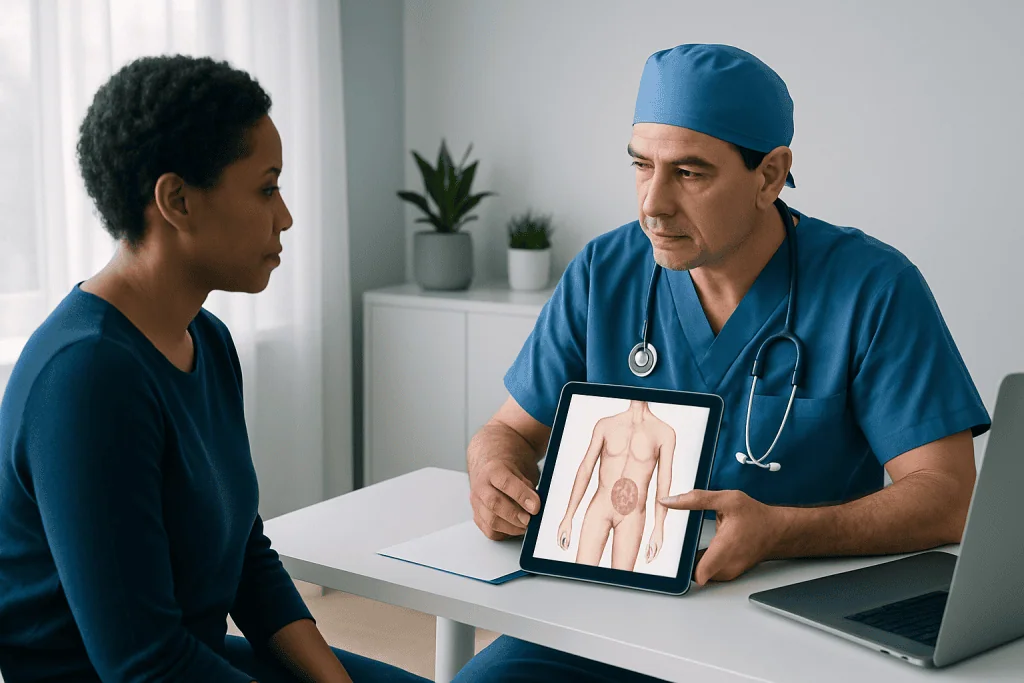
Before surgery, the team usually confirms the diagnosis with imaging and a biopsy. MRI is often used for tumors in the arms or legs because it shows the relationship between the sarcoma and nearby muscles, nerves, and vessels. CT scans may be used for tumors in the chest, abdomen, or pelvis, and chest imaging is commonly done to look for spread to the lungs.
The biopsy should ideally be planned by the same team that will manage the definitive treatment. This matters because the biopsy path and surrounding tissue may need to be removed during surgery to lower the risk of leaving cancer cells behind. Pathology also helps identify the sarcoma subtype and grade, which guide treatment decisions.
A central aim of surgery is to remove the tumor with a margin of healthy tissue around it. This is called a negative or clear margin. In some cases, achieving this margin is straightforward; in others, the tumor may be close to essential structures, so the team balances cancer control with preservation of movement, sensation, and stability.
When reconstruction is likely, the operation may involve additional specialists. For example, surgeons may rebuild soft tissue using flaps or grafts, repair blood vessels, or stabilize bone if it is affected. In selected patients, robotic surgery or other minimally invasive approaches may be considered for certain internal tumors, but many sarcomas still require traditional open surgery for safe and complete removal.
Limb-Sparing Surgery and When Amputation Is Considered
Limb-sparing surgery, also called limb-salvage surgery, aims to remove the entire sarcoma while preserving the arm or leg. Today, many patients with extremity soft tissue sarcoma can be treated this way. Advances in imaging, surgical techniques, reconstruction, and radiation therapy have made limb preservation possible in a large number of cases.
During limb-sparing surgery, the surgeon removes the tumor and a rim of normal tissue around it. If the tumor is close to or involves blood vessels, nerves, muscles, or skin, part of these structures may also need to be removed. Reconstruction can then restore coverage, blood flow, or function as much as possible, sometimes with the help of plastic or vascular surgery techniques.
Amputation is considered much less often than in the past, but it may still be the safest option in selected situations. This may happen when the tumor cannot be removed completely without destroying critical nerves or blood vessels, when a limb would remain painful or nonfunctional after surgery, or when recurrent disease makes limb preservation unrealistic. Even then, the decision is individualized and made with careful discussion of cancer control, function, rehabilitation, and quality of life.
Some people worry that limb-sparing surgery is always less effective than amputation. In many appropriately selected patients, limb-sparing treatment combined with radiation can offer good local control while maintaining better function. The best approach depends on the specific tumor, not on a one-size-fits-all rule.
Other Treatments Used With Surgery
Surgery is often combined with other treatments to improve outcomes. Radiation therapy may be given before surgery to shrink the tumor or after surgery to lower the risk of local recurrence. The timing depends on the tumor’s location, size, and the expected effects on wound healing and long-term tissue function.
Chemotherapy is not needed for every soft tissue sarcoma, but it may be considered for certain subtypes, higher-grade tumors, or disease that has spread. In some cases, doctors use it before surgery to try to reduce tumor size or after surgery when there is a higher concern about recurrence elsewhere in the body. Decisions are individualized because different sarcoma subtypes respond differently to medicines.
For selected abdominal or retroperitoneal tumors, care may overlap with the management of related cancers such as gastrointestinal stromal tumor (GIST), although these are distinct diseases with different treatment pathways. Some patients may also require reconstructive procedures after tumor removal, particularly if a large area of skin, muscle, or vessel is involved.
When surgery and supportive therapies are coordinated by a multidisciplinary team, treatment tends to be more organized and personalized. Near the end of the care pathway, patients may also discuss rehabilitation, nutrition, pain control, and emotional support to prepare for recovery as fully as possible.
Recovery, Rehabilitation, and Follow-Up
Recovery after soft tissue sarcoma surgery varies widely. A smaller tumor removed from an easily accessible area may allow a relatively quick recovery, while a large sarcoma near major muscles or vessels may require a longer hospital stay and more rehabilitation. If reconstruction is needed, healing may take additional time.
In the first days after surgery, the team monitors pain control, wound healing, swelling, and circulation. Some patients may have drains, dressings, or temporary movement restrictions. If the operation involved a limb, early guidance on safe movement is important to protect the repair and reduce stiffness.
Rehabilitation is a key part of recovery, especially after limb-sparing surgery. Physical therapy can help restore strength, flexibility, walking, balance, and day-to-day function. Occupational therapy may also help when surgery affects hand use, dressing, bathing, work tasks, or other practical activities.
Follow-up continues after the wound has healed because sarcoma can recur locally or spread to other areas. Visits commonly include physical examination and periodic imaging based on the tumor type, grade, and original location. At Acibadem International, multidisciplinary specialists in JCI-accredited hospitals diagnose and treat sarcoma for international patients, with care plans that may include rehabilitation and physical therapy as part of recovery.
Possible Risks and When to See a Doctor
All operations carry some risk, and soft tissue sarcoma surgery may be more complex when tumors are large or close to important structures. Possible complications include bleeding, infection, delayed wound healing, fluid buildup, pain, stiffness, numbness, weakness, or reduced limb function. If radiation therapy is part of treatment, wound healing may sometimes be slower.
Some patients may need further surgery if the final pathology shows cancer cells at the edge of the removed tissue, known as a positive margin. Additional treatment may also be recommended if the tumor behaves aggressively or if imaging later shows recurrence. These possibilities can feel stressful, but they are part of careful long-term management.
Patients should contact their doctor promptly if they develop fever, worsening redness, increasing swelling, drainage from the wound, severe pain not improving with treatment, new shortness of breath, or sudden changes in limb color or sensation. It is also important to report any new lump, persistent swelling, or unexplained symptoms during follow-up.
After treatment, self-care focuses on attending follow-up appointments, doing prescribed exercises, protecting the surgical area, and gradually returning to normal activity as advised. Questions about mobility, work, sports, or daily routines are common and worth discussing openly with the care team.
Frequently asked questions
Is surgery the main treatment for soft tissue sarcoma?
For many localized soft tissue sarcomas, surgery is the main treatment. The aim is to remove the tumor completely with a margin of healthy tissue while preserving function as much as possible. Some patients also need radiation therapy or chemotherapy as part of their treatment plan.
Can soft tissue sarcoma be removed without amputation?
In many cases, yes. Modern limb-sparing surgery can often remove the cancer while keeping the arm or leg, sometimes with reconstructive techniques if important tissues are involved. Amputation is usually reserved for situations where complete tumor removal and a functional limb cannot both be achieved safely.
How do doctors decide if limb-sparing surgery is possible?
Doctors look at the tumor's size, location, subtype, grade, and whether it involves major nerves, blood vessels, bone, or skin. Imaging such as MRI or CT helps show these relationships clearly. The decision also considers expected function after surgery and the person's overall health.
How long does recovery take after soft tissue sarcoma surgery?
Recovery time depends on the extent of surgery, the tumor location, and whether reconstruction or additional therapy is needed. Some people recover over a few weeks, while others need several months of rehabilitation. The care team usually gives a personalized timeline based on the operation performed.
Will radiation or chemotherapy be needed after surgery?
Not always. Radiation is often used before or after surgery for certain tumors to reduce the risk of local recurrence, while chemotherapy is used more selectively depending on the sarcoma subtype and stage. The final recommendation is based on pathology results and multidisciplinary review.
What follow-up is needed after surgery?
Regular follow-up is important because soft tissue sarcoma can recur or spread even after successful treatment. Appointments may include physical exams and imaging of the surgical area or chest, depending on the type of sarcoma. The schedule is individualized and is often more frequent during the first years after treatment.
References
- National Cancer Institute
- American Cancer Society
- National Comprehensive Cancer Network
- European Society for Medical Oncology
- World Health Organization
This article is for general information only and is not a substitute for professional medical advice. Please consult a qualified doctor about your individual situation.
Joint and spine care in Turkey — expert assessment & treatment
JCI-accredited · board-certified surgeons · reply within 24h
Add us as a Preferred Source to see more of our trusted health content across Google Search, AI Overviews and Discover.

Medical Oncology Department
Medical treatment of cancer with chemotherapy, immunotherapy and targeted therapies under a multidisciplinary tumor board.
60 specialists in this unitMore from the Health Library

Related Specialists

Dr. Rana Özgüven
Emergency Service
Dilek Küçükvardar
Physical Medicine & Rehabilitation
Prof. Dr. Kenan Hizel
Infectious Diseases & Clinical Microbiology
Assoc. Prof. Dr. Serap Şahin Önder
Otorhinolaryngology