Sore in Nose: What Patients Need to Know

A sore in nose is commonly caused by dryness, nose picking, blowing the nose often, allergies, or a minor infection. Symptoms can include tenderness, crusting, scabbing, bleeding, burning, or a pimple-like bump inside the nostril.
Key Takeaways
- A sore in nose is commonly caused by dryness, nose picking, blowing the nose often, allergies, or a minor infection.
- Symptoms can include tenderness, crusting, scabbing, bleeding, burning, or a pimple-like bump inside the nostril.
- Gentle moisture, avoiding irritation, and treating the underlying cause often help the area heal.
- Medical care is important if the sore lasts more than a couple of weeks, keeps returning, becomes very painful, or is linked to fever or spreading redness.
- People with diabetes, weakened immunity, or frequent skin infections should seek advice sooner.
A sore in nose is common and is often linked to dryness, minor irritation, allergies, or infection. Most nasal sores are not serious and improve with gentle self-care, but persistent, very painful, or repeatedly bleeding sores should be assessed by a doctor.
Overview: what a sore in nose usually means
A sore in nose usually refers to a tender area, crack, scab, ulcer, or small bump inside or around the nostril. In many cases, it develops because the delicate nasal lining has become dry or irritated. Repeated rubbing, blowing the nose, seasonal allergies, and indoor heating or air conditioning can all make the tissue more fragile.
Sometimes the sore is related to inflammation or infection. A small infected hair follicle, a cold sore near the nostril, or irritation from frequent use of nasal sprays may cause pain, crusting, or swelling. Less commonly, a sore that does not heal can be linked to an ongoing skin condition, an autoimmune disorder, or, rarely, a more serious growth.
Because the causes vary, it helps to look at the sore in context: how long it has been present, whether there is bleeding or discharge, and whether other symptoms such as congestion, fever, or facial pain are also present. A short-lived sore after a cold is different from one that returns repeatedly without a clear reason.
Common symptoms and how they may feel
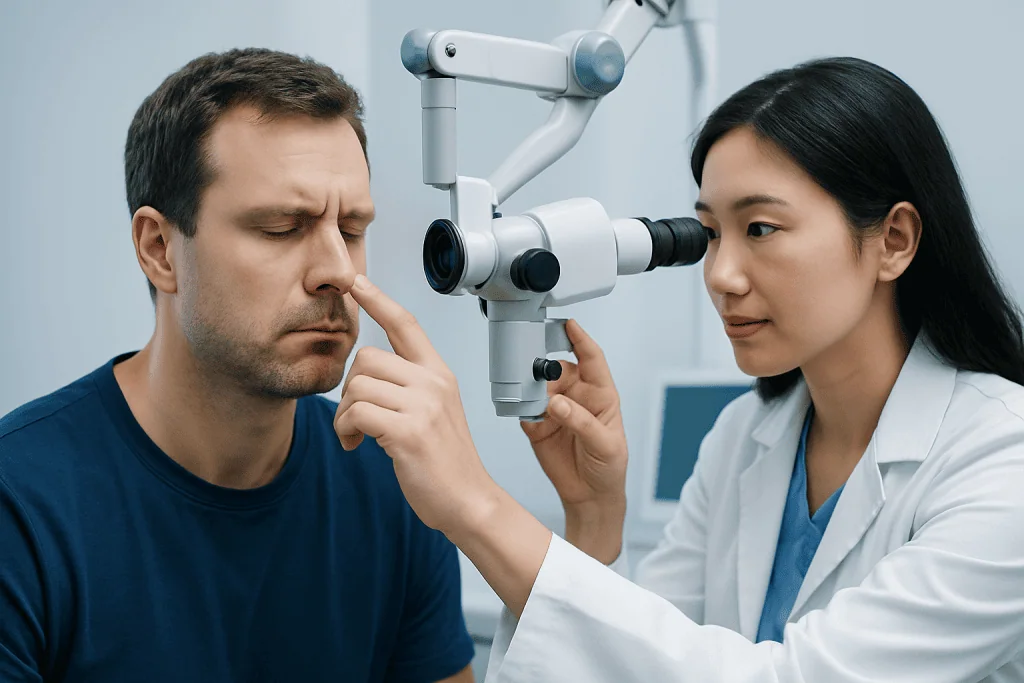
A sore in nose may feel different from person to person. Some people notice a dry, cracked area that stings when they breathe in cold air. Others feel a small painful bump, tenderness at the edge of the nostril, or crusting that sticks to the skin. If the area opens slightly, there may be spotting of blood when wiping or blowing the nose.
Symptoms often depend on the cause. Dryness usually causes burning, tightness, and fine cracks. Infection may cause redness, warmth, swelling, yellow crusting, or pus-like drainage. Viral sores can tingle before they appear and may form grouped blisters. If the lining is inflamed, there may also be itching, congestion, sneezing, or a blocked feeling in the nose.
- Pain or tenderness inside one nostril or both
- Crusting, scabbing, or repeated minor bleeding
- A pimple-like bump or inflamed hair follicle
- Burning, dryness, or irritation
- Swelling around the nostril opening
- Discharge, unpleasant odor, or worsening redness in some infections
A sore that heals and then comes back may suggest an ongoing trigger such as chronic dryness, habitual touching, allergies, or recurrent infection. That pattern is often useful for a doctor to know during evaluation.
Why sores develop inside the nose

The inside of the nose is lined with thin, moist tissue and very small blood vessels. This lining protects the airways, but it can be easily irritated. Dry climates, winter weather, heated rooms, dehydration, and long air travel may reduce moisture and lead to cracking. Repeated nose blowing during a cold or allergy flare can have the same effect.
Mechanical irritation is another frequent cause. Nose picking, trimming nose hairs aggressively, friction from tissues, or pressure from devices such as oxygen tubing can injure the lining. Some medicated or decongestant nasal sprays may also dry the nose when used too often or for too long.
Infection is also possible. Bacteria can infect tiny cuts or hair follicles near the nostril, causing localized pain, redness, and crusting. Viruses such as herpes simplex may cause sores around the nose and nostrils. Less often, fungal infection, inflammatory skin disease, or chronic sinus and nasal problems contribute. People with ongoing nasal blockage or recurrent sinus symptoms may also need assessment for related ENT issues, including sinusitis.
Risk factors and less common causes
Some people are more likely to develop a sore in nose. Frequent colds, seasonal allergies, chronic rhinitis, or exposure to smoke, chemicals, and dust can increase irritation. Skin conditions such as eczema, seborrheic dermatitis, or contact dermatitis may affect the skin at the nostril entrance and make it easier for sores to form.
Diabetes, immune system problems, and certain medications can increase the risk of infection or slow healing. Recurrent bacterial infections around the nose may happen in people who carry bacteria on the skin or who have repeated skin trauma from touching the area. In children, foreign bodies in the nose can sometimes cause irritation, discharge, or a sore, especially on one side.
Although uncommon, persistent sores deserve attention because a non-healing ulcer can rarely be linked to inflammatory disease or a skin cancer involving the nose. Warning signs include a sore that lasts several weeks, steadily enlarges, or repeatedly bleeds without obvious irritation. Nasal symptoms together with structural blockage may also need expert review for conditions such as nasal polyps, especially if congestion and reduced smell are present.
How doctors diagnose the cause
Diagnosis usually begins with a careful history and physical examination. A doctor will ask when the sore started, whether it is painful or itchy, and whether there has been recent illness, nose blowing, allergies, trauma, or use of nasal sprays. They may also ask about repeated bleeding, fever, facial pain, cold sores, and any history of skin conditions.
During the exam, the doctor looks at the nostril opening and the skin around it for cracks, crusting, swelling, discharge, or blisters. Sometimes a lighted instrument is used to see a little further into the nasal passage. If there are signs of repeated obstruction, sinus disease, or deeper irritation, an ENT evaluation may be advised, and some patients may benefit from nasal endoscopy to inspect the inside of the nose more closely.
Most people do not need extensive testing. However, a swab may be taken if a bacterial infection is suspected, and blood tests or a biopsy may be considered if the sore is unusual, severe, or not healing as expected. The goal is to identify whether the problem is simple irritation, infection, inflammatory disease, or a less common condition needing targeted treatment.
Treatment options and home care
Treatment depends on the cause. For simple dryness or irritation, the main approach is to protect the lining and allow it to heal. This usually means avoiding picking or rubbing, reducing exposure to very dry air, and using a gentle moisturizing approach recommended by a clinician or pharmacist. Saline sprays or saline gels are often used to add moisture without irritating the tissue.
If the sore appears infected, a doctor may recommend treatment aimed at the infection, such as a topical medication or, in some cases, an oral medicine. If allergies are contributing, controlling the underlying nasal inflammation can reduce repeated trauma from rubbing and blowing. When overuse of a decongestant spray is part of the problem, the doctor may advise a safer plan to stop or reduce it.
Supportive measures can make healing easier:
- Use a humidifier if indoor air is very dry
- Apply saline products as directed to keep the nose moist
- Drink enough fluids and avoid smoke or chemical irritants
- Trim nails and avoid touching or picking the inside of the nose
- Blow the nose gently and use soft tissues
If a structural issue or chronic sinus problem is contributing to repeated irritation, an ENT specialist may consider broader treatment options. Depending on the underlying diagnosis, this may include medical management for sinusitis treatment or other targeted care. In selected patients with persistent nasal blockage related to anatomy, procedures such as septoplasty may be discussed, but this is only relevant when a doctor identifies a structural problem rather than a simple sore.
Prevention and everyday self-care
Prevention focuses on protecting the nasal lining from dryness and repeated injury. Keeping the nose comfortably moist is often the most helpful step, especially in winter, on airplanes, or in heavily air-conditioned settings. Simple habits such as gentle nose blowing and avoiding frequent checking or touching of the sore can prevent the area from reopening.
People with allergies may benefit from discussing a long-term plan with a doctor so sneezing, rubbing, and congestion are better controlled. It is also important to use nasal medications exactly as directed. Sprays that are very helpful in the short term can become irritating if used too often or incorrectly.
Good hand hygiene can reduce the chance of introducing bacteria into small cracks near the nostrils. If facial skin is sensitive, fragrance-free skin care products and avoiding harsh cleansers around the nose may help. For those who get recurring sores, keeping track of triggers such as colds, dry weather, or certain products can make future episodes easier to prevent.
When to seek medical care
Many nasal sores improve within days to a couple of weeks with gentle care. Medical advice is recommended if a sore in nose lasts longer than expected, keeps returning, or is becoming more painful instead of healing. A clinician should also assess any sore linked to increasing redness, swelling, pus, fever, or pain that spreads into the cheek or upper lip.
Prompt review is especially important if there is frequent nosebleeding, a foul-smelling discharge from one side, trouble breathing through the nose, or a lump that seems to be growing. People with diabetes, cancer treatment, immune suppression, or recurrent skin infections should seek care sooner because infection can become more complicated.
If specialist assessment is needed, ENT doctors can evaluate both the sore itself and any contributing nasal problem. Acibadem International’s multidisciplinary specialists and JCI-accredited hospitals diagnose and treat ENT conditions for international patients when further evaluation is needed.
Frequently asked questions
Why do I keep getting a sore in my nose?
Recurring sores are often caused by ongoing dryness, allergies, repeated nose blowing, or frequent touching of the inside of the nose. In some people, repeated bacterial infection, skin conditions, or chronic nasal inflammation also play a role. If it keeps coming back, a doctor can help identify the trigger.
Can a sore in nose heal on its own?
Yes, many mild nasal sores heal on their own once irritation stops and the area is kept moist and protected. Healing is more likely when the person avoids picking, rubbing, and overusing drying nasal sprays. If it does not improve within a couple of weeks, medical review is sensible.
Is a sore inside the nose usually an infection?
Not always. Many sores are caused by dryness or minor trauma rather than infection. Infection is more likely if there is increasing pain, swelling, yellow crusting, discharge, warmth, or fever.
What should be avoided when there is a sore in nose?
It is best to avoid picking the nose, forceful blowing, harsh products, and cigarette smoke or other irritants. Overuse of some decongestant sprays can also worsen dryness and irritation. Gentle care usually supports better healing.
Can allergies cause a sore in nose?
Yes. Allergies can lead to itching, sneezing, congestion, and frequent wiping or blowing, all of which can irritate the nasal lining. Treating the allergy and keeping the inside of the nose moist may reduce repeat sores.
When is a sore in nose a reason for concern?
A sore deserves medical attention if it lasts more than a few weeks, bleeds often, becomes increasingly painful, or returns repeatedly. Care is also important if there is fever, spreading redness, facial swelling, or a bad-smelling discharge, especially from one nostril.
This article is for general information only and is not a substitute for professional medical advice. Please consult a qualified doctor about your individual situation.
Explore treatments in Turkey — costs, top hospitals & a free quote
JCI-accredited · board-certified surgeons · reply within 24h
Add us as a Preferred Source to see more of our trusted health content across Google Search, AI Overviews and Discover.

More from the Health Library

Hip Xray — Explained by Medical Evidence, Not Myths

Liver Function Panel: A Complete Medical Overview

Shaving with Shaving Oil: What Patients Need to Know

Sinuses: An Evidence-Based Guide for Patients

Horse Chestnut: What Patients Need to Know