Soreness on the Left Side of the Face: Possible Causes

One-sided facial soreness is commonly linked to the teeth, jaw muscles, sinuses, headaches, or facial nerves. Pain triggered by chewing, jaw movement, cold foods, or touching a tooth can point toward dental or temporomandibular joint concerns.
Key Takeaways
- One-sided facial soreness is commonly linked to the teeth, jaw muscles, sinuses, headaches, or facial nerves.
- Pain triggered by chewing, jaw movement, cold foods, or touching a tooth can point toward dental or temporomandibular joint concerns.
- Sudden facial drooping, weakness, numbness, trouble speaking, or severe new headache requires emergency assessment.
- A clinician may examine the teeth, jaw, sinuses, ears, skin, nerves, and eye to identify the underlying cause.
- Self-care can help mild muscular discomfort, but persistent, worsening, or unexplained symptoms should be assessed.
Soreness on the left side of the face is a symptom rather than a diagnosis. It may be related to jaw strain, dental problems, sinus inflammation, headache disorders, nerve irritation, or skin conditions; the pattern of symptoms helps guide appropriate care.
Overview: what can soreness on the left side of the face mean?
Soreness on the left side of the face can result from a wide range of usually treatable issues, including jaw tension, a tooth problem, sinus inflammation, migraine, or irritation of a facial nerve. The location, quality, timing, and triggers of discomfort are often more informative than the side of the face alone.
Some people describe a dull ache, pressure, tenderness, tightness, burning, or brief electric-shock-like pain. Facial soreness may occur in the cheek, temple, forehead, jaw, around the eye, or near the ear. It can also occur with symptoms such as nasal congestion, tooth sensitivity, headache, skin changes, ear discomfort, or difficulty opening the mouth.
Although many causes are not emergencies, new facial symptoms should not be ignored when they are severe, persistent, or accompanied by neurological changes. A healthcare professional can distinguish common local causes from conditions that require prompt specialist assessment.
Reading the pattern: symptoms that offer clues
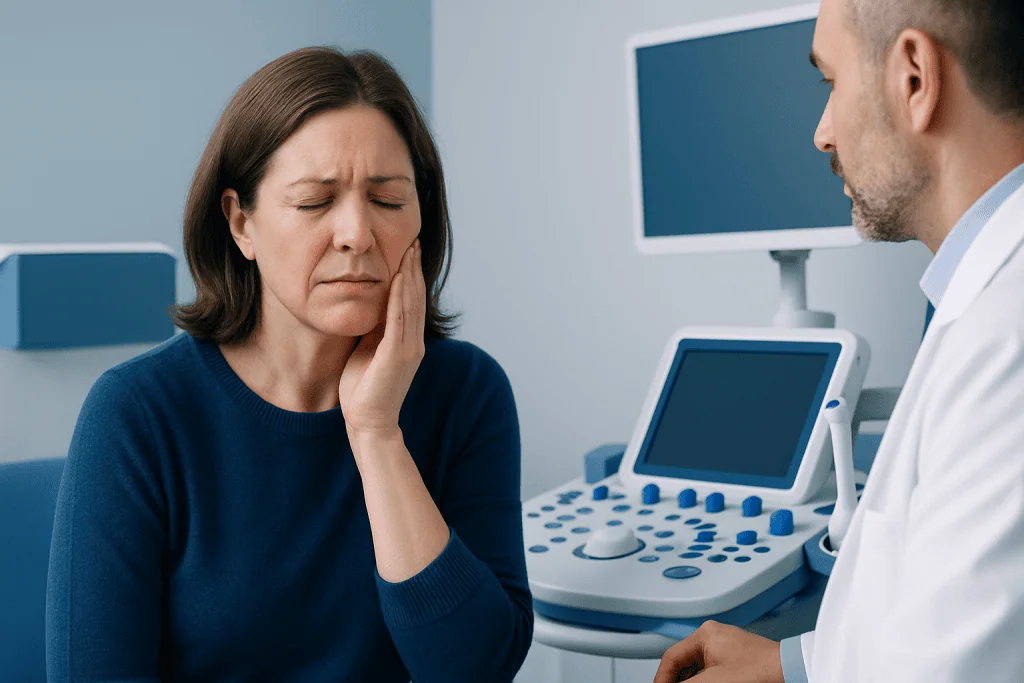
Facial soreness related to muscles or the temporomandibular joint (TMJ) often feels like aching around the jaw, ear, temple, or cheek. It may worsen with chewing, yawning, clenching the teeth, speaking for long periods, or waking after sleep. Jaw clicking, limited mouth opening, or a sense that the bite has changed may also occur.
Dental pain can be felt in the cheek or jaw and may be difficult to identify precisely. Sensitivity to hot, cold, or sweet foods, pain when biting, gum swelling, bad taste in the mouth, or a visibly damaged tooth can suggest a tooth or gum source. An upper tooth infection can sometimes create pressure that resembles sinus discomfort.
Sinus-related pressure generally affects the cheek, nose, forehead, or area around the eye and may come with congestion, thick nasal discharge, reduced smell, or symptoms following a cold. Migraine may cause one-sided facial pain alongside headache, nausea, light sensitivity, sound sensitivity, or visual symptoms. Brief, intense bursts of pain triggered by touching the face, brushing teeth, or eating may suggest a nerve-pain pattern that needs medical evaluation.
- Dull, tender ache: often muscular, jaw-related, dental, or sinus-related.
- Throbbing with headache features: may occur with migraine or another headache disorder.
- Sharp, stabbing, electric pain: can occur with nerve irritation.
- Burning pain with a rash or blisters: may indicate shingles and should be assessed promptly, especially near the eye.
Common causes and contributing factors

Jaw muscle overuse is a frequent explanation for facial soreness. Teeth grinding or clenching, stress, gum chewing, poor sleep, and prolonged jaw tension can overload the muscles around the jaw and temples. Temporomandibular disorders can involve the jaw joint itself, the surrounding muscles, or both.
Dental conditions such as tooth decay, cracked teeth, gum disease, impacted wisdom teeth, or an abscess can cause pain that spreads into the face. Dental infection can become more serious if swelling, fever, difficulty swallowing, or difficulty breathing develops, so these symptoms should be addressed urgently.
Respiratory infections and allergies may inflame the nasal passages and sinuses. However, facial pressure alone does not always mean a bacterial sinus infection. Symptoms lasting a long time, worsening after initial improvement, or occurring with significant facial swelling deserve clinical review.
Other possible causes include migraine, cluster headache, ear conditions, salivary gland inflammation, skin infections, shingles, injury, and neuropathic pain. Trigeminal neuralgia is an example of a condition that can cause sudden, severe facial pain in the distribution of the trigeminal nerve. Less commonly, facial discomfort can occur with autoimmune conditions or other systemic illnesses, which is why a full assessment may be important when symptoms are ongoing.
How clinicians evaluate one-sided facial soreness
A clinician will usually begin by asking when the soreness began, where it is felt, how long episodes last, and what brings it on or relieves it. They may ask about recent dental treatment, respiratory illness, stress, injury, headaches, rashes, vision changes, medications, and medical history.
The examination may include checking the face for swelling, tenderness, rashes, and weakness; assessing jaw movement and jaw-joint sounds; looking in the mouth and ears; and examining the nose, sinuses, eyes, and neck. A neurological examination can help identify altered sensation, changes in facial movement, or other signs involving the nervous system.
Further testing is not always needed. Depending on the findings, a dentist may take dental X-rays, while a physician may recommend blood tests, sinus imaging, or MRI or CT imaging when symptoms suggest a deeper infection, nerve-related condition, injury, or another structural cause. The goal is to treat the cause rather than only suppress the discomfort.
Treatment options depend on the cause
Management is tailored to the underlying problem. For jaw-related soreness, clinicians may recommend reducing jaw overuse, eating softer foods temporarily, applying gentle heat, improving posture, addressing stress, and using professionally guided jaw exercises. Dental care may be needed for decay, infection, gum disease, or a cracked tooth, and timely treatment is important if infection is suspected.
When sinus symptoms are related to a viral illness or allergies, supportive measures and treatment of the nasal inflammation may be appropriate. Antibiotics are not routinely useful for every case of facial pressure and should only be used when a clinician believes a bacterial infection is likely. Migraine treatment may include strategies to manage acute attacks and, for frequent episodes, prevent future attacks.
Nerve-pain conditions require a medical diagnosis because standard pain relief may not be sufficient. Clinicians may prescribe medicines specifically used for neuropathic pain and investigate whether another condition is contributing. Shingles can benefit from early medical treatment, particularly if it affects the forehead, nose, or eye area.
For persistent jaw symptoms, a dentist, oral and maxillofacial specialist, ENT specialist, neurologist, or pain specialist may work together as needed. Acibadem International’s multidisciplinary specialists and JCI-accredited hospitals diagnose and treat facial pain-related conditions for international patients.
Self-care for mild symptoms
For mild facial soreness without warning signs, it can be helpful to rest the jaw and avoid habits that increase strain, such as chewing gum, biting nails, clenching, or eating very hard foods. Gentle heat over the sore jaw or cheek may ease muscle tightness. Maintaining hydration, regular meals, and adequate sleep can also be useful, particularly when headaches contribute to symptoms.
A person can keep a brief symptom diary noting the exact location, severity, duration, triggers, associated symptoms, foods or activities involved, and any treatments tried. This information can make a dental or medical assessment more efficient and may help reveal links with teeth grinding, migraines, allergies, or specific movements.
Over-the-counter pain medicines may be suitable for some adults when used according to the package directions and when there is no medical reason to avoid them. They are not a substitute for professional care if pain is persistent, recurrent, severe, or associated with swelling, fever, rash, or neurological symptoms. It is best not to place aspirin or other substances directly on the gums, as this can irritate oral tissues.
When to seek medical care
Prompt medical or dental assessment is recommended for facial soreness that lasts more than a few days, repeatedly returns, interferes with eating or sleep, or has no clear explanation. It is also important to seek care for tooth pain, gum swelling, jaw locking, facial swelling, fever, a new rash, eye pain, vision changes, or worsening sinus symptoms.
Emergency care is needed for sudden facial drooping, weakness or numbness of the face or body, trouble speaking or understanding speech, new confusion, loss of balance, severe sudden headache, fainting, or sudden vision loss. These symptoms can be signs of a neurological emergency and should be assessed immediately.
Urgent evaluation is also needed for swelling that spreads rapidly, difficulty breathing or swallowing, inability to open the mouth, severe pain after an injury, or a blistering rash near the eye. Early assessment supports safer treatment and helps protect vision, breathing, and neurological function.
Frequently asked questions
Can stress cause soreness on the left side of the face?
Yes. Stress can contribute to jaw clenching, teeth grinding, muscle tension, and headaches, all of which may cause one-sided facial soreness. If symptoms are frequent or the jaw clicks, locks, or hurts with chewing, a dentist or clinician can assess for a temporomandibular disorder.
Is soreness on one side of the face a sign of a stroke?
Facial soreness alone is not a typical stroke symptom. However, sudden facial drooping, numbness, weakness, speech difficulty, confusion, balance problems, or severe sudden headache needs emergency assessment immediately.
How can a person tell whether facial soreness is from a tooth?
Dental pain may worsen with biting or exposure to hot, cold, or sweet foods and drinks. Tooth sensitivity, gum swelling, a bad taste, or pain in a particular tooth are further clues, but pain can spread, so a dental examination is the best way to confirm the cause.
Can sinus problems cause pain in only one cheek?
Yes. Inflammation in one or more sinuses can cause pressure or tenderness in a cheek, around an eye, or in the forehead. Congestion, nasal discharge, reduced sense of smell, or symptoms after a respiratory infection may occur as well.
What does trigeminal neuralgia feel like?
Trigeminal neuralgia usually causes sudden, brief, severe stabbing or electric-shock-like pain on one side of the face. Attacks may be triggered by light touch, washing the face, chewing, talking, or brushing the teeth. A clinician should evaluate this pattern because treatment differs from that used for muscle or dental pain.
Should a person use heat or cold for facial soreness?
Gentle heat may help muscle tightness around the jaw or cheek. Cold may feel more comfortable after a minor injury or when swelling is present, but it should be wrapped and used briefly. Persistent swelling, fever, or severe pain should be assessed rather than managed at home alone.
This article is for general information only and is not a substitute for professional medical advice. Please consult a qualified doctor about your individual situation.
Explore treatments in Turkey — costs, top hospitals & a free quote
JCI-accredited · board-certified surgeons · reply within 24h
Add us as a Preferred Source to see more of our trusted health content across Google Search, AI Overviews and Discover.

More from the Health Library

Phlebotomy: An Evidence-Based Guide for Patients

Gas trapping symptoms: A Complete Medical Guide for Patients

Ear Blackheads: What Patients Need to Know

Myoglobin: What Patients Need to Know

Emg Test: An Evidence-Based Guide for Patients