Emg Test: An Evidence-Based Guide for Patients
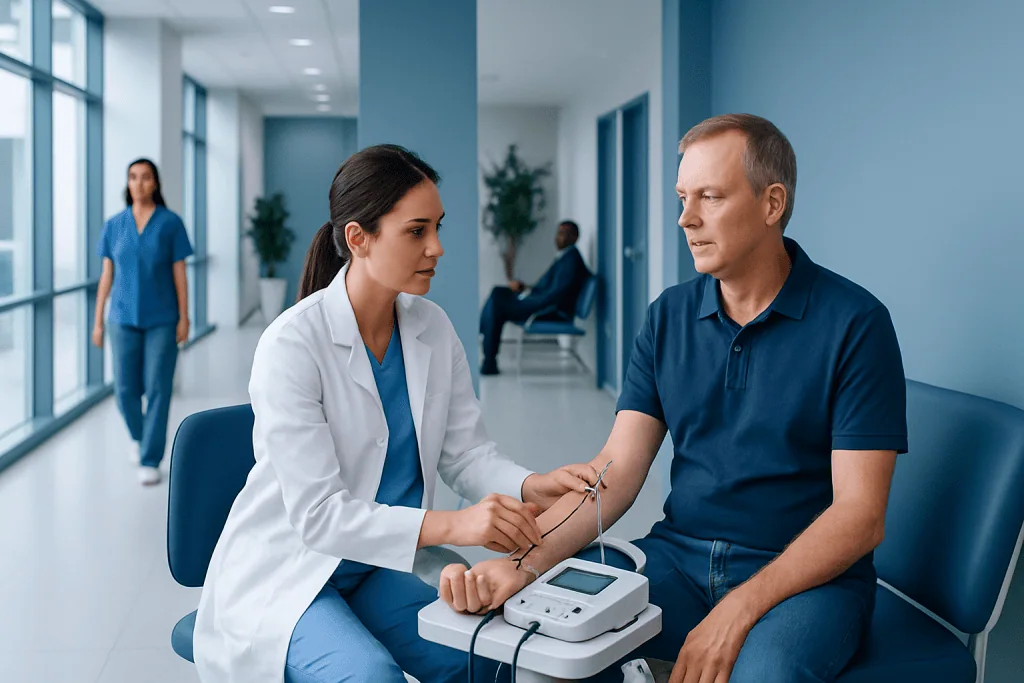
An emg test helps evaluate how well muscles and the nerves controlling them are working. EMG is often paired with a nerve conduction study, but they are different parts of the same evaluation.
Key Takeaways
- An emg test helps evaluate how well muscles and the nerves controlling them are working.
- EMG is often paired with a nerve conduction study, but they are different parts of the same evaluation.
- The test can help diagnose nerve injuries, neuropathies, muscle disorders, and conditions affecting the nerve roots or motor neurons.
- Most people can return to normal activities soon after testing, with only mild temporary discomfort.
- Results must be interpreted together with symptoms, examination findings, and sometimes imaging or blood tests.
An emg test is a medical test that measures electrical activity in muscles and often works together with a nerve conduction study to assess nerve and muscle function. It can help explain symptoms such as weakness, numbness, tingling, muscle cramps, or pain, and it is usually performed as an outpatient procedure.
What an EMG test is and why it is done
An emg test, short for electromyography, is a diagnostic test that records the electrical activity produced by muscles. In simple terms, it helps a doctor understand whether symptoms are more likely to come from a muscle problem, a nerve problem, or the connection between the nerve and the muscle. It is commonly ordered when a person has unexplained weakness, tingling, numbness, muscle twitching, cramping, or pain that suggests nerve involvement.
EMG is often done together with a nerve conduction study. The nerve conduction part checks how quickly and effectively electrical signals travel through nerves, while the needle EMG part examines the electrical signals inside muscles. Because these two tests answer slightly different questions, they are frequently combined to give a clearer picture.
Doctors may recommend EMG when they suspect conditions such as a pinched nerve in the neck or lower back, peripheral neuropathy, carpal tunnel syndrome, muscle inflammation, or disorders affecting the motor nerves. It may also be used to help assess symptoms related to Parkinson’s disease or other neurological conditions, although EMG itself is not the main test for every movement disorder.
Symptoms and situations that may lead to an EMG test
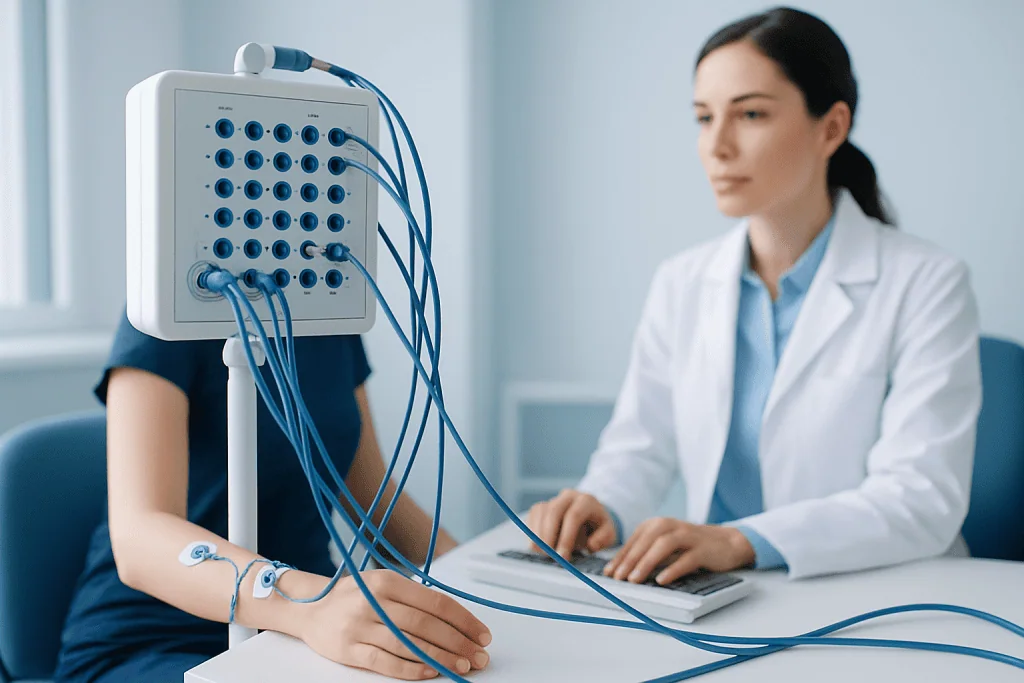
An EMG test is not a routine screening test. It is usually requested when symptoms suggest a problem in the nerves or muscles. Common reasons include persistent numbness in the hands or feet, burning or shooting pain, muscle weakness, loss of grip strength, foot drop, repeated muscle cramps, or visible muscle twitching.
The test may also be helpful when a person has neck pain or back pain that radiates into an arm or leg, especially if there is concern about a compressed nerve root. In these situations, an EMG can sometimes support the diagnosis alongside a physical examination and imaging such as MRI scanning. It can also help clarify whether symptoms are caused by a single trapped nerve, a more widespread nerve condition, or a primary muscle disorder.
Doctors also use EMG to investigate symptoms after injury or surgery, or when recovery of a damaged nerve needs to be monitored over time. In some cases, testing is ordered when blood tests or scans do not fully explain symptoms, and the next step is to assess the function of the nerves and muscles directly.
How the test works: EMG and nerve conduction study
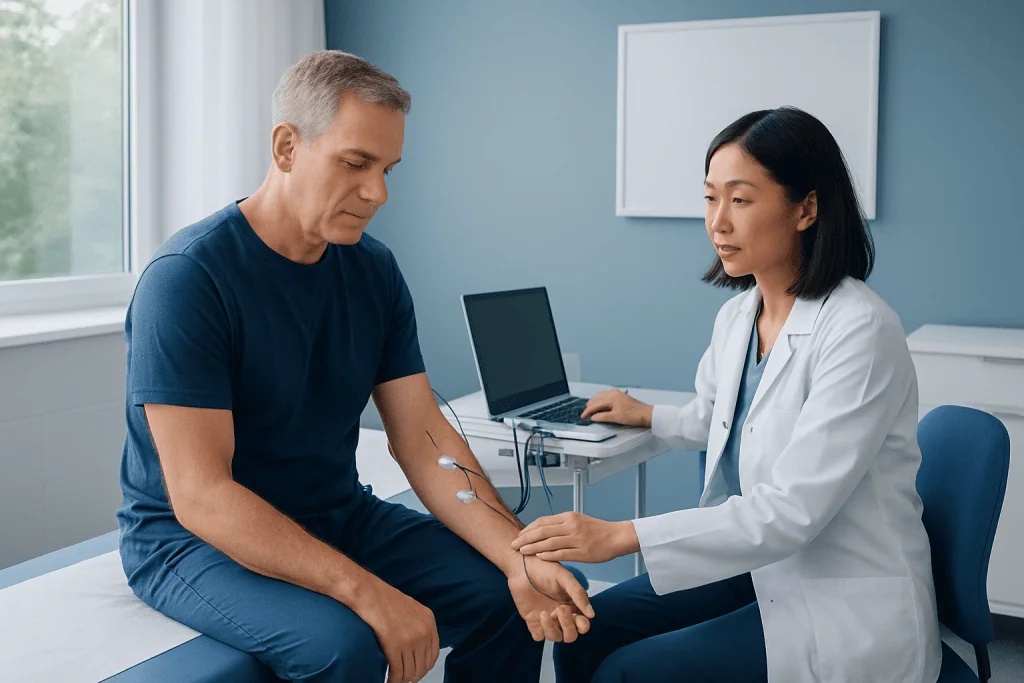
The full evaluation may include two related tests. In a nerve conduction study, small electrodes are placed on the skin over specific nerves and muscles. Gentle electrical pulses are delivered to stimulate the nerve, and the response is recorded. This shows how fast signals travel and whether the signal becomes weak along the pathway.
During the needle EMG portion, a very fine needle electrode is inserted into selected muscles. The electrode records the electrical activity when the muscle is at rest and when it is gently contracted. Different patterns can suggest nerve injury, ongoing nerve irritation, muscle disease, or recovery after damage.
The test is tailored to the person’s symptoms. Not every muscle or nerve needs to be checked, and the specialist selects areas that are most likely to answer the clinical question. Depending on the symptoms, the doctor may focus on the arms, legs, face, or muscles near the spine. In a broader neurological work-up, EMG findings may be considered together with neurology evaluation and other tests.
What to expect before, during, and after an EMG test
Most EMG tests are done in an outpatient clinic or neurophysiology laboratory. Before the appointment, patients are usually advised to avoid applying lotions, creams, or oils to the skin on the day of the test because these can interfere with electrode contact. It is also important to tell the doctor about any bleeding disorders, pacemakers or implanted devices, blood-thinning medicines, or existing infections near the test area.
During the nerve conduction study, the brief electrical impulses can feel unusual or mildly uncomfortable, but they are generally well tolerated. During needle EMG, there may be a quick pinprick as the small electrode is inserted into the muscle, followed by some temporary aching when the muscle is tested. The level of discomfort varies by person and by the muscles being examined.
After the test, most people can return to normal daily activities right away. Mild muscle soreness or small bruises can occur for a day or two, especially after the needle part of the exam. Serious complications are uncommon. If symptoms such as significant swelling, persistent bleeding, fever, or worsening pain develop afterward, medical advice should be sought.
What EMG test results can show
EMG results help the specialist determine whether symptoms are linked to a nerve, a muscle, the junction between the nerve and muscle, or the nerve roots leaving the spine. For example, results may suggest peripheral neuropathy, a trapped nerve such as carpal tunnel syndrome, radiculopathy from a disc problem, or a muscle disease. Sometimes the pattern can also help estimate whether a condition is recent, longstanding, active, or improving.
However, an EMG test does not always provide a single final diagnosis on its own. A normal result does not completely rule out every neurological or muscular condition, particularly if symptoms are very early, mild, or affect structures that EMG does not assess well. For that reason, doctors interpret the findings alongside the person’s medical history, physical examination, and any other relevant tests.
Additional tests may include blood tests, imaging, or studies of the brain and spinal cord. If symptoms point toward a structural problem, a doctor may recommend brain MRI or spine imaging. If there is concern about an ongoing disease process, follow-up EMG testing may occasionally be used to look for change over time.
Conditions an EMG test may help diagnose
EMG can support the diagnosis of several different conditions. These include nerve compression problems such as carpal tunnel syndrome, ulnar neuropathy at the elbow, and pinched nerves in the neck or lower back. It can also help identify more generalized nerve disorders, including peripheral neuropathies related to diabetes, vitamin deficiencies, autoimmune disease, or other causes.
The test may also be useful in evaluating primary muscle disorders and conditions that affect the communication between nerves and muscles. Depending on the clinical picture, the results may contribute to the assessment of motor neuron disease, inflammatory muscle disease, myasthenia gravis, or chronic nerve injury. When combined with examination and imaging, it may also complement care for epilepsy or other neurological conditions when symptoms overlap, although EMG is not a standard test for seizures themselves.
Because the same symptom can have many causes, EMG is often most helpful when the doctor has a focused question in mind. For example, it may help answer whether hand weakness is coming from the wrist, the neck, or the muscle itself. That targeted use is one reason the test remains an important part of modern neuromuscular assessment.
Limits of the test and how doctors use it with other exams
An EMG test is highly useful, but it has limits. It does not directly show the anatomy of a disc, tumor, or joint, and it cannot replace imaging when a structural problem is suspected. It also may not detect very small fiber neuropathies or symptoms that are intermittent without measurable nerve or muscle changes at the time of testing.
Timing matters as well. After an acute nerve injury, some EMG changes may take time to appear, so a test performed too early may not capture the full picture. In other cases, chronic conditions can show changes that confirm there has been nerve damage but do not pinpoint a single cause without further clinical context.
For these reasons, a specialist may combine EMG with blood work, ultrasound, or imaging studies. If a spinal or brain cause is possible, other tests may be recommended to guide treatment planning. In complex cases, multidisciplinary assessment can be helpful. Near the end of the evaluation pathway, centers such as Acibadem International may coordinate care through multidisciplinary specialists in JCI-accredited hospitals for international patients who need diagnosis and treatment of neuromuscular or neurological conditions.
When to seek medical care
A person should seek medical care if numbness, weakness, tingling, muscle wasting, or unexplained pain persists, worsens, or begins to interfere with daily activities. Medical review is also important when symptoms affect walking, grip strength, balance, or bladder and bowel function, or when pain radiates from the neck or back into an arm or leg.
Urgent care is needed if weakness develops suddenly, one side of the body becomes difficult to move, speech changes occur, or there is sudden facial drooping, as these symptoms can indicate a medical emergency rather than a condition typically assessed first by EMG. New breathing difficulty, trouble swallowing, severe back pain with progressive weakness, or rapidly spreading numbness should also be assessed promptly.
Even when symptoms are not urgent, early evaluation can be helpful because some nerve problems are more treatable when addressed sooner. A doctor can decide whether an emg test, imaging, blood tests, physical therapy, medication, or referral to a specialist is the most appropriate next step.
Frequently asked questions
Is an EMG test painful?
Most people find an EMG test uncomfortable rather than truly painful. The nerve conduction study feels like brief electrical pulses, and the needle EMG feels like small pinpricks with short periods of muscle aching. Discomfort is usually temporary and ends soon after the test.
How long does an EMG test take?
The length of the test depends on the symptoms and how many nerves and muscles need to be checked. Many appointments last between 30 and 90 minutes. A more focused study may be shorter, while a more detailed evaluation can take longer.
Do I need to prepare for an EMG test?
Preparation is usually simple. Patients are often told not to use lotion or oils on the skin on the day of the test and to wear comfortable clothing. It is important to tell the doctor about bleeding problems, implanted devices, infections, and any blood-thinning medicines.
Can I drive and go back to work after an EMG test?
Most people can return to normal activities, including driving and work, soon after the test. Some mild soreness or bruising may occur in the tested muscles, but this is generally short-lived. If the doctor gives special instructions based on an individual medical condition, those instructions should be followed.
What is the difference between an EMG and a nerve conduction study?
A nerve conduction study measures how electrical signals travel along nerves using electrodes placed on the skin. Needle EMG records electrical activity directly from muscles using a fine needle electrode. They are different tests, but they are often performed together because they provide complementary information.
Can an EMG test diagnose every nerve or muscle problem?
No. An EMG test is very helpful, but it does not detect every condition and cannot replace all other tests. Doctors interpret it together with symptoms, examination findings, and sometimes imaging or blood tests to make the most accurate diagnosis.
References
- National Institute of Neurological Disorders and Stroke
- American Association of Neuromuscular & Electrodiagnostic Medicine
- National Institute of Arthritis and Musculoskeletal and Skin Diseases
- Mayo Clinic
- MedlinePlus
This article is for general information only and is not a substitute for professional medical advice. Please consult a qualified doctor about your individual situation.
Explore treatments in Turkey — costs, top hospitals & a free quote
JCI-accredited · board-certified surgeons · reply within 24h
Add us as a Preferred Source to see more of our trusted health content across Google Search, AI Overviews and Discover.