

Spacers for Teeth: What Patients Need to Know

Spacers for teeth are used to gently create space between teeth, most often before orthodontic bands are placed. They are usually worn for a short time and can cause temporary pressure, tenderness, or a feeling similar to food being stuck.
Key Takeaways
- Spacers for teeth are used to gently create space between teeth, most often before orthodontic bands are placed.
- They are usually worn for a short time and can cause temporary pressure, tenderness, or a feeling similar to food being stuck.
- Hard, sticky, or chewy foods can dislodge spacers, so eating choices and careful oral hygiene matter.
- A dentist or orthodontist decides whether spacers are needed based on tooth position and the treatment plan.
- Patients should seek dental care if a spacer falls out early, pain becomes severe, or signs of gum infection develop.
Spacers for teeth are small orthodontic devices placed between back teeth to create enough room for bands or other appliances. They are usually temporary, may cause mild soreness for a few days, and are a common step before braces or other orthodontic treatment.
Overview: what spacers for teeth are
Spacers for teeth are small devices placed between certain teeth to gently make a little extra room. They are most often used before orthodontic treatment, especially when a dentist or orthodontist plans to place metal bands around molars. In simple terms, they prepare the teeth so the next step of treatment fits more comfortably and accurately.
These spacers are sometimes called separators. They may be made from elastic material, metal, or other orthodontic materials depending on the clinical need. Most people only need them for a short period, often a few days to a couple of weeks, but the timing depends on how tightly the teeth contact each other and what appliance will be used next.
Spacers are not the same as retainers, aligners, or braces themselves. Instead, they are a temporary preparation step within a broader orthodontic plan. For some patients, this may lead to orthodontic treatment such as braces, while others may need spacers as part of a more specific bite correction approach.
Why dentists and orthodontists use them
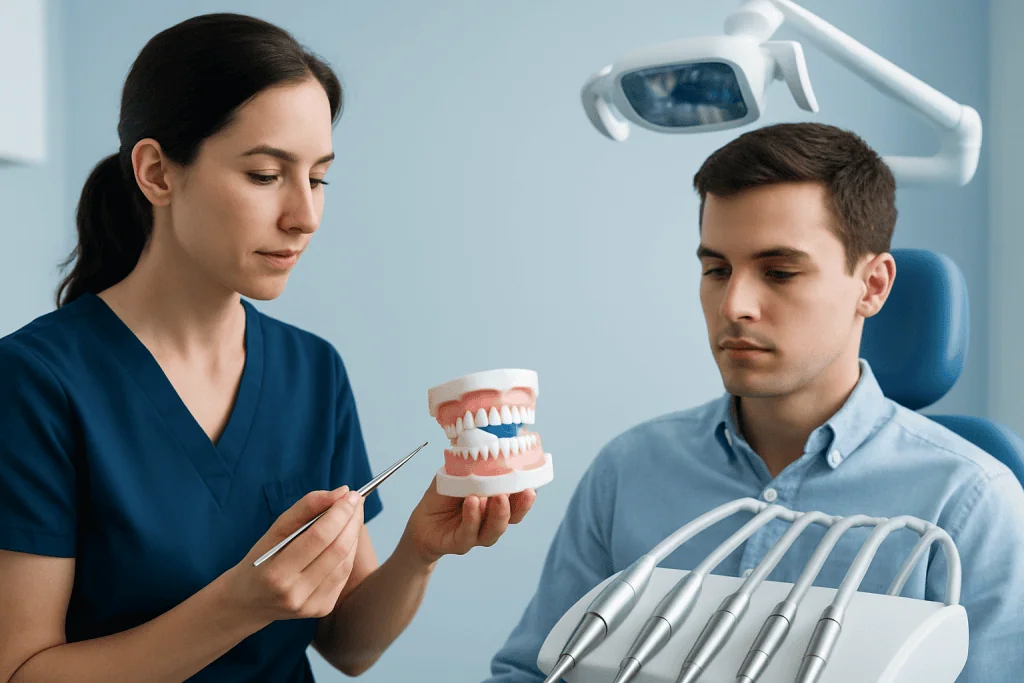
The main purpose of spacers is to create a small amount of space where there is not enough natural separation between teeth. This is especially important when orthodontic bands must slide over a molar. Without enough room, placing these bands can be difficult and uncomfortable.
Spacers may also be used when teeth are crowded or when precise positioning is needed before another appliance is fitted. The amount of space created is very small, but even a small change can make a meaningful difference in how well an orthodontic device fits.
In some cases, spacing needs are related to a patient’s bite pattern, jaw alignment, or crowding. If the orthodontist is evaluating a broader alignment issue, they may also assess related conditions such as malocclusion to decide whether spacers are part of the most appropriate treatment sequence.
Because treatment planning is individualized, not every patient who gets braces will need spacers. Their use depends on tooth shape, existing contact points, the type of appliance planned, and whether enough room is already present.
Types of spacers and how they are placed

The two main types of spacers are elastic spacers and metal spacers. Elastic spacers look like tiny rubber rings and are commonly used because they are simple to place and usually effective for short-term space creation. Metal spacers may be chosen in certain cases when a different kind of pressure or stability is needed.
Placement is usually quick and done in the dental office. The dentist or orthodontist gently slides the spacer between two teeth, most often between back teeth. No drilling or injections are typically needed for this step, although the patient may feel brief pressure as the spacer is inserted.
Once in place, the spacer slowly pushes the teeth slightly apart. This process is gradual and controlled. Patients often notice that the area feels tight, especially when chewing, but the sensation usually settles as the mouth adjusts.
If there are concerns about tooth decay, gum health, or the position of a tooth under the gumline, the clinician may first recommend a more complete dental evaluation and treatment plan before continuing with orthodontic preparation.
What symptoms and sensations are normal
Many people want to know how spacers for teeth will feel. Mild soreness, pressure, or tenderness is common, especially during the first one to three days. Some patients describe it as similar to the feeling of food stuck between the teeth or the pressure felt after braces are tightened.
Chewing may feel uncomfortable at first, particularly with firmer foods. The discomfort is usually temporary and tends to improve as the teeth begin to separate slightly. Speaking is generally not affected very much, although some people are more aware of the spacers with their tongue during the first day or two.
Normal short-term symptoms can include:
- Pressure between the teeth
- Mild gum tenderness nearby
- Soreness when biting down
- A brief feeling of tightness in the jaw area
However, severe pain is not typical. If the discomfort feels intense, keeps getting worse, or is associated with swelling, pus, fever, or a bad taste in the mouth, the patient should contact a dental professional. These symptoms may suggest a different problem, such as gum irritation, an ill-fitting appliance, or an infection unrelated to the spacer itself.
Eating, cleaning, and daily care with spacers
Daily habits can make a big difference in how comfortably spacers stay in place. Because many spacers sit between the teeth rather than attaching firmly like braces, sticky or very chewy foods can pull them out. Caramel, chewing gum, gummy candies, and similar foods are commonly discouraged until the spacer is no longer needed.
Softer foods may be easier during the first few days. Examples include yogurt, soup, pasta, eggs, rice, cooked vegetables, and softer fruits. Patients do not necessarily need a special diet, but choosing foods that require less forceful biting can reduce tenderness.
Oral hygiene remains important. Patients should brush gently but thoroughly around the teeth and gums. Flossing in areas with spacers may not be possible because the floss can catch and dislodge them. A dentist or orthodontist can explain which spaces to avoid and how to keep the area clean safely.
It is usually best to avoid picking at the spacer with fingers, toothpicks, or the tongue. If a spacer falls out, the patient should not try to replace it at home unless they have been specifically instructed how to do so. The dental team can advise whether it needs to be replaced before the next appointment.
Diagnosis and how clinicians decide if spacers are needed
Spacers are not prescribed in isolation; they are part of a treatment plan. A dentist or orthodontist first examines the teeth, bite, and jaw relationship. This may include a physical examination, dental X-rays, photographs, impressions, or digital scans to understand spacing, crowding, and how the upper and lower teeth meet.
The need for spacers depends on whether there is adequate room to place orthodontic bands or appliances. Some people naturally have enough separation between their molars, while others have very tight contact points. Teeth that are rotated, crowded, or affected by bite imbalance may be more likely to need this preparation step.
Clinicians also look at overall oral health before proceeding. Cavities, inflamed gums, or untreated dental problems may need attention first so orthodontic treatment can move forward safely. In more complex cases, a patient may be referred for oral and dental health care before or alongside orthodontic planning.
For children and teenagers, the timing of treatment may also depend on dental development and whether baby teeth or permanent teeth are present. For adults, gum support, restorations, and prior dental work can influence the plan. The decision is always individualized rather than routine.
Treatment pathway, timing, and when to seek medical care
After spacers have created enough room, the next step is usually placement of orthodontic bands or another planned appliance. At that visit, the dentist or orthodontist removes the spacer if it has not already loosened on its own. The timing is often short, but keeping the scheduled appointment is important because the space can change if treatment is delayed too long.
Patients should contact a dental professional if a spacer falls out much earlier than expected, especially if the next orthodontic visit is not imminent. Sometimes it does not need replacement because enough space has already formed, but that decision should be made by the treating clinician.
A short section on when to seek medical care can be helpful. Prompt advice is recommended if there is severe or worsening pain, swelling of the gums or face, bleeding that does not settle, trouble opening the mouth, fever, or signs of infection. Care is also appropriate if the spacer seems embedded in the gum, if a metal spacer bends, or if the patient accidentally swallows or inhales part of an appliance.
Near the end of a patient’s care journey, broader orthodontic and dental follow-up may continue for alignment, bite function, and long-term oral health. Acibadem International’s multidisciplinary specialists and JCI-accredited hospitals diagnose and treat dental and orthodontic conditions for international patients when this is needed.
Frequently asked questions
How long do spacers for teeth stay in place?
Spacers usually stay in place for a few days up to about two weeks, depending on the treatment plan and how quickly space forms. The orthodontist decides the timing based on the amount of room needed before the next step.
Do spacers for teeth hurt?
They can cause mild to moderate pressure or soreness, especially during the first few days. This discomfort is usually temporary and tends to improve as the teeth begin to separate slightly.
What should not be eaten with dental spacers?
Sticky, chewy, or hard foods are best avoided because they can pull spacers out or increase discomfort. Softer foods are often easier until the mouth adjusts.
Can patients brush and floss with spacers?
Brushing should continue as normal, using gentle technique around the area. Flossing between teeth that contain spacers is usually avoided because it may dislodge them, but the dental team can give specific instructions.
What happens if a spacer falls out?
If a spacer falls out, the patient should contact the dentist or orthodontist for advice. Sometimes enough space has already been created, but in other cases the spacer may need to be replaced before the next appointment.
Are spacers for teeth only used before braces?
They are most commonly used before braces or molar bands, but their role depends on the type of orthodontic appliance planned. Not every patient needs them, and some treatment plans use other methods to create or manage space.
References
- American Association of Orthodontists
- American Dental Association
- National Institute of Dental and Craniofacial Research
- National Health Service
- Mayo Clinic
This article is for general information only and is not a substitute for professional medical advice. Please consult a qualified doctor about your individual situation.
Explore treatments in Turkey — costs, top hospitals & a free quote
JCI-accredited · board-certified surgeons · reply within 24h
Add us as a Preferred Source to see more of our trusted health content across Google Search, AI Overviews and Discover.

More from the Health Library

Wheat Bran: An Evidence-Based Guide for Patients

Strength Workout for Weight Loss: A Complete Medical Overview

Patella Injury: An Evidence-Based Guide for Patients

Coffee Urine Odor: An Evidence-Based Guide for Patients

Costovertebral Angle — Explained by Medical Evidence, Not Myths

Blisters on Hands: An Evidence-Based Guide for Patients
Oral & Dental Health Specialists at Acibadem

Dt. Akif Aydın Şen
Oral & Dental Health
Dt. Alara Güler
Oral & Dental Health
Dt. Alara Naz Kenir Çelik
Oral & Dental Health
Dr. Alen Palancıoğlu
Oral Dental & Maxillofacial Surgery