Spinal Dural Arteriovenous Fistula: Early Symptoms and Why Diagnosis Is Often Delayed

Spinal dural arteriovenous fistula often causes slowly progressive leg weakness, numbness, balance problems, and bladder or bowel symptoms. The condition is commonly mistaken for lumbar stenosis, disc disease, neuropathy, or inflammatory spinal cord disorders.
Key Takeaways
- Spinal dural arteriovenous fistula often causes slowly progressive leg weakness, numbness, balance problems, and bladder or bowel symptoms.
- The condition is commonly mistaken for lumbar stenosis, disc disease, neuropathy, or inflammatory spinal cord disorders.
- MRI can suggest the diagnosis, but spinal angiography is usually needed to confirm the fistula and plan treatment.
- Early treatment can stop further spinal cord damage and may improve function, especially before severe disability develops.
- Treatment usually involves endovascular embolization or microsurgery, chosen according to the fistula’s anatomy and the patient’s overall condition.
Spinal dural arteriovenous fistula is a rare abnormal connection between an artery and a vein near the covering of the spinal cord. Because symptoms often develop gradually and resemble more common spine problems, diagnosis is frequently delayed.
Overview
Spinal dural arteriovenous fistula, often shortened to SDAVF, is an abnormal connection between a small artery and a vein in the dura, the protective covering around the spinal cord. This abnormal connection causes blood to flow under higher pressure into veins that normally carry blood away at low pressure. Over time, the veins around the spinal cord become congested, and this can reduce normal drainage and impair the spinal cord’s function.
Unlike some spinal conditions that cause sudden pain or injury, SDAVF usually develops gradually. Symptoms often appear slowly over months or even longer, which can make the problem difficult to recognize early. Many people are first told they may have more common conditions such as disc disease, spinal stenosis, or peripheral nerve problems.
Although SDAVF is rare, it is important because it is a treatable cause of progressive spinal cord dysfunction, also called myelopathy. Once identified, treatment aims to disconnect the abnormal blood flow and protect the spinal cord from further damage. Earlier diagnosis generally offers a better chance of stabilizing symptoms and improving day-to-day function.
Early Symptoms and How They Progress
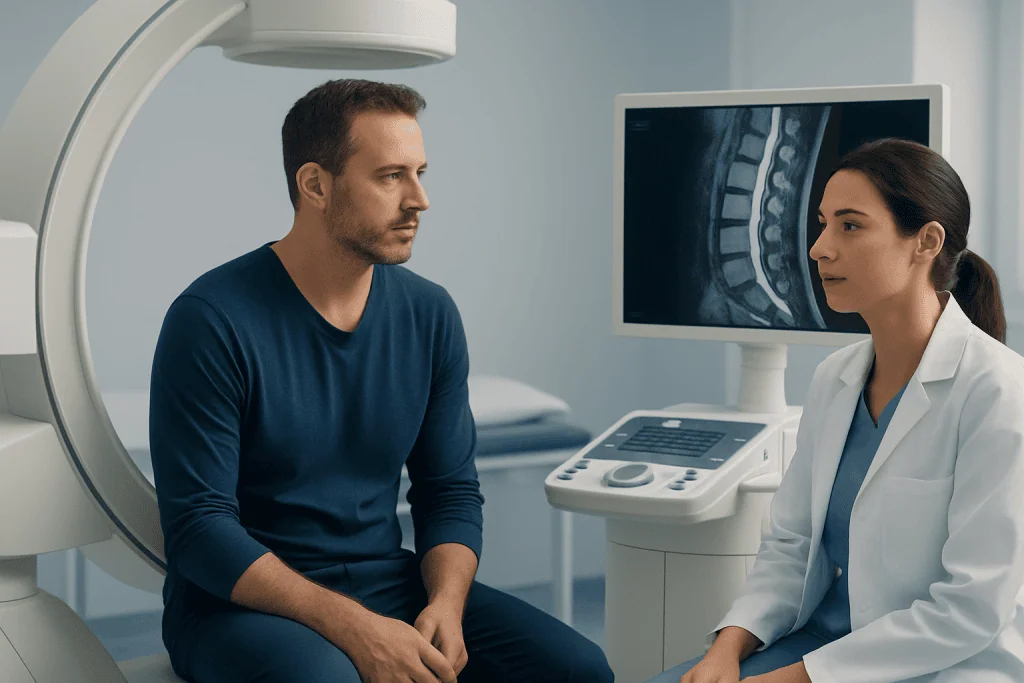
The earliest symptoms of spinal dural arteriovenous fistula are often subtle. A person may notice unusual heaviness in the legs, fatigue while walking, tingling, numbness, or a feeling that the legs are less responsive than before. Some people describe stiffness, cramping, or trouble climbing stairs. These symptoms may come and go at first, especially after exertion, making them easy to dismiss.
As the condition progresses, walking usually becomes more difficult. Balance may worsen, and leg weakness can become more noticeable. Symptoms commonly affect both legs, though they may not start equally on each side. Some people develop sensory changes such as reduced sensation, burning discomfort, or altered temperature perception below a certain level of the body.
Bladder, bowel, or sexual dysfunction can also occur and are important clues that the spinal cord may be involved. These symptoms may include urgency, difficulty emptying the bladder, incontinence, or constipation. In more advanced cases, untreated SDAVF can lead to marked mobility limitations and significant disability.
A hallmark of the condition is gradual worsening rather than sudden onset. However, symptoms can sometimes fluctuate from day to day, which adds to the confusion. Temporary deterioration after exercise, prolonged standing, or other physical stress may occur because venous congestion around the spinal cord becomes more pronounced.
Why Diagnosis Is Often Delayed

Diagnosis is often delayed because the symptoms of SDAVF overlap with many more common disorders. Leg pain, numbness, weakness, and walking difficulty are frequently attributed to lumbar disc disease, spinal stenosis, arthritis, diabetic neuropathy, or age-related changes in the spine. If imaging shows degenerative findings, it can be especially easy to assume those changes explain the symptoms.
Another reason for delay is that the neurological pattern may be incomplete early on. A person may not have classic spinal cord signs at first, and bladder symptoms may appear only later. In addition, some people see several specialists over time, such as orthopedics, neurology, rehabilitation, or urology, before the possibility of a spinal vascular condition is considered.
SDAVF may also resemble inflammatory or demyelinating spinal cord diseases. On MRI, changes within the spinal cord can sometimes look similar to other causes of myelopathy. This can lead to treatment for the wrong condition before the vascular abnormality is recognized. A careful review of the clinical history, examination, and imaging is essential.
Because it is uncommon, SDAVF is simply not the first diagnosis many patients or clinicians think of. Yet awareness matters. In a person with slowly progressive leg weakness, sensory changes, and bladder symptoms, especially when common explanations do not fully fit, clinicians may need to consider a spinal vascular malformation such as arteriovenous malformation or a dural fistula.
Causes and Risk Factors
The exact cause of spinal dural arteriovenous fistula is not always known. In most cases, it is considered an acquired vascular abnormality rather than a problem a person is born with. The fistula forms when an abnormal link develops between a dural artery and a draining vein near a spinal nerve root sleeve.
SDAVF is seen more often in middle-aged and older adults, and it is reported more frequently in men. It most commonly occurs in the lower thoracic or upper lumbar region of the spine, although it can arise at other spinal levels as well. Researchers continue to study why these locations are more commonly affected.
There is no single lifestyle factor known to directly cause SDAVF. It is not usually linked to routine activity, posture, or minor injury. In most people, nothing they did caused the condition. That can be reassuring, especially for patients who worry they may have triggered symptoms through exercise or everyday movement.
What matters most is recognizing risk in the clinical sense: a person with progressive myelopathy, bilateral leg symptoms, and bladder or bowel changes should be evaluated carefully. Even though the disease is rare, overlooking it can allow avoidable spinal cord injury to continue.
How Spinal Dural Arteriovenous Fistula Is Diagnosed
Diagnosis begins with a detailed medical history and neurological examination. Doctors look for signs of spinal cord dysfunction, including weakness, altered reflexes, sensory changes, gait disturbance, and bladder involvement. The pattern of symptoms over time is particularly helpful because SDAVF usually progresses slowly.
MRI of the spine is often the first key imaging test. It may show swelling or signal change within the spinal cord, especially in the lower thoracic region or conus, and it may also show enlarged abnormal vessels around the cord. However, MRI alone may not always give a definite answer, and findings can be subtle or misinterpreted.
When SDAVF is suspected, spinal angiography is generally the gold standard test. This specialized vascular imaging study maps the arteries and veins around the spinal cord and identifies the exact location of the fistula. It is essential both for confirming the diagnosis and for deciding whether the fistula is best treated by an endovascular approach or surgery. In selected cases, clinicians may use angiography as part of the full diagnostic workup.
Additional tests may be needed to rule out other causes of myelopathy, such as infection, inflammation, compression, or vitamin deficiency. The goal is not only to name the condition but also to avoid unnecessary delays from incomplete evaluation. Because spinal vascular disorders can be complex, diagnosis is often best made by an experienced multidisciplinary team.
Treatment Options
The aim of treatment is to disconnect the abnormal artery-to-vein connection and relieve venous congestion affecting the spinal cord. Two main treatments are used: endovascular embolization and microsurgical disconnection. The best option depends on the exact anatomy of the fistula, the blood vessels involved, and whether a durable closure can be achieved safely.
Endovascular treatment is performed by guiding tiny catheters through the blood vessels to the site of the fistula and then closing it using specialized materials. This may be recommended when the anatomy is favorable and the feeding vessel can be reached safely. In appropriate cases, embolization can be an effective minimally invasive option.
Microsurgery may be preferred when embolization is unlikely to fully close the fistula or when the vascular anatomy makes endovascular treatment less suitable. The surgical goal is usually straightforward: interrupt the abnormal draining vein so the harmful high-pressure flow no longer reaches the spinal cord. For some patients, neurosurgery offers the most reliable long-term result.
Recovery after treatment varies. Some symptoms, especially walking ability and strength, may improve over time, while others may improve only partially if the spinal cord has been affected for a long period. In general, treatment is most beneficial when performed before severe or longstanding disability develops. Follow-up imaging and neurological assessment are important to confirm closure of the fistula and monitor recovery.
Living With SDAVF: Recovery, Self-care, and Follow-up
After treatment, recovery is often gradual rather than immediate. The spinal cord needs time to adapt after venous congestion is relieved, and symptoms that built up over months may not resolve quickly. Many people benefit from physical rehabilitation to improve strength, balance, endurance, and confidence with walking.
Self-care focuses on protecting mobility and supporting overall health. Patients are often encouraged to follow their doctor’s guidance on activity, use mobility aids if needed, and report any new or worsening symptoms promptly. Bladder and bowel issues may also require practical management strategies and follow-up with the appropriate specialists.
There is no proven way to prevent SDAVF from forming in the first place, but early recognition can help prevent further damage. Anyone who has ongoing unexplained leg weakness, gait decline, or urinary symptoms should avoid assuming it is just normal aging. Seeking a careful neurological and spinal evaluation can make a meaningful difference.
Near the end of the care journey, some patients may require coordinated follow-up across neurology, interventional neuroradiology, neurosurgery, and rehabilitation. Acibadem International’s multidisciplinary specialists and JCI-accredited hospitals diagnose and treat complex spinal vascular conditions for international patients when advanced evaluation is needed.
When to See a Doctor
A person should seek medical evaluation if they have persistent or progressive leg weakness, numbness, imbalance, or unexplained difficulty walking. Symptoms affecting both legs, especially when they slowly worsen over time, deserve attention even if there is little pain. These features may suggest a spinal cord problem rather than a simple muscle or joint issue.
Bladder or bowel changes together with leg symptoms should be discussed with a doctor promptly. Difficulty emptying the bladder, urinary urgency, incontinence, or new constipation can be important warning signs when they occur alongside weakness or sensory change. A neurological examination and spine imaging may be needed.
Urgent assessment is especially important if mobility declines rapidly, falls increase, or there is sudden worsening of weakness or sensation. Although SDAVF usually progresses gradually, any major change in neurological function requires timely medical review. Early specialist referral can help shorten the path to diagnosis and treatment.
Frequently asked questions
What is a spinal dural arteriovenous fistula?
A spinal dural arteriovenous fistula is an abnormal connection between an artery and a vein in the covering around the spinal cord. This causes increased pressure in the veins, which can reduce normal spinal cord drainage and gradually damage spinal cord function.
What are the first symptoms of SDAVF?
Early symptoms often include heaviness in the legs, weakness, numbness, tingling, stiffness, or increasing difficulty walking. Some people also notice balance problems or urinary changes, but symptoms can be mild at first and easy to mistake for more common spine conditions.
Why is spinal dural arteriovenous fistula often misdiagnosed?
It is frequently misdiagnosed because its symptoms resemble lumbar stenosis, disc problems, neuropathy, or inflammatory spinal disorders. The condition is also rare, and its gradual progression can make it harder to recognize without careful spinal imaging and specialist evaluation.
Can MRI detect spinal dural arteriovenous fistula?
MRI can strongly suggest the diagnosis by showing spinal cord changes and abnormal blood vessels around the cord. However, spinal angiography is usually needed to confirm the fistula and identify its exact location before treatment.
Is SDAVF treatable?
Yes. SDAVF is treatable, most commonly with endovascular embolization or microsurgery. The goal is to close the abnormal connection and prevent further spinal cord damage, and earlier treatment generally gives a better chance of recovery.
Can symptoms improve after treatment?
Many patients experience improvement or stabilization after treatment, especially in walking and leg strength. Recovery is often gradual, and some symptoms may persist if the spinal cord has been affected for a long time before diagnosis.
References
- National Institute of Neurological Disorders and Stroke
- National Organization for Rare Disorders
- American Association of Neurological Surgeons
- Radiological Society of North America
- StatPearls Publishing
This article is for general information only and is not a substitute for professional medical advice. Please consult a qualified doctor about your individual situation.
Joint and spine care in Turkey — expert assessment & treatment
JCI-accredited · board-certified surgeons · reply within 24h
Add us as a Preferred Source to see more of our trusted health content across Google Search, AI Overviews and Discover.