Spotting Blood Postmenopausal: What Patients Need to Know

Any vaginal bleeding, spotting, or pink-brown discharge after menopause should be medically assessed. Many causes are noncancerous, such as vaginal or uterine lining thinning, polyps, or medication effects.
Key Takeaways
- Any vaginal bleeding, spotting, or pink-brown discharge after menopause should be medically assessed.
- Many causes are noncancerous, such as vaginal or uterine lining thinning, polyps, or medication effects.
- Evaluation often includes a pelvic exam, ultrasound, and sometimes an endometrial biopsy.
- Early assessment helps rule out serious causes, including endometrial cancer.
- Patients should seek prompt care if bleeding is heavy, recurrent, or accompanied by pain, dizziness, or weakness.
Spotting blood postmenopausal should always be evaluated by a doctor, even when the amount is small or happens only once. While common causes include vaginal thinning, polyps, or hormone-related changes, bleeding after menopause can sometimes signal a condition that needs prompt treatment.
Overview: What spotting blood postmenopausal can mean
Spotting blood postmenopausal is not considered a normal part of aging. Menopause is defined as going 12 months without a menstrual period, and after that point, any vaginal bleeding or blood-tinged discharge deserves medical attention. In many cases the cause is not serious, but it cannot be identified reliably without an examination.
The term may describe a few drops of blood, pink spotting on underwear, brown discharge, or bleeding that seems similar to a light period. Some patients notice it only once, while others have repeated episodes. Even very light bleeding matters because postmenopausal tissues are expected to remain inactive rather than cycle monthly.
One of the most important points for patients is that the amount of bleeding does not always predict the cause. A harmless condition can sometimes bleed more than expected, and a serious problem can begin with only slight spotting. For this reason, clinicians evaluate postmenopausal bleeding based on timing and symptoms, not only on how much blood is present.
Most causes are treatable. Common explanations include vaginal dryness and thinning, uterine polyps, effects of hormone therapy, or benign changes in the lining of the uterus. However, because bleeding can also be linked to uterine cancer, timely assessment is the safest approach.
Symptoms and bleeding patterns to notice
Patients often describe postmenopausal bleeding in different ways. It may appear as bright red spotting, brown staining, pink discharge, or bleeding after sexual intercourse. Some notice only a small streak when wiping, while others experience a flow requiring a pad. Any of these patterns after menopause should be discussed with a healthcare professional.
Bleeding may happen once or return over days, weeks, or months. It can occur with vaginal dryness, pelvic pressure, cramping, unusual discharge, or discomfort during sex. Sometimes there are no other symptoms at all, which is one reason bleeding should not be ignored simply because a person feels otherwise well.
Helpful details to track before an appointment include when the bleeding started, how long it lasted, whether it happened after intimacy or exercise, and whether there is pain, fever, or dizziness. Patients should also note medications such as hormone replacement therapy, tamoxifen, blood thinners, or herbal products that may affect bleeding.
- Light spotting or pink staining
- Brown discharge that looks like old blood
- Bleeding after sex
- Bleeding that resembles a light period
- Recurring episodes after months or years without bleeding
Common causes and risk factors

The most frequent cause of postmenopausal spotting is thinning of estrogen-sensitive tissues. After menopause, lower estrogen levels can make the vagina and vulva more fragile, a condition often called genitourinary syndrome of menopause or vaginal atrophy. The uterine lining may also become thin and unstable enough to bleed lightly.
Other noncancerous causes include cervical or uterine polyps, endometrial hyperplasia, infections, and irritation after intercourse. Some patients bleed because of hormone therapy, especially when starting, adjusting, or missing doses. Blood thinners can make a small source of bleeding more noticeable, though they do not remove the need to find the source.
Less commonly, spotting blood postmenopausal may be related to cancers of the uterus, cervix, vagina, or ovaries. The most important cancer-related concern is abnormal bleeding from the lining of the uterus. Risk factors for endometrial problems can include obesity, diabetes, long-term unopposed estrogen exposure, a history of polycystic ovary syndrome, tamoxifen use, and a family history of certain hereditary cancer syndromes.
Bleeding can also occasionally come from outside the reproductive tract. Blood from the bladder, urethra, rectum, or hemorrhoids may be mistaken for vaginal bleeding. A clinical exam helps determine the true source so the right tests can be arranged.
How doctors evaluate postmenopausal bleeding
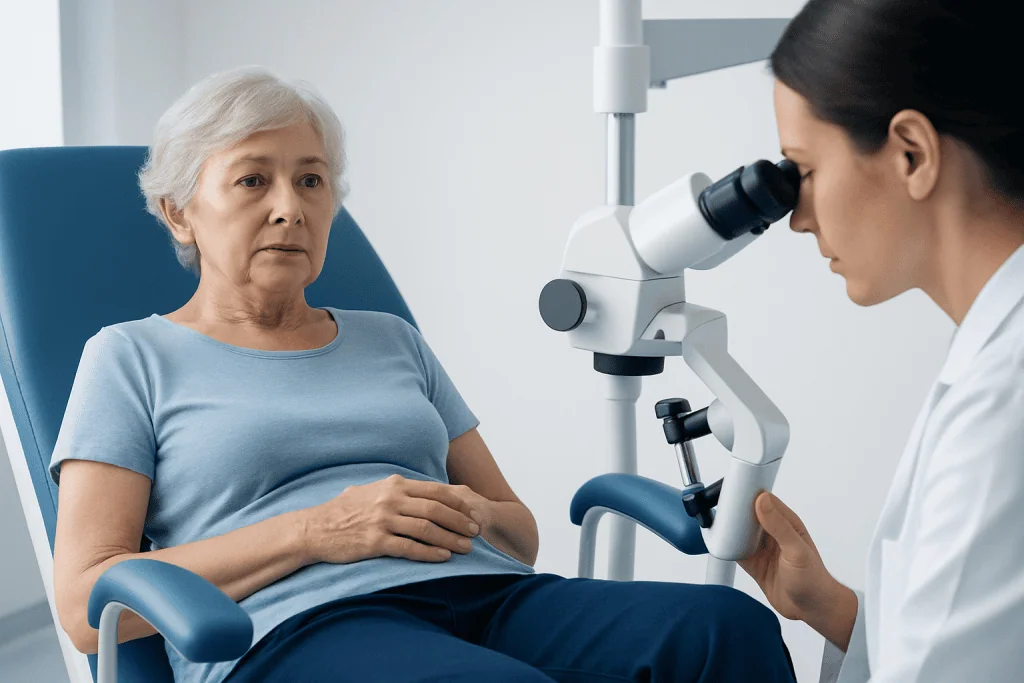
Evaluation begins with a careful medical history and pelvic examination. The clinician will ask about the date of the last menstrual period, the exact pattern of bleeding, medications, prior gynecologic conditions, and any family history of cancer. The exam can help identify vaginal thinning, visible lesions, polyps, or signs that bleeding may be coming from the cervix, urinary tract, or rectum.
A common next step is a transvaginal ultrasound, which measures the thickness of the uterine lining and looks for polyps, fibroids, or other structural causes. In some patients, this imaging test provides enough reassurance when the lining appears thin and symptoms fit a benign explanation. In others, further testing is still needed depending on symptoms and risk factors.
An endometrial biopsy is often used to sample the uterine lining and check for hyperplasia or cancerous changes. This is especially important if the uterine lining is thicker than expected, bleeding recurs, or a patient has higher-risk features. If the biopsy is inconclusive or if a polyp or abnormality is suspected inside the uterus, the doctor may recommend hysteroscopy to view the uterine cavity directly.
Additional tests may include a Pap test if cervical screening is due or there is concern about the cervix, urine testing if blood in the urine is possible, or blood tests if bleeding has been heavy. The goal is not only to stop bleeding but also to make sure significant conditions are not missed.
Treatment options depend on the cause
Treatment for spotting blood postmenopausal is guided by the diagnosis rather than the symptom alone. If vaginal atrophy is responsible, care may include nonhormonal moisturizers and lubricants, and in selected patients a doctor may discuss local estrogen therapy. If a medication contributes to bleeding, the prescribing clinician may adjust the plan.
Polyps in the uterus or cervix can often be removed, particularly if they are causing recurrent bleeding or need examination under the microscope. Endometrial hyperplasia may be monitored or treated depending on whether atypical cells are present. If fibroids, structural changes, or persistent bleeding are found, management can range from observation to procedures.
When there is a confirmed cancer or a strong suspicion of one, treatment may involve surgery and sometimes additional therapies. Depending on the diagnosis and stage, options may include gynecologic oncology care and, in selected cases, robotic surgery as part of a personalized treatment plan. The exact approach depends on the patient’s health, preferences, and pathology results.
Patients generally do best when treatment addresses both the underlying cause and quality-of-life concerns, such as dryness, discomfort, or anxiety about recurrent bleeding. If a patient is seeking evaluation abroad, Acibadem International’s multidisciplinary specialists and JCI-accredited hospitals diagnose and treat gynecologic conditions for international patients.
Self-care, monitoring, and what not to ignore
While waiting for a medical appointment, patients can take simple steps to monitor symptoms safely. It helps to write down the date, amount, color, and triggers for each bleeding episode. Wearing a pad rather than a tampon can make the pattern easier to observe and may reduce irritation.
It is best not to self-diagnose bleeding as “just dryness” without an examination. Over-the-counter vaginal moisturizers or lubricants may ease discomfort, but they should not replace evaluation for new bleeding after menopause. Douching is not recommended, as it may worsen irritation and can make symptoms harder to interpret.
If the bleeding appears after sex, patients may still need an assessment even if it stops quickly. Dryness can be one explanation, but bleeding after intercourse may also come from a cervical or vaginal lesion. Likewise, a single episode that never returns still deserves discussion with a healthcare professional.
General healthy habits can support gynecologic health over time, including keeping up with cervical screening when recommended, reviewing medications regularly, and managing chronic conditions such as diabetes and obesity. These steps do not prevent every cause, but they can reduce some risks and help clinicians interpret symptoms more clearly.
When to seek medical care
Any spotting blood postmenopausal should be reported to a doctor, ideally soon after it is noticed. Prompt evaluation is especially important if bleeding is recurrent, becomes heavier, or happens along with pelvic pain, bloating, unusual discharge, or weight loss. Patients who use tamoxifen or have a history of endometrial hyperplasia should be particularly careful not to delay assessment.
Urgent care is needed if bleeding is heavy enough to soak pads quickly, if there is severe pain, fainting, shortness of breath, dizziness, or signs of significant blood loss. Emergency evaluation may also be appropriate if bleeding follows an injury or if a patient feels acutely unwell.
Some patients assume that small spots can wait because they are not disruptive. In practice, it is better to arrange a routine medical review early rather than wait for another episode. Early diagnosis often means simpler treatment and greater peace of mind, whether the cause turns out to be benign or more serious.
Patients who are also worried about abnormalities of the uterine lining may wish to learn more about endometrial cancer before their appointment, but online information should complement, not replace, a personalized medical assessment.
Frequently asked questions
Is spotting blood postmenopausal ever normal?
No. After 12 months without a menstrual period, any vaginal bleeding or blood-stained discharge should be evaluated. Although many causes are benign, postmenopausal bleeding is not considered a normal effect of menopause.
What is the most common cause of postmenopausal spotting?
A common cause is thinning and dryness of the vaginal or uterine tissues due to lower estrogen levels after menopause. Fragile tissue can bleed lightly, especially after intercourse or irritation. Even so, a doctor should confirm the cause.
Does light spotting mean it is less serious?
Not necessarily. The amount of bleeding does not always reflect the importance of the underlying cause. Even a single light episode can need testing, while some benign conditions may bleed more noticeably.
What tests are usually done for bleeding after menopause?
Doctors often start with a medical history, pelvic exam, and transvaginal ultrasound. Depending on the findings, they may also recommend an endometrial biopsy or hysteroscopy. The choice of tests depends on symptoms, risk factors, and ultrasound results.
Can hormone replacement therapy cause spotting after menopause?
Yes. Some types of hormone therapy can cause bleeding or spotting, especially when treatment is started or changed. However, patients should not assume hormones are the only reason, and medical assessment is still important.
Should bleeding after sex be checked after menopause?
Yes. Dryness and tissue fragility are common explanations, but bleeding after sex can also come from polyps, infection, or abnormalities of the cervix or vagina. A clinician can identify the source and decide whether testing is needed.
This article is for general information only and is not a substitute for professional medical advice. Please consult a qualified doctor about your individual situation.
Explore treatments in Turkey — costs, top hospitals & a free quote
JCI-accredited · board-certified surgeons · reply within 24h
Add us as a Preferred Source to see more of our trusted health content across Google Search, AI Overviews and Discover.

More from the Health Library

Metabolism — Explained by Medical Evidence, Not Myths

Rpe Scale: A Complete Medical Overview

Chromium Picolinate — Explained by Medical Evidence, Not Myths

Deep Cleaning for Gum Recession: What Patients Need to Know

Inductive Reasoning: What Patients Need to Know