

St Depression — Explained by Medical Evidence, Not Myths

ST depression is a change seen on an ECG and must be interpreted in context. It can be associated with myocardial ischemia, but it is not always caused by a heart attack.
Key Takeaways
- ST depression is a change seen on an ECG and must be interpreted in context.
- It can be associated with myocardial ischemia, but it is not always caused by a heart attack.
- Symptoms such as chest pain, shortness of breath, sweating, or fainting need urgent medical attention.
- Doctors assess the ECG pattern together with symptoms, blood tests, and sometimes imaging or stress testing.
- Treatment focuses on the underlying cause rather than the ECG finding alone.
ST depression is an electrocardiogram finding, not a diagnosis by itself. It may reflect reduced blood flow to the heart, medication effects, electrolyte changes, or other conditions, so its meaning depends on symptoms, medical history, and the full ECG pattern.
What ST Depression Means
ST depression is a pattern seen on an electrocardiogram, or ECG, when the ST segment appears lower than the baseline. In simple terms, it shows that the heart’s electrical recovery phase is not looking fully typical on the tracing. This finding can be important, but it does not automatically mean a heart attack or permanent heart damage.
Medical evidence shows that ST depression has several possible explanations. One of the best-known is myocardial ischemia, meaning the heart muscle may not be getting enough oxygen-rich blood for its needs. However, ST depression can also appear with fast heart rates, certain medications such as digoxin, electrolyte imbalance, structural heart changes, or sometimes as a non-specific finding that needs follow-up rather than panic.
The key point is that ST depression is a clue, not a final answer. Doctors look at where it appears on the ECG leads, whether it is horizontal, downsloping, or upsloping, whether it is new, and whether the person has symptoms. That fuller picture helps determine whether the change is likely to represent serious heart-related ischemia or another less urgent cause.
How It Appears on an ECG
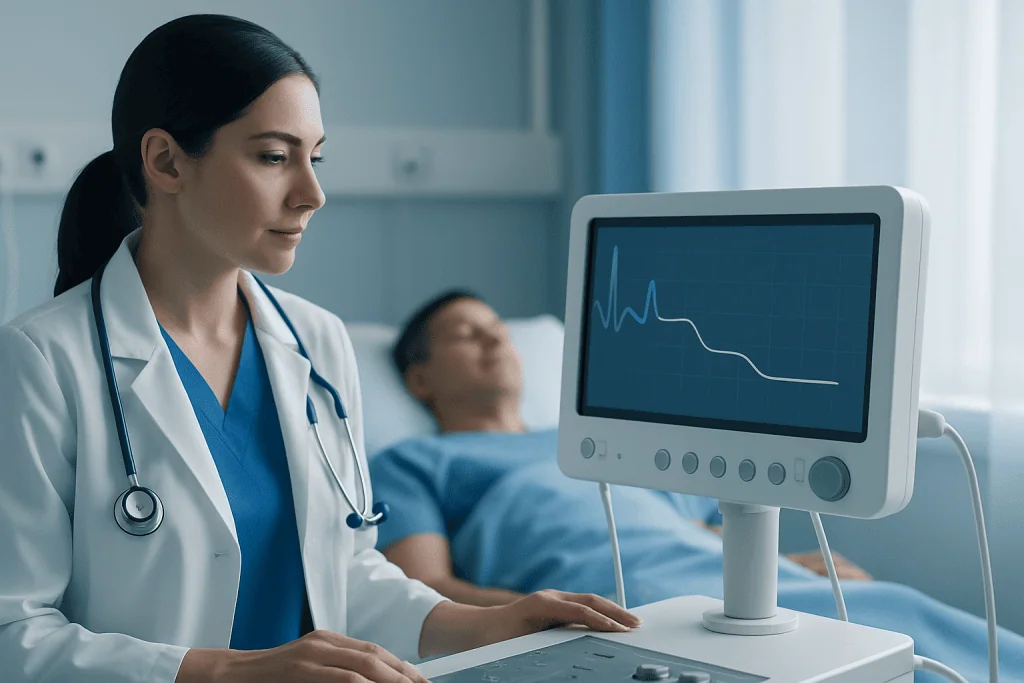
The ST segment is the part of the ECG tracing between the end of the QRS complex and the start of the T wave. When this segment sits below the expected baseline in one or more leads, it is called ST depression. Clinicians usually assess how deep it is, how many leads show it, and whether the change is temporary or persistent.
Not all ST depression patterns carry the same meaning. Horizontal or downsloping ST depression is more concerning for ischemia, especially when it appears during chest discomfort or physical exertion. Upsloping ST depression may be less specific, although it can still matter depending on the overall clinical situation.
Doctors also consider whether the change is localized or widespread. For example, diffuse ST depression across many leads can suggest more extensive strain on the heart or a significant reduction in blood supply in some settings. Because ECG interpretation is nuanced, a reading should be assessed by a qualified clinician rather than interpreted from the tracing alone.
Common Causes and Risk Factors

The most clinically important cause of ST depression is myocardial ischemia, often related to coronary artery disease. This happens when narrowed or blocked coronary arteries limit blood flow to the heart muscle, especially during exercise, emotional stress, or an acute cardiac event. In some people, ST depression may be part of the evaluation for coronary artery disease.
Other causes are also well recognized. These include fast heartbeat, high blood pressure causing left ventricular strain, low potassium or other electrolyte disturbances, anemia, and some medicines. Digoxin is a classic example because it can produce a characteristic ST-segment change even when there is no acute ischemia. Structural heart conditions and recovery after a previous cardiac event may also affect the ECG appearance.
Risk factors that raise concern when ST depression is seen include older age, smoking, diabetes, high cholesterol, obesity, hypertension, a family history of early heart disease, kidney disease, and a personal history of heart problems. Symptoms matter just as much as risk factors. ST depression in a person with pressure-like chest pain is interpreted very differently from the same ECG finding in someone without symptoms.
- Possible ischemic cause: reduced blood flow to the heart muscle
- Possible non-ischemic causes: medications, electrolyte imbalance, rapid heart rate, ventricular strain
- Important context: symptoms, medical history, and comparison with prior ECGs
Symptoms That May Occur Alongside ST Depression
ST depression itself does not create symptoms; it is simply a finding on the ECG. The symptoms depend on the underlying cause. If the change is related to reduced blood flow to the heart, a person may have chest pressure, tightness, heaviness, pain spreading to the arm, neck, jaw, or back, shortness of breath, nausea, sweating, unusual fatigue, dizziness, or palpitations.
Some people, especially older adults and those with diabetes, can have atypical or subtle symptoms. They may describe indigestion-like discomfort, breathlessness on exertion, weakness, or a sense that something feels wrong rather than classic chest pain. This is one reason clinicians do not rely on symptoms alone when evaluating possible cardiac ischemia.
If ST depression appears during exercise testing, symptoms during the test are especially informative. Chest discomfort or breathlessness occurring together with ECG changes may suggest the heart is under stress. By contrast, a person with no symptoms may still need assessment, but the urgency and likely causes may differ.
How Doctors Diagnose the Cause
Evaluation starts with the clinical picture. A doctor asks when symptoms began, how long they last, what triggers them, what medical conditions are present, and whether there is a history of heart disease or stroke. The ECG is then interpreted in detail, often with comparison to previous tracings to see whether the ST depression is new, changing, or longstanding.
If acute coronary syndrome is a concern, urgent testing usually includes repeat ECGs and blood tests for cardiac biomarkers such as troponin. These tests help determine whether the heart muscle has been injured. Depending on the situation, the doctor may also order echocardiography, continuous rhythm monitoring, blood pressure assessment, and laboratory studies to look for anemia or electrolyte abnormalities.
When the situation is stable, additional testing may be used to assess blood flow to the heart. This can include a stress test or advanced imaging such as cardiac MRI in selected cases. If there is strong suspicion of blocked coronary arteries, specialists may consider coronary angiography to define the anatomy and guide treatment. The purpose is not just to explain the ECG finding, but to identify whether the person has a condition that requires urgent care, long-term risk reduction, or simple observation.
Treatment Depends on the Underlying Cause
There is no single treatment for ST depression because it is not a disease on its own. Management is directed at the reason the ECG changed. If the cause is acute myocardial ischemia or a heart attack, treatment may include emergency medicines, close monitoring, and procedures to restore blood flow. If ST depression is linked to stable coronary disease, treatment may focus on symptom control, risk reduction, and improving blood supply to the heart.
When a non-ischemic cause is found, treatment may be very different. Correcting electrolyte imbalance, adjusting medications, treating anemia, managing high blood pressure, or controlling a rapid heart rhythm can lead to improvement. In some cases, no invasive treatment is needed, but careful follow-up is still important.
Long-term care often includes lifestyle measures and treatment of cardiovascular risk factors. Doctors may recommend stopping smoking, improving diet quality, increasing physical activity if medically appropriate, controlling diabetes and cholesterol, and taking prescribed heart medications consistently. For people diagnosed with blocked arteries, treatment may overlap with care for heart disease more broadly. Near the end of the care pathway, some international patients may seek assessment at centers such as Acibadem International, where multidisciplinary specialists in JCI-accredited hospitals evaluate and treat cardiac conditions.
Prevention and Self-Care
Prevention focuses mainly on reducing the chance of the underlying heart and vascular problems that can lead to ST depression. The most effective steps are those that support cardiovascular health over time: not smoking, maintaining a healthy weight, following a balanced eating pattern, being physically active, managing stress, and keeping blood pressure, cholesterol, and blood sugar within target ranges.
People who already have heart disease or risk factors benefit from regular medical follow-up. Taking prescribed medicines as directed, attending checkups, and reporting new symptoms promptly can reduce complications. It is also helpful to know personal warning signs, such as exertional chest discomfort or unexplained shortness of breath, rather than waiting until symptoms become severe.
Self-care does not mean self-diagnosis. Consumer ECG devices and online interpretations can be useful prompts, but they do not replace clinical assessment. Any concern about a new abnormal ECG finding should be discussed with a healthcare professional, especially if the person has symptoms or known cardiovascular risk factors.
When to Seek Medical Care
Urgent medical care is needed if ST depression is reported together with chest pain, pressure, shortness of breath, fainting, severe weakness, cold sweating, or pain spreading to the arm, jaw, neck, or back. These symptoms may signal reduced blood flow to the heart and should be treated as a medical emergency. It is safest not to drive oneself if symptoms are significant.
Prompt but non-emergency medical review is appropriate if an ECG done during a routine exam, sports screening, or checkup shows ST depression but there are no severe symptoms. A doctor can decide whether the finding is likely benign, medication-related, or a sign that further cardiac testing is needed. Follow-up is particularly important for people with diabetes, high blood pressure, high cholesterol, or a family history of early heart disease.
It is also reasonable to seek medical advice for repeated exertional breathlessness, unusual fatigue, palpitations, or chest discomfort that comes and goes even if symptoms are mild. Early evaluation can help identify treatable causes and lower the risk of complications.
Frequently asked questions
Is ST depression the same as a heart attack?
No. ST depression is an ECG finding, while a heart attack is a diagnosis based on symptoms, ECG changes, blood tests, and clinical evaluation. ST depression can occur with reduced blood flow to the heart, but it can also appear in other conditions.
Can ST depression be harmless?
Sometimes it can be non-specific or related to factors such as medication effects, a rapid heart rate, or electrolyte imbalance. Even so, it should not be dismissed without context. A clinician needs to interpret it alongside symptoms and medical history.
What symptoms make ST depression more concerning?
Chest pressure, shortness of breath, sweating, fainting, pain spreading to the jaw or arm, and sudden weakness make it more concerning. These symptoms can suggest inadequate blood flow to the heart. Urgent medical evaluation is important in that situation.
How is ST depression confirmed or investigated?
Doctors usually repeat the ECG and may compare it with older tracings. Blood tests such as troponin, echocardiography, stress testing, or other imaging may also be used depending on symptoms and risk level. The goal is to find the cause rather than label the ECG alone.
Can anxiety cause ST depression?
Anxiety itself is not a classic direct cause of true ischemic ST depression, but it can raise heart rate and intensify awareness of symptoms. Because chest discomfort and palpitations can overlap with heart conditions, a medical review is still wise when ECG changes are reported.
Does ST depression always mean blocked arteries?
No. Blocked or narrowed coronary arteries are one important cause, but not the only one. Medication effects, heart strain, electrolyte problems, and other medical conditions can also produce this ECG pattern.
References
- American Heart Association
- National Heart, Lung, and Blood Institute
- European Society of Cardiology
- Mayo Clinic
- Merck Manual Professional Edition
This article is for general information only and is not a substitute for professional medical advice. Please consult a qualified doctor about your individual situation.
Depression in Turkey — costs, top hospitals & a free quote
JCI-accredited · board-certified surgeons · reply within 24h
Add us as a Preferred Source to see more of our trusted health content across Google Search, AI Overviews and Discover.
Check your numbers in seconds
BMI, calories, due date, blood pressure and 30+ more clinical calculators — free, instant, doctor-reviewed ranges.

More from the Health Library



Related Specialists

Fzt. Hamdi Kandemir
Physical Medicine & Rehabilitation
Dr. Aysel Özkaynak
Gynecology & Obstetrics
Assoc. Prof. Dr. Murat Saylık
Orthopedic Surgery & Traumatology
Assoc. Prof. Dr. Dilek Altun
Anesthesiology