

Stage 4 Endometriosis: Early Signs, Risk Factors, and How It Is Treated

Stage 4 endometriosis refers to severe disease based on surgical findings such as deep lesions, adhesions, and ovarian endometriomas. Symptoms do not always match the stage; some people with advanced disease have moderate symptoms, while others have severe pain or fertility challenges.
Key Takeaways
- Stage 4 endometriosis refers to severe disease based on surgical findings such as deep lesions, adhesions, and ovarian endometriomas.
- Symptoms do not always match the stage; some people with advanced disease have moderate symptoms, while others have severe pain or fertility challenges.
- Diagnosis often combines pelvic history, examination, ultrasound or MRI, and sometimes laparoscopy to confirm extent and guide treatment.
- Treatment is individualized and may include pain relief, hormonal suppression, surgery, and fertility support depending on goals and symptoms.
- Early medical evaluation can help reduce delays in diagnosis and improve quality of life.
Stage 4 endometriosis is the most advanced stage in the commonly used surgical staging system, usually involving extensive implants, scar tissue, and sometimes ovarian endometriomas. Even so, symptom severity and treatment needs vary, and many people improve with a personalized plan that may include pain management, hormone therapy, surgery, and fertility-focused care.
Overview: what stage 4 endometriosis means
Stage 4 endometriosis is the most advanced category in the revised American Society for Reproductive Medicine staging system. It usually means there are widespread endometriosis implants, deeper areas of disease, significant scarring known as adhesions, and often ovarian cysts called endometriomas. This stage describes what is seen inside the pelvis, not how much pain a person should have.
Endometriosis happens when tissue similar to the lining of the uterus grows outside the uterus. These growths can affect the ovaries, fallopian tubes, pelvic lining, bowel, bladder, and the tissues behind the uterus. In stage 4 disease, these implants may be more extensive or deeply infiltrating, which can change organ movement and sometimes affect fertility.
It is important to know that staging and symptom severity are not the same. A person with stage 1 or 2 disease may have severe pain, while someone with stage 4 disease may have fewer symptoms but discover the condition during infertility evaluation or imaging. Because of this, treatment is based on the whole clinical picture rather than stage alone.
Many people feel relieved to learn that stage 4 endometriosis is treatable. Management often focuses on reducing pain, improving daily function, protecting fertility where possible, and addressing related problems such as ovarian cysts or pelvic adhesions.
Early signs and symptoms to recognize
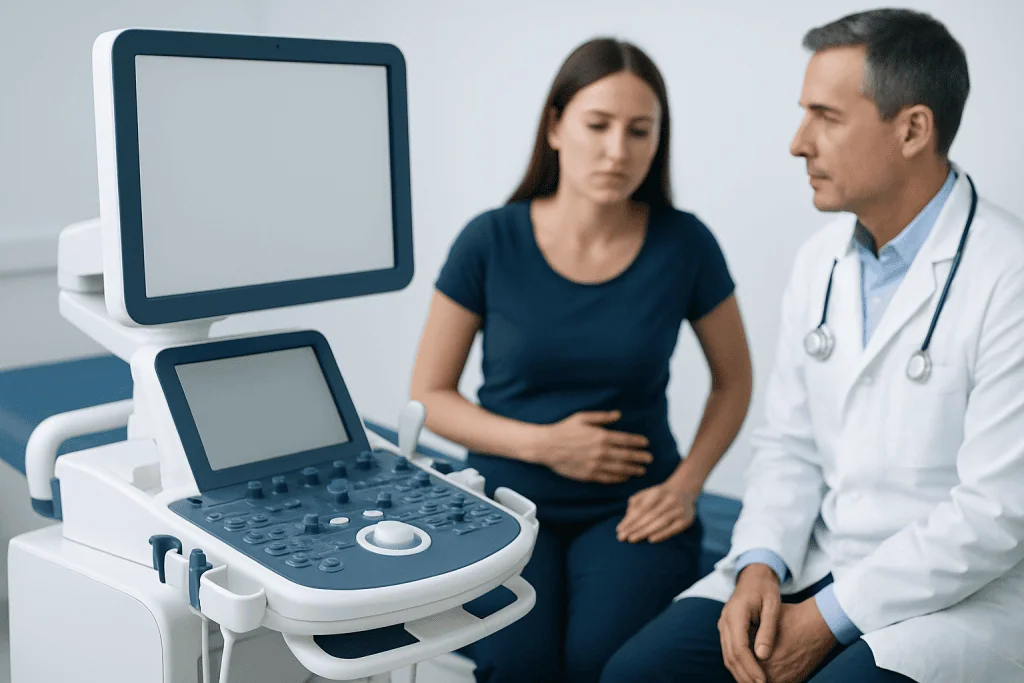
There is no single early sign that proves stage 4 endometriosis, but certain patterns can raise suspicion. Common symptoms include painful periods, pain during or after sex, chronic pelvic pain, pain with bowel movements or urination during menstruation, heavy bleeding, fatigue, and difficulty becoming pregnant. Symptoms may gradually worsen over time, although some people have symptoms from a young age.
One reason advanced endometriosis can be difficult to recognize is that symptoms often overlap with other conditions. Irritable bowel syndrome, pelvic inflammatory disease, ovarian cysts, fibroids, adenomyosis, and urinary disorders can cause similar complaints. Some people are told that severe period pain is normal, which may delay proper assessment.
Stage 4 disease may also be suspected when symptoms involve organs beyond the uterus and ovaries. For example, pain with bowel movements, bloating that worsens around menstruation, or cyclical urinary pain can suggest deeper pelvic involvement. Not everyone will have all of these symptoms, and their intensity can change from month to month.
- Severe menstrual cramps that interfere with work, school, or sleep
- Ongoing pelvic or lower back pain between periods
- Pain during sex or with deep penetration
- Bowel or bladder pain that flares around menstruation
- Infertility or difficulty conceiving
- Known ovarian cysts, especially endometriomas
How stage 4 develops: causes and risk factors

The exact cause of endometriosis is still not fully understood. Researchers believe it is a complex condition influenced by genetics, hormones, inflammation, immune function, and the way endometrial-like cells implant and grow outside the uterus. Several theories exist, including retrograde menstruation, coelomic metaplasia, stem cell involvement, and spread through blood or lymphatic channels.
Risk factors do not mean a person will definitely develop stage 4 endometriosis, but they can increase likelihood. A family history of endometriosis, especially in a mother or sister, raises risk. Starting periods at a young age, having shorter menstrual cycles, heavy or prolonged bleeding, and not having had a pregnancy may also be associated with a higher chance of disease.
Advanced disease may develop when endometriosis is present for years before diagnosis, but progression is not the same for everyone. Some lesions remain relatively stable, while others become more extensive. Repeated inflammation can contribute to scarring, pelvic adhesions, and ovarian endometriomas over time.
Because symptoms can overlap with endometriosis at other stages and with conditions such as ovarian cysts, careful specialist evaluation is often needed. Understanding risk factors helps support earlier recognition, but diagnosis still depends on medical assessment rather than risk alone.
Diagnosis and staging
Diagnosis begins with a detailed history. Doctors usually ask about menstrual pain, pain outside of periods, bowel or bladder symptoms, sexual pain, fertility concerns, and any family history of endometriosis. A pelvic examination may help detect tenderness, nodules, reduced organ mobility, or enlarged ovaries, although a normal exam does not exclude the disease.
Imaging plays an important role, especially in suspected advanced disease. Transvaginal ultrasound can identify ovarian endometriomas and may detect some deep lesions. MRI can be useful when deeper infiltrating endometriosis is suspected or when surgery is being planned. Imaging can strongly suggest the diagnosis, but it may not show every implant or fully define the stage.
Laparoscopy, a minimally invasive surgical procedure, has traditionally been the most definitive way to confirm endometriosis and assess its extent. During laparoscopy, the surgeon can directly see lesions, adhesions, and endometriomas and may take tissue samples when needed. The final stage is usually assigned from surgical findings rather than symptoms alone.
Stage 4 commonly includes dense adhesions, large or bilateral endometriomas, and deep disease in multiple areas. Still, staging has limits. It does not always predict pain level, fertility outlook, or treatment response, so doctors also consider age, symptom burden, fertility plans, imaging findings, and the person’s overall health when making a care plan.
Treatment options and how care is individualized
Treatment for stage 4 endometriosis is highly individualized. The best approach depends on the person’s symptoms, age, fertility goals, the location of disease, previous treatments, and whether endometriomas or organ involvement are present. Some people mainly need pain control and symptom suppression, while others need surgery to remove disease, restore anatomy, or improve fertility options.
Medical treatment can help control pain and reduce menstrual-related activity of endometriosis. Common options include nonsteroidal anti-inflammatory medicines for pain and hormonal treatments such as combined hormonal contraceptives, progestin-based therapies, or gonadotropin-releasing hormone analog-based treatment when appropriate. These therapies can ease symptoms, but they do not remove scar tissue or reverse all advanced anatomical changes.
Surgery may be considered when pain is significant, endometriomas are present, fertility is affected, or imaging suggests deep infiltrating disease involving the bowel, bladder, ureters, or other pelvic structures. A laparoscopic approach is often preferred when suitable, and goals may include removing visible endometriosis, treating adhesions, and preserving healthy ovarian tissue when possible. In selected cases, coordinated care involving gynecology, colorectal, urology, pain, and fertility specialists is important. Helpful procedures may include laparoscopic surgery and evaluation within gynecology care.
For people hoping to conceive, treatment planning is especially personal. Surgery may improve pain or pelvic anatomy in some situations, but fertility outcomes depend on age, ovarian reserve, and the extent of disease. Some patients benefit from consultation in fertility and IVF programs or a broader infertility treatment plan to discuss the best next steps.
Living with stage 4 endometriosis: self-care and long-term management
Stage 4 endometriosis often needs long-term follow-up rather than a one-time treatment. Even after successful symptom control or surgery, some people continue to need ongoing pain management, hormonal suppression, or monitoring for recurrence of symptoms or endometriomas. A practical care plan can help patients feel more in control.
Self-care does not replace medical treatment, but it can support daily comfort. Many people find it helpful to track symptoms with their menstrual cycle, note bowel or bladder triggers, and record which strategies improve pain. Gentle physical activity, regular sleep, stress management, and balanced nutrition may support overall well-being, especially when chronic pain affects energy and mood.
Pelvic floor physical therapy may be useful when pelvic muscles become tense or painful due to longstanding symptoms. Some patients also benefit from psychological support, especially if pain has affected school, work, relationships, or mental health. Chronic pelvic pain can be exhausting, and multidisciplinary care can make treatment more complete.
There is no guaranteed way to prevent endometriosis, but earlier evaluation of persistent period pain or fertility concerns may reduce delays in diagnosis. Near the end of the care pathway, some international patients choose assessment at centers such as Acibadem International, where multidisciplinary specialists in JCI-accredited hospitals diagnose and treat complex endometriosis and related fertility concerns.
When to seek medical care
Medical care is recommended when pelvic pain, menstrual pain, or heavy bleeding is disrupting daily life, work, school, sleep, or relationships. A doctor should also evaluate pain during sex, bowel or bladder pain around periods, or symptoms that keep returning despite over-the-counter measures. Seeking care early can help identify endometriosis or other treatable conditions sooner.
Anyone trying to become pregnant for a prolonged period without success should discuss the possibility of endometriosis with a qualified clinician, especially if painful periods or ovarian cysts are also present. A fertility-focused evaluation may be important even if pain symptoms are not severe. This is because advanced disease can affect pelvic anatomy and ovarian function in ways that are not always obvious.
Urgent medical attention is needed for sudden severe pelvic pain, fainting, fever, vomiting, or signs of heavy acute bleeding, because these symptoms may point to complications or another emergency condition. It is also important to seek prompt review if urinary symptoms, bowel blockage symptoms, or new rapidly worsening pain develop.
If symptoms suggest deep or advanced disease, specialist assessment can help clarify whether imaging, laparoscopy, fertility planning, or complex surgical care is needed. A clear diagnosis often brings reassurance and helps people make informed decisions about treatment.
Frequently asked questions
Is stage 4 endometriosis the same as the worst symptoms?
Not necessarily. Stage 4 refers to how extensive the disease appears during surgical assessment, such as deep lesions, adhesions, or endometriomas. Some people with stage 4 disease have moderate symptoms, while others with lower-stage disease can have severe pain.
Can stage 4 endometriosis be seen on ultrasound?
Ultrasound can often detect ovarian endometriomas and may identify some features of deep endometriosis. However, it may not show every lesion or fully define the extent of disease, so MRI or laparoscopy may also be used when needed.
Does stage 4 endometriosis always cause infertility?
No. Stage 4 endometriosis can affect fertility, but it does not mean pregnancy is impossible. Fertility depends on several factors, including age, ovarian reserve, tubal function, sperm factors, and how the disease affects pelvic anatomy.
Can hormonal treatment cure stage 4 endometriosis?
Hormonal treatment can help control symptoms and reduce menstrual-related activity of endometriosis, but it does not remove existing scar tissue or all deep lesions. For some people, surgery is still needed, especially when anatomy is distorted or fertility is a concern.
Is surgery always needed for stage 4 endometriosis?
No. Surgery is not automatic for every person with stage 4 disease. The decision depends on pain severity, organ involvement, endometriomas, previous treatments, and reproductive goals.
Can stage 4 endometriosis come back after treatment?
Symptoms or lesions can recur after treatment, particularly over time. Ongoing follow-up, symptom monitoring, and a long-term management plan can help reduce the impact of recurrence and guide timely care.
References
- American College of Obstetricians and Gynecologists
- World Health Organization
- National Institute for Health and Care Excellence
- European Society of Human Reproduction and Embryology
- Office on Women's Health
This article is for general information only and is not a substitute for professional medical advice. Please consult a qualified doctor about your individual situation.
Endometriosis in Turkey — costs, top hospitals & a free quote
JCI-accredited · board-certified surgeons · reply within 24h
Add us as a Preferred Source to see more of our trusted health content across Google Search, AI Overviews and Discover.

Gynecology & Obstetrics
Women’s health across pregnancy, gynecologic surgery and high-risk pregnancy care.
187 specialists in this unitMore from the Health Library



Related Specialists

Dr. Betül Baş
Pediatrics
Dr. Buket Karsavuranoğlu Seven
Internal Medicine
Dr. Yusuf Hakan Abacı
Orthopedic Surgery & Traumatology
Embriyolog Sevda Gökçe
Vitro Fertilization and Reproductive Medicine Center