Stem Cell Transplant for AML: Procedure, Recovery and Results

Most transplants for AML are allogeneic, meaning stem cells come from a donor. The transplant is a process rather than a single operation, including assessment, conditioning treatment, infusion and close follow-up.
Key Takeaways
- Most transplants for AML are allogeneic, meaning stem cells come from a donor.
- The transplant is a process rather than a single operation, including assessment, conditioning treatment, infusion and close follow-up.
- A donor immune effect can help control leukemia, but it can also cause graft-versus-host disease.
- Recovery commonly takes months and requires infection prevention, blood tests and support from a specialist team.
- Whether transplant is appropriate depends on AML risk features, remission status, age, overall health and donor availability.
A stem cell transplant for AML is an intensive treatment that uses healthy blood-forming stem cells to restore bone marrow after high-dose treatment. It is most often considered for people whose <a href="https://acibademinternational.com/diseases/acute-myeloid-leukemia/”>acute myeloid leukemia has a higher risk of returning or has not responded fully to initial therapy.
Overview: What Is a Stem Cell Transplant for AML?
A stem cell transplant for AML is a treatment that replaces the blood-forming cells in the bone marrow after intensive chemotherapy, with or without radiation in selected situations. The goal is to allow the body to make new healthy blood cells and, in an allogeneic transplant, to use the donor immune system to help recognize and attack remaining leukemia cells.
AML, or acute myeloid leukemia, is a cancer of blood and bone marrow cells. Initial treatment commonly aims to bring AML into remission, meaning leukemia cells can no longer be detected with standard testing. A transplant may then be recommended as consolidation treatment for people whose leukemia has features linked with a greater chance of relapse, or as treatment after AML returns or does not respond as expected. More background on the disease is available in acute myeloid leukemia information.
Despite the familiar name “bone marrow transplant,” stem cells are now often collected from a donor’s bloodstream. The cells are given through a vein in a way that resembles a blood transfusion; surgery is not required. Over time, the cells travel to the bone marrow and begin producing blood cells, a process called engraftment.
How the Transplant Works and Who May Be a Candidate
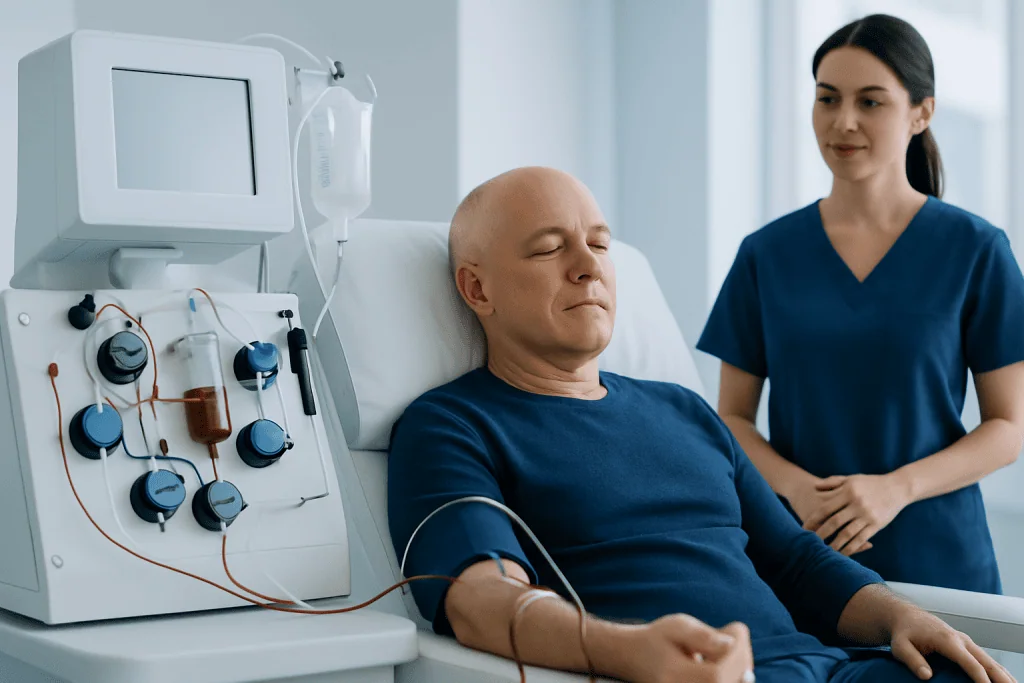
For AML, the most common approach is an allogeneic stem cell transplant, in which cells come from another person. A matched sibling donor may be considered first, but a well-matched unrelated donor, a partially matched family donor, or sometimes stored umbilical cord blood may also be options. The transplant team selects the source based on tissue matching, medical factors, urgency and local expertise.
Doctors consider transplant when its potential benefit in reducing relapse risk outweighs its short- and long-term risks. Important factors include the chromosome and gene changes in leukemia cells, results of measurable residual disease testing, whether AML is in remission, response to prior treatments, previous relapse, age, organ function, fitness for intensive treatment and the availability of a suitable donor.
Not every person with AML needs a transplant in first remission. Some lower-risk forms can be managed with chemotherapy or other post-remission approaches, while others have a sufficiently high relapse risk that transplant is strongly considered. Decisions are individualized through discussion among hematology, transplant, infectious disease, pathology, pharmacy, nursing and supportive-care specialists.
- Myeloablative conditioning uses higher-intensity treatment and may suit medically fit patients.
- Reduced-intensity conditioning uses less intensive treatment and may be appropriate for some older adults or people with health conditions.
- Autologous transplant, using a person’s own cells, has a limited role in AML compared with allogeneic transplant.
Step by Step: The Stem Cell Transplant Process

The process begins with a detailed pre-transplant assessment. This commonly includes blood tests, heart and lung evaluation, infection screening, dental review when needed, imaging or bone marrow testing, medication review and consultation about fertility, nutrition and emotional support. The team also confirms donor compatibility and develops a plan for infection prevention and blood-product support.
Next comes conditioning, usually delivered over several days before the stem cell infusion. Chemotherapy, and occasionally radiation therapy, reduces leukemia cells, suppresses the existing immune system enough to allow donor cells to settle, and creates space in the marrow for new blood formation. The exact medicines and intensity are tailored to the individual.
On transplant day, donor stem cells are infused through a central venous catheter. The infusion itself is usually not painful, although the care team monitors for reactions. The most medically vulnerable phase follows, because blood counts drop before donor cells begin working. Patients may stay in hospital or attend a closely supervised transplant program depending on the regimen and their condition.
After infusion, medications are used to reduce the risk of graft-versus-host disease, and patients receive frequent testing, transfusions, antimicrobial medicines and symptom support as needed. Bone marrow transplant care involves coordinated monitoring throughout these stages rather than the infusion alone.
Recovery Timeline and Follow-Up Care
Engraftment often begins within the first few weeks, although the timing varies with the stem cell source, treatment plan and individual recovery. Rising white blood cells, platelets and red blood cells are signs that donor cells are starting to establish blood production. During this period, fatigue, low appetite, mouth soreness, nausea and a need for transfusions or intravenous medications are common.
The first 100 days after transplant are especially important for monitoring infection, graft-versus-host disease and organ effects. Appointments are frequent, and blood tests help the team check blood counts, liver and kidney function, medication levels and evidence of infection or leukemia. Many people need a caregiver and temporary arrangements near the transplant center, particularly early in recovery.
Immune recovery is gradual and may take many months or longer. The team gives individualized advice about hand hygiene, food safety, visitors, masks in higher-risk settings, physical activity and returning to work or travel. Vaccines usually need to be restarted on a planned schedule because previous immunity may no longer be reliable after transplant.
Long-term follow-up also looks for relapse, chronic graft-versus-host disease, hormonal changes, bone health concerns, cataracts, heart or lung effects and emotional well-being. Survivorship care remains important even after regular hospital visits become less frequent.
Potential Benefits and Risks
The main potential benefit of allogeneic transplant is a lower chance of AML returning for selected patients. Along with the conditioning treatment, donor immune cells may produce a graft-versus-leukemia effect. This immune effect can be valuable when small amounts of leukemia remain after treatment, but it cannot guarantee that AML will not recur.
Transplant is also associated with significant risks. Low blood counts increase the likelihood of serious infection and bleeding in the early phase. Conditioning can affect the mouth, digestive system, liver, kidneys, lungs, heart and fertility. Doctors monitor carefully and provide preventive medicines and supportive treatments to reduce or manage complications.
Graft-versus-host disease, often called GVHD, happens when donor immune cells react against the recipient’s tissues. Acute GVHD may affect the skin, gut or liver, while chronic GVHD can affect several organs and may develop later. Immunosuppressive medicines lower the risk, but they can also make infections more likely.
The transplant team discusses expected benefits and risks in the context of the person’s specific AML, health status and treatment goals. This shared decision-making process should include practical planning, caregiver support, fertility preservation where relevant and the patient’s priorities for quality of life.
Prevention, Self-Care and Everyday Support During Recovery
AML cannot always be prevented, and transplant complications cannot be eliminated completely. However, careful preparation and daily precautions can reduce avoidable risks. Patients should take all medicines exactly as prescribed, attend scheduled blood tests, avoid starting supplements or over-the-counter medicines without approval, and report new symptoms promptly.
Infection prevention is particularly important while immune defenses are low. Transplant teams commonly advise frequent handwashing, avoiding close contact with people who are unwell, following food-safety guidance, caring for the central line as instructed and asking before gardening, handling soil or visiting crowded settings. Advice differs by recovery stage, so the transplant team’s instructions should take priority.
Gentle activity, as tolerated, can help rebuild strength, sleep and mood. A dietitian can help address changes in appetite, taste, weight or swallowing. Emotional strain is also common for patients and families; counseling, support groups, social work services and open communication with the care team can be helpful parts of recovery.
Acibadem International’s multidisciplinary specialists and JCI-accredited hospitals provide assessment and treatment planning for international patients who may need hematology care and transplant-related support.
When to Seek Medical Care
Anyone being evaluated for AML or transplant should contact their hematology team if symptoms change or if there are questions about treatment preparation. Before transplant, urgent assessment may be needed for fever, unusual bruising or bleeding, increasing shortness of breath, severe weakness, confusion or signs of infection.
After transplant, patients should follow their center’s emergency instructions closely. A fever, chills, new cough, breathing difficulty, persistent vomiting or diarrhea, severe abdominal pain, a new rash, yellowing of the skin or eyes, painful urination, confusion, uncontrolled bleeding or sudden worsening of symptoms should be reported immediately. Do not wait for a routine appointment when the transplant team has advised urgent contact.
Patients should not change immunosuppressive medicines, antibiotics or other prescribed treatments on their own. Early communication helps the team investigate symptoms and provide appropriate care, including urgent assessment when necessary.
Frequently asked questions
Is a stem cell transplant a cure for AML?
A stem cell transplant can offer a chance of long-term remission and may reduce the risk of AML returning for some people. However, it cannot guarantee a cure, because relapse and transplant-related complications can still occur. The likely benefit depends on the AML subtype, treatment response and individual health factors.
What type of stem cell transplant is used for AML?
Most people with AML who undergo transplant receive an allogeneic transplant, using stem cells from a donor. Donor immune cells may help fight remaining leukemia cells. The donor may be a matched relative, an unrelated matched donor or, in some cases, a partially matched donor.
How long does recovery take after a stem cell transplant for AML?
The most intensive recovery period usually lasts several weeks to months, while immune recovery may take a year or longer. Follow-up is frequent in the first 100 days and gradually becomes less frequent as recovery progresses. Timing varies according to the conditioning regimen, donor source, complications and overall health.
Can an older adult have a stem cell transplant for AML?
Age alone does not determine eligibility. Doctors consider physical fitness, heart, lung, kidney and liver function, other health conditions, AML risk and the availability of a suitable donor. Reduced-intensity conditioning may be an option for selected older adults.
What is graft-versus-host disease after an AML transplant?
Graft-versus-host disease occurs when donor immune cells react against tissues in the recipient’s body. It can affect the skin, digestive tract, liver and other organs, and it may be acute or chronic. Preventive medicines and close monitoring are used to lower the risk and treat it if it develops.
Will a person need vaccines again after stem cell transplant?
Many people need repeat vaccinations after transplant because immune protection from previous vaccines may be reduced or lost. The transplant team provides a schedule once immune recovery is sufficiently established. Live vaccines are generally delayed and require specialist guidance.
References
- National Cancer Institute
- American Cancer Society
- European Society for Blood and Marrow Transplantation
- Leukemia & Lymphoma Society
- Centers for Disease Control and Prevention
This article is for general information only and is not a substitute for professional medical advice. Please consult a qualified doctor about your individual situation.
Stem Cell Transplant in Turkey — costs, top hospitals & a free quote
JCI-accredited · board-certified surgeons · reply within 24h
Add us as a Preferred Source to see more of our trusted health content across Google Search, AI Overviews and Discover.

Organ Transplantation
Kidney, liver and bone-marrow transplantation programs with dedicated coordination.
5 specialists in this unitMore from the Health Library



Related Specialists

Prof. Dr. Ömer Fatih Ölmez
Medical Oncology
Dr. Yusuf Ay
Emergency Service
Dr. Krıstıne Koyunseven
Infectious Diseases & Clinical Microbiology
Pdg. Fulya Sari
Podiatry & Foot Health