Stem Cells for Cancer Therapy: How It Works, Results and What to Expect

Stem cell transplantation is used mainly for certain blood cancers, including leukemia, lymphoma and multiple myeloma. The transplant replaces or restores blood-forming stem cells after high-dose treatment damages the bone marrow.
Key Takeaways
- Stem cell transplantation is used mainly for certain blood cancers, including leukemia, lymphoma and multiple myeloma.
- The transplant replaces or restores blood-forming stem cells after high-dose treatment damages the bone marrow.
- Autologous transplants use a person's own collected stem cells, while allogeneic transplants use donor cells.
- Outcomes depend on the cancer type, disease stage, response to earlier treatment, transplant type and overall health.
- Recovery takes months, and follow-up is essential to monitor infection, graft-versus-host disease, relapse and long-term health.
Stem cells for cancer therapy most often refers to hematopoietic stem cell transplantation, also called a blood or bone marrow transplant. It can help some people with blood cancers receive intensive treatment and rebuild healthy blood cell production, but it is not a universal cure for cancer.
Overview: What Are Stem Cells for Cancer Therapy?
Stem cells for cancer therapy usually refers to a hematopoietic stem cell transplant (HSCT), often called a blood stem cell transplant or bone marrow transplant. This treatment restores blood-forming stem cells after chemotherapy, radiation therapy, or both have reduced or destroyed the bone marrow’s ability to make healthy blood cells.
It is most commonly used for cancers that begin in blood-forming tissues or affect the immune system, such as leukemia, lymphoma, and multiple myeloma. The goal may be to allow very intensive anti-cancer treatment, to replace diseased marrow with healthy donor cells, or to provide an immune effect against cancer cells.
A stem cell transplant is a complex treatment plan rather than a single procedure. It involves cancer specialists, transplant physicians, nurses, laboratory teams, infection specialists and supportive-care professionals. The best approach is individualized after a detailed assessment of the cancer and the person’s health.
How Does Stem Cell Transplantation Work?
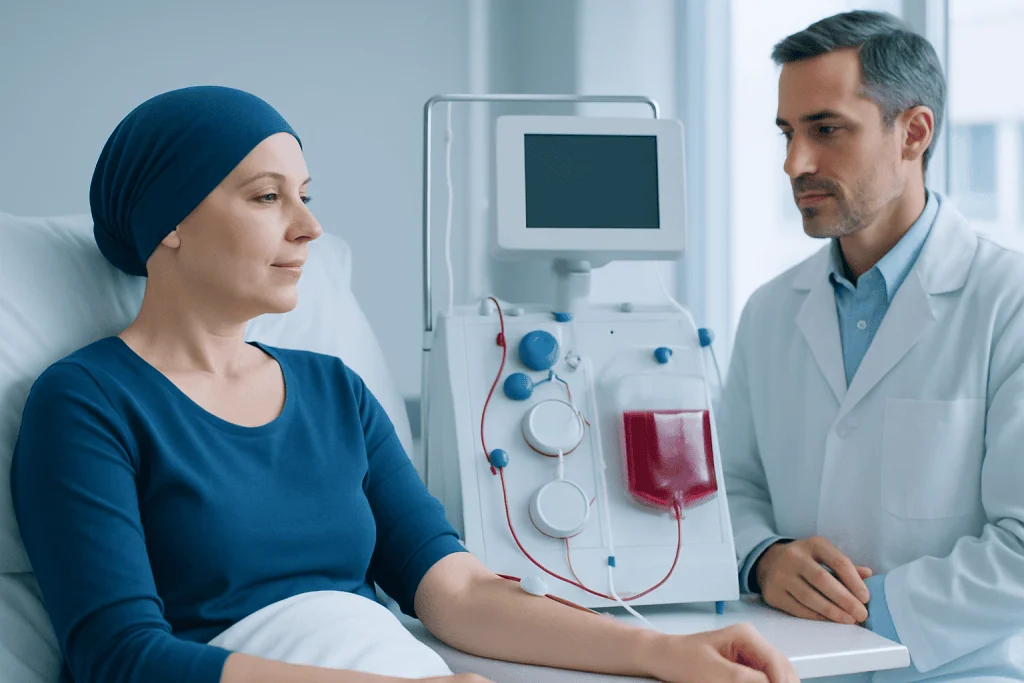
Blood-forming stem cells live mainly in the bone marrow. They can develop into red blood cells, white blood cells and platelets. Before transplant, stem cells are collected either from the patient or from a carefully matched donor, frozen when appropriate, and later given through an intravenous line, much like a blood transfusion.
There are two main transplant approaches. In an autologous transplant, the patient’s own stem cells are collected before high-dose treatment and returned afterward. This is commonly used for selected lymphomas and multiple myeloma. In an allogeneic transplant, stem cells come from a donor, such as a matched relative or an unrelated volunteer donor.
Donor immune cells can sometimes recognize and attack remaining cancer cells, known as the graft-versus-tumor effect. This can be an important advantage in some leukemias and other blood cancers. However, donor cells can also attack healthy tissues, causing graft-versus-host disease, so allogeneic transplantation requires particularly close monitoring.
Stem cell transplants are not the same as unproven commercial “stem cell therapies.” For cancer, established stem cell treatment is performed in accredited transplant programs using carefully regulated blood-forming stem cells and evidence-based protocols.
Who May Be a Candidate for Stem Cell Therapy?

Candidacy depends first on the type and behavior of the cancer. A transplant may be considered when a blood cancer is high risk, has returned after treatment, has not responded adequately to standard therapy, or is in remission but has a meaningful risk of coming back. It may also be part of planned treatment for certain cancers from the outset.
Doctors consider the cancer’s genetic features, current disease status, previous treatments, availability of a suitable donor when needed, and whether other effective treatment options exist. Age alone does not determine eligibility. Instead, the transplant team assesses heart, lung, kidney and liver function, fitness, nutrition, infections and the ability to manage recovery.
For people with leukemia, transplant recommendations can differ substantially according to leukemia subtype and risk profile. Related information may be helpful for those learning about leukemia. For lymphomas and myeloma, transplant may be considered at different points in care depending on the disease and response to treatment.
A transplant consultation should include a discussion of likely benefits, alternatives, practical support needs, possible short- and long-term effects, and the person’s own treatment priorities.
What Happens During the Stem Cell Transplant Procedure?
The process usually begins with evaluation and planning. This includes blood tests, imaging when needed, heart and lung assessments, dental review, infection screening and discussions about fertility preservation. If donor cells are planned, donor matching and collection arrangements take place before conditioning treatment begins.
For an autologous transplant, stem cells are typically moved from the bone marrow into the bloodstream using prescribed medicines and collected through a process called apheresis. In allogeneic transplantation, cells are collected from the donor or, in selected cases, may come from stored umbilical cord blood. The patient then receives conditioning treatment, which may include chemotherapy with or without radiation.
On transplant day, the stem cells are infused through a central venous catheter. This is generally painless and does not require surgery. The cells travel to the bone marrow, where they begin the process of producing new blood cells. This recovery of blood cell production is called engraftment.
During the period before engraftment, blood counts are low and infection or bleeding risks are increased. Hospital admission is often needed, especially for allogeneic transplants. Supportive care can include protective infection measures, transfusions, anti-nausea medicines, nutrition support and close symptom management.
Recovery Timeline, Benefits and Risks
Engraftment commonly begins within a few weeks, although timing varies with the stem cell source, treatment plan and individual response. White blood cells generally recover first, while platelet and red blood cell recovery can take longer. Some people leave hospital after early recovery, but frequent outpatient visits and blood tests remain necessary.
Fatigue, reduced appetite, mouth soreness, nausea, hair loss and changes in taste can occur after conditioning treatment. Immune recovery takes much longer than initial engraftment, often many months and sometimes longer after an allogeneic transplant. Vaccinations may need to be repeated according to the transplant team’s schedule.
Potential benefits include a deeper remission, a chance to control otherwise difficult-to-treat disease, and, for some conditions, the possibility of long-term disease-free survival. Risks include serious infections, bleeding, organ side effects, infertility, cataracts, secondary cancers, transplant failure and, with donor transplants, graft-versus-host disease.
Graft-versus-host disease may affect the skin, liver, digestive tract, mouth, eyes or other organs. It can occur early or later after transplant and ranges from mild to severe. Prompt reporting of new rash, diarrhea, jaundice, breathing changes, dry eyes or mouth symptoms helps the team assess and treat concerns early.
Can Stem Cell Therapy Completely Cure Cancer?
Stem cell therapy can contribute to a cure for some people with certain blood cancers, but it cannot be described as a complete cure for every person or every cancer. Whether a transplant can be curative depends on the cancer type, its biology, how much disease is present at transplant, the response to prior therapy, transplant type and the person’s overall health.
For some patients, especially those with selected leukemias and other high-risk blood cancers, an allogeneic transplant may offer the strongest chance of long-term disease control because donor immune cells may attack remaining cancer cells. For others, transplantation is used to extend remission or improve disease control rather than guarantee a cure.
Solid tumors such as breast, lung, colon or prostate cancer are not usually treated with standard blood stem cell transplantation. Patients should be cautious about clinics offering broad claims that stem cells cure cancer without a clear diagnosis, regulated protocol and oversight by qualified oncology specialists.
How Soon Can Cancer Come Back After Stem Cell Transplant?
Cancer can return, or relapse, at different times after transplant. When relapse occurs, it is often within the first months to two years, but later relapse is also possible. The timing depends greatly on the specific cancer, its genetic and clinical risk factors, the depth of remission before transplant and the type of transplant performed.
Follow-up appointments are designed to identify relapse and treatment complications early. Monitoring may include physical examinations, blood counts, bone marrow testing, imaging, molecular tests or other disease-specific assessments. The schedule is most intensive soon after transplant and becomes less frequent when recovery is stable.
If cancer returns, management may include targeted medicines, immunotherapy, chemotherapy, radiation therapy, donor lymphocyte infusion in selected allogeneic transplant situations, clinical trials or, occasionally, another transplant. The appropriate option depends on the individual situation and should be reviewed by a specialist team.
How Long Does It Take to See Results from Stem Cell Therapy?
The first measurable result is usually engraftment, when the transplanted stem cells begin making blood cells. This commonly happens over several weeks, but it is not the same as knowing whether the cancer is controlled. The team tracks blood count recovery closely while also managing symptoms and preventing infection.
Assessment of cancer response may occur at planned intervals after transplant, based on the condition being treated. Some tests can show early changes, while a more reliable view of remission and long-term benefit often develops over months of follow-up. People may also need months to regain stamina and resume more usual daily activities.
Recovery is rarely linear. Energy, appetite, sleep, mood and physical strength may improve gradually, with occasional setbacks. The transplant team can advise on safe activity, nutrition, medicines, infection prevention and when it is appropriate to return to work, travel or larger social settings.
What Is the Success Rate of Stem Cell Therapy for Cancer?
There is no single success rate for stem cell therapy for cancer. Published outcomes vary widely because “success” may mean complete remission, survival without relapse, overall survival, successful engraftment or quality of life. Results also differ by cancer type, disease stage, transplant approach, donor match, age, medical fitness and transplant-center experience.
For this reason, a transplant physician should explain outcomes using information that is relevant to the person’s exact diagnosis and treatment setting. They may discuss expected disease control, transplant-related risks, likelihood of relapse and alternative approaches. It is reasonable for patients and families to ask what outcomes mean in practical terms for their situation.
Reliable decisions should not be based on generalized online percentages or anecdotal reports. A careful review by an experienced hematology and transplant team provides the most useful estimate of potential benefit and risk.
When to Seek Medical Care
Anyone being evaluated for, receiving or recovering from a transplant should contact their transplant team urgently for fever, chills, shortness of breath, chest pain, confusion, uncontrolled vomiting, severe diarrhea, new bleeding, a rapidly spreading rash, severe weakness or reduced urine output. These symptoms may have many causes, but prompt assessment is important after intensive cancer treatment.
People without a transplant who have persistent unexplained fatigue, frequent infections, enlarged lymph nodes, unusual bruising or bleeding, unintentional weight loss or ongoing night sweats should arrange a medical assessment. These symptoms do not necessarily indicate cancer, but a clinician can determine whether testing is needed.
Acibadem International’s multidisciplinary specialists and JCI-accredited hospitals evaluate and treat blood cancers and transplant candidates for international patients. A consultation can help clarify whether stem cell transplantation is appropriate and what preparation and follow-up may involve.
Frequently asked questions
Is stem cell therapy the same as a bone marrow transplant?
In cancer care, the terms are often used closely. A hematopoietic stem cell transplant replaces blood-forming cells, and the cells may be collected from blood, bone marrow or umbilical cord blood. “Bone marrow transplant” is a commonly used name for this type of treatment.
Is a stem cell transplant painful?
The infusion itself is usually similar to receiving a blood transfusion and is not usually painful. However, conditioning chemotherapy or radiation and the early recovery period can cause significant side effects, including fatigue, nausea, mouth soreness and low blood counts. The care team provides preventive and supportive treatment throughout the process.
Can a person have more than one stem cell transplant?
In selected circumstances, a person may receive more than one transplant. This may be planned for certain cancers or considered if disease returns, but it depends on the prior transplant, current health, cancer characteristics and available treatments. A specialist transplant team should assess the risks and potential benefits carefully.
How long is the hospital stay for a stem cell transplant?
Hospital stay varies by transplant type, conditioning intensity, complications and local care practices. Many allogeneic transplant recipients need prolonged inpatient care during the period of low blood counts, while some autologous transplants may be managed partly as outpatients. Even after discharge, regular monitoring is essential.
What precautions are needed after a stem cell transplant?
Patients are usually advised to reduce exposure to infections, follow food-safety guidance, take prescribed medicines and attend all monitoring visits. They should ask their transplant team before receiving vaccines, traveling, returning to crowded settings or starting supplements. Individual precautions change as immune recovery progresses.
Can family members donate stem cells?
A relative may be a potential donor, but compatibility testing is required. Not every family member is a suitable match, and unrelated volunteer donors or cord blood may be options when an appropriate related donor is unavailable. The transplant center coordinates donor evaluation and safety screening.
References
- World Health Organization
- National Cancer Institute
- American Society of Hematology
- European Society for Blood and Marrow Transplantation
- Centers for Disease Control and Prevention
This article is for general information only and is not a substitute for professional medical advice. Please consult a qualified doctor about your individual situation.
Oncology care in Turkey — second opinion and treatment plan
JCI-accredited · board-certified surgeons · reply within 24h
Add us as a Preferred Source to see more of our trusted health content across Google Search, AI Overviews and Discover.