Stress Test Procedure: Preparation, Procedure and Results
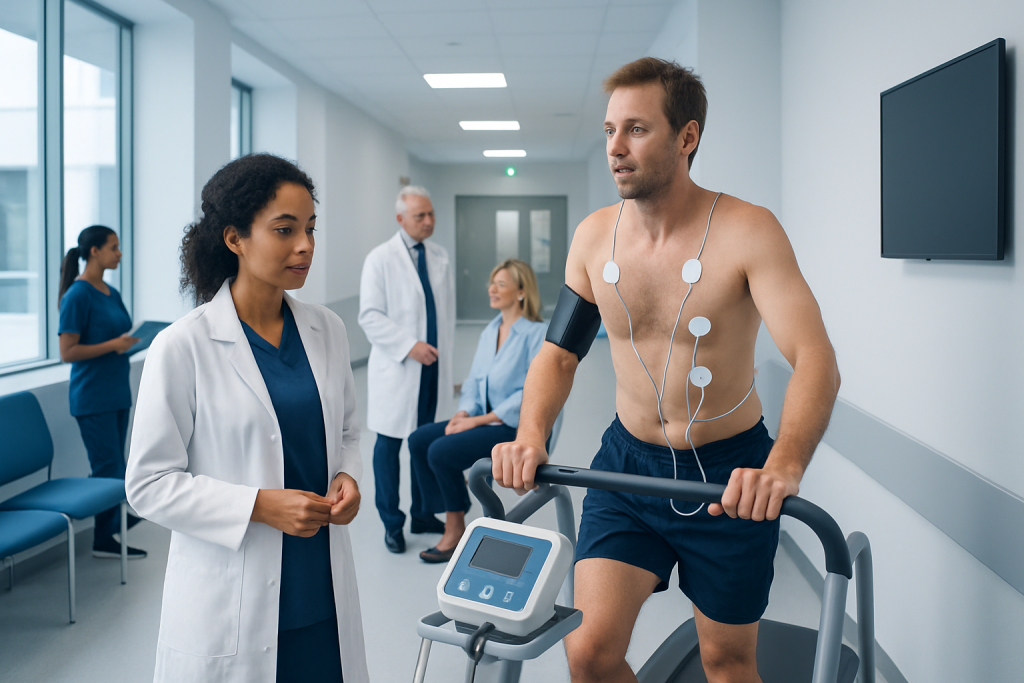
Most stress tests involve walking on a treadmill or receiving medication that temporarily makes the heart work harder. Preparation instructions vary, especially for food, caffeine and regular medicines, so patients should follow their care team’s directions.
Key Takeaways
- Most stress tests involve walking on a treadmill or receiving medication that temporarily makes the heart work harder.
- Preparation instructions vary, especially for food, caffeine and regular medicines, so patients should follow their care team’s directions.
- Results may be available immediately in preliminary form, while imaging-based results can take longer to interpret.
- An abnormal stress test does not confirm a blockage by itself; further testing may be needed.
- Stress testing is generally safe and is performed with trained staff and emergency equipment available.
A stress test procedure measures the heart’s rhythm, blood pressure, symptoms and sometimes blood flow while the heart is working harder than at rest. It can help clinicians investigate chest discomfort, breathlessness or exercise-related symptoms and guide the next steps in heart care.
Stress Test Procedure Overview
A stress test procedure, also called a cardiac stress test, evaluates how the heart performs when its workload increases. During physical exercise or with a medicine that mimics the effects of exercise, clinicians monitor the heart’s electrical activity, heart rate, blood pressure and symptoms. Some tests also use ultrasound or nuclear imaging to assess heart muscle movement or blood flow.
The test is commonly used when a person has symptoms that may be related to the heart, such as chest pressure, shortness of breath, unusual fatigue, dizziness or palpitations during activity. It may also help a cardiologist assess known coronary artery disease, determine safe exercise levels, or evaluate response to treatment.
A stress test is not a test that causes emotional stress. It creates a carefully controlled physical demand on the cardiovascular system while a clinical team monitors the person closely. The best test type depends on symptoms, medical history, ability to exercise and the question the clinician needs to answer.
How a Stress Test Works and Who May Need One
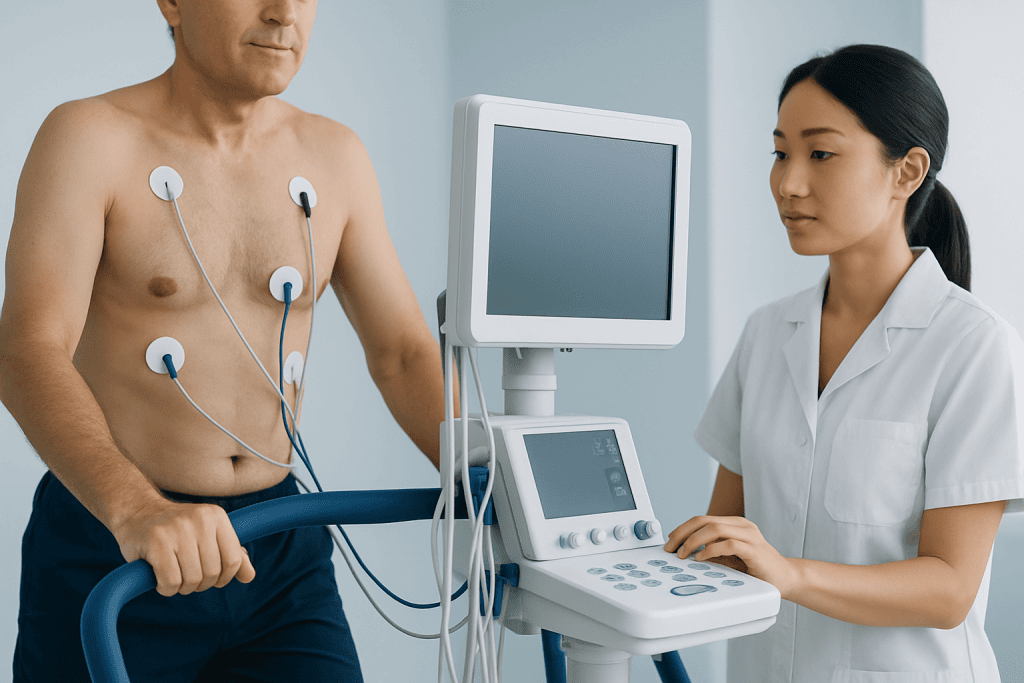
When the body exercises, the heart must pump faster and more forcefully to supply oxygen-rich blood to working muscles. If blood flow to part of the heart is reduced, often because of narrowing in the coronary arteries, signs may become more apparent during this increased demand. These signs can include symptoms, changes on an electrocardiogram (ECG), reduced blood flow on imaging or abnormal movement of part of the heart muscle.
A clinician may recommend a stress test for people with new or changing exertional symptoms, those with known heart disease whose symptoms have changed, or selected people who need an exercise assessment before a cardiac rehabilitation or activity plan. It is not routinely appropriate for every person with cardiovascular risk factors but no symptoms; the decision should be individualized.
Common types include an exercise ECG stress test, stress echocardiogram and nuclear perfusion stress test. People who cannot safely exercise on a treadmill may have a pharmacologic stress test, in which medicine increases blood flow or simulates exercise effects. Related conditions that may be evaluated include coronary artery disease.
- Exercise ECG: records the heart’s electrical activity while the treadmill workload rises gradually.
- Stress echocardiogram: combines exercise or medication with ultrasound images of the heart.
- Nuclear stress test: uses a small amount of tracer and specialized imaging to compare blood flow at rest and under stress.
- Pharmacologic stress test: is used when walking adequately on a treadmill is not possible or suitable.
How Should I Prep for a Stress Test?

Preparation depends on the exact stress test procedure, so the testing center’s instructions should take priority. In general, patients may be asked to avoid a heavy meal for several hours beforehand, wear comfortable walking clothes and supportive shoes, and bring a current list of medicines, allergies and relevant medical information. A two-piece outfit may make it easier for staff to place ECG electrodes on the chest.
Some medicines can affect heart rate, blood pressure or test interpretation. A clinician may advise temporarily withholding certain drugs, such as particular heart-rate-lowering medicines, but patients should never stop a prescribed medicine unless specifically instructed. People with diabetes need individualized advice about fasting, meals and insulin or other glucose-lowering medication.
Caffeine restrictions are particularly important before many nuclear or medication-based stress tests, because caffeine can interfere with some stress medicines. This may include coffee, tea, cola, energy drinks, chocolate and some over-the-counter medicines. Tobacco and nicotine can also affect heart rate and blood vessels, so avoiding them before the test is often advised.
Patients should tell the team about asthma or chronic lung disease, pregnancy or possible pregnancy, mobility limitations, prior heart procedures and any recent illness. They should also report symptoms such as chest pain or breathlessness that occur before the appointment, as these may change the timing or type of test.
What Should You Not Do the Night Before a Stress Test?
The night before a stress test, it is sensible to avoid alcohol, recreational drugs and unusually strenuous exercise. These can affect heart rate, blood pressure, hydration or the ability to exercise normally the next day. A normal evening meal, adequate fluids and a good night’s sleep are usually appropriate unless the clinical team has provided different instructions.
Patients should not make independent changes to their medicines. Some people will be asked to pause certain medicines before testing, while others need to take their usual treatment with a small sip of water. The correct plan depends on the individual’s heart condition, blood pressure, diabetes treatment and the stress-test method.
For a test scheduled early in the morning, a center may ask the patient not to eat after midnight or not to have a meal for a specified number of hours. For nuclear or pharmacologic testing, caffeine may need to be avoided for at least the period stated by the testing team, which is commonly longer than simply skipping morning coffee. If instructions are unclear, contacting the center before the appointment is the safest approach.
Stress Test Procedure: Step by Step
Before the test, a clinician reviews relevant health information and explains what will happen. Staff check blood pressure, place adhesive ECG electrodes on the chest and may establish an intravenous line if imaging or stress medication is planned. A resting ECG is usually recorded first, and baseline symptoms are documented.
For an exercise test, the patient walks on a treadmill that slowly becomes faster and steeper in stages. The team monitors ECG readings, blood pressure, heart rate and symptoms throughout. The goal is usually to reach a target level of exertion safely, not to exercise for as long as possible. The patient should report chest discomfort, unusual breathlessness, dizziness, leg pain or any symptom that feels concerning.
For a pharmacologic test, medicine is given under monitoring to increase cardiac workload or alter coronary blood flow. Imaging may be obtained at set times. Patients may briefly notice flushing, headache, breathlessness, chest discomfort, nausea or a racing heartbeat, depending on the medication used; staff monitor these symptoms and can stop or reverse treatment when needed.
The active exercise portion often lasts around 10 to 15 minutes, although the complete appointment may take longer, particularly when imaging is included. Testing may be stopped early if the patient reaches the planned target, develops limiting symptoms, has significant ECG or blood pressure changes, or if the clinician determines that stopping is safest.
Recovery, Benefits and Possible Risks
After exercise, the patient usually walks slowly or rests while heart rate, ECG readings and blood pressure return toward baseline. This monitoring commonly takes several minutes. Most people can return to normal daily activities afterward, although those who received sedation for another procedure, had significant symptoms or received specific instructions should follow the care team’s advice.
The main benefit of a stress test is that it provides information that may not be visible when the heart is at rest. It can help determine whether symptoms may be due to reduced blood flow, support exercise planning and help clinicians decide whether medicines, lifestyle measures, additional imaging or other assessment may be useful.
Stress tests are generally safe when performed in an appropriate clinical setting. Rare complications include abnormal heart rhythms, fainting, severe chest pain, heart attack or severe allergic reaction to an imaging agent. Medical teams screen for factors that could make testing unsuitable and have emergency equipment and trained personnel available.
If a stress test suggests a heart problem, care may involve risk-factor management, medicines, further noninvasive imaging or an invasive assessment. Depending on the findings, a specialist may discuss coronary angiography to look directly at the coronary arteries.
How Long After a Stress Test Do You Get the Results?
A preliminary impression may sometimes be discussed shortly after a straightforward exercise ECG test, particularly if the tracing and symptoms are clearly reassuring or clearly require prompt attention. However, the final result should come from the clinician who reviews the complete recording, medical history and, when applicable, imaging data.
Stress echocardiography and nuclear stress testing often require additional image processing and specialist interpretation. Results may therefore be shared later that day, within a few days or at a planned follow-up appointment. The time frame varies by test type, facility workflow and whether the findings need urgent review.
A report generally describes exercise capacity or response to stress medicine, heart-rate and blood-pressure response, symptoms, ECG changes and any imaging findings. A normal result can be reassuring, but it does not exclude every possible heart condition. Similarly, an abnormal or inconclusive result should be interpreted in context rather than viewed as a diagnosis on its own.
What Happens If They Find a Blockage During a Stress Test?
A stress test does not usually show a blockage directly. Instead, it may identify signs suggesting that part of the heart is not receiving enough blood during exertion, sometimes called ischemia. The cardiologist considers the location and extent of changes, symptoms, overall risk profile and the reliability of the test before recommending next steps.
Depending on the result, the next step may be medication optimization, lifestyle and risk-factor support, coronary CT angiography, repeat testing with a different method, or invasive coronary angiography. If a significant narrowing is confirmed, treatment may include medicines and, for selected patients, procedures such as coronary angioplasty and stenting or surgery. The choice is based on the coronary anatomy, symptoms and the person’s wider health needs.
People should seek urgent medical care rather than wait for scheduled testing if they have chest pressure or pain that is severe, new, persistent or occurs at rest, particularly when accompanied by breathlessness, sweating, nausea, fainting or pain spreading to the arm, jaw, back or shoulder. For non-urgent but recurring exercise-related symptoms, timely medical assessment is important.
Acibadem International’s multidisciplinary specialists and JCI-accredited hospitals support international patients who need assessment and treatment for cardiovascular conditions, including coordinated evaluation after abnormal test findings.
Frequently asked questions
Is a stress test painful?
A stress test itself is usually not painful. Exercise may cause normal exertion-related breathlessness and tiredness, while medication-based testing can cause temporary sensations such as flushing, headache or chest discomfort. Patients should report any symptom immediately so the clinical team can assess it.
Can a person drive home after a stress test?
Most people can drive and resume routine activities after a standard exercise stress test. Individual advice may differ if symptoms occurred, if another procedure was performed, or if the clinician gives specific restrictions. It is sensible to ask the testing center in advance if transport arrangements are needed.
What should you not do the night before a stress test?
Avoid alcohol, recreational drugs and strenuous exercise the night before, unless a clinician has given other instructions. Do not stop or change prescribed medicines without direct advice. Follow the center’s instructions about meals, fasting and caffeine, especially for a nuclear or medication-based test.
How long after a stress test do you get the results?
Some preliminary results may be available shortly after a basic exercise ECG test. Imaging-based tests often take longer because the images require detailed review, and results may be communicated later that day or over the following days. The ordering clinician should explain when and how results will be shared.
How should I prep for a stress test?
Wear comfortable clothes and walking shoes, bring a current medicine list, and follow the center’s directions about food, drinks, caffeine and medicines. Patients should tell the team about diabetes, lung disease, pregnancy, mobility limitations and recent symptoms. They should ask for clarification before the appointment if any instruction is uncertain.
What happens if they find a blockage during a stress test?
A stress test may suggest reduced blood flow but does not usually confirm a blockage directly. A cardiologist may recommend medicines, risk-factor management or further imaging to clarify the finding. In some cases, coronary angiography is used to assess the arteries more directly and plan treatment.
References
- American Heart Association
- American College of Cardiology
- National Heart, Lung, and Blood Institute
- Mayo Clinic
- Society of Cardiovascular Computed Tomography
This article is for general information only and is not a substitute for professional medical advice. Please consult a qualified doctor about your individual situation.
Heart care in Turkey — expert evaluation and treatment
JCI-accredited · board-certified surgeons · reply within 24h
Add us as a Preferred Source to see more of our trusted health content across Google Search, AI Overviews and Discover.
Check your numbers in seconds
BMI, calories, due date, blood pressure and 30+ more clinical calculators — free, instant, doctor-reviewed ranges.