Stretching the Esophagus Procedure: An Evidence-Based Patient Guide

Esophageal dilation treats narrowing of the esophagus, not every cause of swallowing difficulty. It is usually performed during an upper endoscopy with sedation.
Key Takeaways
- Esophageal dilation treats narrowing of the esophagus, not every cause of swallowing difficulty.
- It is usually performed during an upper endoscopy with sedation.
- Many people notice easier swallowing soon after treatment, although repeat dilations may be needed.
- The main uncommon but serious risk is a tear or perforation of the esophagus.
- Treating the underlying cause, such as reflux or inflammation, can help reduce recurrence.
Stretching the esophagus procedure is commonly called esophageal dilation. It is a minimally invasive treatment that uses carefully sized instruments or a balloon to widen a narrowed part of the esophagus and help food and liquids pass more comfortably.
Overview: What Is Stretching the Esophagus Procedure?
The stretching the esophagus procedure is medically known as esophageal dilation. It is used when part of the esophagus—the muscular tube that carries food and drink from the mouth to the stomach—has become too narrow. By gradually widening the narrowed area, dilation can improve the passage of food and reduce symptoms such as food sticking after swallowing.
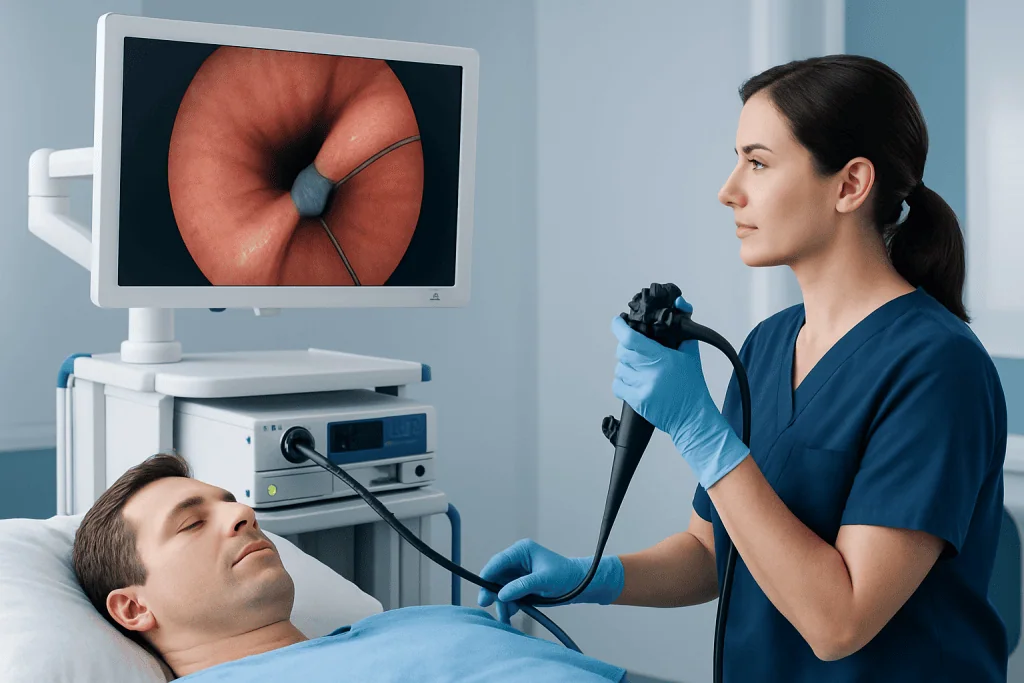
The procedure is most often performed by a gastroenterologist during an upper endoscopy. A thin, flexible camera is passed through the mouth to examine the esophagus, and a balloon or a series of tapered dilators is used to widen the narrowed segment in a controlled way. It is not surgery and is usually an outpatient procedure.
Esophageal dilation can provide meaningful relief, but its long-term result depends partly on why the narrowing developed. For example, narrowing caused by chronic acid reflux, inflammation, prior treatment, or a swallowing disorder may need ongoing management as well as dilation.
Why the Esophagus Can Become Narrow
A narrowing is often called an esophageal stricture. A benign stricture may form when repeated irritation causes inflammation and scar tissue. Long-standing gastroesophageal reflux disease is a frequent cause because stomach acid can repeatedly damage the lower esophagus. Other causes include eosinophilic esophagitis, radiation treatment, prior esophageal surgery, ingestion of a corrosive substance, or injury after certain medical procedures.
Some people have rings or webs: thin areas of tissue that partly narrow the esophagus. Others have achalasia, a condition in which the lower esophageal muscle does not relax normally. Dilation may have a role in selected cases, but the treatment plan differs according to the diagnosis. A specialist may assess related swallowing concerns, including achalasia, when symptoms and test results suggest it.
Not all swallowing problems are caused by a fixed narrowing. Muscle or nerve-related swallowing disorders, reflux symptoms, and conditions outside the esophagus can feel similar. This is why a careful evaluation is important before treatment.
What Is the Procedure for Esophageal Stretching?
Before the procedure, the care team reviews symptoms, medical conditions, medicines, allergies, and any history of bleeding or anesthesia problems. Patients are usually asked not to eat or drink for a period before sedation. Blood-thinning medicines, diabetes medicines, and other treatments may need individual instructions; they should never be stopped without guidance from the prescribing clinician.
During the procedure, the patient commonly receives sedating medicine and lies on their side. The doctor passes an endoscope through the mouth and into the esophagus, allowing the lining and narrowed area to be examined. Depending on the finding, the doctor may take small biopsies, particularly if inflammation or another cause needs clarification.
There are two main dilation approaches. A balloon dilator can be positioned across the narrow area and inflated gradually. Alternatively, tapered dilators may be passed over a guidewire or through the endoscope. The method and final diameter are chosen based on the location, length, and cause of the narrowing. The stretching is deliberately gradual to lower the chance of injury.
The endoscopy and dilation itself often takes a relatively short time, although preparation and recovery from sedation add to the visit. After monitoring, most patients go home the same day and need an adult to accompany them because sedation can temporarily affect judgment and coordination. Esophageal dilation treatment may be planned as a single procedure or as a series of sessions.
Who May Be a Candidate, and What Tests Are Needed?
Esophageal dilation may be considered for people with dysphagia, meaning difficulty swallowing, when tests show a narrowing that is likely to respond to widening. Typical symptoms include food feeling stuck in the chest or throat, needing extra fluids to swallow, taking longer to finish meals, or avoiding certain foods. Some people also experience regurgitation, heartburn, or unintentional weight loss.
An upper endoscopy is often the key test because it allows direct examination and, if appropriate, treatment at the same visit. A barium swallow X-ray may help show the location, length, or shape of a narrowing. In some cases, esophageal manometry is used to measure muscle function, especially when a motility disorder is suspected.
Doctors also need to exclude important causes of narrowing, including cancer. A newly developing or worsening swallowing problem should be assessed rather than assumed to be reflux. Biopsies and imaging may be needed when the appearance of the esophagus or the person’s symptoms raise concern.
- Persistent trouble swallowing solids or liquids
- Food becoming lodged in the esophagus
- Known benign stricture, ring, web, or selected motility disorder
- Symptoms continuing despite treatment of an underlying inflammatory or reflux condition
Benefits, Risks, and How Successful Is Stretching the Esophagus?
The central benefit of dilation is improved swallowing. Many people can return to a broader, more comfortable diet after the narrowed area has been widened. Relief may be noticeable soon after the procedure, although the response varies with the cause and severity of the narrowing.
How successful is stretching the esophagus? For many benign strictures, it is an effective way to improve dysphagia, but it should be understood as one part of a treatment plan rather than a permanent cure for every person. Some narrowings remain open after one or several sessions, while others recur and require repeat dilation. Strictures that are long, complex, severely scarred, or caused by ongoing inflammation can be more difficult to manage.
Risks are uncommon but deserve clear discussion. The most serious risk is perforation, a tear through the esophageal wall, which may require urgent hospital treatment and sometimes surgery. Other possible effects include chest discomfort, sore throat, bleeding, reaction to sedation, or temporary swallowing discomfort. The care team uses a gradual technique and individualized planning to reduce risk.
Managing the cause of the stricture is important for lasting benefit. This may involve reflux treatment, dietary and medication approaches for eosinophilic esophagitis, or other targeted care. For reflux-related damage, clinicians may recommend GERD treatment alongside dilation when appropriate.
How Long Does It Take for Your Esophagus to Heal After Being Stretched?
Recovery after an uncomplicated esophageal dilation is often quick. Many people are monitored briefly after sedation and return home on the same day. A mild sore throat, bloating, or short-lived discomfort behind the breastbone can occur and generally improves within a day or two.
Instructions about eating and drinking vary by the procedure and the person’s swallowing ability. Some patients begin with clear liquids and move to soft foods before returning to their usual diet as advised. Until sedation has fully worn off, driving, operating machinery, drinking alcohol, and making important decisions should be avoided.
The tissue response and the durability of improvement are less predictable than immediate recovery. A simple narrowing may remain improved for a long period, while recurrent scar tissue or untreated inflammation can lead to symptoms returning over weeks, months, or longer. Follow-up helps the clinician decide whether another dilation, medication adjustment, or further testing is needed.
Severe or worsening chest pain, fever, shortness of breath, vomiting blood, black stools, or inability to swallow after the procedure requires urgent medical evaluation because these can be signs of a complication.
Is There a Way to Stretch Your Esophagus at Home?
No. There is no safe home method for stretching the esophagus. Trying to force down food, using devices, or attempting unproven remedies can cause choking, food impaction, injury, or delay diagnosis of a condition that needs medical care.
Home measures may support comfort and nutrition while someone is waiting for assessment, but they do not replace dilation when a true narrowing is present. Depending on symptoms, a clinician may suggest taking small bites, chewing thoroughly, eating slowly, choosing softer foods temporarily, and avoiding foods that regularly become stuck. These strategies should be individualized, particularly for people who are losing weight or struggling with liquids.
If food is stuck and saliva cannot be swallowed, this may be an emergency. The person should seek urgent medical care rather than trying to push the food down with water or additional food.
When to Seek Medical Care
Anyone with new, persistent, or progressive swallowing difficulty should arrange medical assessment. It is especially important to seek prompt care when swallowing trouble is accompanied by weight loss, repeated vomiting, pain with swallowing, anemia, black stools, persistent chest discomfort, or symptoms that begin later in life without an obvious explanation.
Emergency help is needed if a person cannot swallow saliva, has food completely stuck, has trouble breathing, develops severe chest pain, or shows signs of significant bleeding. These symptoms can indicate food impaction or another urgent problem.
Acibadem International’s multidisciplinary specialists and JCI-accredited hospitals diagnose and treat esophageal conditions for international patients. A gastroenterologist can determine whether dilation is appropriate and coordinate care with nutrition, surgery, oncology, or other specialties when needed.
Frequently asked questions
What is the procedure for esophageal stretching?
Esophageal stretching, or dilation, is usually performed during an upper endoscopy. A gastroenterologist guides a balloon or tapered dilator to the narrowed area and widens it gradually. Sedation is commonly used, and most people return home the same day.
How long does it take for your esophagus to heal after being stretched?
Most people recover from the procedure itself within a day or two, although mild throat or chest discomfort can occur briefly. The length of symptom improvement depends on the cause of the narrowing. Some people need repeat treatment if scar tissue or inflammation returns.
Is there a way to stretch your esophagus at home?
No, it is not safe to stretch the esophagus at home. Attempting to force food or use any device can cause choking, injury, or food impaction. Persistent swallowing problems should be evaluated by a qualified clinician.
How successful is stretching the esophagus?
Esophageal dilation is often effective at improving swallowing for benign esophageal narrowings. However, success varies according to the underlying cause, the length and severity of the stricture, and whether the cause is treated. Repeat dilation is sometimes needed.
Is esophageal dilation painful?
Most patients receive sedation, so they generally do not feel significant discomfort during the procedure. A temporary sore throat or mild discomfort in the chest may occur afterward. Severe or increasing pain should be reported promptly.
What can a person eat after esophageal dilation?
The care team gives individualized instructions, often starting with liquids or soft foods for a short period before advancing the diet. Patients should eat slowly, take small bites, and follow the clinician’s guidance. If swallowing becomes more difficult after the procedure, medical advice is needed.
References
- American Society for Gastrointestinal Endoscopy
- American College of Gastroenterology
- National Institute of Diabetes and Digestive and Kidney Diseases
- Mayo Clinic
- Merck Manual Consumer Version
This article is for general information only and is not a substitute for professional medical advice. Please consult a qualified doctor about your individual situation.
Persistent digestive symptoms? Get evaluated in Turkey
JCI-accredited · board-certified surgeons · reply within 24h
Add us as a Preferred Source to see more of our trusted health content across Google Search, AI Overviews and Discover.