Sudden Double Vision: Causes, Tests, and Next Steps

Sudden double vision is not a diagnosis but a symptom with several possible causes. Covering one eye helps doctors distinguish monocular from binocular double vision.
Key Takeaways
- Sudden double vision is not a diagnosis but a symptom with several possible causes.
- Covering one eye helps doctors distinguish monocular from binocular double vision.
- New double vision with headache, drooping eyelid, weakness, trouble speaking, or severe dizziness needs urgent evaluation.
- Testing may include an eye exam, neurologic exam, blood tests, and imaging such as MRI or CT.
- Treatment depends on the cause and may involve glasses, prisms, patching, medicines, or treatment of an underlying neurologic or eye disorder.
Sudden double vision, also called diplopia, means a person sees two images of one object. It can come from a problem in the eye itself, the eye muscles, the nerves that control them, or the brain, so prompt medical assessment is often important.
Overview
Sudden double vision happens when one object appears as two images. The images may be side by side, one above the other, or slightly tilted. Some people notice it only when looking in a certain direction, while others experience it in most positions of gaze.
Doctors usually separate double vision into two main types. Monocular double vision remains when one eye is open by itself and usually points to an issue within that eye, such as the cornea or lens. Binocular double vision goes away when either eye is covered and usually means the eyes are not aligned properly because of a problem affecting the eye muscles, the nerves controlling them, or the brain pathways that coordinate eye movement.
Because the causes range from dry eye or cataract to nerve palsy, myasthenia gravis, thyroid eye disease, or stroke, sudden double vision should not be ignored. It does not always mean an emergency, but it should be evaluated promptly so the cause can be identified and treated appropriately.
Symptoms and warning signs
The main symptom is seeing two images instead of one. A person may describe blurred vision at first, then realize that closing either one eye makes the second image disappear. Some people also develop eye strain, trouble reading, headaches, dizziness, nausea, or a need to turn the head to reduce the overlap between images.
The pattern of the double vision can offer clues. Horizontal separation may suggest weakness in muscles that move the eyes left and right. Vertical or tilted double vision may point to problems with other eye muscles or the nerves that supply them. Symptoms can be constant or intermittent, and some become worse with fatigue or late in the day.
Certain associated symptoms need urgent medical attention, especially when they begin suddenly. These include:
- Severe headache or neck pain
- Drooping eyelid or a newly enlarged pupil
- Weakness, numbness, facial drooping, or trouble speaking
- Loss of balance, confusion, or fainting
- Eye pain, vision loss, or recent head injury
- Double vision with fever or significant swelling around the eye
These features may suggest a more serious neurologic, vascular, or infectious cause and should be assessed without delay.
Common causes and risk factors

Monocular double vision often comes from problems affecting how light enters the eye. Common examples include dry eye, irregularities of the cornea, cataract, or less commonly lens displacement. In these cases, the eyes may be aligned normally, but one eye produces a doubled image on its own. An ophthalmic exam helps identify these causes.
Binocular double vision is usually caused by poor coordination between the two eyes. This may happen when one or more eye muscles are weak, restricted, or not receiving the right nerve signals. Causes include cranial nerve palsies, diabetes-related nerve injury, thyroid eye disease, myasthenia gravis, inflammation, orbital problems, and brain conditions that affect eye movement control. In some people, sudden double vision may be related to stroke or a transient vascular event, especially if other neurologic symptoms are present.
Risk factors depend on the underlying cause but may include older age, diabetes, high blood pressure, thyroid disease, autoimmune disease, recent viral illness, trauma, and a history of neurologic disease. People with known eye conditions such as cataract or untreated corneal problems may also develop symptoms that resemble or contribute to double vision.
In children, persistent or sudden misalignment of the eyes needs timely medical review as well, although the causes may differ from those seen in adults. Any new double vision after injury or with severe headache deserves particular attention.
How doctors evaluate sudden double vision
The first step is a careful history. Doctors ask when the double vision started, whether it is constant or comes and goes, whether it disappears when one eye is covered, and whether it is worse in certain gaze directions. They also ask about headaches, eye pain, recent infection, trauma, thyroid problems, diabetes, weakness, swallowing difficulties, or shortness of breath, which may help point to conditions such as myasthenia gravis or nerve palsy.
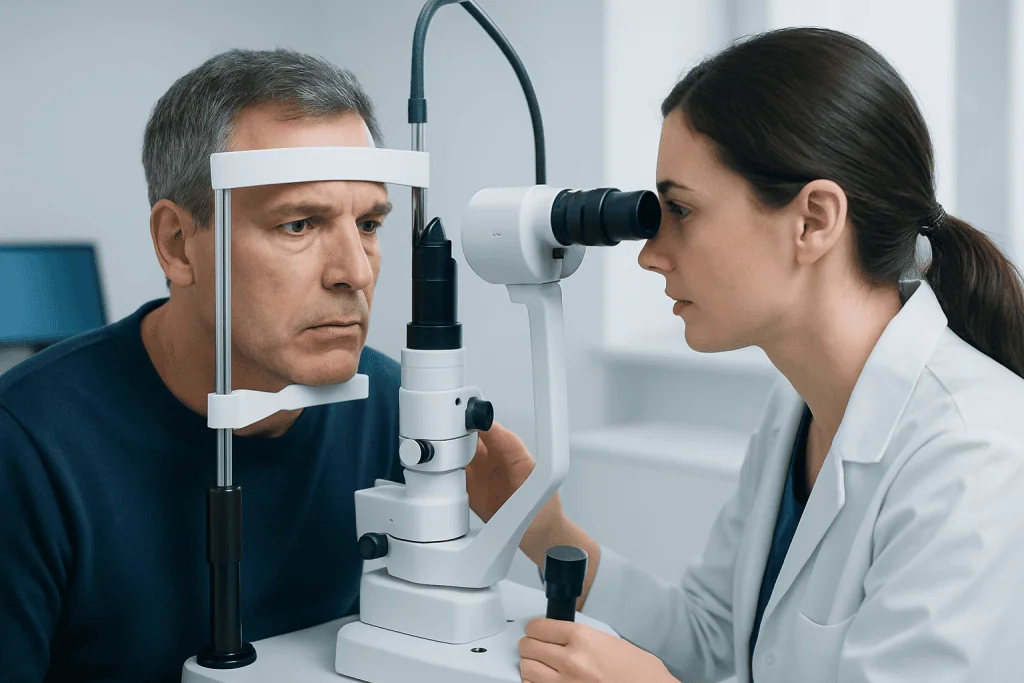
The examination includes visual acuity, pupil testing, eyelid position, eye movement testing, alignment checks, and a full neurologic assessment when needed. Cover tests and gaze testing help determine which muscles or nerves may be involved. If monocular double vision is suspected, the doctor will closely examine the surface of the eye, cornea, lens, and retina.
Depending on the findings, further tests may include blood sugar testing, thyroid function tests, and tests for autoimmune causes. Imaging such as MRI or CT scan may be needed if a structural, inflammatory, vascular, or brain-related cause is suspected. In selected cases, doctors may recommend urgent imaging the same day, especially if there are neurologic symptoms, a painful third nerve palsy, or concern about stroke or aneurysm.
Treatment options
Treatment for sudden double vision depends entirely on the cause. If the problem comes from dry eye, corneal surface disease, or cataract, treatment is directed at the eye condition itself. If the cause is a cranial nerve palsy, treatment may focus on managing diabetes, blood pressure, inflammation, or other underlying factors while the nerve recovers. If evaluation suggests an acute neurologic problem, prompt hospital-based care may be necessary.
Some treatments help reduce symptoms while the main cause is being addressed. These may include an eye patch over one eye, temporary opaque tape on one lens, or prism glasses to improve alignment. Prism correction can be especially helpful when the deviation is stable. In some cases, eye muscle surgery may be considered if the double vision persists after the underlying condition has stabilized.
Specific disorders need targeted treatment. Myasthenia gravis may require medicines and specialist monitoring. Thyroid eye disease may need coordinated care between endocrinology and ophthalmology. If a brain or nerve problem is found, doctors may recommend neurologic treatment, rehabilitation, or procedures based on the diagnosis. Some patients may also need neurological rehabilitation after a stroke or other brain condition affecting eye movement control.
Near the end of the diagnostic process, patients benefit from multidisciplinary care when the cause is complex. Acibadem International’s multidisciplinary specialists in JCI-accredited hospitals evaluate and treat neuro-ophthalmic symptoms such as sudden double vision for international patients when advanced testing or coordinated care is needed.
Self-care, safety, and prevention
Double vision can interfere with driving, walking, reading, and balance. Until the cause is clarified, it is safest to avoid driving and using machinery if vision is unstable. Covering one eye may temporarily reduce symptoms, but it should not replace medical evaluation, especially if the symptom started suddenly.
Good control of general health conditions can lower the risk of some causes of binocular double vision. This includes managing diabetes, blood pressure, and cholesterol, following thyroid treatment plans, and attending regular eye examinations. Protective eyewear may reduce the risk of injury-related eye or orbital problems.
People with dry eye symptoms can support eye comfort by staying hydrated, taking breaks from screens, and using doctor-recommended lubricating drops. However, if the double vision is new, persistent, or accompanied by neurologic symptoms, self-care alone is not enough. Prevention is not always possible because some causes involve sudden nerve, muscle, vascular, or immune-related changes.
When to seek urgent medical care
Sudden double vision should be assessed promptly by a qualified clinician, and in some cases it requires emergency care. The need is greater if the symptom begins within minutes or hours, follows trauma, or is associated with severe headache, eye pain, drooping eyelid, a dilated pupil, weakness, numbness, trouble speaking, or loss of coordination.
If double vision comes with facial drooping, arm or leg weakness, confusion, or severe dizziness, emergency services should be contacted right away because these may be signs of brain hemorrhage or another acute neurologic event. A painful eye movement problem, especially with new pupil changes, also needs urgent specialist review.
Even when there are no emergency signs, a person should arrange timely assessment if the symptom is new, recurring, or interfering with daily life. Early diagnosis often makes treatment more effective and helps reduce the risk of complications from an untreated underlying condition.
Frequently asked questions
Is sudden double vision always an emergency?
Not always, but it should be taken seriously. Sudden double vision can be caused by relatively minor eye problems or by urgent neurologic conditions, so prompt medical assessment is important, especially if there is headache, weakness, drooping eyelid, or trouble speaking.
How can someone tell if double vision is monocular or binocular?
A simple clue is what happens when one eye is covered. If the double vision remains when only one eye is open, it is more likely monocular; if it goes away when either eye is covered, it is usually binocular. This distinction helps doctors narrow down possible causes.
Can fatigue cause double vision?
Fatigue can make some forms of double vision more noticeable, especially when underlying eye alignment problems or myasthenia gravis are present. However, fatigue alone should not be assumed to be the cause of new sudden double vision.
Will sudden double vision go away on its own?
Some cases do improve over time, such as certain nerve palsies related to small blood vessel disease. However, because the cause cannot be known without examination, it is important not to wait and assume it will resolve without medical advice.
What tests are usually done for sudden double vision?
Doctors typically begin with a medical history, vision testing, eye alignment and movement testing, and a neurologic examination. Depending on the findings, they may also order blood tests, MRI, CT, or other studies to look for nerve, muscle, thyroid, vascular, or brain-related causes.
Can double vision be treated with glasses?
In some cases, yes. Prism glasses may help align the two images for certain stable forms of binocular double vision, while regular glasses may help if a refractive problem contributes to symptoms. Treatment still depends on identifying and managing the underlying cause.
References
- American Academy of Ophthalmology
- National Eye Institute
- American Association for Pediatric Ophthalmology and Strabismus
- National Institute of Neurological Disorders and Stroke
- Mayo Clinic
This article is for general information only and is not a substitute for professional medical advice. Please consult a qualified doctor about your individual situation.
Explore treatments in Turkey — costs, top hospitals & a free quote
JCI-accredited · board-certified surgeons · reply within 24h
Add us as a Preferred Source to see more of our trusted health content across Google Search, AI Overviews and Discover.
Check your numbers in seconds
BMI, calories, due date, blood pressure and 30+ more clinical calculators — free, instant, doctor-reviewed ranges.