Sun Protection Tanning: A Complete Medical Overview

A tan is the skin’s response to UV damage, not a sign of skin health. Sunscreen lowers the risk of burning but does not make prolonged tanning safe.
Key Takeaways
- A tan is the skin’s response to UV damage, not a sign of skin health.
- Sunscreen lowers the risk of burning but does not make prolonged tanning safe.
- Both UVA and UVB rays contribute to skin aging and skin cancer risk.
- Protective clothing, shade, and avoiding peak sun hours are more effective than relying on sunscreen alone.
- New or changing moles, severe sunburn, or non-healing skin spots should be assessed by a doctor.
Sun protection tanning refers to trying to limit skin damage while spending time in the sun, usually by using sunscreen, timing exposure, and avoiding burns. While these steps can reduce harm, no suntan is completely safe because tanning itself reflects skin injury from ultraviolet radiation.
Overview: What Sun Protection Tanning Means
Sun protection tanning usually means trying to tan while reducing the harmful effects of ultraviolet (UV) exposure. In practical terms, this often includes using broad-spectrum sunscreen, limiting time in direct sun, wearing protective clothing, and avoiding the strongest midday rays. These measures can lower the chance of sunburn, but they do not remove the underlying risks linked to tanning.
Medically, there is no completely safe way to tan under natural sunlight or artificial tanning devices. A tan develops when the skin increases melanin production in response to UV radiation. This is a protective reaction, but it also indicates that the skin has already been exposed to damage.
Understanding this difference is important. Many people associate a gradual tan with a healthier or safer approach than burning. Although avoiding sunburn is clearly beneficial, even repeated mild tanning can contribute over time to premature skin aging, uneven pigmentation, and a higher risk of skin cancers including skin cancer.
How UV Radiation Affects the Skin
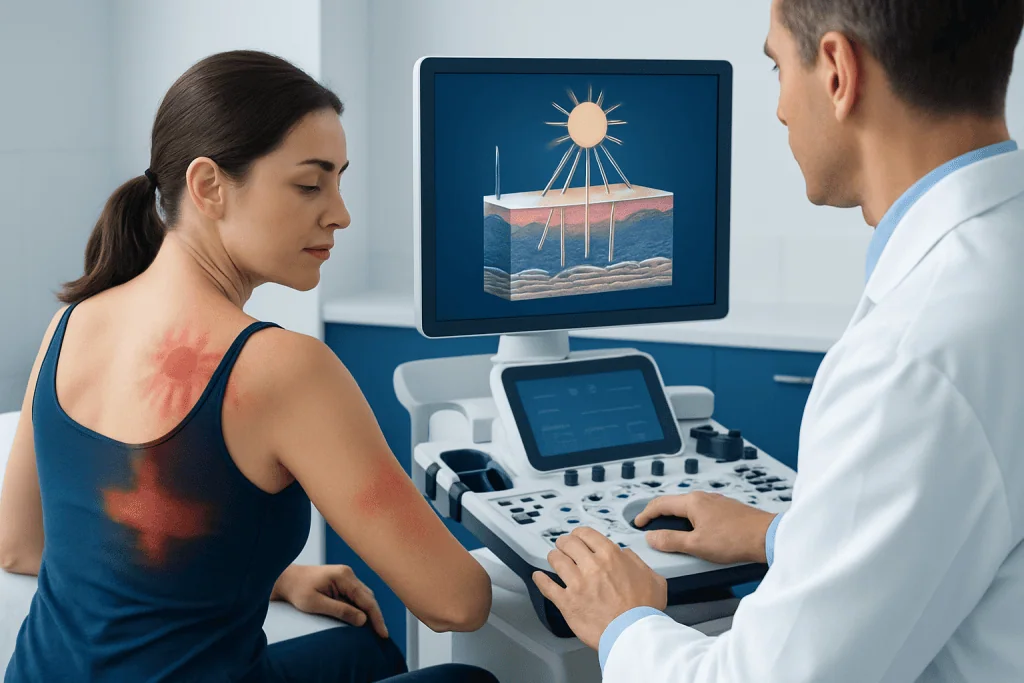
Sunlight contains ultraviolet A (UVA) and ultraviolet B (UVB) rays, both of which affect the skin. UVB is more strongly associated with sunburn, while UVA penetrates more deeply and plays a major role in photoaging, including wrinkles, loss of elasticity, and pigment changes. Both forms can damage DNA in skin cells.
When the skin is exposed to UV radiation, it responds by producing more melanin, the pigment that darkens the skin. This darkening may provide a small increase in natural protection, but it is not enough to prevent future injury. In other words, a tan offers very limited defense and should not be viewed as a substitute for sun protection.
UV exposure also accumulates over a lifetime. Even if a person does not burn often, repeated exposure can gradually lead to visible and invisible skin changes. These may include rough texture, brown spots, fine lines, fragile skin, and changes in moles or other lesions that should be evaluated by a specialist in dermatology care.
Can a Person Tan Safely?

From a medical standpoint, the safest approach is not to seek a tan from UV exposure at all. This is because tanning is a marker of skin injury. However, if a person spends time outdoors and wishes to reduce harm, the goal should shift from “safe tanning” to “safer sun behavior.”
Safer sun behavior includes using a broad-spectrum sunscreen with appropriate sun protection factor, applying it generously, and reapplying it after swimming, sweating, or spending extended time outdoors. It also means wearing a wide-brimmed hat, UV-protective sunglasses, and tightly woven clothing, and seeking shade whenever possible.
Importantly, sunscreen should not be used to stay in the sun longer in order to tan. That practice can create a false sense of security and may lead to more total UV exposure. Self-tanning lotions and sprays can create the appearance of tanned skin without UV radiation, but they do not protect against sunburn unless they also contain sunscreen.
Indoor tanning beds are not a safe alternative. They expose the skin to concentrated UV radiation and are associated with an increased risk of skin cancer, especially when use begins at a younger age.
Benefits, Risks, and Common Misunderstandings
Some people pursue tanning because they prefer the appearance of darker skin or believe it reflects health and vitality. Others may think sun exposure is necessary for vitamin D. While sunlight can contribute to vitamin D production, prolonged unprotected exposure is not recommended as a health strategy. Diet, lifestyle guidance, and supplements when advised by a doctor are safer ways to address vitamin D needs.
A common misunderstanding is that a “base tan” protects the skin enough to prevent damage on vacation or during summer activities. In reality, a base tan provides only minimal protection and does not prevent cumulative UV injury. Another misconception is that people with naturally darker skin do not need sun protection. Although melanin offers some natural defense, anyone can experience sun damage, hyperpigmentation, eye injury, and skin cancer.
Short-term risks of excessive sun exposure include sunburn, dehydration, heat-related illness, cold sores triggered by sunlight, and worsening of certain skin conditions. Longer-term risks include wrinkles, leathery texture, actinic keratoses, and various skin cancers. People with many moles, a personal or family history of skin cancer, very fair skin, or immune suppression need especially careful protection.
- Myth: Sunscreen makes tanning safe.
- Fact: Sunscreen reduces burning risk but does not eliminate UV damage.
- Myth: Cloudy days are harmless.
- Fact: UV rays still reach the skin through clouds.
- Myth: Only burns matter.
- Fact: Tanning without burning still reflects skin injury.
Practical Sun Protection Strategies
The most effective sun protection plan combines several methods rather than relying on just one. Broad-spectrum sunscreen helps protect against UVA and UVB rays, but it works best when paired with clothing, shade, and smart timing. Areas often missed during application include the ears, back of the neck, tops of the feet, scalp in people with thinning hair, and lips.
Outdoor timing also matters. UV radiation is usually strongest in the late morning through mid-afternoon. Planning exercise, walks, beach time, or children’s outdoor activities earlier or later in the day can reduce exposure. Reflection from water, sand, snow, and concrete can increase UV intensity, so protection is still important even in breezy or cool weather.
For people who want tanned-looking skin, sunless tanning products are a useful alternative. These products color the outer skin layer without UV exposure. Even so, they should be combined with regular sun protection because they generally do not prevent sun damage. If there are concerns about sensitive skin, eczema, acne, or unusual pigmentation, a doctor may recommend individualized skin care and dermatology advice.
How Doctors Evaluate Sun Damage
Doctors usually diagnose sun damage through a medical history and skin examination. They may ask about time spent outdoors, history of blistering sunburns, tanning bed use, skin type, changing moles, medications that increase sun sensitivity, and family history of skin cancer. The pattern and location of skin changes can provide helpful clues.
A full skin exam may be recommended if a person has many moles, suspicious lesions, or significant long-term sun exposure. Dermatologists often use dermoscopy, a magnified skin assessment tool, to examine pigmented spots more closely. If a lesion looks concerning, a biopsy may be needed to confirm whether it is benign, precancerous, or cancerous.
Sun damage can overlap with other skin conditions such as melasma, rosacea, photosensitivity reactions, and certain rashes. When symptoms are unclear, further evaluation helps guide the right treatment plan. If needed, management may involve monitoring, biopsy, removal of suspicious lesions, or treatment of visible sun-related changes through dermatologic oncology care or general dermatology services.
Treatment, Prevention, and Self-Care
Treatment depends on the specific problem caused by UV exposure. Mild sunburn often improves with cool compresses, hydration, gentle skin care, and avoiding further sun until the skin heals. More severe burns, extensive blistering, or symptoms such as fever, confusion, or fainting require medical assessment.
For long-term sun damage, treatment may target rough patches, pigment irregularities, visible blood vessels, or suspicious growths. A doctor may recommend topical medications, cryotherapy for precancerous spots, lesion removal, or monitoring over time. The right approach varies by skin type, symptoms, and the possibility of underlying disease.
Daily prevention remains the most important long-term strategy. This includes regular sunscreen use on exposed skin, protective clothing, avoidance of tanning beds, and monthly self-checks for new or changing moles. Any lesion that bleeds easily, crusts repeatedly, or does not heal should be professionally evaluated.
Near the end of the care pathway, some patients also seek expert advice for broader skin health maintenance, especially if they have recurrent sun damage or a history of skin lesions. Acibadem International’s multidisciplinary specialists and JCI-accredited hospitals diagnose and treat skin conditions for international patients when further evaluation is needed.
When to Seek Medical Care
Medical care is advisable if a person develops severe sunburn with large blisters, intense pain, fever, chills, vomiting, dizziness, confusion, or signs of dehydration. Children, older adults, and people with chronic illness may need earlier assessment because they can become unwell more quickly after heat or sun exposure.
A doctor should also evaluate any mole or spot that changes in size, shape, or color, as well as sores that do not heal, scaly patches that persist, or lesions that bleed repeatedly. New skin changes after years of sun exposure deserve attention even if they are painless.
People who take medicines that increase sun sensitivity, have an immune system condition, or have a personal or family history of skin cancer may benefit from preventive dermatology follow-up. Early assessment is reassuring when findings are harmless and important when treatment is needed.
Frequently asked questions
Is there such a thing as safe tanning in the sun?
No suntan from UV exposure is completely safe because tanning is the skin’s response to damage. Sun protection can reduce harm, especially sunburn, but it cannot fully prevent the long-term effects of ultraviolet radiation.
Does sunscreen stop tanning completely?
Sunscreen does not always stop tanning completely, especially if it is applied too thinly or not reapplied as needed. Its purpose is to reduce UV damage, not to allow unlimited time in the sun.
Is a base tan protective?
A base tan provides only minimal protection and should not be relied on to prevent sunburn or skin damage. It still reflects prior UV injury and does not make prolonged sun exposure safe.
Are tanning beds safer than natural sunlight?
No, tanning beds are not safer. They expose the skin to ultraviolet radiation that can increase the risk of premature aging and skin cancer.
Can people with darker skin skip sun protection?
No. Darker skin has more natural melanin, which offers some protection, but it does not eliminate the risk of sun damage, hyperpigmentation, or skin cancer. Sun protection is important for all skin tones.
What is the safest way to get a tanned appearance?
Sunless tanning products such as lotions, mousses, or sprays can create a tanned look without UV exposure. Even when using these products, regular sunscreen and other sun-protective habits are still necessary.
References
- World Health Organization
- American Academy of Dermatology
- Centers for Disease Control and Prevention
- Skin Cancer Foundation
- National Cancer Institute
This article is for general information only and is not a substitute for professional medical advice. Please consult a qualified doctor about your individual situation.
Explore treatments in Turkey — costs, top hospitals & a free quote
JCI-accredited · board-certified surgeons · reply within 24h
Add us as a Preferred Source to see more of our trusted health content across Google Search, AI Overviews and Discover.