Sunscreen for Pimples: What Patients Need to Know
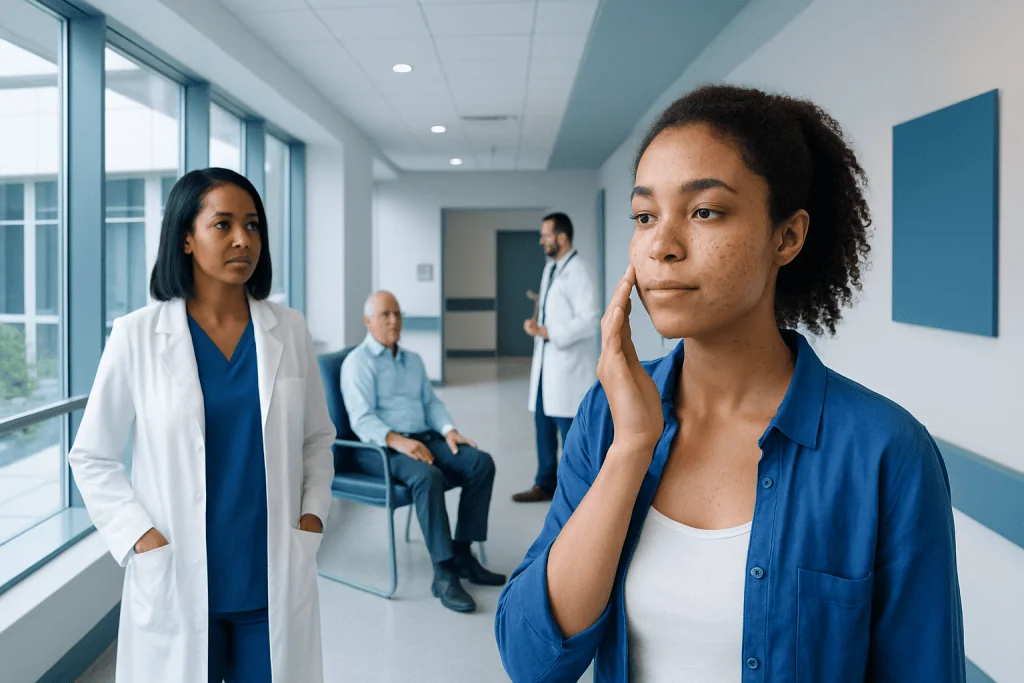
People with pimples should use broad-spectrum sunscreen with SPF 30 or higher every day when exposed to daylight. Look for labels such as non-comedogenic, oil-free, or designed for acne-prone skin, but choose a product that feels comfortable enough to use consistently.
Key Takeaways
- People with pimples should use broad-spectrum sunscreen with SPF 30 or higher every day when exposed to daylight.
- Look for labels such as non-comedogenic, oil-free, or designed for acne-prone skin, but choose a product that feels comfortable enough to use consistently.
- Sunlight may temporarily dry or mask pimples, but it does not treat acne and can worsen irritation, discoloration, and scarring risks.
- Some acne medicines increase sensitivity to sunlight, making regular sun protection especially important.
- Persistent, painful, scarring, or emotionally distressing acne should be assessed by a qualified clinician.
Sunscreen can be an important part of caring for skin with pimples. A lightweight, broad-spectrum, non-comedogenic formula helps protect against sun damage and may reduce the risk of dark marks becoming more noticeable after acne heals.
Overview: Is Sunscreen Good for Pimples?
Sunscreen for pimples is usually recommended. People with acne-prone skin can use sunscreen safely by choosing a broad-spectrum product with SPF 30 or higher that is labeled non-comedogenic, meaning it is formulated to be less likely to clog pores. Daily protection is helpful because ultraviolet (UV) exposure can irritate the skin and make red, brown, or purple marks left after pimples more noticeable.
It is understandable to worry that sunscreen may feel greasy or trigger breakouts. However, many modern formulas are made for oily or acne-prone skin and come as lightweight fluids, gels, lotions, or mineral-based products. The best choice is one that the person can apply generously and comfortably every day.
Sunscreen does not cure acne. Rather, it supports an acne-care plan by protecting the skin barrier and limiting sun-related worsening of post-inflammatory color changes. This can be particularly valuable for people using treatments that dry, exfoliate, or otherwise make the skin more sensitive to sunlight.
Why Acne-Prone Skin Still Needs Sun Protection
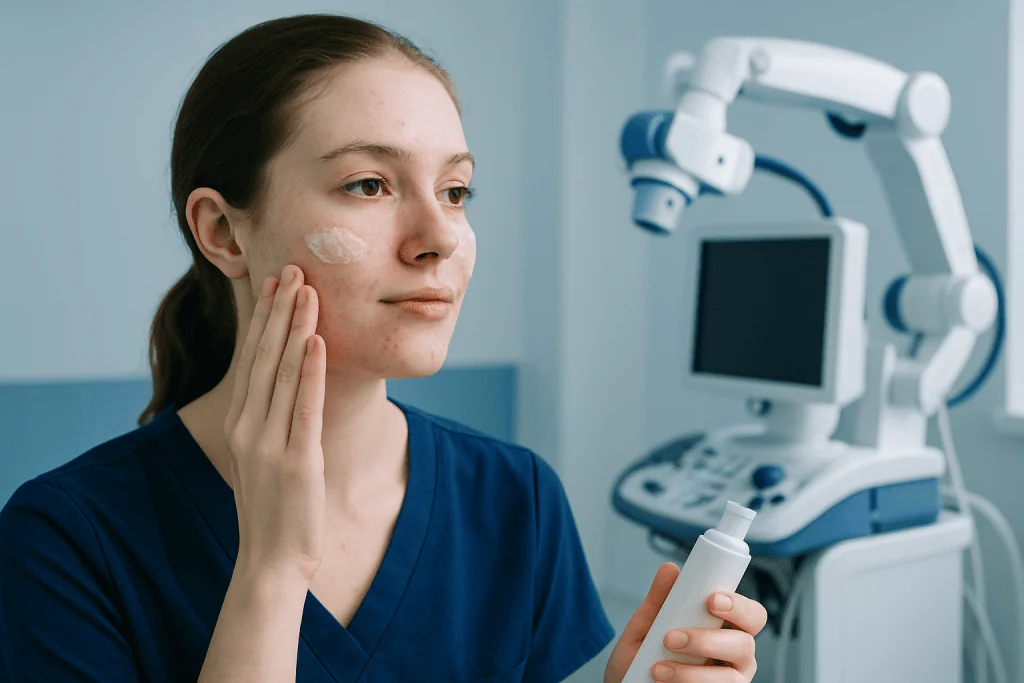
Pimples develop when pores become blocked with oil and dead skin cells, often alongside inflammation and the activity of skin bacteria. Sun exposure does not clear these underlying processes. Although a tan or temporary drying effect may make blemishes seem less visible for a short time, UV exposure can cause irritation and may lead the skin to produce more oil afterward.
After a pimple settles, it may leave a flat darkened or discolored area called post-inflammatory hyperpigmentation. In some skin tones, these marks can persist for months. Visible light and UV radiation can deepen discoloration, so consistent sunscreen use is an important part of preventing existing marks from becoming darker.
Sun protection is also especially relevant during acne treatment. Topical retinoids, benzoyl peroxide, exfoliating acids, and certain oral medicines may make the skin more prone to dryness, redness, or sunburn. A clinician can advise on how to combine acne treatment and sunscreen in a routine suited to the individual.
How to Choose Sunscreen for Pimples
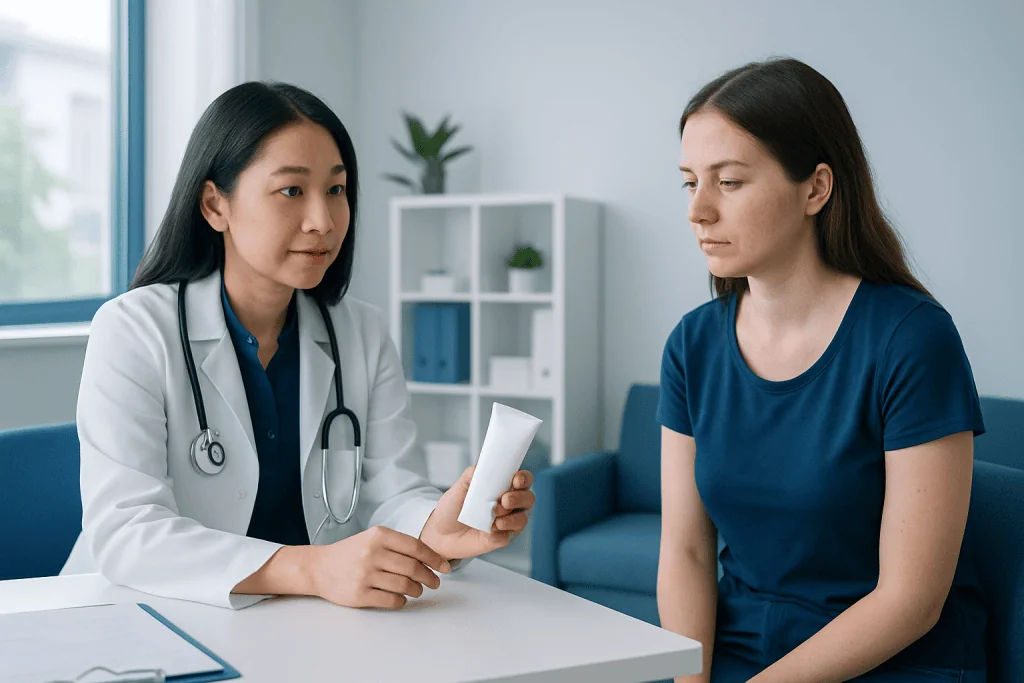
For most people with pimples, a broad-spectrum sunscreen protects against both UVA and UVB radiation. SPF 30 or higher is generally recommended for everyday outdoor exposure. Water-resistant products are useful during swimming, sweating, or activities that involve prolonged time outside, but they still need to be reapplied.
Labels can help guide selection. “Non-comedogenic” indicates that a product has been designed and tested to be less likely to contribute to clogged pores. “Oil-free” may be appealing for people with very oily skin, although oil-free does not automatically mean a product will suit every person. Fragrance-free products can be useful when the skin is sensitive or irritated by acne medicines.
Both mineral and chemical UV filters can be appropriate. Mineral sunscreens commonly contain zinc oxide and titanium dioxide, which sit largely on the skin’s surface and may be well tolerated by sensitive skin. Organic, sometimes called chemical, filters are often available in lighter or more transparent textures. A person may need to try more than one formula to find one that does not sting, pill, feel heavy, or leave an unwanted cast.
- Choose broad-spectrum SPF 30 or higher.
- Prefer non-comedogenic formulas for acne-prone skin.
- Select a texture that matches skin comfort: fluid, gel, lotion, or cream.
- Consider tinted mineral options if visible light may worsen discoloration.
- Stop using a product and seek advice if it causes marked burning, rash, swelling, or repeated worsening of breakouts.
How to Apply Sunscreen Without Aggravating Acne
Sunscreen is most effective when applied as the final skincare step in the morning, after acne medicines and moisturizer have had time to settle. It should be used on exposed skin, including the face, ears, neck, and other uncovered areas. Applying too little reduces the level of protection achieved in real-life use.
For the face and neck, many dermatology professionals suggest using roughly two finger lengths of product as a practical guide, although product texture and individual face size vary. It should be applied before going outdoors and reapplied about every two hours during ongoing sun exposure. Reapplication is also needed after swimming, heavy sweating, or towel drying, even with water-resistant products.
Gentle cleansing at the end of the day helps remove sunscreen, makeup, sweat, and environmental debris. Scrubbing, harsh brushes, and frequent washing can irritate acne-prone skin and should be avoided. A mild cleanser, non-comedogenic moisturizer, targeted acne treatment, and daily sunscreen are often enough for a simple routine.
Using Sunscreen Alongside Acne Treatments
Acne treatment should be chosen according to the type and severity of acne. Mild cases may improve with over-the-counter ingredients such as benzoyl peroxide, salicylic acid, or adapalene where available and appropriate. These treatments can cause dryness or irritation, particularly at the start, so adding products gradually and using moisturizer may help.
Retinoids and exfoliating products are often used at night because they may increase sun sensitivity or cause irritation. In the morning, sunscreen becomes particularly important. People should follow the instructions for their prescribed or over-the-counter products and speak with a pharmacist or doctor if they are unsure how to layer treatments safely.
If pimples are frequent, inflamed, painful, or leaving scars, professional assessment may be helpful. Acne is a treatable medical condition, and care can be tailored to the person’s skin, hormonal factors, medical history, and treatment goals. More information about acne may help patients understand common treatment approaches and when specialist care is appropriate.
Common Mistakes That Can Make Breakouts Worse
One common mistake is avoiding sunscreen entirely because of oily skin. This can leave the skin exposed to inflammation and discoloration, especially while using acne treatments. Another is relying on makeup with SPF alone; unless it is applied in a generous, even layer, it may not provide the amount of protection stated on the package.
Using many new products at once can also make it difficult to identify what is causing irritation or breakouts. Introducing one product at a time, allowing several days to observe skin tolerance, is often a practical approach. A patch test on a small area may be useful for people with a history of sensitive skin, though it cannot guarantee that facial acne will not occur.
Heavy occlusive products, fragranced cosmetics, aggressive exfoliation, and picking or squeezing pimples may worsen inflammation or increase the risk of marks and scars. It is also important to remember that a breakout after starting a product may have several causes, including hormones, stress, hair products, makeup, or the acne condition itself.
When to Seek Medical Care
A doctor or dermatologist should assess acne that is painful, deep, widespread, causing scars, or not improving with a consistent gentle routine. Medical advice is also appropriate if acne is causing significant worry, low mood, embarrassment, or avoidance of work, school, or social activities. Early treatment can help reduce the chance of long-lasting scarring.
Urgent medical care is needed for signs of a serious allergic reaction after a skincare product, such as swelling of the lips or face, trouble breathing, widespread hives, or feeling faint. A new severe rash, blistering, or intense eye-area irritation also warrants prompt assessment.
Acibadem International’s multidisciplinary specialists and JCI-accredited hospitals diagnose and treat acne-related skin concerns for international patients. A dermatologist can help identify a sunscreen and acne plan that supports the person’s skin type, lifestyle, and medical needs.
Frequently asked questions
Can sunscreen cause pimples?
Some sunscreen formulas may feel too heavy or irritating for a particular person, but sunscreen itself does not need to cause pimples. Choosing a non-comedogenic, broad-spectrum SPF 30 or higher product and removing it gently at the end of the day can help. If breakouts repeatedly appear after starting one formula, trying a different texture or filter type may be useful.
What SPF is best for acne-prone skin?
Broad-spectrum SPF 30 or higher is a practical minimum for daily protection. Higher SPF products can provide additional UVB protection, especially during prolonged outdoor activity, but they should still be reapplied regularly. The most suitable sunscreen is one that is comfortable enough to use consistently.
Is mineral sunscreen better for pimples?
Mineral sunscreen is not automatically better for every person with pimples, but products containing zinc oxide or titanium dioxide can be a good option for sensitive or easily irritated skin. Some people prefer their texture and tolerability, while others find lightweight organic-filter formulas easier to wear. A non-comedogenic product that does not sting or feel overly heavy is the main goal.
Should sunscreen be applied before or after acne treatment?
Most leave-on acne treatments are applied first, followed by moisturizer if needed, then sunscreen as the final morning skincare step. Treatments such as retinoids are commonly used at night, depending on the product instructions and a clinician’s advice. People using prescription acne medicines should follow their doctor’s directions.
Can sunlight make acne better?
Sunlight may temporarily dry the skin or make blemishes appear less obvious, but it does not treat the causes of acne. UV exposure can increase irritation, darken marks left by pimples, and raise the risk of sun damage. Regular sun protection is therefore recommended rather than intentional tanning.
How often should sunscreen be reapplied on acne-prone skin?
During continued outdoor exposure, sunscreen should generally be reapplied about every two hours. Reapply sooner after swimming, sweating heavily, or towel drying. On days spent mostly indoors, application in the morning may still be useful when there is daylight exposure through daily activities or windows.
References
- American Academy of Dermatology
- National Health Service
- Mayo Clinic
- World Health Organization
This article is for general information only and is not a substitute for professional medical advice. Please consult a qualified doctor about your individual situation.
Explore treatments in Turkey — costs, top hospitals & a free quote
JCI-accredited · board-certified surgeons · reply within 24h
Add us as a Preferred Source to see more of our trusted health content across Google Search, AI Overviews and Discover.