Surgical Guides in Orthopedics and Dentistry: Are They Made for One Patient Only?

Most surgical guides are patient-specific and made from that individual’s scans and treatment goals. They are used to improve precision in procedures such as dental implant placement and some orthopedic surgeries.
Key Takeaways
- Most surgical guides are patient-specific and made from that individual’s scans and treatment goals.
- They are used to improve precision in procedures such as dental implant placement and some orthopedic surgeries.
- A guide is only one part of treatment; surgical skill, planning, and follow-up care remain essential.
- Not every patient or procedure needs a custom guide.
- The guide is typically created from digital imaging, virtual planning, and specialized manufacturing.
- Patients should ask how the guide will be used, what benefits it may offer, and whether there are alternatives.
Surgical guides in orthopedics and dentistry are most often designed for one specific patient based on that person’s anatomy and treatment plan. These custom tools can help surgeons place implants, make cuts, or position instruments with greater accuracy and consistency.
Overview: What Surgical Guides Are
Surgical guides are tools used to help surgeons perform a planned procedure more precisely. They act like a physical roadmap during surgery, showing where to place an implant, where to drill, or how to align a cut according to a plan made before the operation. In both orthopedics and dentistry, these guides are increasingly used alongside digital imaging and computer-based planning.
In many cases, the answer to the question “Are they made for one patient only?” is yes. A large number of surgical guides are patient-specific, meaning they are designed for one individual using that person’s scans, anatomy, and surgical goals. Because they are tailored to fit a unique bone structure, jaw shape, or tooth position, they are generally not intended to be reused for another person.
There are also standard surgical instruments and generic templates used in some procedures. However, these are different from truly custom guides. A patient-specific guide is usually created after imaging such as CT, CBCT, MRI, or digital dental scanning is reviewed and a detailed treatment plan is finalized.
For patients, the main value of a guide is not that it replaces the surgeon’s expertise, but that it supports careful planning and accurate execution. It may help reduce uncertainty during some steps of surgery and can be especially helpful in complex anatomy or when implant position is very important.
Why Many Surgical Guides Are Made for One Patient Only
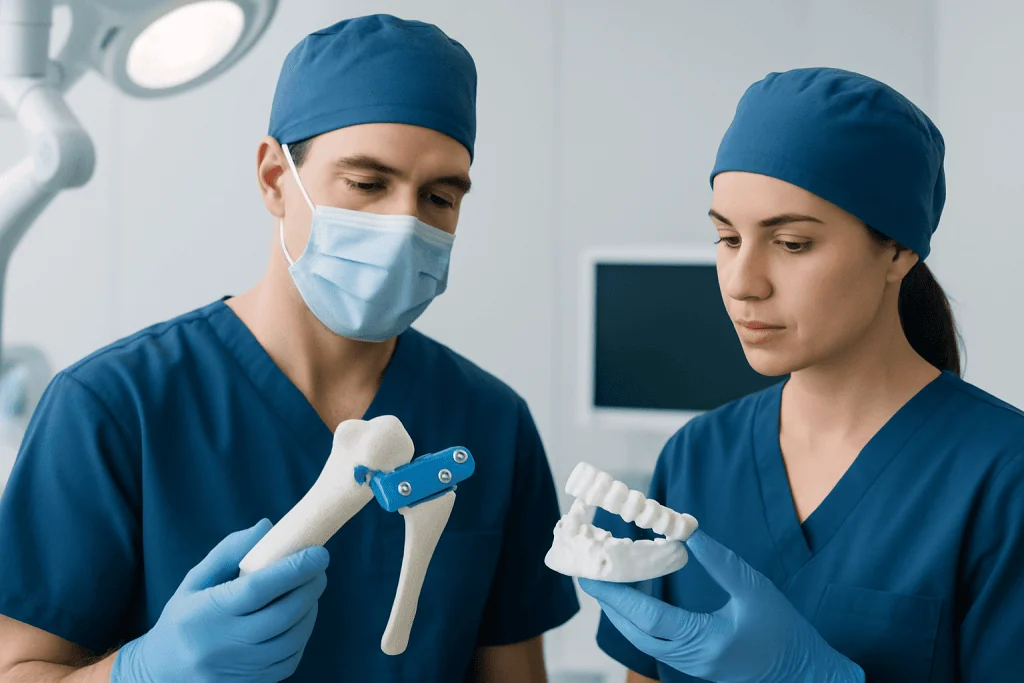
Patient-specific guides are usually made for one patient because human anatomy varies from person to person. Even small differences in bone shape, jaw width, tooth spacing, or joint alignment can affect how a guide fits. A guide that matches one patient’s anatomy closely would usually not fit another patient safely or accurately.
These guides are commonly designed using three-dimensional imaging and planning software. The surgeon and technical team identify the exact surgical target, such as the ideal position of a dental implant or the planned bone cuts around a knee or other joint. The guide is then manufactured to rest on very specific landmarks, which is why it is individualized.
Single-patient use also supports safety and sterility. Many guides are produced for one planned procedure and used once in a controlled surgical setting. Reusing a custom guide for another person would not only create fitting problems, but could also raise infection-control and quality concerns.
That said, being “made for one patient” does not mean every case requires a guide. Some procedures can be performed very effectively with conventional planning and standard instruments. Whether a custom guide is helpful depends on the condition being treated, the anatomy involved, the experience of the surgical team, and the goals of the procedure.
How Surgical Guides Are Used in Dentistry
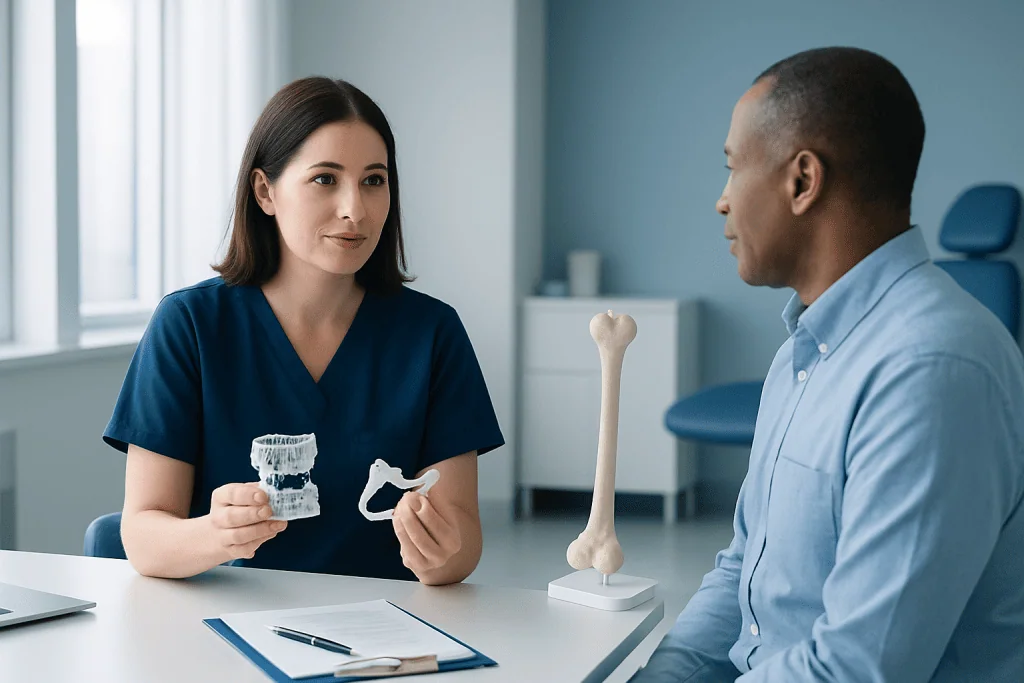
In dentistry, surgical guides are most commonly associated with dental implant placement. After digital scans and treatment planning, a guide can help the dentist or oral surgeon place an implant at the planned angle, depth, and position. This can be especially useful when space is limited, when nearby structures must be avoided, or when several implants are being placed.
Dental guides may rest on teeth, gums, or bone, depending on the clinical situation. Because the guide is based on the patient’s mouth and imaging, it is generally custom-made for that person. In implant treatment, the guide may be part of a broader process that includes prosthetic planning, bone evaluation, and long-term bite function.
Custom guides can also be helpful in more complex dental and jaw procedures. Examples include cases with reduced bone volume, unusual anatomy, or reconstructive planning. In selected patients, this technology may work alongside procedures such as dental implant treatment or more advanced oral and maxillofacial surgery.
Even with a guide, the procedure still depends on clinical judgment. The surgeon may need to adjust the plan if the tissue condition, bone quality, or surgical findings differ from what was expected on imaging. A guide improves planning support, but it does not make treatment automatic.
How Surgical Guides Are Used in Orthopedics
In orthopedics, surgical guides may be used to assist with bone cuts, implant positioning, alignment, or trajectory planning. They are especially discussed in joint replacement and certain reconstructive procedures, where precise fit and alignment can influence function. These guides are often based on advanced imaging and are shaped to match a particular bone surface.
One example is patient-specific instrumentation in selected joint procedures. A custom guide may help the surgeon translate a preoperative plan into the operating room by fitting onto the patient’s bone in a defined position. This can support consistency during carefully planned steps, although the surgeon still confirms alignment and decisions throughout the operation.
Orthopedic guides may be considered in cases involving deformity, previous surgery, complex anatomy, or procedures where exact positioning matters. They can also be relevant in planning around osteoarthritis when joint damage has changed normal anatomy, or during pathways that may lead to knee replacement in selected patients.
Not all orthopedic operations use custom guides, and practices vary by surgeon, hospital, and procedure type. Some operations are done with conventional tools, while others may use navigation systems, robotic support, or custom guides. The best approach depends on the specific clinical problem and the surgeon’s experience with the technique.
How a Patient-Specific Guide Is Made
The process usually begins with imaging. In dentistry, this may include digital impressions and cone beam CT scans. In orthopedics, CT or MRI may be used to understand bone shape, joint alignment, or the relationship between structures. These images are converted into a three-dimensional model that can be studied in planning software.
Next comes virtual planning. The clinical team maps out the desired implant position, cutting plane, drilling path, or alignment target. The guide is then digitally designed to fit the patient’s anatomy and to direct the planned surgical step. Once approved, it is manufactured, often with specialized milling or 3D-printing methods, using materials suitable for medical use.
Before surgery, the team checks that the guide matches the treatment plan and the expected anatomy. During the procedure, the guide is positioned on the appropriate surface and used only if it fits correctly and provides the intended orientation. If there is any concern about the fit, the surgeon may modify the approach or proceed with another technique.
Because the guide is linked so closely to one patient’s scans and one planned procedure, accuracy in the preparation stage matters. If imaging is outdated, if teeth shift, or if anatomy changes before surgery, the guide may no longer be ideal. This is one reason patients may be advised to complete treatment within a planned time window after imaging.
Benefits, Limits, and Possible Concerns
The main potential benefit of a custom surgical guide is improved precision. It may help transfer the preoperative plan into the operating room more reliably and may support more predictable implant placement or bone preparation in selected cases. For patients, this can offer reassurance that the procedure has been carefully mapped in advance.
Other possible advantages may include better planning for complex anatomy, easier communication within the surgical team, and more confidence in procedures where position and angle are important. In dentistry, prosthetic planning can be integrated with implant planning. In orthopedics, custom planning may complement broader care pathways for joint disease or structural problems.
Still, surgical guides have limits. They are only as good as the imaging, planning, and fit. A guide cannot compensate for poor bone quality, unexpected bleeding, tissue changes, infection, or healing problems. It also does not guarantee a perfect outcome. Surgical success depends on many factors, including diagnosis, surgeon judgment, the patient’s overall health, and rehabilitation or aftercare.
Patients should also know that not every custom guide provides the same benefit in every procedure. For some operations, evidence supports improved planning accuracy, but this may not always translate into major differences in long-term outcomes for every patient. This is why doctors weigh the possible value of a guide against cost, practicality, and the nature of the procedure.
Questions Patients Can Ask Before Surgery
When a custom guide is suggested, patients can ask what problem it is meant to solve in their specific case. It can be helpful to understand whether the guide is being used to improve implant placement, alignment, access, or planning for difficult anatomy. Asking how it may change the procedure compared with a standard approach can make decision-making clearer.
Patients may also ask what imaging is needed, whether the guide is made only for them, and whether there are any reasons it might not be usable on the day of surgery. It is reasonable to ask about alternatives too, such as conventional instrumentation, navigation, or other planning methods. Understanding these options supports informed consent.
Other useful questions include what the guide can and cannot do, whether it affects recovery, and how the surgeon checks accuracy during the procedure. In orthopedic care, patients may ask how this fits into the overall treatment plan, including rehabilitation. In dental care, they may ask how the guide supports final tooth appearance and function, especially in patients considering dental implants.
Near the end of the planning process, patients should make sure they understand the full pathway, not just the guide itself. In experienced centers, multidisciplinary teams review imaging, diagnosis, treatment goals, and follow-up. Acibadem International’s multidisciplinary specialists and JCI-accredited hospitals diagnose and treat orthopedic and dental conditions for international patients using individualized planning when appropriate.
Frequently asked questions
Are surgical guides always custom-made for one person?
No. Many surgical guides are patient-specific, but some procedures use standard instruments or non-custom templates instead. Whether a guide is custom-made depends on the surgery, the anatomy involved, and the treatment plan.
Can a patient-specific surgical guide be reused for another patient?
In general, no. A patient-specific guide is designed to fit one person’s anatomy and one planned procedure. Using it for another patient would usually be inappropriate because the fit and accuracy would not match.
Do surgical guides make surgery safer?
They can support precision and planning in selected procedures, which may be helpful for safety and consistency. However, they are only one part of care and do not remove the usual risks of surgery. The experience of the clinical team and the patient’s overall health still matter greatly.
Are surgical guides commonly used for dental implants?
Yes, they are commonly used in many implant practices, especially when exact angle and position are important. They may be particularly helpful in cases with limited space, multiple implants, or complex anatomy. Still, not every implant case requires a guide.
Do all joint replacements use custom orthopedic guides?
No. Some joint replacements use conventional instruments, while others may use patient-specific guides, navigation, or robotic systems. The choice depends on the surgeon’s approach, the patient’s anatomy, and the goals of the operation.
What happens if the guide does not fit during surgery?
If a guide does not fit as expected, the surgeon may decide not to use it. The team can switch to another appropriate technique based on the operative findings and preoperative planning. This is one reason why surgeon judgment remains essential even when a guide has been prepared.
References
- World Health Organization
- American Academy of Orthopaedic Surgeons
- American Dental Association
- National Institute for Health and Care Excellence
- U.S. Food and Drug Administration
This article is for general information only and is not a substitute for professional medical advice. Please consult a qualified doctor about your individual situation.
Joint and spine care in Turkey — expert assessment & treatment
JCI-accredited · board-certified surgeons · reply within 24h
Add us as a Preferred Source to see more of our trusted health content across Google Search, AI Overviews and Discover.