Surgical Navigation Systems: How Real-Time Guidance Improves Precision
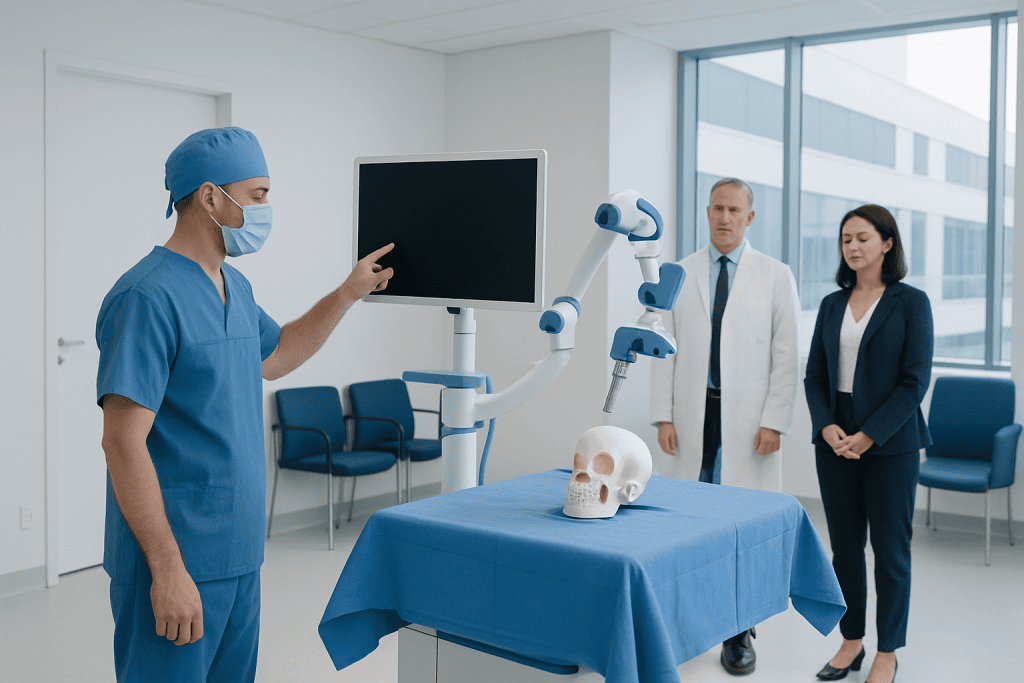
Surgical navigation systems provide real-time guidance during many types of operations. They combine preoperative scans, live tracking, and computer software to support surgical precision.
Key Takeaways
- Surgical navigation systems provide real-time guidance during many types of operations.
- They combine preoperative scans, live tracking, and computer software to support surgical precision.
- These systems may help surgeons protect nerves, blood vessels, and other critical structures.
- Navigation technology supports, but does not replace, surgical skill and clinical judgment.
- Not every procedure needs navigation; suitability depends on the condition, anatomy, and surgical goals.
Surgical navigation systems are advanced tools that help surgeons see anatomy more clearly and track instruments in real time during an operation. By combining imaging, software, and positioning technology, they can improve precision, support safety, and help protect important nearby structures.
Overview: What Surgical Navigation Systems Are
Surgical navigation systems are computer-assisted technologies that help surgeons plan and perform operations with greater spatial accuracy. They work somewhat like a GPS system for surgery: the platform combines medical images, tracking tools, and software so the surgical team can see where instruments are in relation to the patient’s anatomy during the procedure.
These systems are used in a range of specialties, including brain surgery, spine surgery, ear, nose and throat procedures, orthopedic surgery, and some cancer operations. In many cases, they are especially useful when anatomy is complex, the surgical target is small, or important structures such as nerves, vessels, or the spinal cord are very close to the area being treated.
Surgical navigation does not perform the operation on its own. Instead, it gives the surgeon additional visual information in real time or near real time. This can support careful decision-making, help confirm orientation in the body, and improve confidence when working through small incisions or in hard-to-reach areas.
How Real-Time Guidance Works
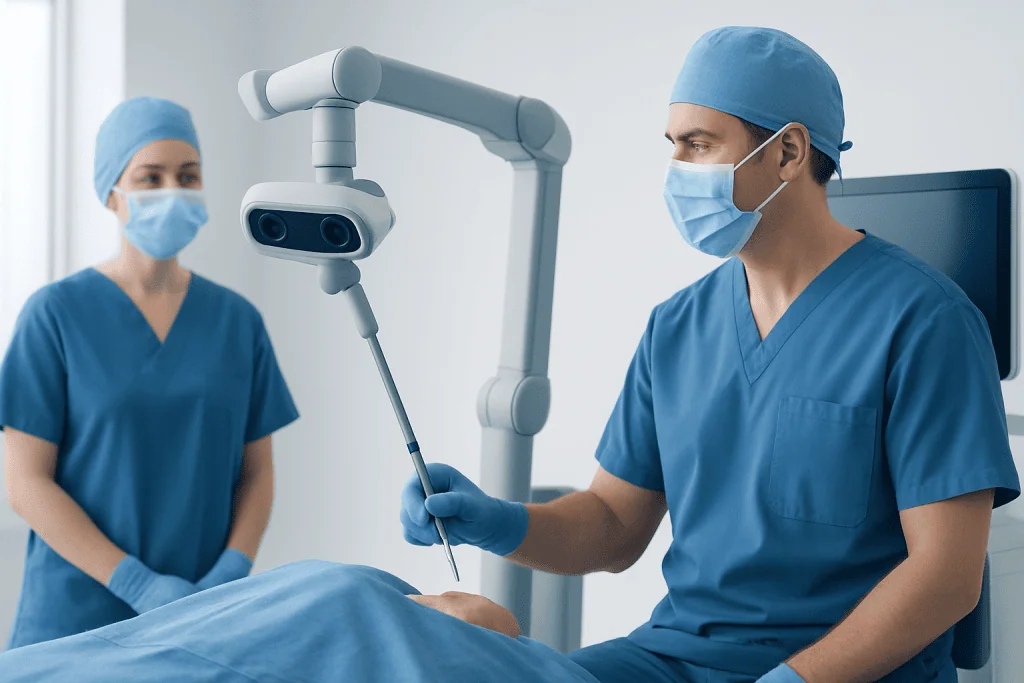
Most surgical navigation systems start with imaging. A patient may have a CT scan, MRI, or other imaging study before surgery. In some operating rooms, imaging can also be updated during the procedure. The software turns these images into detailed views of the anatomy, which the surgeon can use for planning and navigation.
During surgery, special cameras, sensors, or electromagnetic trackers detect the position of surgical instruments. The system matches this information to the patient’s images through a process called registration. Once registration is complete, the screen shows where the instrument tip is located in relation to bones, organs, tumors, or other important structures.
Real-time guidance can be especially helpful if the surgeon needs to follow a precise pathway, place an implant, remove abnormal tissue, or avoid delicate anatomy. Depending on the system and the procedure, navigation may be used alongside microscopes, endoscopes, robotics, fluoroscopy, or MRI and CT scan imaging support.
- Preoperative or intraoperative imaging provides a map of the anatomy.
- Tracking technology shows instrument position during the operation.
- Software displays the relationship between the instrument and the target area.
- The surgeon uses this information to guide movement and verify accuracy.
Where These Systems Are Commonly Used

Surgical navigation systems are widely used in neurosurgery and spine surgery. In brain procedures, they can help identify the safest route to a lesion, biopsy target, or deep structure while reducing unnecessary disruption to surrounding tissue. In spine procedures, navigation may support accurate placement of screws or help the team work around the spinal cord and nerves.
Navigation is also common in ear, nose and throat surgery, especially sinus and skull base procedures where spaces are small and the anatomy sits close to the eyes and brain. In orthopedic surgery, it may assist with joint alignment, implant positioning, or complex reconstruction. In some oncologic procedures, image-guided surgery can help define margins and improve orientation in difficult anatomical areas.
Its value is often greatest in cases involving altered anatomy, prior surgery, congenital differences, very small targets, or minimally invasive approaches. For example, a surgeon treating a brain tumor or a complex spinal disorder may use navigation to better understand the anatomy from multiple angles and to work with greater control.
Potential Benefits for Precision and Safety
The main goal of surgical navigation is to improve precision. Better precision can mean more accurate targeting, more confident implant placement, and more reliable orientation during a procedure. When surgeons can see exactly where they are operating relative to critical structures, they may be better able to protect healthy tissue.
Another important benefit is consistency. Navigation can help reduce uncertainty in complex anatomy and support standardized workflows, particularly in procedures where even small differences in angle or depth matter. This may be useful in minimally invasive surgery, where the surgeon has a limited direct view of the surgical field.
In some situations, navigation may also support shorter operative decision time, fewer positioning adjustments, or reduced need for repeated imaging checks. However, the degree of benefit depends on the procedure, the equipment being used, and the experience of the surgical team. It is best understood as a tool that enhances surgery rather than a guarantee of a specific outcome.
- May improve accuracy in locating the surgical target
- Can help protect nearby nerves, vessels, and organs
- Often supports minimally invasive or anatomically complex procedures
- May improve confidence in implant and instrument positioning
Limitations and Important Considerations
Although surgical navigation is highly useful, it is not perfect. Accuracy depends on image quality, correct registration, patient positioning, and the stability of the anatomy during surgery. In some operations, tissues can shift after the procedure begins, which may reduce how closely preoperative images reflect the current anatomy.
There is also a learning curve. Surgeons and operating room teams need training to use the system efficiently and interpret the information correctly. Setup and registration can add time at certain stages of the operation, especially when the technology is newly introduced or the case is particularly complex.
Not every patient or procedure requires navigation. In straightforward operations, conventional techniques may be fully appropriate. The decision to use navigation depends on the nature of the condition, the goals of surgery, available imaging, the surgeon’s expertise, and whether the technology is likely to provide meaningful added value for that individual case.
What Patients Can Expect Before and During Surgery
If navigation is planned, the patient may need imaging before surgery so the team can map the anatomy in detail. The surgeon usually explains why navigation is being recommended, what problem it is intended to solve, and how it fits into the overall treatment plan. This discussion is a good time to ask whether the technology is expected to improve access, precision, or safety in that specific procedure.
On the day of surgery, navigation equipment is prepared in the operating room. Depending on the system, small reference markers, frames, or trackers may be placed so the computer can recognize the patient’s position. After anesthesia, the team completes registration to align the images with the patient’s actual anatomy.
From the patient’s perspective, navigation usually does not change how surgery feels because it is an internal operating room tool. What matters most is that it may help the surgeon work with more detailed guidance. In centers offering advanced care, this technology may be part of broader planning that includes neurosurgery or spine surgery pathways tailored to the patient’s diagnosis.
How to Discuss Surgical Navigation With a Doctor
Patients who are advised to have surgery can ask whether navigation technology will be used and why. Helpful questions include whether it is standard for that operation, whether it is especially useful in complex anatomy, and whether the surgeon believes it may improve accuracy or help reduce risks in the individual case. Understanding the reason for its use often makes the technology easier to relate to the patient’s own treatment.
It is also reasonable to ask about alternatives, expected benefits, and any limitations. Navigation can be one part of a larger strategy that includes imaging, minimally invasive techniques, intraoperative monitoring, or robotic assistance. Patients benefit from knowing how these tools work together and which elements are most important for their operation.
Near the end of care planning, some patients seek treatment in specialized centers where complex cases are managed by multidisciplinary teams. Acibadem International’s multidisciplinary specialists and JCI-accredited hospitals diagnose and treat conditions that may require navigation-assisted surgery for international patients. Even so, the most appropriate approach always depends on the diagnosis, the surgeon’s assessment, and a careful discussion of risks and benefits.
Frequently asked questions
What is a surgical navigation system in simple terms?
A surgical navigation system is a computer-guided tool that helps surgeons see where their instruments are during an operation. It uses medical images and tracking technology to provide real-time guidance and improve orientation inside the body.
Does surgical navigation make surgery safer?
It can support safety by helping surgeons work more precisely and avoid important nearby structures. However, safety still depends on many factors, including the patient's condition, the complexity of the procedure, and the experience of the surgical team.
Is surgical navigation the same as robotic surgery?
No. Surgical navigation and robotic surgery are different technologies, although they may sometimes be used together. Navigation mainly provides visual guidance, while robotic systems can assist the surgeon with instrument control and movement.
Which surgeries commonly use navigation systems?
Navigation is often used in brain surgery, spine surgery, sinus surgery, orthopedic procedures, and some cancer operations. It is especially helpful when anatomy is complex or when the target area is close to important nerves, blood vessels, or organs.
Will a patient feel anything different because navigation is used?
Usually no. Navigation is a tool used by the surgical team in the operating room, so it does not generally change what the patient feels during the procedure. The main difference is in how the surgeon plans and guides the operation.
Does every patient need surgical navigation?
No. Some procedures can be done very effectively without it. A surgeon recommends navigation when it is likely to add meaningful value, such as improving accuracy in a complex or high-risk anatomical area.
References
- World Health Organization
- National Institute for Health and Care Excellence
- American College of Surgeons
- National Institutes of Health
- North American Spine Society
This article is for general information only and is not a substitute for professional medical advice. Please consult a qualified doctor about your individual situation.
Explore treatments in Turkey — costs, top hospitals & a free quote
JCI-accredited · board-certified surgeons · reply within 24h
Add us as a Preferred Source to see more of our trusted health content across Google Search, AI Overviews and Discover.