Swallowing Rehabilitation: Dysphagia Therapy and Safe Eating Strategies

Dysphagia can affect people after stroke, neurological disease, head and neck cancer treatment, surgery, aging-related changes, or other medical conditions. A swallowing assessment may include clinical evaluation and imaging tests such as videofluoroscopic swallow study or fiberoptic endoscopic evaluation of swallowing.
Key Takeaways
- Dysphagia can affect people after stroke, neurological disease, head and neck cancer treatment, surgery, aging-related changes, or other medical conditions.
- A swallowing assessment may include clinical evaluation and imaging tests such as videofluoroscopic swallow study or fiberoptic endoscopic evaluation of swallowing.
- Therapy may involve swallowing exercises, posture changes, diet texture modifications, compensatory techniques, and caregiver education.
- Safe eating strategies can reduce the risk of choking, aspiration, dehydration, and inadequate nutrition when they are tailored by a qualified clinician.
- New or worsening swallowing difficulty, coughing during meals, unexplained weight loss, or recurrent chest infections should be discussed with a doctor promptly.
Swallowing rehabilitation is a structured therapy approach for people who have difficulty swallowing, also called dysphagia. It aims to improve safety, comfort, nutrition, hydration, and quality of life through expert assessment, targeted exercises, and individualized eating strategies.
Overview
Swallowing rehabilitation is a specialized area of therapy that helps people who have difficulty moving food, liquid, saliva, or medication safely from the mouth to the stomach. This difficulty is called dysphagia. Swallowing is a complex action involving the lips, tongue, throat, voice box, esophagus, breathing coordination, and many nerves and muscles. When any part of this system is affected, eating and drinking may become tiring, uncomfortable, or unsafe.
The goals of dysphagia therapy are practical and patient-centered. Treatment may aim to make swallowing safer, improve muscle strength and coordination, support adequate nutrition and hydration, reduce the risk of food or liquid entering the airway, and help the person enjoy meals with greater confidence. Rehabilitation is usually guided by a speech and language therapist, also called a speech-language pathologist, often working with doctors, dietitians, nurses, physiotherapists, occupational therapists, dentists, and caregivers.
Swallowing problems can be temporary or long-term. Some people recover swallowing function after an illness or surgery, while others need ongoing strategies because of a neurological or progressive condition. A personalized plan is important because the safest food texture, liquid thickness, exercises, and mealtime techniques vary from person to person.
What Dysphagia May Feel Like
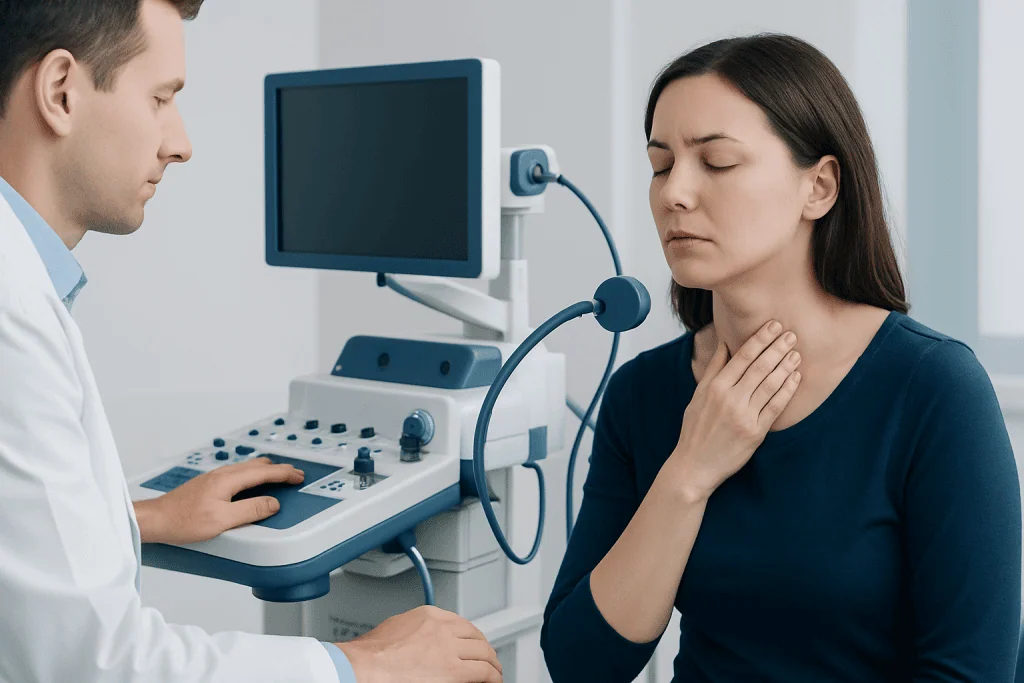
Dysphagia does not feel the same for everyone. Some people notice that food sticks in the throat or chest, while others cough when drinking water or need extra time to finish meals. In some cases, swallowing difficulty is obvious. In others, aspiration can be silent, meaning food or liquid may enter the airway without a strong cough. This is why professional assessment is important when symptoms are persistent or unexplained.
Common signs and symptoms of dysphagia include:
- Coughing, choking, or throat clearing during or after eating and drinking
- A wet, gurgly, or changed voice after swallowing
- Food remaining in the mouth, pocketing in the cheeks, or drooling
- Difficulty chewing or moving food around the mouth
- Feeling that food is stuck in the throat or chest
- Taking much longer than usual to eat meals
- Avoiding certain foods or drinks because they are difficult to swallow
- Unexplained weight loss, dehydration, or reduced appetite
- Recurrent chest infections or pneumonia in some people
Swallowing symptoms may also affect emotional wellbeing. Meals are often social, and people with dysphagia may feel embarrassed, anxious, or isolated. Rehabilitation addresses not only the mechanics of swallowing but also safe participation in daily routines, family meals, and community life whenever possible.
Causes and Risk Factors

Dysphagia can result from conditions affecting the brain, nerves, muscles, mouth, throat, or esophagus. A common cause is stroke, especially when it affects areas of the brain that control swallowing coordination. Other neurological conditions, such as Parkinson’s disease, multiple sclerosis, dementia, amyotrophic lateral sclerosis, traumatic brain injury, and spinal cord injury, may also interfere with swallowing safety and efficiency.
Head and neck conditions can also contribute. Surgery, radiotherapy, or chemotherapy for head and neck cancer may affect saliva production, tissue flexibility, sensation, and muscle movement. Structural issues such as tumors, strictures, Zenker’s diverticulum, enlarged thyroid, cervical spine changes, or scarring can make swallowing more difficult. In some people, reflux disease or esophageal motility disorders cause food to feel stuck after it has passed through the throat.
Risk factors may include advanced age, frailty, poor dentition, reduced alertness, certain medications that cause dry mouth or sedation, prolonged intubation, tracheostomy, respiratory disease, and general weakness after hospitalization. Dysphagia can also occur in children because of developmental, neurological, structural, or feeding-related conditions, though pediatric swallowing rehabilitation requires age-specific assessment and care.
Because the causes are varied, treatment is most effective when it is based on a clear understanding of the underlying problem. For example, a person with weak tongue movement may need different exercises than someone whose main difficulty is delayed airway protection or esophageal narrowing.
How Swallowing Problems Are Diagnosed
Diagnosis begins with a careful medical history and clinical swallowing evaluation. The clinician may ask when the problem started, which foods or liquids are difficult, whether coughing occurs, and whether there has been weight loss, dehydration, pneumonia, reflux, neurological symptoms, or recent surgery. They may observe facial, tongue, jaw, voice, breathing, and cough function, and may watch the person swallow selected foods or liquids when it is safe to do so.
Instrumental swallowing tests are often used when more detail is needed. A videofluoroscopic swallow study, sometimes called a modified barium swallow, uses moving X-ray images to show how different food and liquid textures pass through the mouth and throat. A fiberoptic endoscopic evaluation of swallowing uses a thin flexible camera passed through the nose to view the throat before and after swallowing. These tests can help identify aspiration, residue, timing problems, and which strategies improve safety.
Depending on symptoms, additional investigations may be recommended. These can include an ENT examination, gastrointestinal evaluation, endoscopy, esophageal manometry, reflux testing, imaging studies, dental assessment, or neurological review. The aim is to distinguish oropharyngeal dysphagia, which involves the mouth and throat, from esophageal dysphagia, which involves the swallowing tube leading to the stomach.
A complete assessment also considers nutrition, hydration, respiratory status, cognition, posture, independence, and the home environment. This broader view helps the rehabilitation team design recommendations that are safe, realistic, and sustainable for the person and caregivers.
Dysphagia Therapy and Rehabilitation Options
Dysphagia therapy is tailored to the person’s diagnosis, swallowing physiology, medical condition, and goals. Some interventions are compensatory, meaning they help the person swallow more safely during meals without necessarily changing muscle function. Others are rehabilitative, meaning they aim to improve strength, timing, range of motion, or coordination over time. Many treatment plans combine both approaches.
Therapy may include exercises for the tongue, lips, jaw, throat, or breathing-swallow coordination. Examples include effortful swallow practice, tongue strengthening, range-of-motion exercises, airway protection maneuvers, and exercises designed to improve opening of the upper esophageal sphincter when appropriate. These should be prescribed and monitored by a qualified clinician, because not every exercise is suitable for every swallowing problem.
Compensatory strategies may include posture changes such as chin tuck, head turn, or upright positioning; specific swallow maneuvers; pacing techniques; smaller sips and bites; alternating solids and liquids; or repeated swallows. The correct technique depends on what the assessment shows. A strategy that helps one person may be ineffective or unsafe for another, so self-prescribing techniques from the internet is not recommended.
Diet modification can be part of dysphagia management. Foods may be adjusted to softer, minced, moist, or pureed textures, and liquids may be thickened when thin fluids are difficult to control. The International Dysphagia Diet Standardisation Initiative framework is often used to describe food textures and liquid thickness consistently. A dietitian may help maintain adequate calories, protein, fluids, and enjoyment while meeting swallowing safety needs.
Safe Eating and Drinking Strategies
Safe eating strategies are most effective when they are individualized. However, several general habits can support safer meals for many people with swallowing difficulty. The person should be fully awake and seated upright, ideally with good head and trunk support. Meals should be unhurried, with distractions reduced, and the person should remain upright for a period after eating if advised by the care team, especially when reflux is present.
Helpful mealtime practices may include:
- Taking small bites and sips rather than large mouthfuls
- Swallowing fully before taking the next bite or sip
- Checking the mouth for leftover food after meals when pocketing occurs
- Using adaptive cups, spoons, or seating supports if recommended
- Avoiding talking while chewing and swallowing
- Following the exact food texture and liquid thickness prescribed
- Maintaining good oral hygiene to reduce harmful bacteria in the mouth
Caregivers play an important role when a person needs assistance. They may need training on safe feeding pace, cueing, positioning, signs of distress, and when to stop a meal. Forcing food or drink is not safe. If the person becomes sleepy, breathless, repeatedly coughs, or seems unable to clear food, the meal should be paused and medical advice sought according to the care plan.
Medication swallowing also deserves attention. Some tablets should not be crushed or mixed with food because this can change how the medicine works. A doctor or pharmacist can advise on safe alternatives such as liquid formulations, dispersible tablets, or different administration methods when swallowing pills is difficult.
Recovery, Nutrition, and Quality of Life
Recovery from dysphagia depends on the cause, severity, general health, and response to therapy. After a stroke or surgery, swallowing may improve significantly with time and rehabilitation. In progressive neurological conditions, therapy may focus on maintaining function, adapting safely as needs change, and supporting comfort and nutrition. Regular reassessment is important because swallowing ability can improve or decline.
Nutrition and hydration are central to rehabilitation. If eating and drinking by mouth do not provide enough intake or are unsafe despite strategies, temporary or longer-term tube feeding may be considered. This decision is made by the medical team together with the patient and family, taking into account the underlying condition, goals of care, expected recovery, and quality of life. Tube feeding can support nutrition while therapy continues, and it does not always mean that oral intake is permanently stopped.
Oral care is another key part of dysphagia management. Brushing teeth, cleaning dentures, and keeping the mouth moist can reduce discomfort and may help lower the risk of complications if small amounts of material enter the airway. Dental problems, ill-fitting dentures, or mouth pain can also worsen chewing and swallowing, so they should be addressed.
Living with dysphagia can be frustrating, but practical adjustments can make meals safer and more enjoyable. Some people benefit from recipe modification, flavor enhancement, social support, counseling, or occupational therapy input for feeding independence. The rehabilitation plan should respect personal food preferences, culture, routines, and dignity whenever possible.
When to See a Doctor
A person should seek medical evaluation if swallowing difficulty is new, persistent, worsening, or associated with coughing, choking, voice changes, weight loss, dehydration, fever, chest infections, or pain. Urgent medical care is needed if there are signs of airway blockage, severe breathing difficulty, inability to swallow saliva, sudden neurological symptoms, or a suspected stroke. Sudden facial drooping, arm weakness, speech difficulty, or confusion should be treated as an emergency.
People already diagnosed with dysphagia should request reassessment if meals become harder, prescribed strategies no longer help, a new illness occurs, medications change, or there are repeated respiratory infections. Children with feeding or swallowing concerns, poor growth, frequent coughing with feeds, or distress during meals should be assessed by pediatric specialists.
Swallowing rehabilitation is safest when guided by qualified professionals. The care team may include a speech and language therapist, rehabilitation physician, neurologist, ENT specialist, gastroenterologist, dietitian, nurse, dentist, and other therapists depending on the cause. At Acibadem International, multidisciplinary specialists in JCI-accredited hospitals diagnose and treat swallowing disorders for international patients, with care plans adapted to each person’s medical needs.
Frequently asked questions
What is swallowing rehabilitation?
Swallowing rehabilitation is therapy for people who have difficulty swallowing safely or efficiently. It may include assessment, exercises, posture changes, swallowing techniques, food and liquid texture modifications, and caregiver education. The plan is individualized based on the cause and pattern of dysphagia.
Who provides dysphagia therapy?
Dysphagia therapy is commonly provided by a speech and language therapist or speech-language pathologist with training in swallowing disorders. They often work with doctors, dietitians, nurses, physiotherapists, occupational therapists, dentists, and caregivers. This team approach helps address safety, nutrition, mobility, cognition, and overall health.
Can swallowing problems improve with exercises?
Some swallowing problems improve with targeted exercises, especially when weakness, reduced range of motion, or coordination issues are present. However, the right exercise depends on the specific swallowing impairment. Exercises should be prescribed by a qualified clinician after assessment, because an unsuitable exercise may not help and could increase fatigue or risk.
Are thickened liquids always necessary for dysphagia?
No. Thickened liquids are helpful for some people who aspirate or cannot control thin fluids, but they are not required for everyone. They should be recommended only after assessment and reviewed regularly, because hydration, preference, and quality of life also matter.
What foods are safest for someone with difficulty swallowing?
The safest foods depend on the person’s chewing ability, throat strength, sensation, and airway protection. Some people need soft and moist foods, while others may need minced or pureed textures. A swallowing clinician and dietitian can recommend appropriate textures while helping maintain balanced nutrition.
What should caregivers do if coughing happens during meals?
If coughing happens, the caregiver should pause the meal, encourage the person to clear the airway if they can, and avoid offering more food or drink until they are settled. Repeated coughing, wet voice, breathlessness, or distress should be reported to the healthcare team. Emergency care is needed if the person cannot breathe, speak, or clear an airway blockage.
Is dysphagia the same as reflux or indigestion?
Dysphagia means difficulty swallowing, while reflux is the backflow of stomach contents that may cause heartburn, regurgitation, or throat irritation. The conditions can overlap, and reflux may worsen swallowing discomfort in some people. A doctor can help determine whether symptoms come from the mouth and throat, the esophagus, reflux, or another cause.
References
- World Health Organization
- American Speech-Language-Hearing Association
- European Society for Swallowing Disorders
- International Dysphagia Diet Standardisation Initiative
- National Institute for Health and Care Excellence
This article is for general information only and is not a substitute for professional medical advice. Please consult a qualified doctor about your individual situation.
Dysphagia in Turkey — costs, top hospitals & a free quote
JCI-accredited · board-certified surgeons · reply within 24h
Add us as a Preferred Source to see more of our trusted health content across Google Search, AI Overviews and Discover.

Gastroenterology
Diagnosis and treatment of the digestive system and liver, with advanced endoscopy.
46 specialists in this unitMore from the Health Library



Related Specialists

Asst. Prof. Dr. Mehmet Karaarslan
Internal Medicine
Assoc. Prof. Dr. Fatma Tokat
Breast Clinic Clinical Service
Dr. Nezihi Ün
Ophthalmology
Prof. Dr. Ayten Ferahbaş Kesikoğlu
Dermatology