Tension Headache vs Migraine: Key Differences in Symptoms and Treatment

Tension headaches usually cause a dull, tightening pain on both sides of the head, while migraines often cause throbbing pain that may be one-sided. Migraines are more likely to include nausea, vomiting, and sensitivity to light, sound, or smells.
Key Takeaways
- Tension headaches usually cause a dull, tightening pain on both sides of the head, while migraines often cause throbbing pain that may be one-sided.
- Migraines are more likely to include nausea, vomiting, and sensitivity to light, sound, or smells.
- Stress, poor sleep, dehydration, and skipped meals can trigger both tension headaches and migraines.
- Diagnosis is mainly based on medical history, symptom pattern, and a neurological examination.
- Treatment may include lifestyle changes, over-the-counter or prescription medicines, and preventive care for frequent headaches.
Tension headaches and migraines are both common, but they are not the same. Understanding how they differ in pain, triggers, and associated symptoms can help people seek the right treatment and manage headaches more effectively.
Overview: How Tension Headaches and Migraines Differ
When comparing tension headache vs migraine, the most important difference is that they are distinct headache disorders with different symptom patterns. A tension headache commonly feels like a steady pressure or tight band around the head. A migraine is more likely to cause moderate to severe throbbing pain and often comes with other symptoms such as nausea or light sensitivity.
Tension headaches are generally the most common type of primary headache. They may develop during periods of emotional stress, muscle tension, fatigue, or long hours at a desk. Migraines are also common, but they tend to be more disruptive to daily life because the pain can be intense and may worsen with movement.
Not every headache fits neatly into one category. Some people may have features of both, and symptoms can change over time. Keeping track of when headaches happen, how long they last, and what the pain feels like can help a doctor identify whether the pattern is more consistent with migraine or a tension-type headache.
Symptoms: What Each Type of Headache Feels Like
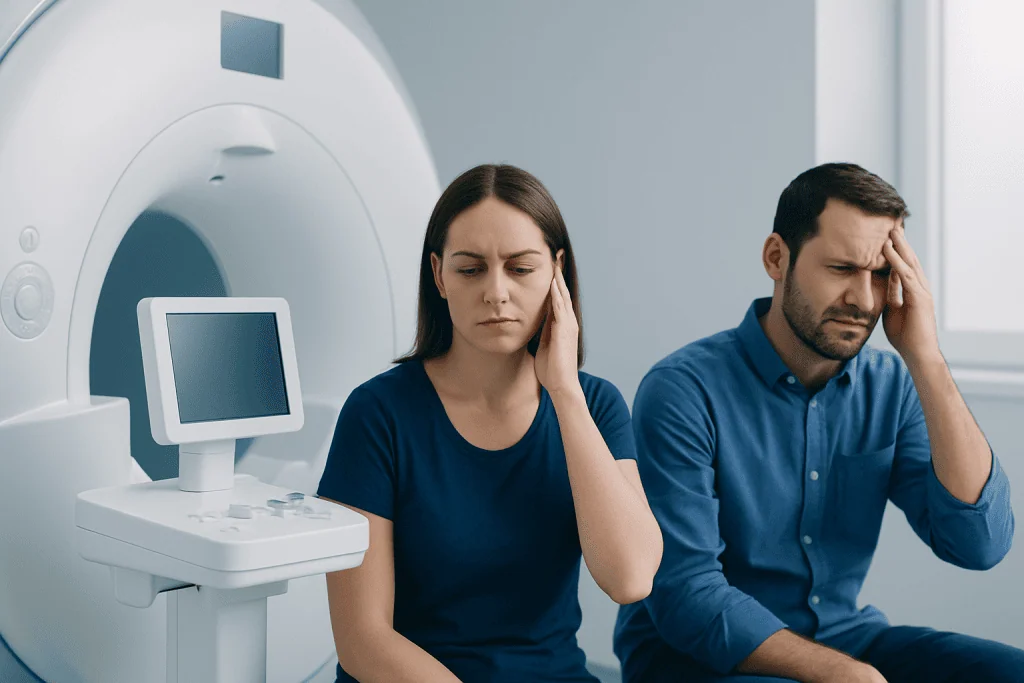
Tension headache symptoms are often described as dull, aching, pressing, or tightening. The pain is usually mild to moderate rather than severe. It often affects both sides of the head and may be felt in the forehead, temples, back of the head, or neck and shoulder muscles. Many people say it feels like a band is wrapped around the head.
Migraine symptoms can be quite different. Migraine pain is often pulsating or throbbing and may occur on one side of the head, although it can affect both sides. The pain can last for hours to several days and may interfere with work, sleep, or routine activities. Physical activity such as climbing stairs or walking can make migraine pain worse.
Migraines are also more likely to include associated symptoms. These may appear before, during, or after the headache and can include:
- Nausea or vomiting
- Sensitivity to light
- Sensitivity to sound
- Sensitivity to smells
- Visual changes such as flashing lights or blind spots in some people
- Dizziness or difficulty concentrating
By contrast, tension headaches usually do not cause vomiting and are less likely to cause strong sensory sensitivity. If a person regularly develops severe headache pain with nausea or light sensitivity, the pattern is more suggestive of migraine than of a tension headache.
Causes and Risk Factors

The exact cause of tension headaches is not fully understood, but they are often linked to stress, muscle tension, poor posture, eye strain, fatigue, and inadequate sleep. Long periods spent working at a computer, clenching the jaw, or carrying emotional stress may contribute. These headaches can occur occasionally or become chronic if they happen frequently.
Migraines are thought to involve complex changes in the brain and nervous system. Genetics can play an important role, and many people with migraines have a family history of the condition. Hormonal changes, especially in women, can also influence migraine patterns. Common triggers include stress, missed meals, dehydration, changes in sleep routine, alcohol, certain foods, strong smells, and sensory overstimulation.
Some triggers overlap between the two conditions, which is why headache diaries can be useful. Recording sleep, meals, hydration, stress levels, menstrual cycles, caffeine intake, and screen time may help reveal patterns. For some patients, headache evaluation may also include assessment for related issues such as sinusitis or jaw clenching if symptoms suggest another contributing factor.
How Doctors Diagnose the Difference
Diagnosis usually starts with a detailed discussion of symptoms. A doctor may ask where the pain is located, how often headaches happen, how long they last, what the pain feels like, and whether there are symptoms such as nausea, aura, or sensitivity to light and sound. The pattern over time often gives the clearest clue to whether the headache is tension-type or migraine.
A physical examination and neurological examination are also important. These help check reflexes, coordination, eye movements, sensation, muscle strength, and other nervous system functions. In most people with a long-standing, typical pattern of tension headache or migraine, no major testing is needed.
Imaging tests such as MRI or CT are usually reserved for situations in which another cause needs to be ruled out. This may be necessary if the headache is sudden and severe, starts after age 50, changes quickly in pattern, follows a head injury, or is accompanied by concerning symptoms such as weakness, confusion, seizures, fever, or vision loss. In selected cases, doctors may use MRI or other neurological assessments to investigate unusual headaches safely and thoroughly.
Treatment Options for Tension Headache and Migraine
Treatment depends on the type of headache, how severe it is, and how often it occurs. Occasional tension headaches may improve with rest, hydration, regular meals, stretching, stress reduction, and simple pain relievers recommended by a doctor or pharmacist. If headaches become frequent, it is important to review lifestyle factors and medicine use, because overusing pain medication can itself lead to more headaches.
Migraine treatment often includes two approaches: relieving symptoms during an attack and preventing future attacks. Acute treatment may involve resting in a dark, quiet room and taking medicines that are chosen based on symptom severity and a person’s overall health. Preventive treatment may be considered when migraines are frequent, long-lasting, or significantly affect daily life.
Non-drug strategies can help both conditions. These include regular sleep, good hydration, exercise, posture correction, limiting skipped meals, and stress management techniques such as relaxation training or mindfulness. In some cases, treatment of contributing factors such as neck problems or sleep disorders may also improve headache control.
If headaches are persistent or disabling, specialist care may be helpful. Depending on the pattern, a doctor may recommend a structured evaluation in a neurology consultation or, when symptoms suggest a broader issue affecting the brain and nervous system, assessment through neurology care.
Prevention and Self-Care Strategies
Many people can reduce headache frequency by building regular daily habits. A consistent sleep schedule, balanced meals, hydration, and breaks from screens can make a meaningful difference. Gentle exercise and stretching may help reduce muscle tension, especially for people whose headaches are linked to desk work or poor posture.
Stress management is another key part of prevention. Techniques such as deep breathing, relaxation exercises, yoga, and counseling support can be useful, especially if stress is a common trigger. Caffeine should be used thoughtfully, since too much or sudden withdrawal may worsen headaches in some people.
A headache diary is one of the most practical self-care tools. It can include the date, time, pain intensity, associated symptoms, foods eaten, sleep quality, menstrual cycle information, stress level, and medications taken. This information can help both patients and clinicians identify triggers and judge whether treatment is working.
It is also wise to avoid frequent use of pain medicines without medical guidance. Taking headache medicine too often can contribute to medication-overuse headaches. When headaches occur regularly, professional evaluation is more helpful than repeatedly self-treating without a clear diagnosis.
When to See a Doctor
A doctor should be consulted if headaches are frequent, severe, worsening, or interfering with normal life. Medical advice is also important if a person is uncertain whether symptoms are due to tension headache, migraine, or another condition. Accurate diagnosis helps guide safe and effective treatment.
Urgent medical attention is needed for a headache that is sudden and extremely severe, or for a headache associated with fainting, confusion, seizures, weakness, numbness, fever, stiff neck, or major vision changes. Headaches after a significant head injury also need prompt medical assessment.
People who have migraine symptoms for the first time, or whose usual headache pattern changes, should not ignore those changes. A careful evaluation can help rule out other causes and provide reassurance where appropriate. Near the end of the care pathway, patients seeking international expertise may choose centers such as Acibadem International, where multidisciplinary specialists in JCI-accredited hospitals diagnose and treat headache disorders for international patients.
Frequently asked questions
How can someone tell if it is a tension headache or a migraine?
A tension headache usually causes a steady, pressing pain on both sides of the head and is often milder. A migraine is more likely to cause throbbing pain, may affect one side, and often comes with nausea or sensitivity to light and sound.
Can stress cause both tension headaches and migraines?
Yes. Stress is a common trigger for both tension headaches and migraines, although the symptoms they produce can still be different. Managing stress may help reduce the frequency of both types.
Do migraines always happen on one side of the head?
No. Although migraine pain is often one-sided, it can also affect both sides of the head. The quality of pain and associated symptoms are usually more helpful than location alone.
Are tension headaches dangerous?
Tension headaches are usually not dangerous, but they can still affect comfort and quality of life. Frequent or changing headaches should be evaluated by a doctor to confirm the diagnosis and rule out other causes.
What triggers should people watch for?
Common triggers include stress, poor sleep, dehydration, skipped meals, long screen time, muscle tension, alcohol, and hormonal changes. A headache diary can help identify which triggers are most relevant for each person.
When should a headache be treated as an emergency?
Emergency care is important for a sudden, severe headache or one that comes with weakness, confusion, seizures, fever, fainting, or major vision changes. A headache after head injury or a dramatic change in the usual pattern also needs prompt medical attention.
References
- World Health Organization
- International Headache Society
- National Institute of Neurological Disorders and Stroke
- American Migraine Foundation
This article is for general information only and is not a substitute for professional medical advice. Please consult a qualified doctor about your individual situation.
Migraine in Turkey — costs, top hospitals & a free quote
JCI-accredited · board-certified surgeons · reply within 24h
Add us as a Preferred Source to see more of our trusted health content across Google Search, AI Overviews and Discover.