The Breakage: A Complete Medical Overview

The breakage most often means a bone fracture, which may be a crack, partial break, or complete break. Common signs include pain, swelling, bruising, reduced movement, and difficulty using the injured area.
Key Takeaways
- The breakage most often means a bone fracture, which may be a crack, partial break, or complete break.
- Common signs include pain, swelling, bruising, reduced movement, and difficulty using the injured area.
- Diagnosis usually involves a physical examination and imaging such as X-rays, with CT or MRI used in selected cases.
- Treatment depends on the fracture type and may include splinting, casting, pain control, rehabilitation, or surgery.
- Early medical care helps lower the risk of poor healing, deformity, stiffness, and long-term function problems.
The breakage usually refers to a bone fracture, meaning the bone has cracked or broken after trauma, overuse, or weakened bone structure. Prompt assessment helps confirm the type of injury, relieve pain, and support proper healing.
Overview: what “the breakage” means medically
The breakage usually means a fractured bone. In medical terms, a fracture can be a small crack, a partial break, or a complete separation of the bone. Some fractures are simple and stable, while others are more complex and may affect nearby joints, muscles, nerves, or blood vessels.
Bones are strong living tissues, but they can break when a force is greater than the bone can tolerate. This may happen after a fall, sports injury, road traffic accident, direct blow, or repetitive stress. In some people, bones become more fragile because of underlying conditions, making fractures possible even after a minor injury.
Not every fracture looks dramatic. Some people can still move the injured area or walk on a broken bone, especially when the fracture is small or incomplete. Because of this, persistent pain and swelling after an injury should not be ignored, even if the person remains able to use the limb.
Fractures are often grouped by pattern and severity. A closed fracture stays under the skin, while an open fracture breaks through the skin and needs urgent treatment because of infection risk. Other terms describe where the bone is broken, whether the pieces are aligned, and whether a nearby joint is involved.
Symptoms and signs of a broken bone
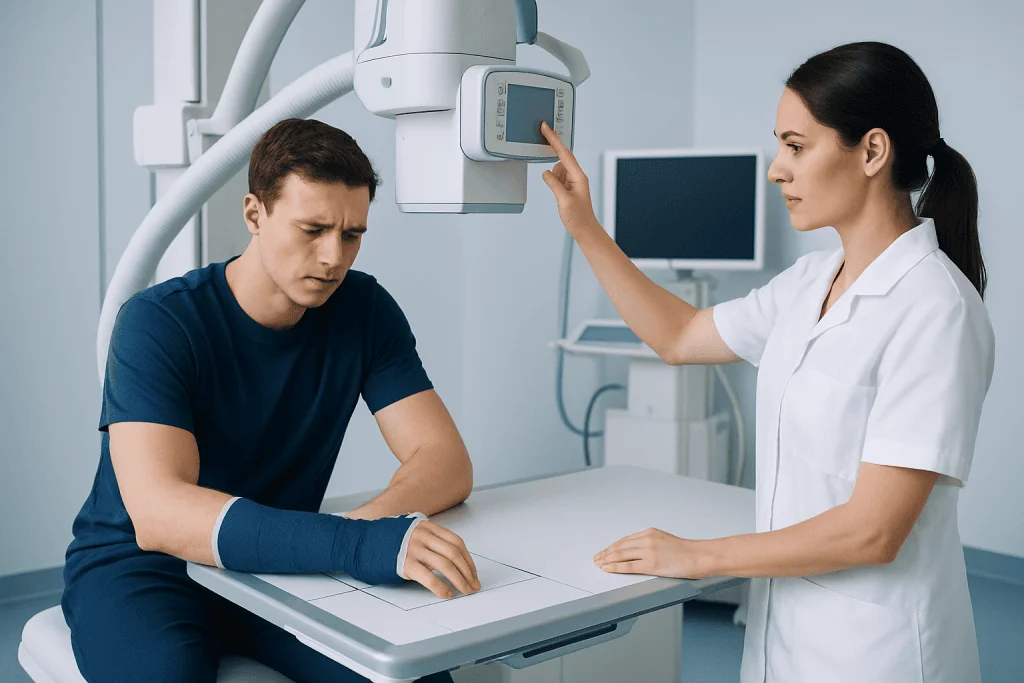
The most common symptom of the breakage is pain that starts suddenly after an injury or develops gradually with overuse. The pain often becomes worse with movement, pressure, or weight-bearing. Many people also notice swelling, tenderness, bruising, or warmth around the injured area.
The affected body part may not look or feel normal. It can appear bent, shortened, or out of place if the fracture has shifted. Movement may be limited, and normal daily tasks can become difficult. In leg or foot fractures, walking may be painful or impossible. In arm or hand fractures, gripping and lifting may be reduced.
Some fractures produce a cracking sensation or sound at the time of injury, but this does not happen in every case. Stress fractures, which develop from repeated strain rather than a single event, may cause a more gradual pattern of pain. At first, the pain may only appear during exercise, then continue during rest if the injury worsens.
- Sudden or persistent pain
- Swelling and bruising
- Tenderness to touch
- Difficulty moving or using the area
- Visible deformity or abnormal alignment
- Inability to bear weight
- Numbness, tingling, or pale skin, which may signal an urgent problem
Causes, fracture types, and risk factors
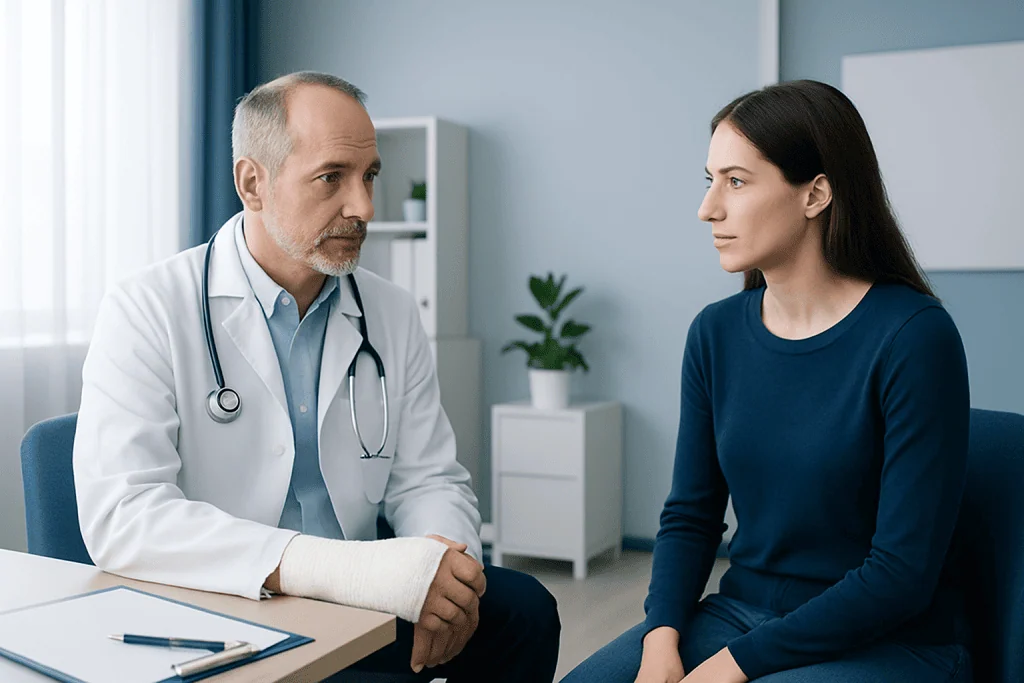
The breakage can happen for several reasons. Acute trauma is the most familiar cause and includes falls, sports collisions, twisting injuries, workplace accidents, and motor vehicle crashes. However, bones can also break under repeated mechanical stress, especially in athletes, runners, military recruits, or people who increase activity too quickly.
Doctors also consider whether a fracture happened in otherwise healthy bone or in bone weakened by disease. Conditions such as osteoporosis can make bones more likely to fracture after relatively small impacts. Certain tumors, infections, long-term steroid use, nutritional deficiencies, and age-related bone loss may also weaken the skeleton.
Fractures can be described in different ways. Common terms include closed, open, displaced, non-displaced, hairline, comminuted, compression, and stress fracture. A fracture involving a growth plate in a child requires careful attention because it may affect future bone development. Joint-related fractures can influence long-term mobility and may need more specialized care.
Risk factors include older age, low bone density, contact sports, poor balance, previous fractures, smoking, heavy alcohol use, and low calcium or vitamin D intake. Some people also have medical conditions that raise fall risk or impair healing, such as nerve disease, poor circulation, or diabetes.
How doctors diagnose the breakage
Diagnosis begins with a medical history and physical examination. A doctor asks how the injury happened, where the pain is located, whether the person could move the limb afterward, and if numbness or weakness is present. During the examination, the doctor checks for swelling, bruising, deformity, skin injury, circulation, and nerve function.
X-rays are the most common first imaging test because they can show many types of fractures clearly. They help identify the location of the break, how the bone fragments are aligned, and whether a joint is involved. In some cases, the first X-ray may appear normal even when a fracture is present, especially with some stress fractures or small wrist fractures.
When more detail is needed, additional imaging may be recommended. CT scans can provide a more precise view of complex fractures, especially around joints or in the spine and face. MRI may help detect stress fractures, soft tissue injuries, or hidden fractures not visible on standard X-rays. Ultrasound can sometimes support diagnosis in selected settings.
The doctor also decides whether the injury is stable or urgent. Open fractures, severe deformity, loss of pulse, significant numbness, or severe swelling require prompt management. Early assessment is important because delayed treatment can make healing more difficult and may increase the risk of complications.
Treatment options and the healing process
Treatment for the breakage depends on which bone is injured, how severe the fracture is, whether the fragments are aligned, and the person’s age and health. The main goals are to relieve pain, keep the bone in the correct position, protect surrounding tissues, and allow safe healing. Many stable fractures can heal with nonsurgical treatment, while others need reduction or surgery.
First-line treatment often includes rest, ice, elevation, and immobilization with a splint, brace, or cast. If the bone pieces have shifted, a doctor may need to realign them in a procedure called reduction. Some fractures then remain stable in a cast, while others need surgery to hold the bone in place with plates, screws, rods, pins, or external fixation. This may fall under orthopedic treatment when specialist bone and joint care is needed.
Healing takes time and varies by bone, age, blood supply, and overall health. Children often heal faster than adults. During recovery, follow-up appointments and repeat imaging may be used to confirm that the bone remains well aligned and is healing as expected. Rehabilitation can help restore strength, flexibility, balance, and function after immobilization or surgery, sometimes through physical therapy and rehabilitation.
Some fractures are linked to weaker bone rather than major injury. In those cases, treating the underlying cause matters as much as treating the break itself. A person with recurrent fractures or low-impact fractures may be assessed for bone health and referred for osteoporosis treatment or related evaluation. Complex injuries involving joints or the spine may also need advanced imaging or trauma and emergency care in the acute phase.
Prevention and self-care after injury
Not every fracture can be prevented, but many risks can be reduced. Fall prevention is especially important for older adults. Supportive footwear, good lighting, removal of home trip hazards, and vision checks can all help lower the chance of injury. For athletes and active individuals, proper training, protective equipment, and gradual increases in activity may reduce stress-related fractures.
Bone health also plays a major role. Adequate nutrition, including enough calcium and vitamin D, supports healthy bone maintenance. Weight-bearing exercise can strengthen bones over time, while smoking cessation and moderating alcohol intake may also support bone quality and healing. People with a history of fractures, menopause-related bone loss, or long-term steroid treatment may benefit from a discussion about bone density evaluation.
After a suspected fracture, self-care should be cautious. The injured area should be rested and supported, and unnecessary movement should be avoided. Ice and elevation may reduce swelling in the early period. It is safer not to eat or drink before urgent assessment if surgery might be needed. No one should attempt to force a deformed limb back into place at home.
During recovery, following medical advice matters. Casts and splints should be kept dry unless instructed otherwise, and swelling, increasing pain, numbness, or color change in fingers or toes should be reported promptly. Returning to sport, driving, or heavy work too early can delay healing or cause re-injury.
When to seek medical care
Medical assessment is appropriate whenever the breakage is suspected. Pain, swelling, or loss of function after an injury can indicate a fracture even when the bone is not visibly deformed. Evaluation is also important for ongoing limb pain after repetitive activity, as this may signal a stress fracture that can worsen without rest and treatment.
Urgent care is especially important if there is severe pain, an obvious deformity, an open wound over the bone, heavy bleeding, inability to bear weight, numbness, weakness, or the limb looks pale or cold. These signs may suggest a more serious injury involving the blood supply, nerves, or surrounding tissues.
People should also seek medical care if a cast feels too tight, swelling rapidly increases, fever develops, or pain becomes worse rather than better during recovery. If a fracture occurs after a very minor injury, doctors may investigate whether an underlying bone condition is present.
For international patients who need coordinated orthopedic and rehabilitation assessment, Acibadem International offers diagnosis and treatment through multidisciplinary specialists in JCI-accredited hospitals. A qualified clinician can help determine both the best fracture treatment and whether further evaluation of bone health is needed.
Frequently asked questions
Is the breakage always obvious right away?
No. Some fractures cause clear deformity, but others only cause pain, swelling, or trouble using the injured area. Small or stress fractures can be easy to miss at first, so persistent symptoms should be checked by a doctor.
Can a person still walk or move with a broken bone?
Yes, sometimes. A person may still walk with certain foot, ankle, or leg fractures, or move an arm with a minor crack. This is why ongoing pain after an injury should not be judged only by whether movement is still possible.
How long does a fracture take to heal?
Healing time varies by the bone involved, the type of fracture, the person’s age, and overall health. Many fractures heal over several weeks, but some need a longer period and follow-up imaging. Recovery of full strength and movement may continue after the bone itself has healed.
Do all fractures need surgery?
No. Many fractures heal well with splints, casts, or braces if the bone pieces are stable and well aligned. Surgery is more likely when the fracture is displaced, open, unstable, involves a joint, or cannot be kept in a good position without fixation.
What is the difference between a fracture and a broken bone?
There is no real difference in meaning. Fracture is the medical term, while broken bone is the everyday phrase. Both describe a crack or break in the bone.
Can weak bones cause the breakage after a minor fall?
Yes. Low-impact fractures can happen when bones are weakened, especially with osteoporosis or other conditions affecting bone strength. In these cases, doctors may recommend evaluation for bone density and underlying causes.
This article is for general information only and is not a substitute for professional medical advice. Please consult a qualified doctor about your individual situation.
Joint and spine care in Turkey — expert assessment & treatment
JCI-accredited · board-certified surgeons · reply within 24h
Add us as a Preferred Source to see more of our trusted health content across Google Search, AI Overviews and Discover.

More from the Health Library

Botoxon: Procedure, Recovery and Results

St john’s wort oil: A Complete Medical Guide for Patients
Hip Thrusts — Explained by Medical Evidence, Not Myths
Vomiting Green Emesis — Explained by Medical Evidence, Not Myths

Proton Pump Inhibitors: What Patients Need to Know