Threatened Miscarriage: What Patients Need to Know

Threatened miscarriage refers to bleeding in early pregnancy with a closed cervix and no confirmed pregnancy loss. It does not always lead to miscarriage; many pregnancies continue after prompt assessment.
Key Takeaways
- Threatened miscarriage refers to bleeding in early pregnancy with a closed cervix and no confirmed pregnancy loss.
- It does not always lead to miscarriage; many pregnancies continue after prompt assessment.
- Medical evaluation usually includes history, pelvic exam, ultrasound, and blood tests when needed.
- Heavy bleeding, severe pain, dizziness, fever, or passing tissue need urgent medical attention.
- Treatment focuses on confirming the pregnancy location and viability, managing symptoms, and monitoring closely.
Threatened miscarriage is vaginal bleeding during early pregnancy when the cervix remains closed and the pregnancy may still continue. It can be frightening, but many pregnancies progress normally after evaluation and supportive care.
Overview
A threatened miscarriage is a term doctors use when there is vaginal bleeding in the first half of pregnancy, but the cervix is still closed and there is no clear evidence that the pregnancy has ended. In simple terms, it means there are warning signs, not a confirmed miscarriage. Many people who experience this go on to have an ongoing pregnancy.
Bleeding in early pregnancy is relatively common and can happen for several reasons. Sometimes the cause is minor, such as bleeding from the cervix, while in other cases it may signal a problem with the pregnancy. Because the same symptom can have different explanations, medical assessment is important.
This term describes a situation rather than a final diagnosis. A clinician will usually aim to answer three questions: whether the pregnancy is inside the uterus, whether it appears to be developing normally, and whether the bleeding may be linked to another gynecologic cause. This helps guide the safest next steps.
Symptoms and what they may feel like
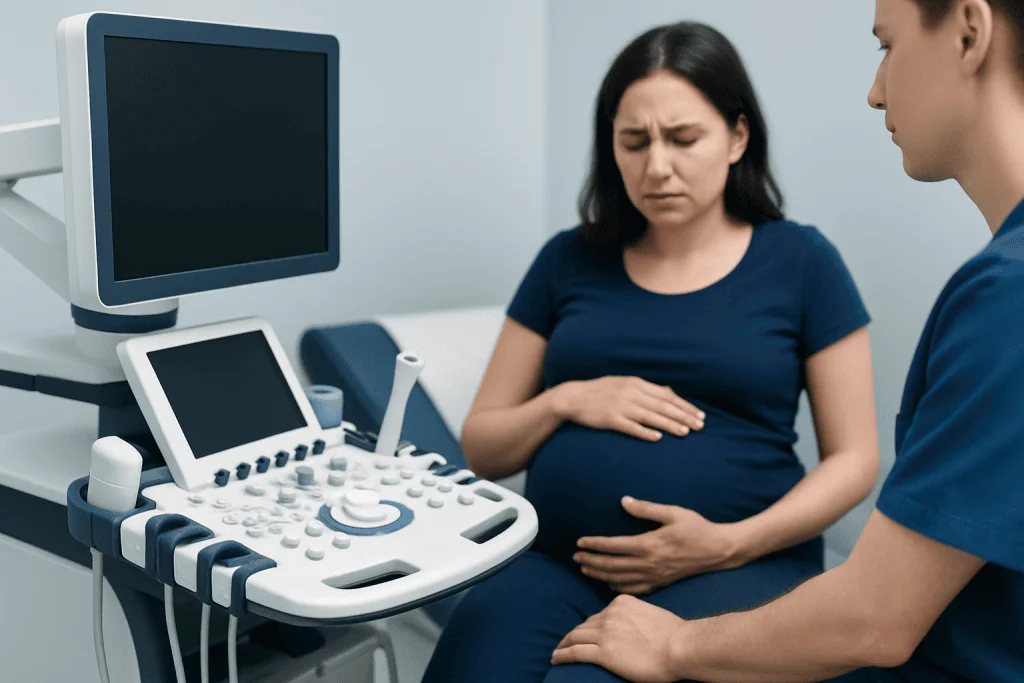
The most common symptom of threatened miscarriage is vaginal bleeding during early pregnancy. The amount can vary from light spotting to bleeding that resembles a menstrual period. Blood may appear pink, red, or brown, and some people notice it only when wiping.
Some people also have mild lower abdominal discomfort, pelvic pressure, or cramping. Light cramping can occur in normal pregnancy as well, so it does not always mean a pregnancy loss is happening. However, stronger pain, worsening cramps, or bleeding that becomes heavier should not be ignored.
Symptoms can overlap with other conditions that need prompt evaluation, including ectopic pregnancy. For that reason, bleeding should not be self-diagnosed at home. A healthcare professional can assess whether the symptoms fit threatened miscarriage or another cause.
- Light or moderate vaginal bleeding or spotting
- Mild cramps or lower abdominal discomfort
- Back pain in some cases
- Passage of small clots may occur, but passing tissue needs urgent review
Possible causes and risk factors
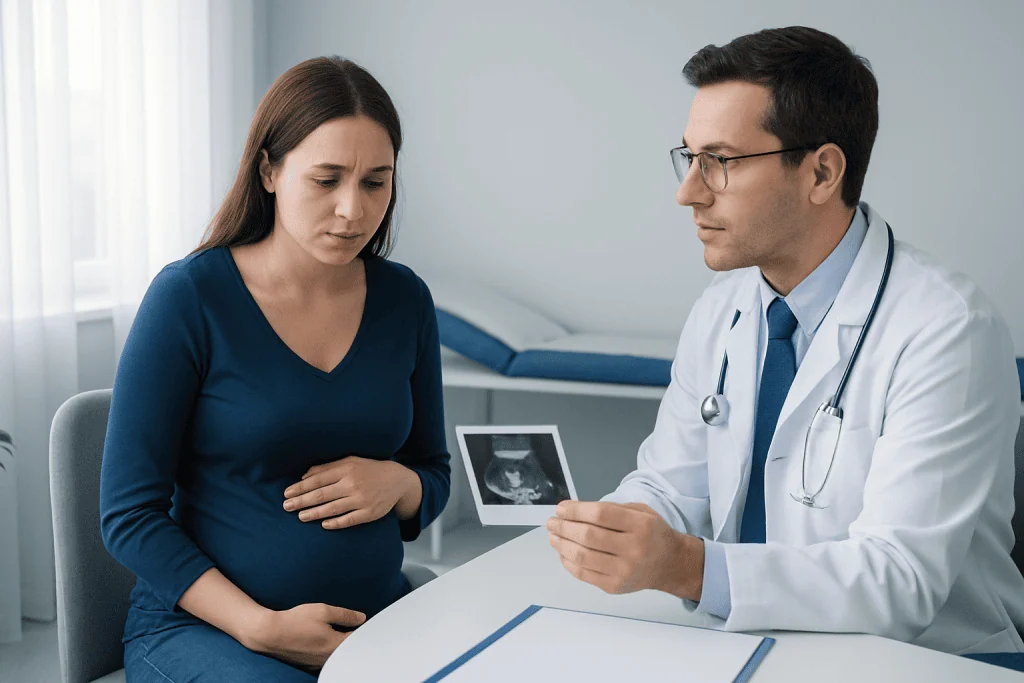
In many cases, the exact cause of threatened miscarriage cannot be identified at the first visit. Early pregnancy bleeding may occur when the pregnancy is still developing normally. In other cases, it may be related to changes in the placenta, a small collection of blood near the pregnancy sac, or pregnancy tissue that is not developing as expected.
Bleeding can also come from the cervix or vagina rather than the pregnancy itself. Cervical irritation after intercourse, infection, or benign growths such as polyps may lead to spotting. A doctor may also consider less common but important causes such as molar pregnancy or pregnancy outside the uterus.
Risk factors for miscarriage in general include increasing maternal age, a prior history of miscarriage, certain chronic medical conditions, smoking, uncontrolled diabetes, thyroid disease, significant structural uterine problems, and some infections. Still, having one or more risk factors does not mean a miscarriage will happen, and many patients with bleeding have no clear risk factor at all.
It is important for patients not to blame themselves. Everyday activity, working, mild exercise, or emotional stress usually do not cause threatened miscarriage. A careful evaluation is more useful than trying to identify a specific action that might have triggered the bleeding.
How doctors diagnose threatened miscarriage
Diagnosis starts with a medical history and symptom review. A clinician will ask about the amount of bleeding, whether there is pain, the date of the last menstrual period, prior pregnancy history, and whether there has been any fainting, shoulder pain, fever, or passage of tissue. These details help determine how urgently tests are needed.
A physical examination may include checking blood pressure, pulse, and abdominal tenderness. A pelvic examination can help assess whether the cervix is closed and whether the bleeding may be coming from the cervix or vagina. If there is concern about blood loss or significant pain, more urgent evaluation is needed.
Ultrasound is one of the most important tools. It can show whether the pregnancy is in the uterus, whether there is a gestational sac, yolk sac, or embryo, and sometimes whether cardiac activity is present. In some early pregnancies, the ultrasound may be inconclusive simply because it is too soon, so a repeat scan after several days may be recommended. This may be part of a broader obstetric ultrasound assessment.
Blood tests may include measuring pregnancy hormone levels over time and checking blood type. If a patient is Rh-negative and has bleeding, a doctor may recommend Rh immunoglobulin according to local clinical guidance. Some patients may also need tests for anemia, infection, or other conditions depending on the clinical picture.
Treatment and follow-up
Treatment depends on what the evaluation shows. If the pregnancy appears viable and the patient is stable, the main approach is usually observation, symptom monitoring, and follow-up. There is no single medicine that reliably stops a threatened miscarriage in every case, so management focuses on identifying the cause, excluding urgent conditions, and supporting the patient through repeat testing if needed.
Doctors may advise reducing strenuous activity for a short period if bleeding is active, although strict bed rest is generally not recommended because it has not been shown to prevent miscarriage. Patients are often advised to avoid inserting anything into the vagina until reviewed, including tampons or intercourse, especially if bleeding continues. Pain relief may be discussed, but medicines should be used only as directed by a qualified clinician in pregnancy.
If tests suggest another diagnosis, treatment changes accordingly. For example, if there is concern about a pregnancy outside the uterus, management may involve urgent care and in some cases laparoscopic surgery. If pregnancy loss is later confirmed, treatment options may include expectant management, medication, or dilation and curettage depending on symptoms, gestational age, and patient preference.
Follow-up is a key part of care. Repeat ultrasound or blood tests may be needed to confirm that the pregnancy is progressing. Emotional support matters too, as uncertainty can be distressing even when the pregnancy continues. In appropriate cases, patients may also be referred for high-risk pregnancy care if there are underlying medical or obstetric concerns.
Self-care, practical steps, and emotional support
While waiting for follow-up, patients are usually advised to monitor the amount of bleeding and any change in pain. It can help to note how many pads are used, whether clots are appearing, and whether symptoms are improving or worsening. Staying hydrated and resting as needed may make this period more manageable, even though rest itself does not treat the cause.
Pregnancy bleeding often brings understandable worry, guilt, or confusion. Reassurance is important: threatened miscarriage is not usually caused by routine daily activity. Patients may find it helpful to ask for clear written instructions, bring a support person to appointments, or speak openly with the care team about what signs to watch for.
There is no proven home remedy to stop a threatened miscarriage. Herbal products, over-the-counter supplements, or online advice should not replace medical evaluation, especially because early bleeding can sometimes be linked to conditions that need urgent treatment. Continuing prescribed prenatal care and discussing all medicines with a doctor is the safest course.
Near the end of evaluation or follow-up, some patients may choose care through centers with coordinated obstetric, gynecologic, imaging, and surgical services. Acibadem International’s multidisciplinary specialists and JCI-accredited hospitals diagnose and treat threatened miscarriage and related early pregnancy conditions for international patients.
When to seek medical care
Any bleeding in pregnancy deserves medical advice, especially in the first trimester. Even when the bleeding is light, assessment can help confirm whether the pregnancy is in the uterus and whether follow-up tests are needed. Patients should contact a healthcare professional promptly rather than waiting for symptoms to settle on their own.
Urgent medical care is needed if bleeding becomes heavy, if there is severe or one-sided abdominal pain, dizziness, fainting, shoulder pain, fever, or passage of tissue. These symptoms can point to significant blood loss, infection, or an ectopic pregnancy, all of which need prompt attention.
- Seek same-day advice for any new bleeding in pregnancy
- Go urgently if soaking pads quickly or passing large clots
- Seek emergency care for severe pain, fainting, or shoulder pain
- Contact a doctor if fever, chills, or foul-smelling discharge develops
Outlook and future pregnancy questions
The outlook after a threatened miscarriage varies, but many pregnancies continue normally after bleeding stops and follow-up tests are reassuring. Prognosis depends on factors such as gestational age, ultrasound findings, the amount of bleeding, and whether a fetal heartbeat is seen. A doctor can explain what the results mean in the context of the individual pregnancy.
Having a threatened miscarriage does not necessarily mean future fertility problems. Most people who experience early pregnancy bleeding can still go on to have healthy pregnancies in the future. If there have been repeated miscarriages or recurrent bleeding, a more detailed evaluation may be recommended.
Questions about trying again after a confirmed pregnancy loss should be individualized. Emotional recovery is just as important as physical recovery, and support from a clinician, counselor, or trusted support network can be helpful. Patients who have had more than one loss may benefit from discussion of possible underlying causes and preconception planning before the next pregnancy.
Frequently asked questions
Does threatened miscarriage always mean pregnancy loss?
No. Threatened miscarriage means there is bleeding in pregnancy, but the cervix is closed and the pregnancy has not been confirmed as lost. Many pregnancies continue normally after evaluation and follow-up.
How is threatened miscarriage different from a miscarriage?
Threatened miscarriage is a warning sign, not a confirmed miscarriage. In a miscarriage, the pregnancy is no longer developing or pregnancy tissue has begun to pass, while in threatened miscarriage the pregnancy may still be ongoing.
Can stress or normal activity cause threatened miscarriage?
Routine daily activity, work, light exercise, and emotional stress are not usually the cause. Patients should not blame themselves, although a doctor may suggest temporary activity modification if bleeding is ongoing.
Will a doctor always do an ultrasound?
Ultrasound is commonly used because it helps confirm the pregnancy location and assess development. If the pregnancy is very early, the first scan may not give a final answer, and a repeat ultrasound or blood tests may be needed.
What should a patient avoid if bleeding happens in early pregnancy?
Until reviewed by a doctor, patients are often advised to avoid tampons, intercourse, and inserting anything into the vagina if bleeding is continuing. They should also avoid taking medicines or supplements in pregnancy unless approved by a qualified clinician.
When is bleeding in pregnancy an emergency?
Emergency care is needed if bleeding is heavy, pain is severe or one-sided, or there is dizziness, fainting, shoulder pain, fever, or passage of tissue. These symptoms can indicate blood loss, infection, or an ectopic pregnancy and should be assessed urgently.
This article is for general information only and is not a substitute for professional medical advice. Please consult a qualified doctor about your individual situation.
Explore treatments in Turkey — costs, top hospitals & a free quote
JCI-accredited · board-certified surgeons · reply within 24h
Add us as a Preferred Source to see more of our trusted health content across Google Search, AI Overviews and Discover.
Check your numbers in seconds
BMI, calories, due date, blood pressure and 30+ more clinical calculators — free, instant, doctor-reviewed ranges.

More from the Health Library

Agonal Breathing — Explained by Medical Evidence, Not Myths

Titrate: What Patients Need to Know

Medicated Shampoo: What Patients Need to Know

Eye Lash: A Complete Medical Overview

Boiling Eggs: A Complete Medical Overview