TIA Stroke — Explained by Medical Evidence, Not Myths

A TIA causes temporary stroke-like symptoms and should never be ignored. Symptoms may resolve within minutes or hours, but urgent evaluation is still essential.
Key Takeaways
- A TIA causes temporary stroke-like symptoms and should never be ignored.
- Symptoms may resolve within minutes or hours, but urgent evaluation is still essential.
- Common causes include blood clots, narrowed arteries, and heart rhythm problems such as atrial fibrillation.
- Treatment focuses on preventing a future stroke through medicines, risk-factor control, and sometimes procedures.
- Using the FAST warning signs can help people recognize possible stroke or TIA quickly.
- Emergency care is needed right away, even if the person feels normal again.
TIA stroke refers to a transient ischemic attack, a short-lived blockage of blood flow to part of the brain that causes stroke-like symptoms but does not leave lasting injury on scans in many cases. Even though symptoms often go away quickly, it should be treated as a medical emergency because it can be an early warning sign of a future stroke.
What TIA Stroke Means
TIA stroke is a commonly used term for a transient ischemic attack, sometimes called a mini-stroke. It happens when blood flow to part of the brain is briefly interrupted, causing sudden neurological symptoms such as weakness, speech difficulty, vision changes, or numbness. The symptoms improve because the blockage clears quickly, but the event is still medically important.
A TIA is not harmless simply because it is temporary. It signals that the brain has already experienced a short episode of reduced blood supply and that the person may be at higher risk of a full stroke in the near future. For this reason, doctors view a TIA as an urgent warning sign rather than a minor event.
Many people feel uncertain when symptoms disappear before they reach a hospital. However, a TIA still needs prompt assessment because the cause may be ongoing, such as artery narrowing, a heart rhythm problem, or a small clot. Evaluation after a TIA aims to lower the chance of a future stroke, which can cause permanent disability.
Symptoms: How a TIA Can Present
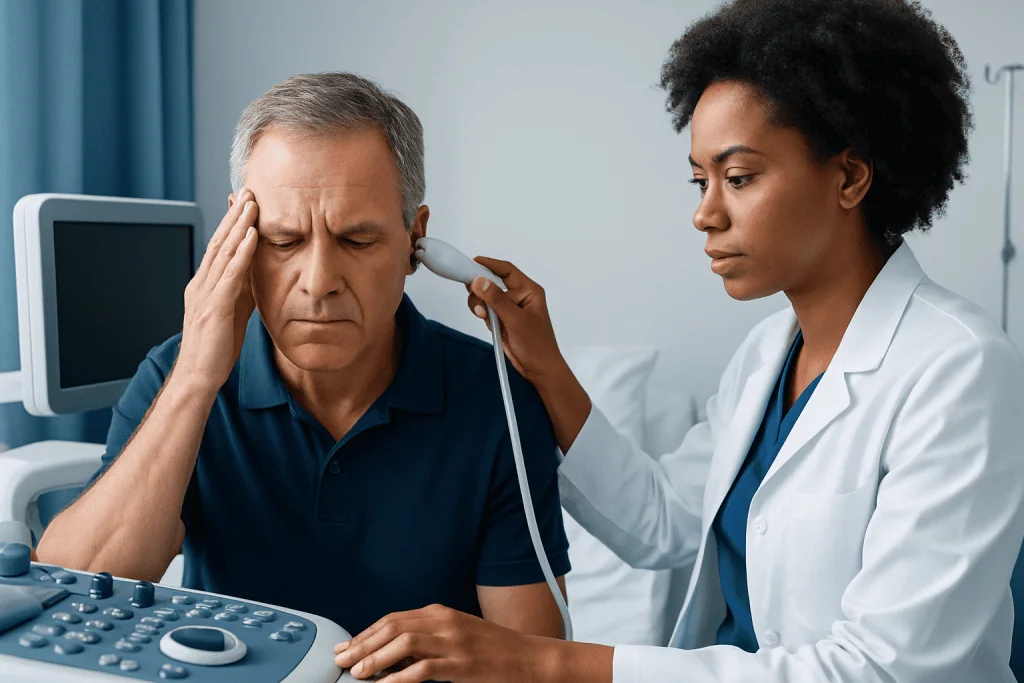
The symptoms of a TIA are similar to those of a stroke, but they usually last a shorter time. They begin suddenly and may affect one side of the body or one specific function, depending on which part of the brain is involved. Some episodes last only a few minutes, while others may continue longer before resolving.
Possible symptoms include:
- Sudden weakness or numbness of the face, arm, or leg, especially on one side
- Sudden trouble speaking or understanding speech
- Sudden vision loss or blurred vision in one or both eyes
- Sudden dizziness, loss of balance, or difficulty walking
- Sudden severe confusion or trouble thinking clearly
A useful way to recognize warning signs is the FAST approach: Face drooping, Arm weakness, Speech difficulty, Time to call emergency services. Even if symptoms improve by the time help is called, the person still needs urgent care. A TIA cannot be confirmed at home based on symptoms alone.
Some TIAs can be subtle. A brief episode of slurred speech, temporary blindness in one eye, or short-lived clumsiness may be the only clue. Because these signs can come and go, they are sometimes dismissed, but any sudden neurological change should be taken seriously.
Why It Happens: Causes and Risk Factors
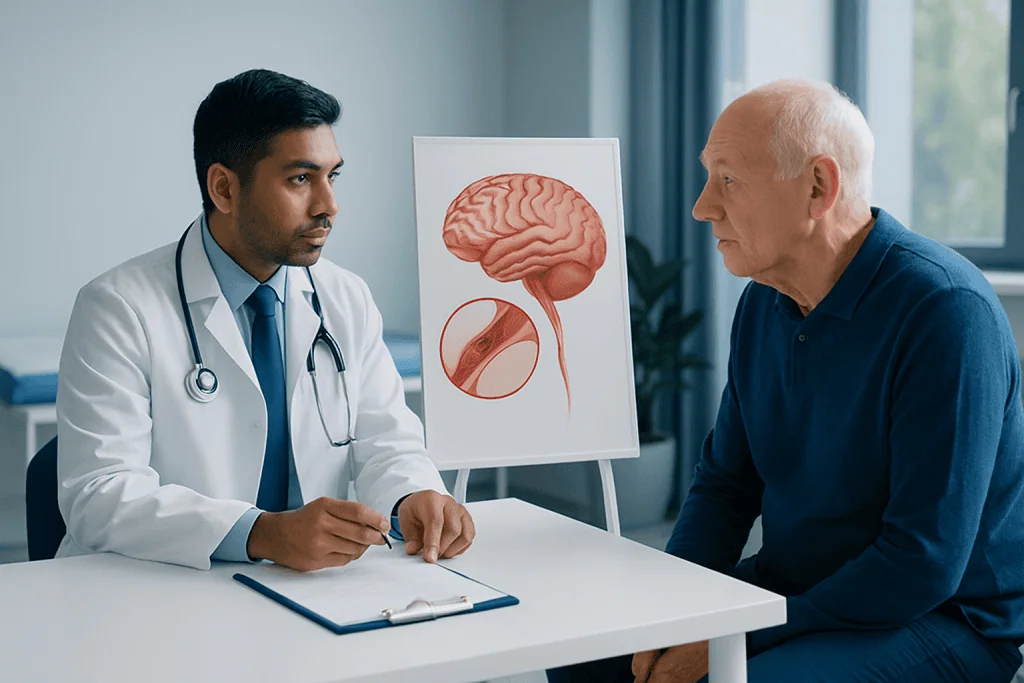
A TIA usually happens when a blood clot briefly blocks an artery that supplies the brain. In some people, the clot forms in a blood vessel in the neck or brain; in others, it travels from the heart. The underlying problem may involve atherosclerosis, which is the buildup of fatty plaque inside the arteries, or a heart condition that increases clot formation.
One important cause is atrial fibrillation, an irregular heart rhythm that can allow blood clots to form in the heart and travel to the brain. Narrowing of the carotid arteries in the neck is another common contributor. Doctors may also evaluate for related conditions when assessing a possible stroke or TIA.
Risk factors overlap strongly with those for stroke and cardiovascular disease. These include high blood pressure, diabetes, high cholesterol, smoking, obesity, physical inactivity, older age, and a personal or family history of vascular disease. Sleep apnea, excess alcohol use, and certain inflammatory or clotting disorders may also play a role in some people.
Not every person with a TIA has the same risk profile. A young adult may be evaluated for uncommon causes such as arterial dissection, autoimmune disease, or inherited clotting disorders, while an older adult may be more likely to have artery disease or atrial fibrillation. Care is individualized based on the likely source of the event.
How Doctors Diagnose a TIA
There is no single test that proves every TIA, because symptoms may have completely resolved before the examination begins. Diagnosis relies on the person’s description of symptoms, the timeline, the physical and neurological examination, and tests that look for stroke, bleeding, blood vessel narrowing, or a source of clots. The goal is not only to decide whether a TIA happened, but also to identify why.
Brain imaging is usually part of the evaluation. Depending on the situation, doctors may use a CT scan or an MRI to look for evidence of brain injury or another explanation for symptoms. Imaging of the blood vessels in the head and neck can help detect narrowing or blockage. In many cases, this may involve MRI scanning or other forms of vascular imaging.
Blood tests may be used to assess glucose, cholesterol, blood counts, and other medical conditions that can affect stroke risk. Heart testing is also important because rhythm problems such as atrial fibrillation are a common cause of TIAs. This may include an electrocardiogram, heart monitoring, and sometimes an ultrasound of the heart.
Doctors also consider conditions that can mimic a TIA, such as migraine aura, seizure, low blood sugar, inner ear disorders, or certain nerve problems. Because the consequences of missing a true TIA can be serious, it is safer to seek evaluation urgently rather than trying to self-diagnose.
Treatment After a TIA: Preventing a Future Stroke
Treatment after a TIA focuses on preventing another event, especially a full stroke. The exact plan depends on the cause. Many people are prescribed medicines that reduce clotting risk, such as antiplatelet drugs, while some need anticoagulants if the source is atrial fibrillation or another heart-related clotting problem. Doctors may also recommend cholesterol-lowering therapy and careful blood pressure management.
If tests show significant narrowing in the carotid arteries, a procedure may be considered to improve blood flow and reduce stroke risk. Depending on anatomy and clinical findings, specialists may discuss carotid endarterectomy or carotid angioplasty and stenting for selected patients. These decisions are made after weighing the benefits and risks for the individual.
When a TIA is linked to heart disease, care may involve a cardiology evaluation and treatment of the underlying condition. For example, controlling atrial fibrillation, valve disease, or heart failure can be an important part of stroke prevention. If symptoms were due to an actual brain infarction rather than a TIA, the event may instead be managed within a broader stroke rehabilitation pathway after acute treatment.
Effective treatment also includes education. Patients are usually advised to understand stroke warning signs, take medicines exactly as prescribed, and attend follow-up appointments. Prevention is strongest when the medical plan and lifestyle changes are addressed together.
Prevention and Daily Self-Care
Many of the same steps that protect heart health also help prevent TIA and stroke. Blood pressure control is especially important because hypertension is one of the strongest risk factors for vascular events. Regular medical follow-up can help detect and manage high cholesterol, diabetes, and irregular heartbeat before complications develop.
Healthy daily habits can meaningfully reduce future risk. These include stopping smoking, being physically active within a doctor’s advice, eating a balanced diet rich in vegetables, fruits, whole grains, and lean proteins, limiting excess salt, and maintaining a healthy weight. If alcohol is used, moderation is important.
People who have already had a TIA should be especially careful about taking prescribed medication consistently. Skipping blood pressure medicines, cholesterol treatment, or blood thinners can raise the risk of another event. It is also wise to ask a doctor before starting supplements or over-the-counter medicines that might affect bleeding or interact with prescriptions.
Stress management, good sleep, and treatment of conditions such as sleep apnea can also support vascular health. Self-care is valuable, but it should not replace professional care after a TIA. A personalized prevention plan is often the most effective approach.
When to Seek Medical Care
Medical care should be sought immediately for any sudden symptom that could suggest a TIA or stroke. This includes new weakness, numbness, trouble speaking, facial drooping, sudden vision loss, severe imbalance, or unexplained confusion. People should call emergency services rather than waiting to see if the symptoms disappear.
It is important to seek help even when the person feels completely normal again. A temporary recovery does not rule out danger, and the highest risk period for a future stroke can be soon after a TIA. Early assessment allows doctors to identify the cause and begin preventive treatment quickly.
Anyone who has had a suspected TIA should also arrange follow-up care after the emergency evaluation. This may include consultations in neurology, cardiology, or vascular medicine depending on the findings. At Acibadem International, multidisciplinary specialists in JCI-accredited hospitals evaluate and treat TIA and stroke-related conditions for international patients.
Frequently asked questions
Is a TIA the same as a stroke?
A TIA is not the same as a major stroke, but it is closely related. A TIA causes temporary stroke-like symptoms because blood flow to the brain is briefly reduced, and it is treated as an urgent warning sign of possible future stroke.
How long do TIA symptoms last?
TIA symptoms usually start suddenly and often last only a few minutes, though they can continue longer before resolving. Even if symptoms disappear quickly, urgent medical evaluation is still needed.
Can a TIA cause permanent damage?
By definition, a TIA does not usually leave lasting neurological deficits, and many people recover fully from the symptoms. However, it may still indicate underlying blood vessel or heart disease and a higher risk of a future stroke that could cause permanent damage.
What should someone do during a suspected TIA?
They should call emergency services right away and not wait for symptoms to pass. The person should avoid driving themselves if possible, note the time symptoms began, and get urgent assessment in a medical setting.
What tests are commonly done after a TIA?
Doctors often use brain imaging, blood vessel imaging, blood tests, and heart evaluation to look for the cause. Common assessments may include CT or MRI, an electrocardiogram, and monitoring for rhythm problems such as atrial fibrillation.
Can a TIA be prevented?
Risk can often be reduced by managing blood pressure, cholesterol, diabetes, and heart rhythm disorders, and by avoiding smoking. Healthy eating, regular activity, weight management, and taking prescribed medicines consistently are also important.
References
- American Stroke Association
- National Institute of Neurological Disorders and Stroke
- Centers for Disease Control and Prevention
- World Stroke Organization
- National Health Service
This article is for general information only and is not a substitute for professional medical advice. Please consult a qualified doctor about your individual situation.
Explore treatments in Turkey — costs, top hospitals & a free quote
JCI-accredited · board-certified surgeons · reply within 24h
Add us as a Preferred Source to see more of our trusted health content across Google Search, AI Overviews and Discover.
Check your numbers in seconds
BMI, calories, due date, blood pressure and 30+ more clinical calculators — free, instant, doctor-reviewed ranges.