Tidal Volume: An Evidence-Based Guide for Patients

Tidal volume means the amount of air moved during one normal breath. Doctors use tidal volume to assess breathing efficiency and help set ventilators safely.
Key Takeaways
- Tidal volume means the amount of air moved during one normal breath.
- Doctors use tidal volume to assess breathing efficiency and help set ventilators safely.
- Normal tidal volume varies by body size, age, and health status rather than one fixed number for everyone.
- Low or high tidal volume can happen with lung disease, pain, weakness, sedation, or critical illness.
- Tidal volume is only one part of breathing assessment and is interpreted together with respiratory rate, oxygen levels, and symptoms.
Tidal volume is the amount of air a person breathes in or out during a normal, relaxed breath. It is a basic but important measure that helps explain how the lungs work and guides care in breathing problems, lung disease, and mechanical ventilation.
Overview: what tidal volume means
Tidal volume is the amount of air that moves into or out of the lungs during a quiet, normal breath. In everyday terms, it reflects how much air the body exchanges each time a person breathes without forcing the breath deeper or faster. This measure is one of the basic building blocks of respiratory assessment.
Although tidal volume sounds technical, it is useful for patients to understand because it connects to how the body gets oxygen in and removes carbon dioxide. On its own, it does not diagnose a specific disease. Instead, it helps clinicians understand whether breathing is shallow, effective, labored, or supported by a machine.
Tidal volume matters both in ordinary health and in medical care. It may be discussed during lung function testing, after surgery, during treatment for pneumonia or asthma, or when a patient needs a ventilator in an intensive care setting. In those situations, doctors do not look at tidal volume alone; they also consider respiratory rate, oxygen saturation, work of breathing, and the underlying cause of symptoms.
How tidal volume fits into normal breathing
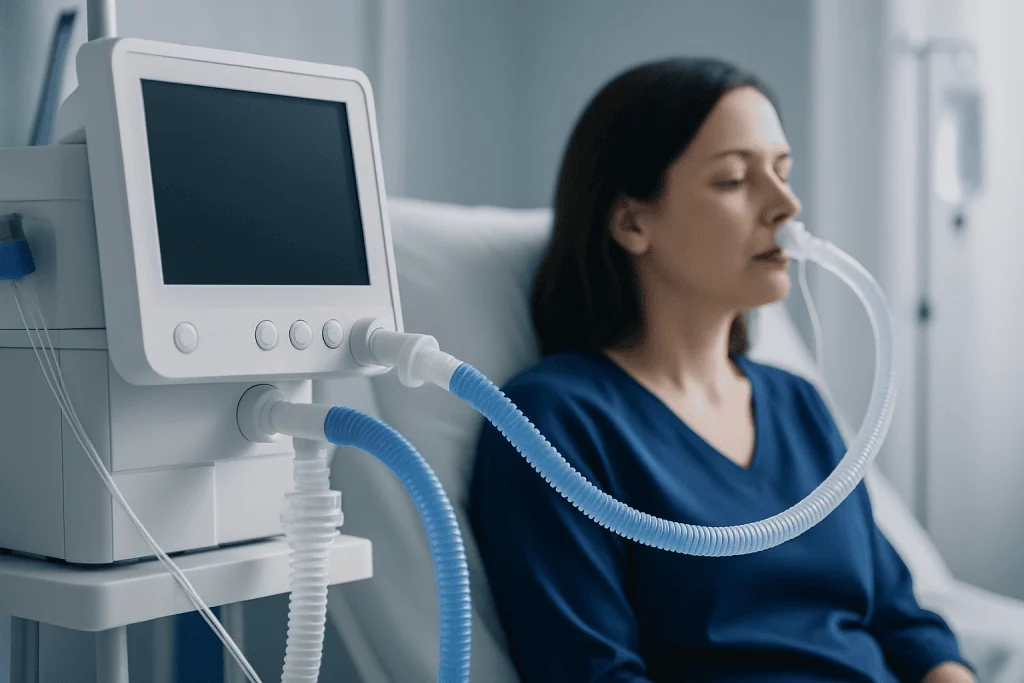
Breathing is a coordinated process involving the brain, chest wall, diaphragm, airways, and lungs. With each relaxed inhalation, the diaphragm contracts and moves downward, allowing the lungs to expand. Air then flows in. During a normal exhalation, the lungs and chest wall recoil, and air flows back out. The amount moved during this cycle is the tidal volume.
In healthy adults at rest, tidal volume is often described in relation to body size rather than a single universal number. This is because a taller person or someone with a larger predicted body size generally moves more air with each quiet breath than a smaller person. Children naturally have lower absolute tidal volumes than adults, but their breathing still meets their body’s needs when it is appropriately matched to size and activity.
Tidal volume works together with breathing rate. A person can take small breaths more often or larger breaths less often and still maintain overall ventilation. What matters clinically is whether enough air reaches the lungs effectively and whether gas exchange is adequate. This is why a quick, shallow breathing pattern can sometimes be less efficient, especially in illness or after surgery.
- Tidal volume: air moved with one normal breath
- Respiratory rate: number of breaths per minute
- Minute ventilation: total air moved in one minute
- Gas exchange: oxygen entering the blood and carbon dioxide leaving it
What affects tidal volume

Many factors can change tidal volume from hour to hour or day to day. Physical activity usually increases it because the body needs more oxygen and must remove more carbon dioxide. Sleep may reduce tidal volume slightly, while anxiety, pain, fever, or exertion can alter the breathing pattern. Body position may also matter, especially in people with obesity, neuromuscular weakness, or chronic lung disease.
Medical conditions can reduce tidal volume when the lungs cannot expand well or when taking a deep breath is uncomfortable. Examples include pneumonia, fluid around the lungs, severe obesity, chest wall injury, or muscle weakness affecting the diaphragm. In other cases, airway narrowing can make breathing less efficient, as in asthma or chronic obstructive lung conditions.
Medicines and medical care may also influence tidal volume. Sedatives, opioid pain medicines, and anesthesia can slow breathing or make breaths shallower. After surgery, pain may lead a person to avoid deeper breathing, which is why breathing exercises are often encouraged. In critically ill patients, mechanical ventilation may be used to deliver a carefully chosen tidal volume while the underlying problem is treated.
Why doctors measure tidal volume
Tidal volume helps clinicians understand how effectively a person is breathing. A low tidal volume may suggest shallow breathing, pain with breathing, sedation, restricted lung expansion, or respiratory muscle weakness. A high tidal volume may be seen during exercise or in some patients who are working hard to breathe. The meaning depends on the full clinical context.
Doctors may estimate tidal volume by observing the patient, but more accurate measurement usually comes from devices. In hospital settings, monitors and ventilators display it directly. During pulmonary function testing, spirometry helps measure how much air is moved and how the lungs and airways are functioning overall. This can be useful when evaluating symptoms such as shortness of breath, chronic cough, or wheezing, and may lead to tests related to pulmonary function testing.
In critical care, tidal volume is especially important because ventilator settings must balance support with lung protection. Delivering too large a tidal volume may overdistend the lungs, while too little may not provide enough ventilation. For this reason, clinicians often calculate ventilator tidal volume using predicted body size and the patient’s condition rather than actual body weight alone.
Tidal volume and mechanical ventilation
Mechanical ventilation is used when a person cannot breathe effectively on their own or needs temporary breathing support. In that setting, tidal volume is one of the main settings or measurements clinicians review. The goal is to provide enough ventilation while reducing the risk of ventilator-related lung injury.
Modern intensive care practice often uses a lung-protective approach, especially in patients with inflamed or injured lungs. Rather than giving very large breaths, clinicians usually choose more moderate volumes tailored to predicted body size and disease severity. This approach has become especially important in severe pneumonia, acute respiratory distress syndrome, and other critical respiratory illnesses.
Ventilator care is never based on tidal volume alone. The team also monitors airway pressures, oxygenation, blood gases, comfort, and the patient’s progress. If the underlying illness improves, support may be reduced gradually. For some patients with severe breathing failure, management may involve advanced respiratory and critical care support related to intensive care.
Because ventilation is highly individualized, patients and families should not compare one person’s tidal volume directly with another’s. The “right” setting depends on body size, lung condition, and the reason breathing support is needed.
How tidal volume is assessed in symptoms and lung disease
Shortness of breath does not always mean tidal volume is abnormal, but the two can be related. A person may feel breathless if breaths are too shallow, if the breathing rate is very fast, or if oxygen levels are low. Doctors therefore combine symptoms, physical examination, pulse oximetry, and sometimes imaging or lab tests to understand the cause.
Conditions affecting the lungs, airways, respiratory muscles, or chest wall can change tidal volume. Infections such as pneumonia, chronic airway diseases, neuromuscular disorders, and postoperative pain may all reduce the depth of breathing. In these cases, improving the underlying condition often improves tidal volume as well.
Assessment may include chest imaging, spirometry, blood gas testing, or continuous hospital monitoring depending on the situation. If a structural problem, persistent symptoms, or unexplained low oxygen levels are present, more specialized respiratory evaluation may be needed. Supportive care can include breathing exercises, oxygen therapy, rehabilitation, and treatment directed at the underlying diagnosis.
Prevention, self-care, and healthy breathing habits
There is no single way to “increase tidal volume” that is right for every person, because the body normally adjusts breathing to its needs. In general, healthy breathing is supported by not smoking, staying physically active, maintaining good posture, and seeking care for asthma, infections, sleep-related breathing concerns, or chronic lung disease. Good overall fitness can help breathing feel more efficient during activity.
After surgery or during recovery from illness, clinicians may recommend slow deep-breathing exercises or the use of an incentive spirometer. These exercises may help reopen small areas of the lungs, reduce shallow breathing due to pain, and support recovery. Patients should follow the instructions given by their care team, since breathing exercises vary by condition.
People with chronic respiratory symptoms should avoid self-diagnosing based on tidal volume alone. Home devices and internet estimates cannot replace medical evaluation when there is ongoing breathlessness, wheezing, recurrent chest infections, or unexplained fatigue. In selected cases, a specialist may recommend further treatment, rehabilitation, or structured evaluation.
Near the end of a patient’s diagnostic journey, coordinated specialist care can be helpful. Acibadem International’s multidisciplinary specialists in JCI-accredited hospitals diagnose and treat respiratory conditions for international patients, including advanced evaluation when symptoms are persistent or complex.
When to seek medical care
Medical advice should be sought if breathing feels persistently shallow, unusually fast, or more difficult than usual, especially if symptoms are new or getting worse. A doctor should also evaluate breathlessness with cough, fever, wheezing, chest discomfort, bluish lips, confusion, or unusual fatigue. These symptoms can have many causes, and proper assessment is important.
Urgent care is needed if a person has severe shortness of breath, cannot speak in full sentences, seems drowsy or confused, or has signs of low oxygen. These situations can signal serious respiratory distress and should not be managed at home. Prompt evaluation allows the care team to check oxygen levels, lung function, and whether hospital treatment is necessary.
For non-urgent but ongoing concerns, a primary care doctor or chest specialist can review symptoms, medications, medical history, and risk factors. If needed, they may arrange tests such as imaging, pulse oximetry, or bronchoscopy when airway evaluation is clinically appropriate. Early assessment often makes it easier to identify treatable causes and plan next steps safely.
Frequently asked questions
What is tidal volume in simple terms?
Tidal volume is the amount of air a person breathes in or out during one normal, relaxed breath. It is a basic measure of how breathing is working at rest.
What is a normal tidal volume?
Normal tidal volume is usually described in relation to body size rather than as one exact number for everyone. In adults at rest, it often falls within a typical clinical range, but doctors interpret it together with age, height, health status, and breathing rate.
Can tidal volume be too low?
Yes. Tidal volume can be low if breathing is shallow because of pain, sedation, weak breathing muscles, restricted lung expansion, or lung disease. A low value does not point to one diagnosis by itself, so it needs medical interpretation.
Why is tidal volume important on a ventilator?
On a ventilator, tidal volume helps determine how much air the machine gives with each breath. It is carefully set to support breathing while also helping protect the lungs from overstretching or inadequate ventilation.
Is tidal volume the same as lung capacity?
No. Tidal volume is the air moved in one quiet breath, while lung capacity refers to larger measured volumes that describe how much air the lungs can hold or move overall. They are related but not the same test result.
Can breathing exercises improve tidal volume?
Breathing exercises may help in some situations, especially after surgery or during recovery from illness when breaths are shallow. However, they do not replace treatment for conditions such as asthma, pneumonia, or other causes of breathing difficulty.
References
- American Thoracic Society
- National Heart, Lung, and Blood Institute
- Mayo Clinic
- Merck Manual Consumer Version
- Society of Critical Care Medicine
This article is for general information only and is not a substitute for professional medical advice. Please consult a qualified doctor about your individual situation.
Explore treatments in Turkey — costs, top hospitals & a free quote
JCI-accredited · board-certified surgeons · reply within 24h
Add us as a Preferred Source to see more of our trusted health content across Google Search, AI Overviews and Discover.

More from the Health Library

Enlarged Spleen: A Complete Medical Overview

Antigen — Explained by Medical Evidence, Not Myths

Mtp Joint: A Complete Medical Overview

Blunt Trauma: What Patients Need to Know

Aerophagia: A Complete Medical Overview