Tiny Red Dots on Skin: An Evidence-Based Guide for Patients

Tiny red dots on skin are a symptom, not a diagnosis, and the cause depends on how they look and what other symptoms are present. Common explanations include petechiae, cherry angiomas, heat rash, folliculitis, allergic reactions, and some infections.
Key Takeaways
- Tiny red dots on skin are a symptom, not a diagnosis, and the cause depends on how they look and what other symptoms are present.
- Common explanations include petechiae, cherry angiomas, heat rash, folliculitis, allergic reactions, and some infections.
- Spots that do not blanch, spread quickly, or appear with fever, bruising, or bleeding need prompt medical assessment.
- Diagnosis is based on the appearance of the skin, medical history, and sometimes blood tests or a skin examination.
- Treatment depends on the cause and may range from reassurance and skin care to treatment of infection, allergy, or an underlying blood disorder.
Tiny red dots on skin can have many causes, from harmless blood vessel growths to irritation, allergy, infection, or small areas of bleeding under the skin. The most useful first step is to notice whether the spots are flat or raised, itchy or painless, and whether they fade when pressed, then seek medical advice if they spread, persist, or occur with other symptoms.
Overview: what tiny red dots on skin can mean
Tiny red dots on skin are common and are often harmless, but they do not all mean the same thing. In some people they are caused by small visible blood vessels or benign growths such as cherry angiomas. In others, they may reflect skin irritation, blocked hair follicles, allergy, infection, heat, or tiny amounts of bleeding under the skin called petechiae.
One practical way to think about this symptom is by looking at three features: whether the dots are flat or raised, whether they itch or hurt, and whether they fade when a clear glass or a finger gently presses on them. Spots that blanch, meaning they briefly fade with pressure, are often related to inflammation in the skin. Spots that do not blanch may suggest bleeding under the skin and should be taken more seriously, especially if new or widespread.
The location also matters. Tiny red dots limited to the arms after shaving may point to irritated follicles, while a scattered rash after exercise may be heat-related. Dots on the legs with easy bruising, nosebleeds, or gum bleeding deserve medical attention because they may be linked to platelet or blood vessel problems.
Because this symptom can overlap with many conditions, a diagnosis should not be made from appearance alone. A clinician will usually consider the person’s age, medications, recent infections, allergies, and any symptoms such as fever, fatigue, itching, or bleeding.
Common patterns and symptoms to notice
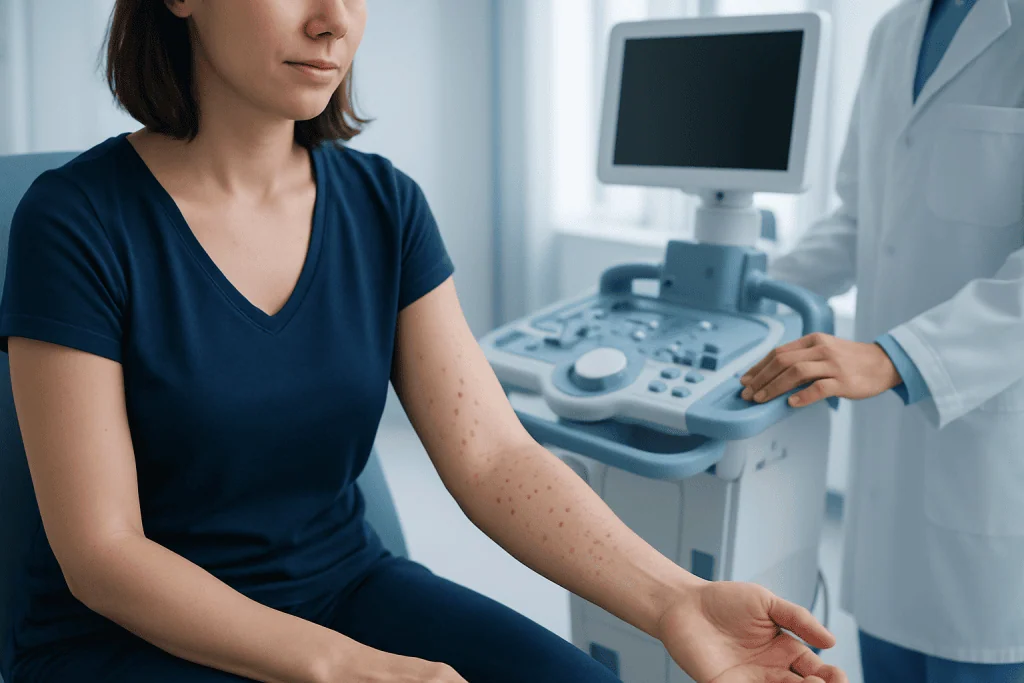
Patients often describe all small red marks as a rash, but the pattern gives important clues. Flat pinpoint dots are often called petechiae when they come from bleeding under the skin. Slightly raised, bright red dome-shaped spots may be cherry angiomas, which are usually benign. Red bumps centered around hairs may suggest folliculitis. Patchy itchy redness may fit eczema, contact dermatitis, or hives.
Itching often suggests irritation, allergy, eczema, insect bites, or heat rash. Tenderness or warmth can point toward inflamed follicles or skin infection. A smooth, painless spot that has been present for a long time without change is more likely to be benign than a sudden crop of new dots appearing with illness.
People should also look for symptoms beyond the skin. Fever, sore throat, cough, joint pain, abdominal symptoms, fatigue, bruising, bleeding from the gums, or blood in urine or stool may help identify a more general medical problem. In children, red spots with fever require particular caution because some infections need urgent assessment.
A simple observation at home can be helpful but does not replace medical advice. If a spot fades under pressure, inflammation of the skin is more likely. If it stays red or purple and does not fade, it may represent blood under the skin and should be evaluated, especially if many spots appear over a short time.
Possible causes and risk factors

There are several broad categories of causes. Benign blood vessel changes include cherry angiomas, which are common with age and usually harmless. Inflammatory causes include heat rash, contact dermatitis from soaps or cosmetics, eczema, and some drug reactions. Infectious causes include viral rashes, bacterial folliculitis, and less commonly more serious infections. Bleeding-related causes include petechiae due to low platelets, clotting problems, intense coughing or vomiting, or fragile blood vessels.
Medications can play an important role. Blood thinners, aspirin, some anti-inflammatory drugs, and certain antibiotics or other medicines may increase bruising or trigger rashes in some people. Recent viral illness, vigorous exercise, prolonged pressure from tight clothing, or scratching can also lead to small red spots in certain situations.
Risk factors depend on the underlying cause. Hot and humid weather, sweating, and occlusive clothing make heat rash more likely. Shaving, friction, and exposure to hot tubs can contribute to folliculitis. A personal or family history of allergies, asthma, or eczema increases the likelihood of inflammatory skin conditions. Age can make cherry angiomas more common.
Sometimes tiny red dots on skin are part of a broader condition. For example, they may occur alongside other skin changes that need skin cancer evaluation if a lesion is unusual, growing, or bleeding, although most tiny red dots are not cancer. They can also appear in immune, vascular, or blood-related conditions, which is why persistent or unexplained spots should be assessed rather than self-diagnosed.
How doctors diagnose the cause
Diagnosis begins with a careful history and skin examination. A doctor will usually ask when the spots started, whether they are itchy, painful, or spreading, and whether there has been a recent infection, new medicine, travel, insect exposure, or skin product change. They may ask about nosebleeds, heavy periods, easy bruising, fatigue, fever, or weight loss because these details can point toward a blood, immune, or infectious cause.
The physical exam focuses on size, color, shape, and distribution. A clinician may check whether the spots blanch with pressure, whether they involve hair follicles, and whether there are signs of eczema, hives, vasculitis, or infection. They may also look at the mouth, nails, and other areas of skin for clues.
Not everyone needs tests. If the appearance is typical for a harmless cause, reassurance or simple treatment may be enough. If petechiae are suspected, or if there are warning symptoms, doctors may order blood tests such as a complete blood count and clotting studies. In selected cases, allergy evaluation, swabs for infection, or skin biopsy may be recommended.
When the appearance is uncertain, further assessment by a dermatologist can be useful. Depending on the findings, a clinician may suggest dermatology evaluation or, if imaging is needed for another suspected condition, MRI scanning or CT scanning as part of a broader workup. The right test depends on the overall clinical picture rather than the skin dots alone.
Treatment options depend on the cause
Treatment for tiny red dots on skin is guided by the diagnosis. Harmless cherry angiomas often need no treatment unless they bleed repeatedly or are removed for comfort or cosmetic reasons. Heat rash usually improves with cooling the skin, reducing sweating, and wearing loose breathable clothing. Contact dermatitis and mild eczema may settle with avoidance of triggers, gentle skin care, and clinician-recommended topical treatment.
If folliculitis is present, management may include better hygiene after sweating, avoiding friction, and sometimes antiseptic or prescription treatment if infection is suspected. Allergic or medication-related rashes are approached by identifying and removing the trigger, but medicines should only be stopped after speaking with a healthcare professional who can advise safely.
Petechiae are treated by addressing the underlying reason they formed rather than the spots themselves. If blood tests show low platelets, infection, or a clotting problem, treatment will be tailored to that issue. That is why flat non-blanching dots, especially with bruising or bleeding, should not be dismissed as a simple rash.
Self-treatment with strong steroid creams, leftover antibiotics, or internet remedies is not ideal because it can blur the diagnosis or worsen certain conditions. If the dots are persistent, recurrent, or associated with other symptoms, a proper medical assessment is the safest way to find the cause and choose the right treatment.
Prevention and self-care at home
Prevention is not always possible because the causes vary, but simple skin care measures can reduce many common triggers. Gentle fragrance-free cleansers, regular moisturizing, and avoiding harsh scrubbing can help maintain the skin barrier. Breathable clothing and showering after exercise can reduce sweat-related irritation and folliculitis.
People who notice recurrent irritation after a new cream, detergent, fabric, or metal exposure should consider the possibility of contact dermatitis and avoid the suspected trigger until they can discuss it with a clinician. Shaving with clean equipment and using non-irritating products may also help if the spots form around hair follicles.
It can be useful to take clear photos over several days and note any new medicines, fever, itching, food exposures, or activities. This record often helps a doctor identify patterns. However, repeated pressing, scratching, or picking at the spots should be avoided because it can irritate the skin and make interpretation harder.
General health habits matter too. Staying well hydrated, managing chronic conditions, and attending routine medical care can help detect underlying problems early. If a blood-thinning medication has been prescribed, it should be taken exactly as directed, and any new unexplained red dots or bruising should be reported to the prescribing doctor.
When to seek medical care
Medical advice is appropriate if tiny red dots on skin do not improve, keep returning, or are difficult to explain. Evaluation is also sensible when the spots are widespread, involve the mouth or eyes, or appear after starting a new medicine. A doctor should review any skin change that is growing, changing color, crusting, or bleeding unexpectedly.
Urgent medical care is needed if the dots are flat and do not blanch, especially when they appear suddenly or are accompanied by fever, severe headache, neck stiffness, shortness of breath, confusion, dizziness, unusual bruising, or bleeding. These features can signal an illness that should be assessed promptly. In infants and children, a new rash with fever should always be taken seriously.
People living with chronic illness, weakened immunity, or known blood disorders should have a lower threshold for seeking care. If a doctor suspects a more complex cause, they may involve dermatology, hematology, infectious disease, or other specialists. In selected cases, a person may also need evaluation for related conditions such as vasculitis if the pattern suggests inflamed blood vessels.
For international patients, Acibadem International’s multidisciplinary specialists in JCI-accredited hospitals assess skin symptoms and the medical conditions behind them, coordinating further testing and treatment when needed. The most important step, however, is timely assessment by a qualified clinician rather than assuming all red dots are harmless.
Frequently asked questions
Are tiny red dots on skin usually serious?
Often they are not serious and may be caused by harmless conditions such as cherry angiomas, mild irritation, or heat rash. However, some causes need medical attention, especially if the dots are new, widespread, non-blanching, or associated with fever, bruising, or bleeding.
How can a person tell if red dots are petechiae?
Petechiae are usually tiny, flat red or purple dots caused by small amounts of bleeding under the skin. They generally do not fade or blanch when pressed, which helps distinguish them from many inflammatory rashes, although a doctor should confirm the cause.
Can allergies cause tiny red dots on skin?
Yes, allergic reactions and contact dermatitis can cause small red spots or bumps, often with itching or irritation. Common triggers include cosmetics, soaps, detergents, metals, fabrics, medications, and in some cases foods or environmental exposures.
Do cherry angiomas need treatment?
Cherry angiomas are benign collections of small blood vessels and commonly appear as bright red raised spots. They usually do not need treatment unless they bleed often, are irritated by clothing, or a doctor recommends removal after confirming the diagnosis.
Should someone worry if the spots appeared after exercise?
Not always. Exercise, heat, sweating, friction, or even intense coughing or straining can sometimes lead to temporary red spots. If the dots persist, recur frequently, or appear with other symptoms such as bruising or bleeding, a medical review is appropriate.
When should a child with tiny red dots on skin be seen by a doctor?
A child should be assessed promptly if the spots are new and accompanied by fever, unusual sleepiness, breathing difficulty, poor feeding, or if the dots do not blanch with pressure. Even when the child seems otherwise well, parents should seek advice if the rash spreads quickly or they are unsure of the cause.
This article is for general information only and is not a substitute for professional medical advice. Please consult a qualified doctor about your individual situation.
Explore treatments in Turkey — costs, top hospitals & a free quote
JCI-accredited · board-certified surgeons · reply within 24h
Add us as a Preferred Source to see more of our trusted health content across Google Search, AI Overviews and Discover.

More from the Health Library

Staghorn Calculus: A Complete Medical Overview

Carvedilol: A Complete Medical Overview

Flomax: What Patients Need to Know

Remedies for Sleep Deprivation: What Patients Need to Know

Nic Salts — Explained by Medical Evidence, Not Myths