Tooth Decay: A Complete Medical Overview

Tooth decay begins when plaque bacteria turn sugars and starches into acids that weaken tooth enamel. Early tooth decay may not cause pain, so regular dental checkups are important.
Key Takeaways
- Tooth decay begins when plaque bacteria turn sugars and starches into acids that weaken tooth enamel.
- Early tooth decay may not cause pain, so regular dental checkups are important.
- Treatment depends on the stage of decay and may range from fluoride care to fillings, root canal treatment, or tooth replacement.
- Daily brushing with fluoride toothpaste, cleaning between teeth, and limiting frequent sugary snacks help prevent cavities.
- Persistent tooth pain, swelling, fever, or trouble chewing should be assessed by a dentist or doctor promptly.
Tooth decay is the gradual breakdown of tooth structure caused by acids produced by bacteria in dental plaque. It can often be prevented, slowed, or treated early, but untreated decay may lead to pain, infection, and tooth loss.
Overview: what tooth decay is and why it matters
Tooth decay is a common disease in which the hard outer and inner layers of a tooth are damaged over time. It happens when bacteria living in dental plaque feed on sugars and starches from food and drinks, producing acids that remove minerals from the tooth surface. If this process continues, a cavity can form and gradually deepen.
Many people think of tooth decay as only a small hole in a tooth, but it is better understood as a process that starts long before a visible cavity appears. In its earliest stage, minerals are lost from enamel, the outer protective layer. At this point, the damage may still be reversible with fluoride and improved oral care. Once a true cavity forms, however, the tooth usually needs professional dental treatment.
Tooth decay can affect children, teenagers, adults, and older adults. It may involve the chewing surfaces, the sides between teeth, or the roots in people with receding gums. Because early decay can be painless, some people do not realize there is a problem until the decay becomes deeper.
Untreated tooth decay can lead to toothache, difficulty eating, bad breath, infection, and in some cases an abscess. For this reason, early recognition, routine dental visits, and prevention are important parts of protecting overall health.
How tooth decay develops
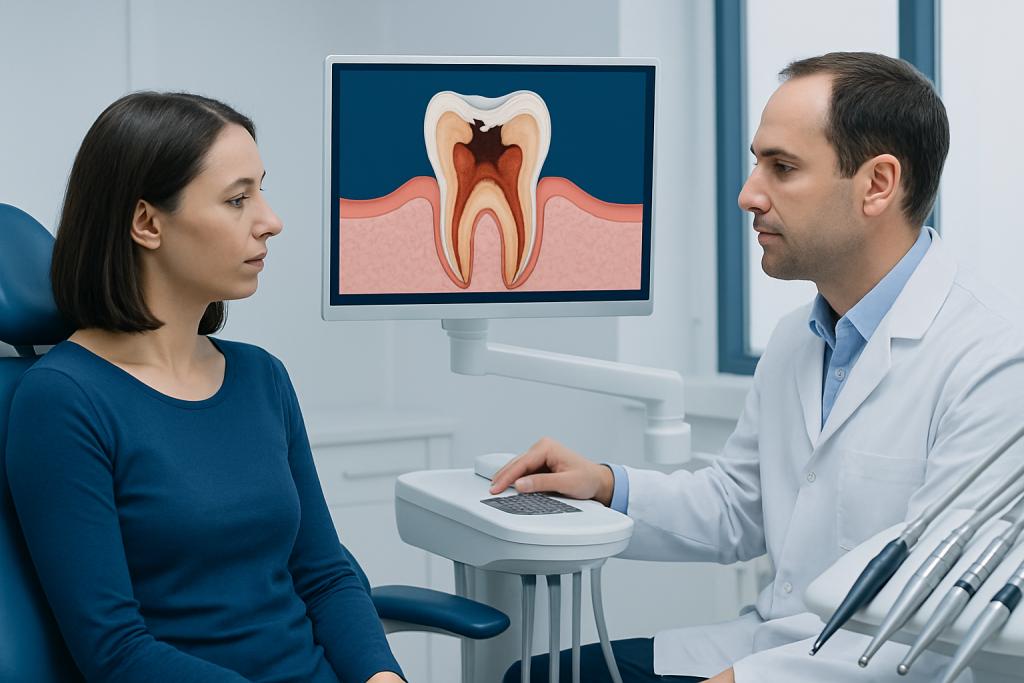
The mouth naturally contains many kinds of bacteria. These bacteria mix with food particles and saliva to form plaque, a sticky film that collects on teeth and along the gumline. When plaque is not removed regularly, the bacteria in it use sugars and refined carbohydrates from foods and drinks to make acids.
These acids draw minerals such as calcium and phosphate out of the enamel in a process called demineralization. Saliva helps repair early damage by neutralizing acids and returning some minerals to the tooth, especially when fluoride is present. If acid attacks happen too often during the day, the tooth does not have enough time to recover, and the balance shifts toward ongoing mineral loss.
As the enamel weakens, a chalky white area may appear. If the process continues, the enamel can break down and form a cavity. Decay may then spread into dentin, the softer layer beneath enamel, where it progresses faster. If it reaches the pulp, which contains nerves and blood vessels, significant pain or infection can develop.
This step-by-step view is important because it shows that tooth decay is not always sudden. In many cases, it starts quietly and can be interrupted early through better oral hygiene, fluoride use, diet changes, and timely dental care.
Symptoms and warning signs

Early tooth decay often causes no symptoms at all. A person may feel completely well even while enamel is beginning to lose minerals. This is one reason dental examinations and X-rays are valuable, since dentists can often detect areas of concern before pain begins.
As decay becomes more advanced, symptoms may include tooth sensitivity to cold, heat, or sweets, mild discomfort when biting, visible pits or holes in a tooth, staining that looks white, brown, or black, and food getting trapped in a certain area. Bad breath or an unpleasant taste may also occur in some cases.
When decay reaches deeper parts of the tooth, pain may become more noticeable or persistent. The discomfort can be sharp, throbbing, or difficult to localize at first. Some people also notice swelling of the gum near the affected tooth, tenderness when chewing, or pain that wakes them at night.
- White chalky spots on a tooth surface
- Sensitivity to sweets, cold, or hot foods
- Visible holes, dark areas, or rough spots
- Pain when chewing or spontaneous toothache
- Swelling, pus, fever, or facial pain in more serious cases
Causes and risk factors
The main cause of tooth decay is repeated acid exposure from plaque bacteria. However, several factors influence how likely decay is to develop. Frequent snacking, sipping sweet drinks over long periods, poor brushing and flossing habits, and not using fluoride are among the most common contributors.
Dry mouth is another important risk factor because saliva plays a protective role. A reduced saliva flow may be linked to some medications, medical treatments, dehydration, mouth breathing, or certain health conditions. Without enough saliva, acids are neutralized less effectively and food debris may stay in the mouth longer.
The shape and condition of the teeth also matter. Deep grooves in molars can trap plaque and food. Crowded teeth can be harder to clean. Receding gums expose root surfaces, which are softer than enamel and more vulnerable to decay. Existing dental work that has worn or developed gaps may also allow bacteria to collect.
Risk can be higher in young children who fall asleep with bottles containing milk or juice, in people who consume frequent acidic or sugary beverages, and in older adults with gum recession or multiple medications. Conditions affecting oral health may overlap with gum disease, and a dentist may also check for periodontal disease when evaluating long-term dental problems.
How dentists diagnose tooth decay
Diagnosis usually begins with a dental history and a careful examination of the teeth, gums, and mouth. A dentist looks for soft areas, visible cavities, plaque accumulation, changes in color, and signs of enamel breakdown. They may also ask about pain, sensitivity, diet, dry mouth, oral hygiene habits, and previous dental treatment.
Dental X-rays are often used to identify decay that cannot be seen directly, especially between teeth or under existing restorations. X-rays also help show how deep the decay is and whether it may be close to the pulp. In some settings, dentists may use additional tools such as special lights, magnification, or caries-detection devices to assess suspicious areas.
Importantly, not every discolored area is active decay, and not every early lesion needs drilling right away. Dentists consider whether a lesion is active, whether the surface is intact, and whether the risk of further progression is high. This helps guide whether preventive treatment, close monitoring, or a restoration is the most appropriate next step.
Assessment may also include a broader review of oral health. If a tooth is severely damaged or infected, the dentist may discuss restorative options or advanced care such as dental implant treatment when a tooth cannot be saved, although preserving the natural tooth is usually preferred whenever possible.
Treatment options by stage of decay
Treatment depends on how far the decay has progressed. In the earliest stage, when minerals have been lost but no cavity has formed, fluoride treatments and improved daily oral care may help remineralize the enamel. Dentists may also recommend dietary changes, more frequent cleaning between teeth, and follow-up monitoring.
Once a cavity has formed, the damaged part of the tooth usually needs to be removed and replaced with a filling material. Fillings restore the tooth’s shape and function and help prevent further bacterial entry. If decay is more extensive, a crown may be needed to cover and strengthen the tooth.
When decay reaches the pulp and causes inflammation or infection, root canal treatment may be recommended to remove infected tissue and save the tooth. If the tooth is too badly damaged to restore, extraction may be necessary. Missing teeth can then be replaced depending on the person’s needs, overall oral health, and dentist’s assessment.
Orthodontic crowding can sometimes make cleaning difficult and may contribute to plaque retention in certain patients. In selected cases, improving alignment with orthodontic treatment may support long-term oral hygiene, though it is not a direct treatment for active decay. Treatment planning is individualized and aims to control disease, relieve symptoms, and preserve healthy tooth structure whenever possible.
Prevention and self-care
Preventing tooth decay focuses on reducing plaque, limiting frequent acid attacks, and strengthening teeth. Brushing twice a day with fluoride toothpaste is a basic step, and cleaning between teeth daily with floss or interdental brushes helps remove plaque from areas a toothbrush cannot reach. For many people, fluoride is one of the most effective tools for lowering cavity risk.
Food and drink habits also matter. It is not only how much sugar is consumed, but how often it is consumed. Frequent snacking or sipping sweetened beverages gives bacteria repeated opportunities to produce acid. Choosing water instead of sugary drinks, limiting sticky sweets, and having sweets with meals rather than continuously through the day can help reduce risk.
Routine dental visits are important for professional cleaning, early detection, and individualized advice. Dentists may recommend sealants for some back teeth, fluoride varnish, or other preventive strategies depending on age and cavity risk. People with dry mouth may need special support to protect their teeth.
- Brush twice daily with fluoride toothpaste
- Clean between teeth every day
- Drink water regularly and limit sugary drinks
- Reduce frequent snacking, especially on sweets or sticky foods
- Attend regular dental checkups and cleanings
- Ask a dentist about fluoride treatments or sealants if risk is high
Near the end of the care journey, some people benefit from coordinated assessment by dental and medical teams, especially if repeated decay is linked to dry mouth, chronic disease, or complex restorative needs. Acibadem International’s multidisciplinary specialists at JCI-accredited hospitals diagnose and treat dental conditions for international patients when more advanced evaluation is needed.
When to seek medical care
Tooth decay should ideally be treated before it becomes painful. A person should arrange a dental appointment if they notice sensitivity that does not improve, a visible hole or dark spot in a tooth, pain when chewing, or a chipped area that traps food. Even mild symptoms can signal deeper disease than is visible from the outside.
Prompt professional care is especially important if there is swelling of the gums or face, severe or throbbing pain, fever, a bad taste from possible drainage, or difficulty opening the mouth. These can be warning signs of a dental infection that may need urgent assessment.
Children, pregnant people, older adults, and anyone with diabetes, a weakened immune system, or dry mouth should not delay evaluation if symptoms appear. In these groups, oral disease may progress more quickly or have broader health effects.
If a person has recurring cavities, a dentist may also look for related issues such as bite problems, gum disease, diet patterns, or reduced saliva. In more advanced situations involving damage to surrounding structures, assessment for conditions such as jaw cyst may occasionally be part of a broader dental evaluation, though this is separate from ordinary tooth decay.
Frequently asked questions
Can early tooth decay be reversed?
In some cases, yes. When decay is limited to early mineral loss in enamel and no cavity has formed, fluoride, improved oral hygiene, and diet changes may help the tooth repair itself. Once a physical hole develops, professional treatment is usually needed.
Is tooth decay the same as a cavity?
Not exactly. Tooth decay is the disease process in which acids damage the tooth over time, while a cavity is the structural hole that forms after enough damage has occurred. Early decay may exist before a cavity is visible.
Why do I have tooth decay even if I brush every day?
Brushing is important, but it is only one part of prevention. Frequent sugar intake, not cleaning between teeth, dry mouth, deep grooves in teeth, or missed areas while brushing can still allow decay to develop. A dentist can help identify personal risk factors.
Does tooth decay always cause pain?
No. Early and even moderate decay may cause no pain at all. Pain often appears later, when the decay reaches deeper layers of the tooth or irritates the nerve.
Can a decayed tooth heal without a dentist?
A formed cavity does not usually heal on its own. While early enamel changes may improve with fluoride and better care, a true cavity generally needs dental treatment to stop it from getting larger.
When is tooth decay an emergency?
Urgent care is needed if there is severe pain, swelling of the face or gums, fever, pus, or difficulty swallowing or opening the mouth. These symptoms can suggest infection and should be assessed promptly by a dentist or doctor.
References
- World Health Organization
- American Dental Association
- National Institute of Dental and Craniofacial Research
- Centers for Disease Control and Prevention
- FDI World Dental Federation
This article is for general information only and is not a substitute for professional medical advice. Please consult a qualified doctor about your individual situation.
Tooth Decay in Turkey — costs, top hospitals & a free quote
JCI-accredited · board-certified surgeons · reply within 24h
Add us as a Preferred Source to see more of our trusted health content across Google Search, AI Overviews and Discover.