

Torticollis in Babies: Causes, Head Tilt Signs, and When Physical Therapy Helps

Torticollis in babies often appears as a persistent head tilt with difficulty turning the neck equally both ways. It may be related to tight neck muscles, positioning in the womb, or time spent in one position after birth.
Key Takeaways
- Torticollis in babies often appears as a persistent head tilt with difficulty turning the neck equally both ways.
- It may be related to tight neck muscles, positioning in the womb, or time spent in one position after birth.
- Early treatment can improve neck motion and may help prevent flattening of the head shape.
- Physical therapy is commonly recommended when home positioning and stretching are not enough or when movement is clearly limited.
- A doctor should assess any baby with a head tilt to confirm the cause and rule out less common problems.
Torticollis in babies is a common condition that causes a baby’s head to tilt to one side and rotate to the other. With early recognition, guided stretching, positioning, and physical therapy when needed, most infants improve well.
Overview
Torticollis in babies is a condition in which an infant’s head tilts to one side while the chin points toward the opposite side. The most common form in infancy is congenital muscular torticollis, which usually involves tightness in a neck muscle called the sternocleidomastoid. Parents may notice that the baby prefers looking one way, seems uncomfortable turning the head equally, or develops a flat spot on one side of the head.
This condition is common and is often identified in the first weeks or months of life. In many babies, it is not painful, but it can affect feeding positions, tummy time, sleep positioning while awake and supervised, and overall movement patterns. Because babies grow quickly, early attention matters. Improving neck movement during infancy can support more symmetrical development.
Torticollis is usually manageable with simple strategies such as positioning, supervised exercises, and physical therapy. The earlier treatment begins, the easier it often is to restore full movement. A healthcare professional can also look for related issues, such as a misshapen head, often called plagiocephaly, which may happen when a baby spends more time resting on one side.
Symptoms and Head Tilt Signs

The most noticeable sign of torticollis in babies is a persistent head tilt. A baby may keep one ear closer to the shoulder on one side and rotate the chin toward the opposite side. Some infants also seem to prefer breastfeeding or bottle-feeding more easily on one side because turning the neck the other way feels limited.
Parents may notice that the baby does not track faces or toys equally in both directions. During tummy time, the baby may consistently look to one side, or the shoulders and trunk may begin to shift unevenly. Over time, if the baby rests the head in the same position often, flattening can develop on one side of the back of the head. Facial asymmetry may also become noticeable in more persistent cases.
Other possible signs include a firm small lump in the neck muscle, difficulty with midline head control, fussiness with certain positions, or delayed tolerance of tummy time. These signs do not always mean a serious problem, but they do suggest that the baby should be examined. Early identification helps treatment begin before movement patterns become more established.
- Head tilts to one side most of the time
- Baby prefers looking in one direction
- Difficulty turning the head fully both ways
- Flat spot on one side of the head
- Uneven shoulder position or body posture
- Feeding preference on one side
Causes and Risk Factors
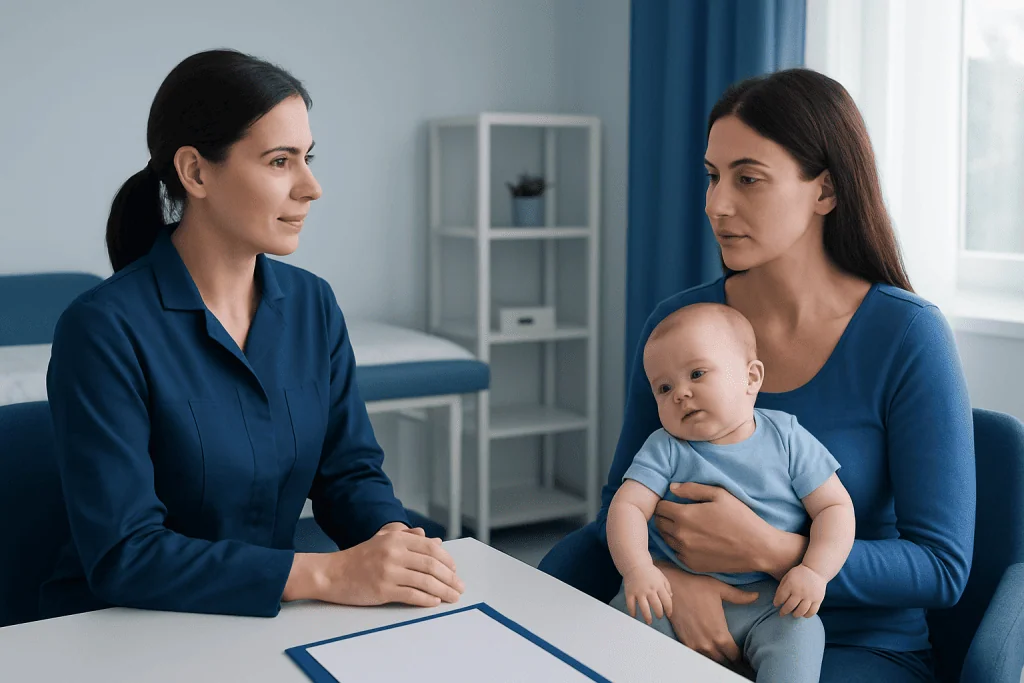
The most common cause of infant torticollis is tightness or shortening of the sternocleidomastoid muscle in the neck. This may happen before birth because of how the baby was positioned in the uterus, especially if space was limited. It can also be associated with difficult delivery, multiple pregnancy, or breech position, although many babies with torticollis have no clear risk factor.
After birth, babies may continue to prefer one head position. Spending long periods lying with the head turned the same way can reinforce the pattern and contribute to both neck tightness and flattening of the skull. This does not mean that normal sleep safety advice is wrong; babies should still always be placed on their backs for sleep. Instead, supervised awake-time repositioning and tummy time are used to balance this.
Less commonly, a head tilt can have causes other than muscle tightness. These include eye muscle problems, bone differences in the neck, neurologic conditions, inflammation, or injury. For that reason, a persistent head tilt should be assessed rather than assumed to be simple torticollis. A doctor will consider the baby’s age, exam findings, and whether symptoms fit the usual pattern.
How Doctors Diagnose Torticollis
Diagnosis usually begins with a physical examination and a careful history. The doctor looks at the baby’s usual head position, checks how far the neck turns and bends in each direction, and examines the shape of the head and face. The shoulders, spine, hips, and overall motor development may also be assessed, since some babies with torticollis have other positional concerns.
In many straightforward cases, no special test is needed. The diagnosis can often be made based on the typical head tilt and limited neck range of motion. The doctor may ask when the head preference was first noticed, whether there were birth complications, and whether feeding or tummy time has been affected.
Imaging or specialist referral may be considered if the presentation is unusual. For example, if the baby’s neck movement is not simply tight, if the head tilt started later after a period of normal movement, or if there are neurologic, eye, or skeletal concerns, further evaluation may be needed. In some children, doctors may use imaging such as MRI scans or X-rays when there is a specific reason to look for another cause. This is not routine for every baby with torticollis.
Treatment Options and When Physical Therapy Helps
Treatment depends on the baby’s age, the degree of stiffness, and whether head shape changes are present. In many cases, the first steps include parent-guided stretching exercises, feeding and carrying positions that encourage turning toward the less preferred side, and regular supervised tummy time. These simple approaches are often very effective when started early and done consistently.
Physical therapy is especially helpful when the head tilt is clear, neck motion is limited, home strategies are difficult to perform, or improvement is slow. A pediatric physical therapist can teach safe stretches, age-appropriate strengthening, and positioning techniques tailored to the baby’s needs. Therapy also helps monitor progress and guide parents as the baby reaches new developmental stages such as rolling and sitting.
If flattening of the head is also present, treatment may include repositioning strategies and follow-up for head shape. In selected cases, a clinician may discuss physical therapy and rehabilitation in more detail, and occasionally helmet therapy may be considered for significant positional skull asymmetry. Surgery for muscular torticollis is uncommon and usually reserved for persistent cases that do not respond to conservative treatment over time.
When care is coordinated early, outcomes are generally very good. Near the end of the evaluation and treatment journey, some families may seek care at centers such as Acibadem International, where multidisciplinary specialists in JCI-accredited hospitals assess and treat infants with movement and developmental concerns, including neck positioning problems.
Prevention and Self-care at Home
Parents cannot always prevent torticollis, but they can support healthy neck movement and reduce positional preference. Safe sleep remains essential: babies should always sleep on their backs. During awake and supervised periods, however, it helps to vary the baby’s position, encourage looking both ways, and change the direction the baby lies in the crib so interesting sights come from different sides.
Tummy time is one of the most useful habits for prevention and recovery. Short, frequent sessions started early can strengthen the neck, shoulders, and trunk while reducing time spent with pressure on the back of the head. Parents can make tummy time easier by placing the baby on a caregiver’s chest, using a rolled towel under the chest if advised, or engaging the baby with voice and toys.
Daily routines also offer chances to encourage symmetry. During feeding, carrying, and play, parents can gently position themselves or a toy on the side the baby avoids. Any stretches should be shown by a qualified clinician first so they are done safely and comfortably. Forceful movement should never be used, and exercises should be stopped if the baby seems distressed or if parents are unsure about technique.
- Alternate the side used for feeding positions when possible
- Offer supervised tummy time several times a day
- Place toys or faces on the less preferred side
- Vary holding and carrying positions
- Follow a therapist’s stretching plan carefully
When to See a Doctor
A doctor should evaluate any persistent head tilt, consistent preference for looking one way, or difficulty turning the head. Parents should also seek medical advice if they notice a flat spot on the baby’s head, a lump in the neck muscle, or trouble with feeding positions. Early assessment can confirm whether the pattern is typical muscular torticollis and whether treatment should begin right away.
More urgent review is important if the head tilt appears suddenly after a period of normal movement, if the baby seems to be in pain, has fever, unusual sleepiness, weakness, vomiting, or abnormal eye movements. These features are less typical and may point to another cause that needs prompt attention. Babies who are not meeting expected motor milestones or who have marked asymmetry in body posture should also be checked.
If home strategies do not seem to help within a reasonable period, follow-up is important. Many infants need reassurance and a clear home program, while others benefit from referral to pediatric physical therapy or another specialist. Timely care supports the best chance of full, comfortable movement and balanced development.
Frequently asked questions
Is torticollis in babies common?
Yes, infant torticollis is a relatively common condition seen in early life. It is often related to tightness in a neck muscle and is usually manageable, especially when recognized early.
Does torticollis hurt a baby?
Many babies with torticollis do not seem to be in significant pain, but they may resist certain positions or seem uncomfortable turning one way. If a baby appears clearly painful, develops sudden symptoms, or has fever or other concerning signs, a doctor should assess them promptly.
Will torticollis go away on its own?
Mild cases may improve with growth, positioning changes, and tummy time, but many babies do best with guided exercises and monitoring. Waiting too long can allow movement preference and head flattening to become more established.
When is physical therapy needed for torticollis?
Physical therapy is often recommended when the neck range of motion is limited, the head tilt is persistent, or home exercises alone are not leading to improvement. A pediatric physical therapist can provide safe stretches, strengthening, and practical positioning advice for daily routines.
Can torticollis cause a flat head?
Yes, babies who keep the head turned or tilted the same way often rest on one area of the skull more than the other. Over time, this can contribute to positional flattening, which is why early treatment and repositioning are important.
How long does treatment usually take?
Treatment time varies depending on the baby’s age and how severe the tightness is when therapy starts. Babies treated early often improve more quickly, while older infants or those with more pronounced stiffness may need a longer therapy program.
References
- American Academy of Pediatrics
- National Institute of Neurological Disorders and Stroke
- American Physical Therapy Association
- MedlinePlus
- National Health Service
This article is for general information only and is not a substitute for professional medical advice. Please consult a qualified doctor about your individual situation.
Explore treatments in Turkey — costs, top hospitals & a free quote
JCI-accredited · board-certified surgeons · reply within 24h
Add us as a Preferred Source to see more of our trusted health content across Google Search, AI Overviews and Discover.

More from the Health Library



Related Specialists

Prof. Dr. Hatem Hakan Selçuk
Interventional Neuroradiology
Prof. Dr. Şahin Şenay
Cardiovascular Surgery
Assoc. Prof. Dr. Kamer Dere
Treatment of Pain Algology
Dr. Ercan Biçakci
Gastroenterology