Traditional Chinese Therapy: Symptoms, Causes, and Treatment Options

Traditional chinese therapy refers to several approaches, not one single treatment. Some methods may help symptom relief, especially when used as part of an overall care plan.
Key Takeaways
- Traditional chinese therapy refers to several approaches, not one single treatment.
- Some methods may help symptom relief, especially when used as part of an overall care plan.
- Safety depends on the therapy, the practitioner’s training, and whether it is used alongside appropriate medical evaluation.
- Herbal products can interact with prescription medicines and are not risk-free.
- Patients should seek medical advice for new, severe, persistent, or unexplained symptoms.
Traditional chinese therapy is a broad group of practices, including acupuncture, herbal medicine, tai chi, cupping, and massage, that some people use alongside standard medical care. It may help with certain symptoms such as pain, stress, or nausea, but it is not a replacement for diagnosis, emergency care, or evidence-based treatment for serious illness.
Overview: what traditional chinese therapy means
Traditional chinese therapy is an umbrella term for a range of health practices that developed within Traditional Chinese Medicine (TCM). Depending on the practitioner and the patient’s needs, it may include acupuncture, herbal medicine, tai chi, qigong, cupping, moxibustion, and forms of therapeutic massage such as tui na. People often ask whether traditional chinese therapy works; the clearest answer is that some approaches may help selected symptoms and quality of life, but results vary and they should be used thoughtfully within safe, medically guided care.
Unlike a single drug or procedure, traditional chinese therapy is a whole-system approach. In practice, this means a practitioner may combine more than one method and also discuss sleep, stress, diet, activity, and symptom patterns. For many patients, the main reason to explore these therapies is symptom support rather than cure.
Modern healthcare increasingly looks at how complementary therapies can fit into integrative care. For example, acupuncture may be considered for some types of chronic pain or treatment-related nausea, while movement-based practices such as tai chi may support balance, flexibility, and stress management. Still, no complementary therapy should delay evaluation for warning signs or replace proven treatment for conditions such as infection, stroke, cancer, or heart disease.
Common types and what they are used for

The best-known traditional chinese therapy is acupuncture, which involves placing very fine needles at specific points on the body. In some settings, it is used to support pain management, headaches, nausea, or recovery from stress-related symptoms. Some hospitals and pain clinics offer acupuncture as part of multidisciplinary care when it is appropriate for the patient’s diagnosis and overall treatment plan.
Chinese herbal medicine uses plant-based and sometimes mineral or other traditional substances in carefully selected formulas. Herbs are often promoted for digestion, fatigue, sleep, or menstrual symptoms, but they require caution because product quality can vary and ingredients may interact with medicines. Patients should tell their doctor about any herbal remedies, teas, powders, or supplements they are taking.
Other forms include tai chi and qigong, which are gentle movement and breathing practices, as well as cupping, moxibustion, and tui na massage. These approaches are usually aimed at symptom relief, relaxation, mobility, and a sense of well-being rather than direct treatment of disease itself.
- Acupuncture: often explored for pain, nausea, and tension-related symptoms
- Herbal medicine: used by some people for digestion, sleep, energy, or menstrual concerns
- Tai chi and qigong: support balance, flexibility, breathing, and stress reduction
- Cupping and massage-based methods: usually used for muscle tension and comfort
Symptoms and conditions people commonly seek help for
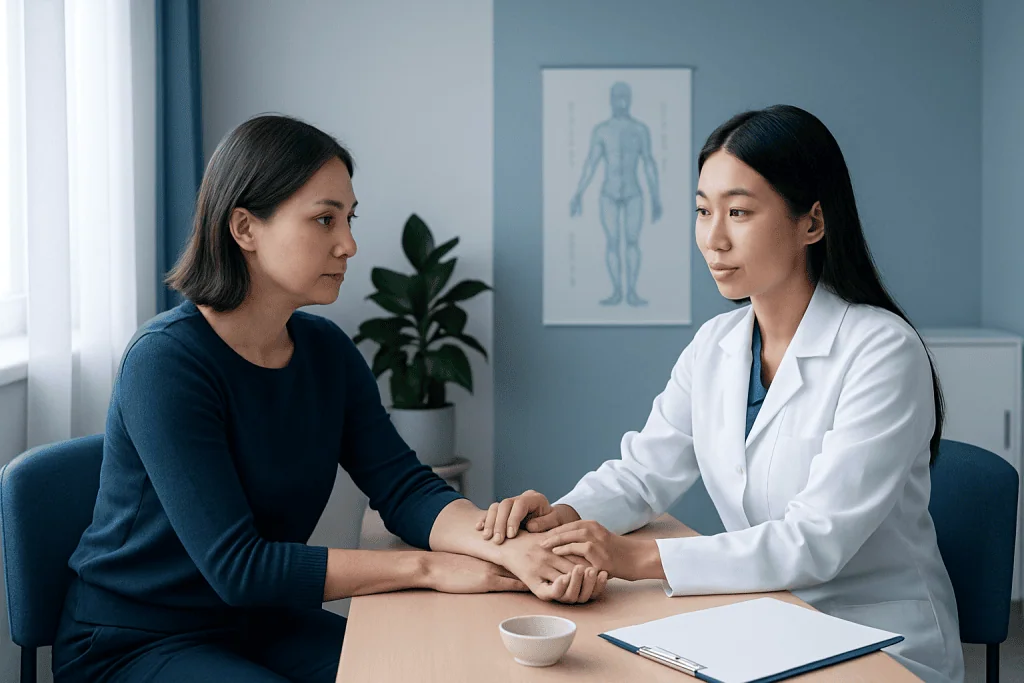
Traditional chinese therapy is not a diagnosis, but people often turn to it because they are living with ongoing symptoms. Common reasons include neck or back pain, joint discomfort, headaches, stress, trouble sleeping, fatigue, nausea, digestive upset, and musculoskeletal tension. Some patients also ask about it when managing long-term conditions under the supervision of a doctor.
One area where integrative care can be relevant is chronic pain. For example, patients with chronic pain may benefit from a plan that includes physical rehabilitation, exercise, sleep support, psychological strategies, and in selected cases complementary therapies such as acupuncture. The aim is usually to improve function and quality of life rather than rely on a single treatment alone.
People with stress-related symptoms or recurring headaches may also ask whether traditional chinese therapy can help. In some situations, acupuncture or mind-body practices are considered alongside standard evaluation and treatment for migraine or tension-type headache. It is important to remember that headaches, fatigue, abdominal pain, or dizziness can also signal underlying medical problems that need formal assessment.
How it may work and why evidence varies
Traditional Chinese Medicine explains health and illness using its own historical framework, while modern medicine studies therapies through anatomy, physiology, and clinical trials. From a biomedical perspective, some techniques may influence pain signaling, muscle tension, stress responses, or general relaxation. Movement practices may also improve conditioning, posture, and balance.
Evidence is not the same for every therapy or every symptom. Acupuncture has been studied more extensively than many other TCM methods, and for some conditions there is moderate evidence that it may help with symptom control. Herbal medicine is more difficult to study consistently because formulas differ, ingredients vary, and product standardization is not always reliable.
Patients may see very different claims online, from highly positive stories to complete dismissal. A balanced view is more useful: traditional chinese therapy may offer symptom support for some people, but not every condition has good-quality evidence, and no complementary method should be presented as a guaranteed cure. The most reliable approach is to discuss goals, expected benefits, limits, and safety with a qualified clinician.
Risks, side effects, and who should be careful
Traditional chinese therapy is often described as natural, but natural does not always mean safe. Acupuncture is generally considered low risk when performed by a properly trained professional using sterile single-use needles, yet it can still cause bruising, soreness, bleeding, lightheadedness, or, very rarely, more serious complications. Cupping may leave temporary skin marks, and vigorous massage techniques may not be suitable for everyone.
Herbal medicine needs especially careful review. Some herbs can affect blood pressure, blood sugar, liver function, kidney function, or blood clotting. Others may interact with chemotherapy, anticoagulants, seizure medicines, antidepressants, or medicines for the heart. Patients preparing for surgery, receiving cancer treatment, pregnant or breastfeeding, or living with significant liver, kidney, or cardiovascular disease should not start herbal remedies without medical advice.
Children, older adults, and people with weakened immune systems need individualized guidance. The same is true for anyone with unexplained weight loss, fever, chest pain, shortness of breath, fainting, severe headache, sudden weakness, or heavy bleeding. These symptoms require medical assessment rather than self-treatment with complementary therapies.
Diagnosis and treatment planning in integrative care
Before starting traditional chinese therapy, the safest first step is a proper medical evaluation for the underlying symptom. A doctor may take a history, perform an examination, and order tests if needed to rule out serious causes. This is especially important when symptoms are new, worsening, or affecting daily life.
Once a diagnosis is clearer, complementary therapies can be considered within a broader plan. In some cases, symptom-based support may sit alongside physical therapy, counseling, nutrition guidance, and specialist treatment. For musculoskeletal pain, for example, a patient may need rehabilitation and pain management rather than relying on a single alternative approach.
Integrative treatment planning works best when all providers know what the patient is using. That includes acupuncture, herbs, teas, powders, oils, and supplements. Near the end of care planning, some patients also seek a second opinion at centers experienced in multidisciplinary evaluation; Acibadem International’s specialists in JCI-accredited hospitals diagnose and treat complex conditions for international patients using coordinated, evidence-based care.
Self-care, prevention, and choosing a qualified practitioner
Traditional chinese therapy may be more helpful when it is part of a healthy routine rather than a stand-alone fix. Regular sleep, balanced nutrition, physical activity, stress management, and following prescribed medical treatment remain the foundation of care. Gentle practices such as tai chi or breathing exercises may be reasonable for many people if a doctor agrees they are safe for their condition.
When choosing a practitioner, patients should ask about training, licensing or certification where applicable, infection-control standards, and experience with their specific symptom. It is also reasonable to ask how the therapy fits with standard medical treatment, what side effects may occur, and when to stop if symptoms change.
People should be cautious of anyone who advises stopping prescribed medicines, promises to cure serious disease, or discourages medical testing. Complementary care is most helpful when it supports informed choices, realistic expectations, and good communication between practitioners and the patient’s medical team.
When to seek medical care
Medical care is important if symptoms are severe, sudden, or unexplained, or if they do not improve with usual self-care. A person should seek prompt medical attention for chest pain, difficulty breathing, stroke-like symptoms, fainting, seizures, severe headache, persistent vomiting, signs of dehydration, high fever, or uncontrolled bleeding. Traditional chinese therapy should not be used instead of urgent care in these situations.
It is also wise to see a doctor before starting herbs or acupuncture during pregnancy, while trying to conceive, before surgery, or while receiving treatment for cancer or heart disease. Patients with long-lasting digestive symptoms, new neurological symptoms, or significant functional limitations may need specialist assessment. In some cases, symptoms that seem routine can be related to conditions needing structured treatment, including physical therapy and rehabilitation or other targeted medical care.
If a patient develops a rash, jaundice, unusual bruising, palpitations, swelling, or worsening pain after using herbal remedies or any complementary treatment, they should stop the product and contact a healthcare professional. Bringing the product label or a full list of ingredients can help clinicians assess possible reactions or interactions.
Frequently asked questions
What is traditional chinese therapy?
Traditional chinese therapy is a broad term for practices associated with Traditional Chinese Medicine, including acupuncture, herbal medicine, tai chi, qigong, cupping, and massage-based techniques. People usually use it to support symptom relief and well-being, often alongside standard medical care.
Does traditional chinese therapy really work?
Some forms may help certain symptoms, but effectiveness depends on the therapy, the condition, and the quality of the evidence. Acupuncture has been studied more than many other methods, while evidence for herbal combinations can be harder to interpret. It is best viewed as supportive care rather than a universal cure.
Is traditional chinese therapy safe?
It can be safe when provided by a qualified professional and used appropriately, but it is not risk-free. Acupuncture may cause bruising or soreness, and herbal products can interact with medicines or affect organs such as the liver and kidneys. Patients should tell their doctor about all complementary therapies they use.
Can traditional chinese therapy replace regular medical treatment?
No. Traditional chinese therapy should not replace diagnosis, emergency care, or proven treatment for serious or progressive illnesses. It may be considered as part of an integrative plan after a medical evaluation has clarified the cause of symptoms.
Who should be especially careful with herbal medicine?
Pregnant or breastfeeding people, children, older adults, and anyone with liver, kidney, heart, or bleeding disorders should be particularly cautious. The same applies to people taking anticoagulants, chemotherapy, seizure medicines, or several prescription drugs. Medical guidance is important before starting any herbal product.
How can someone choose a qualified practitioner?
A good starting point is to ask about formal training, licensing or certification, hygiene practices, and experience treating the specific symptom. Patients should also ask how the therapy will be coordinated with their doctor’s advice. Practitioners should be willing to discuss benefits, limits, and safety clearly.
References
- World Health Organization
- National Center for Complementary and Integrative Health
- National Institutes of Health
- U.S. Food and Drug Administration
- Cochrane
This article is for general information only and is not a substitute for professional medical advice. Please consult a qualified doctor about your individual situation.
Persistent digestive symptoms? Get evaluated in Turkey
JCI-accredited · board-certified surgeons · reply within 24h
Add us as a Preferred Source to see more of our trusted health content across Google Search, AI Overviews and Discover.