Traditional Metal Braces — Explained by Medical Evidence, Not Myths
Traditional metal braces can correct a wide range of tooth alignment and bite problems through gradual, planned tooth movement. Treatment length varies according to the individual orthodontic problem, growth, oral health, and consistent attendance at adjustment appointments.
Key Takeaways
- Traditional metal braces can correct a wide range of tooth alignment and bite problems through gradual, planned tooth movement.
- Treatment length varies according to the individual orthodontic problem, growth, oral health, and consistent attendance at adjustment appointments.
- Good brushing, interdental cleaning, fluoride use, and dietary choices are essential to reduce the risk of cavities and gum inflammation during treatment.
- Braces may cause short-lived pressure or soreness after fitting and adjustments, but severe pain, swelling, or a loose appliance should be assessed.
- A qualified dentist or orthodontist should evaluate whether metal braces, another orthodontic approach, or treatment at a later time is most appropriate.
Traditional metal braces are fixed orthodontic devices that use brackets, wires, and gentle, controlled force to move teeth into healthier positions over time. They remain a reliable, evidence-based option for many children, teenagers, and adults with crowding, spacing, bite concerns, or tooth alignment problems.
What Are Traditional Metal Braces?
Traditional metal braces are fixed orthodontic appliances used to straighten teeth and guide the bite into a more functional position. Small metal brackets are bonded to the front surfaces of the teeth. A flexible orthodontic wire passes through the brackets and is held in place with small ties or clips, allowing the orthodontist to apply carefully controlled forces over time.
These forces prompt gradual changes in the bone around the tooth roots, enabling teeth to move safely when treatment is appropriately planned and monitored. Metal braces can address mild to complex concerns, including crowded or rotated teeth, spaces, teeth that have not erupted in the expected position, and some upper- and lower-jaw bite relationships.
Although clear aligners and less visible brace options are available for selected patients, metal braces remain widely used because they are durable, precise, and suitable for many types of orthodontic movement. The best appliance is not necessarily the least noticeable one; it is the option that can meet the person’s dental needs safely and predictably.
What Problems Can Metal Braces Help Treat?
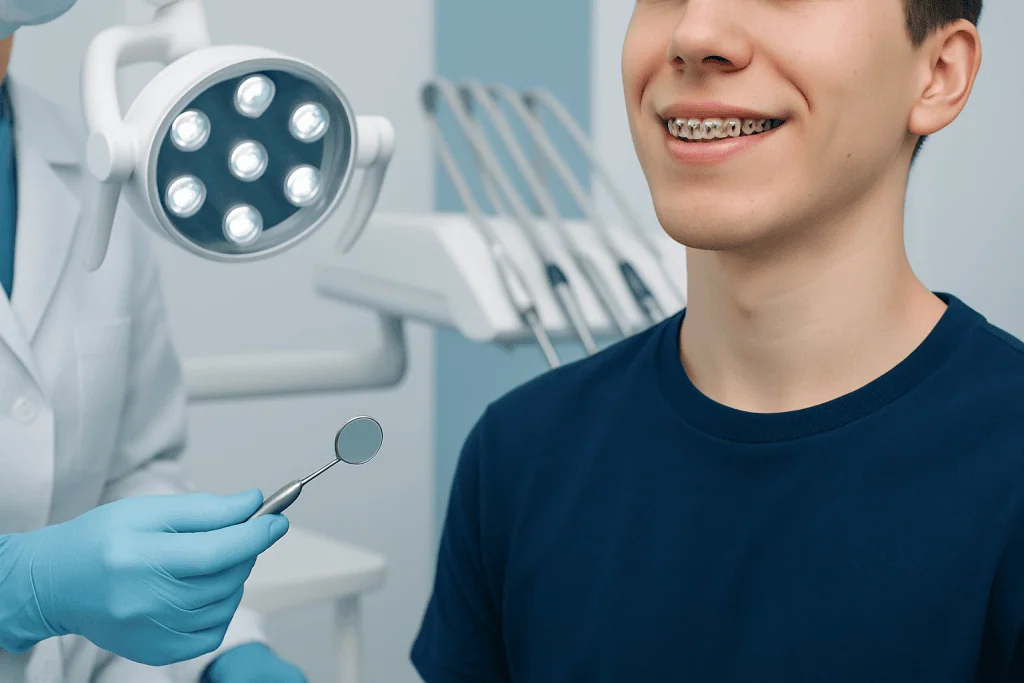
Orthodontic treatment is not only about the appearance of a smile. Teeth that are severely crowded, widely spaced, poorly positioned, or difficult to clean can sometimes contribute to plaque retention, uneven tooth wear, gum irritation, or challenges with chewing. Braces may improve alignment and make daily oral hygiene more manageable, although they do not replace regular preventive dental care.
Traditional metal braces may be recommended for problems such as crowding, gaps between teeth, crossbite, overbite, underbite, open bite, and teeth that are tilted, rotated, or displaced. In some cases, braces are also part of care for impacted teeth, meaning teeth that have not emerged into the mouth normally. Treatment planning may involve collaboration with a general dentist, oral and maxillofacial surgeon, or other dental specialists.
Not every bite difference requires treatment, and orthodontics cannot correct every jaw-related concern with tooth movement alone. Children and adults with significant jaw discrepancies may need additional assessment, particularly if they have difficulty chewing, jaw discomfort, speech concerns, or facial growth differences. The orthodontist considers tooth position, jaw growth, gum health, bone support, and the patient’s goals before recommending treatment.
How Traditional Metal Braces Work

Before braces are fitted, the orthodontist performs a detailed assessment. This commonly includes an examination of the teeth and gums, photographs, digital or physical dental models, and dental X-rays when clinically appropriate. These records help identify tooth positions, root health, jaw relationships, missing or extra teeth, and any issues that should be treated before orthodontics begins.
At the fitting appointment, brackets are bonded to the teeth and connected with an archwire. The wire is designed to guide teeth in a planned sequence rather than all at once. Follow-up visits allow the orthodontist to review progress, change or adjust wires when needed, and check that the teeth, gums, and appliance remain healthy.
Tooth movement is gradual because bone tissue needs time to remodel. Appointments are therefore an important part of treatment, and missed visits can delay progress. Some patients need additional components, such as elastic bands worn between the upper and lower teeth, springs to create or maintain space, or temporary anchorage devices. These are used only when they support a specific treatment objective.
Once active tooth movement is complete, retainers are usually needed. Teeth can naturally shift throughout life, especially after braces are removed. Wearing retainers as instructed is the most effective way to help preserve the final orthodontic result.
Benefits, Limits, and Common Myths
A common myth is that metal braces are only for teenagers. Orthodontic treatment can be effective for adults as well, provided the teeth and supporting gums are healthy enough for movement. Adults may have additional factors to consider, such as previous dental work, gum recession, bone loss, missing teeth, or bite changes, so individualized planning is especially important.
Another misconception is that braces always weaken teeth. Properly managed orthodontic treatment does not inherently weaken healthy teeth. However, fixed appliances create more surfaces where plaque can collect. If cleaning is inadequate, the risk of tooth decay, white spot marks caused by early enamel mineral loss, and gum inflammation increases. These complications are largely preventable with consistent oral hygiene and professional monitoring.
Traditional metal braces are often effective for complex movements because the orthodontist can make detailed adjustments directly through the fixed appliance. Still, braces require cooperation. Elastic wear, cleaning, food choices, and attendance at appointments can affect comfort, treatment efficiency, and long-term oral health.
Braces do not cause major facial changes in every person, nor are they intended to create a particular cosmetic ideal. Their primary purpose is to improve tooth alignment and bite function within the individual’s anatomy and clinical needs. Any expected changes should be discussed openly during treatment planning.
What to Expect During Treatment
It is common to feel pressure, tenderness, or sensitivity when braces are first fitted and after adjustment visits. This usually settles as the mouth adapts. Soft foods may feel more comfortable for a short period. Orthodontic wax can help protect the cheeks or lips if a bracket or wire rubs against soft tissue.
Braces can affect speech very briefly while a person adapts, but they do not usually cause lasting speech problems. There may also be occasional practical issues, such as a tie becoming loose or the end of a wire irritating the cheek. The orthodontic team can advise on temporary comfort measures and arrange repair when required. Patients should not attempt to cut a wire or remove a bracket themselves.
The overall treatment timeline varies widely. It depends on the starting position of the teeth, the complexity of the bite, whether teeth need to erupt or be guided into place, jaw growth in children and adolescents, and how consistently the treatment plan is followed. A clinician can provide a personalized estimate after assessment, but progress should be reviewed over time rather than judged against another person’s experience.
Oral Hygiene, Food Choices, and Daily Care
Thorough oral hygiene is one of the most important responsibilities during fixed-brace treatment. Food and plaque can collect around brackets, under wires, and near the gumline. Brushing carefully with fluoride toothpaste after meals when possible, or at least twice daily, helps protect enamel and gums. A small orthodontic brush, interdental brush, or water flosser may help clean around the appliance, but these should complement rather than replace effective toothbrushing.
Daily cleaning between teeth is also important. The orthodontic team can demonstrate how to use floss threaders, orthodontic floss, or interdental brushes safely. Regular dental check-ups and professional cleanings should continue during orthodontic treatment unless the dental team advises otherwise. Fluoride products may be recommended for people at increased risk of tooth decay.
Hard, sticky, or chewy foods can bend wires, loosen brackets, or become trapped around the appliance. Patients are commonly advised to avoid biting directly into hard foods such as whole apples or crusty bread; cutting foods into smaller pieces may help. Sticky sweets, chewing gum where not advised, ice, and hard candies can also damage braces. Limiting frequent sugary snacks and drinks supports dental health.
- Brush along the gumline, above and below each bracket, and on all chewing surfaces.
- Use interdental cleaning tools daily to remove plaque around wires and between teeth.
- Wear elastics or other removable orthodontic components exactly as instructed.
- Bring any broken appliance, lost elastic, or mouth sore concern to the orthodontic team promptly.
When to Seek Medical or Dental Care
Routine tenderness after braces are fitted or adjusted is expected and usually improves within several days. However, patients should contact their orthodontist or dentist if pain is severe, worsening, or does not settle; if a wire is persistently poking the cheek or gum; or if a bracket, band, or wire becomes loose. Early advice can prevent discomfort and avoid disruption to treatment.
Urgent dental or medical assessment is appropriate for facial swelling, fever, trouble swallowing or breathing, uncontrolled bleeding, significant trauma to the teeth or jaw, or signs of infection such as increasing swelling and pus. These symptoms are not typical effects of braces and should not be managed by waiting for the next routine orthodontic appointment.
Bleeding gums, persistent bad breath, white marks on teeth, or noticeable gum swelling should also be discussed with a dental professional. These may indicate plaque-related gum inflammation or early enamel changes that need prompt attention. At Acibadem International, multidisciplinary dental specialists in JCI-accredited hospitals can assess orthodontic needs and related oral health concerns for international patients.
Frequently asked questions
Are traditional metal braces effective?
Traditional metal braces are an effective orthodontic option for many alignment and bite problems. Because they are fixed to the teeth, they allow the orthodontist to make precise adjustments throughout treatment. Their suitability depends on the individual’s teeth, gums, jaw relationship, and treatment goals.
Do metal braces hurt?
Braces commonly cause a feeling of pressure or soreness for a few days after they are fitted or adjusted. The cheeks and lips may also need time to adapt to the brackets. Severe, persistent, or worsening pain should be discussed with the orthodontic team.
Can adults get traditional metal braces?
Yes. Adults can receive orthodontic treatment if their teeth and gums are healthy enough for movement. An orthodontist will assess gum health, bone support, existing fillings or crowns, missing teeth, and other factors before recommending a plan.
How long do traditional metal braces take to work?
Treatment duration varies considerably and cannot be determined from the type of braces alone. It is influenced by the complexity of the tooth and bite positions, growth, oral health, attendance at appointments, and use of elastics when prescribed. The orthodontist can give an individualized estimate after examination.
What foods should be avoided with metal braces?
Hard, sticky, and very chewy foods can damage brackets and wires or become difficult to clean away. Patients are often advised to avoid ice, hard candies, sticky sweets, and biting directly into hard foods. The orthodontic team can provide a practical food guide based on the appliance used.
Will teeth move again after braces are removed?
Teeth can shift naturally after active orthodontic treatment, even in adulthood. Retainers are therefore an essential part of treatment and should be worn as directed by the orthodontist. Regular retainer checks can help identify wear, damage, or unwanted tooth movement early.
This article is for general information only and is not a substitute for professional medical advice. Please consult a qualified doctor about your individual situation.
Metal Braces in Turkey — costs, top hospitals & a free quote
JCI-accredited · board-certified surgeons · reply within 24h
Add us as a Preferred Source to see more of our trusted health content across Google Search, AI Overviews and Discover.

More from the Health Library

Lime Powder — Explained by Medical Evidence, Not Myths

Hypo Mania: What Patients Need to Know

Skin spots: A Complete Medical Guide for Patients

Filiform Warts Pictures Images: What Patients Need to Know

Healthcare Provider: A Complete Medical Overview